Crashes, No Sound, or Screen Glitches?
Random freezes, missing sound and display glitches usually trace back to one bad driver. Find and replace yours safely.Free scan · under a minuteWindows Errors? Fix Them Before They Spread
Repair common Windows errors and clear accumulated junk for a smoother, more stable PC - no reinstall needed.Free scan · no reinstallFor a React website backed by Node.js, keep payment creation and verification on the server: create a Razorpay order for each payment, pass its trusted order ID to Standard Checkout, then verify the returned signature and confirm capture before fulfilling the purchase. Never put the Key Secret in React code.
How the integration should work
The browser opens Checkout and reports the result; your Node.js server controls the order and decides whether the payment is authentic and captured. This separation prevents a client from choosing the trusted order ID or secret used to validate a transaction.

As an Amazon Associate I earn from qualifying purchases.
- Create an order on the server. For each payment, your server calls Razorpay’s Orders API with the amount and currency, then stores the returned order ID against your own application order. See Razorpay’s Standard Checkout integration steps.
- Open Checkout from React. Provide the public Key ID, the server-created order ID, amount and currency, and appropriate business display details. The success response includes a payment ID, order ID, and signature. Keep the Key Secret exclusively on the server.
- Verify the response on Node.js. Load the expected Razorpay order ID from trusted server-side state, then compute an HMAC-SHA256 signature over
order_id|razorpay_payment_idusing the server-held Key Secret. Compare it safely with the signature returned by Checkout. Do not use an order ID supplied by the browser as the trusted input. - Confirm status and capture. A successful browser callback alone is not grounds to fulfill a purchase. Check payment status through the server/API and ensure it is captured. Razorpay advises merchants to deliver goods or services only after capture.
- Process asynchronous events. Configure webhooks for automated payment updates and validate webhook signatures using HMAC. If the customer needs an immediate status answer before a webhook arrives, fetch payment or order status through the API as well.
- Test before switching to live mode. Run an end-to-end transaction with test-mode keys, then move to live-mode keys after validation. Check live configuration and event subscriptions in the Dashboard.
What belongs in React and what belongs in Node.js
React: initiate Checkout, not authorize fulfillment
The React application can use the Key ID and display the Checkout interface. Treat every value returned to the browser as untrusted until the server verifies it. Do not ship the Key Secret in client bundles or expose it through a browser-accessible endpoint.
Recommended Free Tools
Node.js: create and verify
Keep the order creation call, Key Secret, trusted order-to-application-order mapping, signature calculation, and status checks on the server. Persist the callback’s relevant payment fields server-side so your application can reconcile the transaction.
#1 Best Overall
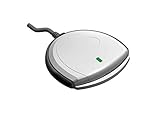
- Fully Compliant - Complies With All Major Industry Standards, Including Iso/Iec 7816, Usb Ccid, Pc/Sc, And Microsoft Whql. As Well As, Emv 2011 Ver 4.3 Level 1 And Gsa Fips 201.
- Seamless Integration - With Identiv-Specific Smartos You’Ll Get Easy, Complete Support Of All Major Contact Smart Card Ics And Technologies In One Simple Reader.
- Universal Compatibility - Works With Virtually All Contact Chip Cards And Pc Operating Systems, Including Windows, Macos, Linux And Android.
- Fast And Convenient- Shorten Your Transaction Time With A Reader That’S Optimized For Speed. It’S Ultra-Compact And Robust Design Is Streamlined For Mobile Operation, Making This Reader The Best Choice For Convenience, Security And Reliability.
- Ergonomic and cost efficient design
Razorpay’s Trust Portal checklist covers secret protection, trusted order IDs, payment capture, and webhook validation. The specific Node.js SDK methods and current React web package syntax are not established by the sources cited here; check Razorpay’s current web documentation and package guidance before adopting code.
Choose status handling and capture behavior deliberately
Webhook automation versus immediate confirmation
Webhooks are suited to asynchronous backend automation. They may arrive after the customer’s Checkout flow has returned, so a time-sensitive confirmation screen can also make a server-side API fetch. Both paths should feed the same payment-state logic, and webhook requests must pass signature validation.
Rank #2
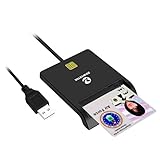
- Advanced Realtek Chipset; PIV, EMS, ISO-7816 & EMV2 2000 Level 1, CE, FCC, VCCI and Microsoft WHQL certifications.
- Supports ActivClient, AKO, OWA, DKO, JKO, NKO, BOL, GKO, Marinenet, AF Portal, Pure Edge Viewer, ApproveIt, DCO, DTS, LPS, Disa Enterprise Email and etc. CAC chip cards
- Sleek ergonomic flat design, precise slot, convenient to horizontally plug card
- Compatible with Windows10/11, Mac OS 10.15 or later. Driver free, plug and play.
- New generation DOD Military CAC USB smart chip card reader, no firmware upgrade requirements
Automatic versus manual capture
Razorpay supports capture settings, and its documentation ties capture settings to server-side use of the Orders API. Choose a capture policy that fits your operations, but do not fulfill based only on authorization. An authorized payment must be captured to settle; uncaptured payments are automatically refunded after a fixed interval, but the cited documentation does not state that interval.
What’s actually slowing this PC down?
Pick the symptom - the matching free tool is one click away.
Keep order status separate from refund status
Razorpay’s order reference defines created, attempted, and paid states. An order can remain paid even when its associated payment is refunded, so represent payment and refund state separately in your application. See Fetch an Order With ID.
Rank #3
Verify the implementation against current web documentation
The available official materials establish the workflow but do not provide a complete current React web plus Node.js implementation. Razorpay’s web Standard Checkout guide demonstrates the server flow in Python, while its React Native integration steps concern a mobile framework, not React for the web. Use those sources for the relevant order, signature, capture, and webhook concepts; confirm exact current Node.js APIs and React web Checkout setup in the official documentation before copying code. Regional availability and merchant eligibility also depend on current Dashboard and region-specific guidance.
Quick Recap
Best Value
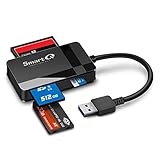
- SmartQ C368 USB 3.0 Card Reader: Four-in-one design, supports Micro SD/SD/MS/CF cards, and reads data independently; ideal for plug and play mobile use during travel.
- High data transfer speed: Supports data transfer speed up to 5GB per second (at USB 3.0 speed), compatible with USB 3.0 and USB 2.0 multi-card readers for CF and MicroSD cards.
- Multi-system compatibility: Compatible with Windows/Mac OS/Linux and other systems, no driver needed, enjoy a plug and play experience.
- Working status: Blue LED light indicator, the indicator LED lights up when powered on, the device status is clearly visible.
- In the Box: SmartQ C368 USB 3.0 Card Reader (memory card not included), Cable organizer, User manual.
Rank #4

- Compact And Lightweight Dongle Form-Factor Card Reader
- Accepts Cards In Id1 Format (Iso8716)
- Ccid Compliant
- Compact and lightweight dongle form-factor card reader
- Accepts cards in ID1 format (ISO8716)
Product prices and availability are accurate as of the date/time indicated and are subject to change. Any price and availability information displayed on Amazon at the time of purchase will apply.




