To play a chess engine using real pieces, you need a physical board that can report moves to the Raspberry Pi, software that understands that board and can pass positions to an engine, and the engine itself. Stockfish supplies the engine—not the chessboard interface—so an ordinary board will not communicate with the Pi unless you enter moves manually or add sensors.
Choose how the Pi will receive your moves
There are four practical routes. The right one depends on whether you want a ready-made appliance, an electronic board with custom software, a DIY electronics project, or simply a physical board beside a screen.

As an Amazon Associate I earn from qualifying purchases.
| Route | How moves reach the engine | Main trade-off |
|---|---|---|
| DGT e-Board with DGT Pi | The supported electronic board reports moves to the DGT Pi, which runs PicoChess. | It is a documented hardware combination, but the DGT Pi product listing says the e-Board and pieces are not included; check current package contents and board compatibility. |
| DGT e-Board with a custom Pi setup | Board-aware software and compatible drivers or protocol pass moves to an engine running on the Pi. | You must verify compatibility across the board, operating system, interface software, and engine; a universal current setup recipe is not established. |
| DIY sensor board with a Pi | Sensors detect piece placement; software interprets the board and can show a response through LEDs or another interface. | Requires construction and electronics and software integration. Published projects demonstrate approaches, not universal plug-and-play instructions. |
| Ordinary board with manual move entry | You enter your move in chess software and transfer the engine’s reply to the physical board. | No electronic board is needed, but you must relay every move yourself. |
Before choosing components, confirm that the exact board model works with the software you plan to use. A USB connector alone does not guarantee that the Pi can interpret a board’s moves.
Why Stockfish needs another piece of software
Stockfish is a chess engine that communicates with chess applications using the Universal Chess Interface (UCI). It does not include a graphical interface for displaying a board or entering moves. The official Stockfish documentation makes that distinction explicit.
#1 Best Overall

- Raspberry Pi 5 with 8GB RAM: Model SC1112 featuring a quad-core ARM Cortex-A76 processor running at 2.4GHz. Enhanced Connectivity: Includes dual 4K micro HDMI ports, USB-C power input, and high-speed USB 3.0 ports. PCIe Expansion Support: FPC connector enables M.2 NVMe SSDs when using compatible adapters. Fast Storage Options: Works with microSD cards for booting, or optional NVMe storage for advanced projects. Built for Projects & Learning: Ideal for programming, home labs, DIY electronics, automation, and Linux-based development.
For over-the-board play, the additional software must receive the board position, pass it to Stockfish, and present the engine’s response in a way you can follow. That might be a supported integrated system such as DGT Pi with PicoChess, compatible board-control software on a general-purpose Pi, or a manual move-entry workflow. Stockfish by itself does not detect pieces or connect a standard chessboard to the Pi.
Documented ready-made route: DGT USB e-Board and DGT Pi
DGT documents connecting its USB e-Board to a DGT Pi. The DGT USB e-Board manual says to connect the board to the DGT Pi with the USB cable. The Pi’s USB connector is under a cover on its left side. The manual also specifies batteries and the supplied power adapter for the DGT Pi.
Rank #2
- Notice: We only provide after-sales service purchased from Seeed Studio
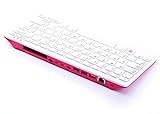
- 【Computer in Keyboard Form】Raspberry Pi 400 is a complete personal computer, built into a compact keyboard. Portable design, easy to carry. Just simply connect to a mouse, and a monitor with the Pi 400, you will get a powerful desktop PC.Note: There is only a keyboard in the package. If you want other accessories, welcome to visit our store.
- 【1.8GHz Quad-Core 64-bit Arm Cortex A72 CPU】Compared with the 1.5 GHz frequency of Raspberry Pi 4, Pi 400 has a frequency of 1.8 GHz. So Pi 400 runs more stable and smoothly, also can help increase the read and write speed of large files.
- 【Dual 4K HD Video Output】 The 2 HDMI ports on the back of the Raspberry Pi 400 can support up to 4K high-definition dual-band display, very convenient for your work and home entertainment. Built-in 2.4GHz/5GHz Wi-Fi & Bluetooth 5.0, you can enjoy smooth network anywhere.
- 【Multiple Functional Interfaces】Raspberry Pi 400’s back is designed with multiple functional interfaces. Rich I/O peripherals to further expand your projects.
- Check that your board and DGT Pi are compatible, and check what is included with the hardware you are buying.
- With the DGT Pi powered as described in its manual, connect the USB e-Board using the supplied cable.
- Set up all pieces in their correct starting positions. The manual says the computer detects the connected board and that the clock shows a time setting when the starting position is correct.
DGT describes the DGT Pi as running PicoChess and supporting DGT USB, Smart, or Bluetooth e-Boards on its product page. Its listing says the e-Board and pieces are not included. Product contents and availability can change, so confirm the current listing before ordering. These instructions apply to the DGT hardware described in the manual; they do not mean that any USB chessboard will work with any Raspberry Pi.
What’s actually slowing this PC down?
Pick the symptom - the matching free tool is one click away.
Build a custom Pi and sensor-board setup
A custom build can use a commercial electronic board or a board made with sensors. Either way, the Pi needs software that interprets the board input and connects it to a chess application and engine.
Prepare the Raspberry Pi
Follow the Raspberry Pi getting-started documentation to install an operating system on boot media and use a power supply suitable for your chosen Pi model. For desktop use, you also need a display, keyboard, and mouse. A headless setup instead relies on network access and remote control, such as SSH. Exact accessory needs depend on the Pi model and how you intend to operate it.
Choose compatible board and chess software
Check support for the exact board and operating system before buying or building. The board interface must turn sensed piece changes into a position the chess software can use; that software must then communicate with the engine. Do not assume that Stockfish includes board drivers or a move-entry interface.
Rank #4

- POWERFUL PROCESSOR: Features a 2.4GHz quad-core ARM Cortex-A76 processor with 8GB RAM capacity for smooth performance and multitasking capabilities
- COMPLETE KIT: Includes 32GB microSD card, micro HDMI to HDMI-A cable, USB mouse, US keyboard, and power supply for immediate setup
- CONNECTIVITY: Multiple ports including USB 2.0, dual USB 3.0, Gigabit Ethernet, and built-in Wi-Fi/Bluetooth for versatile connectivity options
- DISPLAY OUTPUT: Supports micro HDMI output with OpenGL capabilities for high-quality visual display and graphics performance
- EXPANSION OPTIONS: Equipped with GPIO pins, SD card slot, and wireless connectivity for extensive project development and customization
Understand what DIY examples demonstrate
The RPi Chessboard project describes using a microcontroller sketch to implement a DGT board protocol so PicoChess on a Raspberry Pi can use a custom board. A separate Raspberry Pi Official Magazine project describes a wooden board with reed-switch piece recognition and LED move indicators; the Pi runs Stockfish, and the player follows the lights when moving pieces.
Crashes, No Sound, or Screen Glitches?
Random freezes, missing sound and display glitches usually trace back to one bad driver. Find and replace yours safely.Free scan · under a minutePC Slower Than It Used to Be?
A free scan shows the junk files, broken settings and background clutter dragging Windows down - then fixes them in one click.Free scan · Windows 10 & 11These projects show that a custom physical interface is possible, but they are examples rather than a maintained, general-purpose recipe for every Pi model, operating system, board design, and Stockfish release. Plan for integration work rather than expecting to connect sensors and have a playable system automatically.
Independent reader supportYour contribution helps us test, update, and keep practical guides available for everyone.Set up and verify the complete move cycle
Once your board-aware software and engine are configured, verify that a move can travel both ways. Use the board and software makers’ instructions for their specific hardware; the following is a practical check, not a claim that every configuration has been tested.
- Start the chess application and confirm it can use the selected engine.
- Place the pieces in the starting position and check that the application recognizes the board position.
- Make one legal move on the physical board. Confirm that the application registers the correct move and resulting position.
- Ask the engine to respond. Confirm that its move is displayed, announced, or indicated in a way you can transfer to the physical board.
- Make the engine’s move on the board, then check that the application registers the updated position before continuing.
If a physical move is not recognized, check piece placement and starting position first. Then confirm the board connection, power, and software compatibility. If the move is recognized but there is no engine reply, check that the chess application—not just the engine binary—is configured to use Stockfish.
Quick Recap
Pick a route by the work you want to do
- Choose DGT Pi with a compatible DGT e-Board if you want the documented integrated route and are comfortable checking package contents separately.
- Choose a DGT e-Board with custom Pi software if you want to select your own software stack and are prepared to verify protocol and application support.
- Choose a DIY sensor board if building the electronics and interface is part of the project, not an obstacle to playing immediately.
- Choose manual move entry if you already have a regular board and want the simplest way to play against an engine without automatic move sensing.
Product prices and availability are accurate as of the date/time indicated and are subject to change. Any price and availability information displayed on Amazon at the time of purchase will apply.




