Windows Errors? Fix Them Before They Spread
Repair common Windows errors and clear accumulated junk for a smoother, more stable PC - no reinstall needed.Free scan · no reinstallOutdated Drivers Are Slowing You Down
One free scan finds every outdated or missing driver and matches the right update for your exact hardware.Free scan · exact hardware matchChoose by update rhythm and how much system setup you want to own. Fedora Workstation suits people who want a curated desktop and planned version upgrades; openSUSE Tumbleweed suits people who want a rolling release with installer options such as Btrfs snapshots; Arch Linux is for users who want a minimal starting system and maximum direct control; EndeavourOS offers an Arch-based, terminal-centric route with project-provided defaults. None is a universal winner, and a rolling release is not a promise that updates will never cause trouble.
Start with the kind of change you want to manage
The most useful first distinction is not whether one distribution is simply “stable” or “unstable.” It is how and when changes arrive, how much configuration you want to handle, and what recovery options matter to you. A planned version upgrade, frequent rolling updates, a minimal base, and installer-provided snapshots are different trade-offs; they should not be collapsed into one reliability ranking.
As an Amazon Associate I earn from qualifying purchases.
Fedora Workstation uses numbered releases and Fedora says each version receives updates for approximately 13 months. The Fedora Project identifies Workstation 44 as released on April 28, 2026. Its lifecycle documentation describes a roughly six-month release cadence, so users should expect periodic upgrades rather than a single installation that remains on one version indefinitely. See the Fedora Workstation 44 download page and Fedora Workstation overview.
Do these 3 things before closing this tab:
1Clear out junk files and repair common Windows errors2Scan for outdated or missing drivers - takes under a minute3Repair Windows errors before they cause bigger problemsopenSUSE calls Tumbleweed a rolling release and Leap a stable release. Arch Linux is also rolling release: it begins with a minimal base rather than a preconfigured desktop experience. Rolling systems deliver ongoing package changes instead of asking the user to move between numbered releases in the same way as Fedora. That can suit users who value ongoing updates, but it also means updates are part of regular system maintenance. The openSUSE project distinguishes Tumbleweed and Leap, while the ArchWiki comparison of distributions describes Arch’s rolling model and minimal starting point.
#1 Best Overall

- ✅For beginners, refer image-7, its a video boot instruction, and image-6 is "boot menu Hot Key list"
- ✅16-IN-1, 64GB Bootable USB Drive 3.2 , Can Run Linux On USB Drive Without Install, All Latest versions.
- ✅Including Windows 11 64Bit & Linux Mint 22.3 (Cinnamon)、Kali 2026.02、Ubuntu 26.04、Zorin Pro 18、Tails 7.8.1、Debian 13.5.0、Garuda 2026.03、Fedora Workstation 44、Manjaro 25.06、Pop!_OS 22.04、Solus 2026.04、Archcraft 26.05、Neon 2026.06、Fossapup 9.5、Sparkylinux 8.3, All ISO has been Tested
- ✅Supported UEFI and Legacy, Compatibility any PC/Laptop, Any boot issue only needs to disable "Secure Boot"
“Latest packages” and “stability” are not opposites with one simple winner. A rolling release gives you a continuing stream of changes; a scheduled-release system organizes changes around numbered versions. Snapshot availability may offer a recovery tool, while backups protect personal files. These answer different questions: how frequently the system changes, how you return from a troublesome change, and how you restore your own data. Choose the arrangement whose maintenance habits you can sustain, not only the one whose label sounds most appealing.
Compare the options that fit this question
| Option | Release and upgrade pattern | Starting experience | Best fit when | Important qualification |
|---|---|---|---|---|
| Fedora Workstation | Numbered releases; approximately 13 months of updates per version, with a roughly six-month release cadence described in Fedora lifecycle documentation. | Curated desktop and graphical installer. | You want a planned upgrade rhythm and a desktop system that starts from a defined release. | Be prepared to move to later versions periodically; the update period is not indefinite support for a release. |
| openSUSE Tumbleweed | Rolling release. | Installer provides desktop selections and options including full-disk encryption, Btrfs snapshots, LVM partitioning, and Secure Boot. | You want a rolling system and value having installation and partitioning choices in the installer. | Rolling updates still require ongoing attention; snapshots are an option, not a guarantee that every problem can be undone. |
| openSUSE Leap | Stable-release flavor. | Part of the same openSUSE distribution family as Tumbleweed. | You prefer a non-rolling openSUSE path. | Confirm current lifecycle and support terms on the project site before choosing based on a particular support duration. |
| Arch Linux | Rolling release. | Minimal base that expects the user to configure more of the system. | You want maximum direct control and are comfortable building and maintaining the setup. | It is a less guided starting point than a graphical, curated desktop installation. |
| EndeavourOS | Arch-based; its project positioning does not remove the maintenance characteristics of an Arch-based rolling system. | Terminal-centric, with project-provided defaults and pacman/AUR helper tooling. | You want an Arch-based route that begins with project choices rather than configuring everything from a bare base. | It is not a way to avoid learning how to maintain an Arch-based system. |
These descriptions draw on the projects’ own pages for their product and installer claims, and on the ArchWiki for the relative release, setup, and package-management descriptions. Fedora’s RPM/DNF ecosystem and Arch’s pacman ecosystem are another practical distinction if you already rely on packages or instructions written for one of them. Do not assume a command or package source transfers unchanged between the two.
Use the table as a shortlisting tool, not a scorecard. Fedora is not automatically the best choice for every desktop user, and “rolling” does not tell you how a particular machine will behave. Your preferred desktop, necessary applications, comfort with the command line, and willingness to keep up with changes should all affect the decision. If two candidates remain tied, check the specific software and hardware that matter to you before you install.
Free tools Windows power users keep installed
One-click scans. No signup required.
Choose Fedora Workstation for a planned release cycle
Fedora is a sensible starting point if you want a curated desktop and prefer to think in terms of numbered releases and scheduled upgrades. The approximately 13-month update window gives a release a finite lifecycle; it does not mean you can postpone upgrades forever. A roughly six-month cadence also means version transitions are a normal part of using Fedora, not an exceptional maintenance event.
Before installing, consider whether that rhythm fits your calendar and your tolerance for planned change. If you need to keep a machine on one release for an extended, precisely defined support period, check the current support details rather than inferring them from the phrase “approximately 13 months.” Fedora’s download page currently identifies Workstation 44 and dates that release to April 28, 2026, but a reader installing at another time should verify which release is current on the download page.
Fedora’s Media Writer workflow calls for a USB flash drive with at least 4 GB capacity. That is an installation-media requirement stated for this workflow, not a purchase requirement for Fedora itself. Follow the current download-page instructions when preparing the installer; images and procedures can change.
Rank #2

- Dual USB-A & USB-C Bootable Drive – works with almost any desktop or laptop computer (new and old). Boot directly from the USB or install Linux Mint Cinnamon to a hard drive for permanent use.
- Fully Customizable USB – easily Add, Replace, or Upgrade any compatible bootable ISO app, installer, or utility (clear step-by-step instructions included).
- Familiar yet better than Windows or macOS – enjoy a fast, secure, and privacy-friendly system with no forced updates, no online account requirement, and smooth, stable performance. Ready for Work & Play – includes office suite, web browser, email, image editing, and media apps for music and video. Supports Steam, Epic, and GOG gaming via Lutris or Heroic Launcher.
- Great for Reviving Older PCs – Mint’s lightweight Cinnamon desktop gives aging computers a smooth, modern experience. No Internet Required – run Live or install offline.
- Premium Hardware & Reliable Support – built with high-quality flash chips for speed and longevity. TECH STORE ON provides responsive customer support within 24 hours.
Fedora’s graphical Anaconda installer is a useful point of contrast with Arch’s minimal starting approach. It does not remove the need to make careful installation decisions, but it is a more guided route into a defined desktop setup. Fedora also uses RPM packages and DNF, so check whether software instructions you rely on are written for that ecosystem. If a guide instead assumes pacman or an Arch-specific package source, look for the Fedora equivalent rather than copying commands without checking.
What’s actually slowing this PC down?
Pick the symptom - the matching free tool is one click away.
Choose Tumbleweed for rolling updates with installer choices
Tumbleweed is the option in this group for someone who wants openSUSE’s rolling-release path. Its installer offers desktop selections alongside choices such as full-disk encryption, Btrfs snapshots, LVM partitioning, and Secure Boot. Those options let you make consequential setup decisions during installation rather than treating the installer as only a way to copy a default system onto disk.
A snapshot can be valuable when you want a recovery point around system changes, but it is not equivalent to a guarantee of effortless recovery. The presence of a snapshot option does not establish how much disk space snapshots will use, which exact failures they can reverse, or how a particular machine will behave. Decide whether you want that capability, read the current installer guidance, and retain a separate backup of important personal files.
Snapshots and backups solve different problems. A snapshot option relates to system state and can be part of a rollback approach; a separate backup is still important for personal documents and other files you cannot replace. Before relying on snapshots, learn how they are configured and accessed on the installed system and what their limits are. Do not assume that selecting a snapshot option means you can recover from every installer mistake, disk failure, or lost file.
The Tumbleweed download page publishes minimum requirements of a 2 GHz dual-core processor or better, 2 GB of physical RAM plus memory for the workload, and more than 40 GB of free disk space. Those are the page’s stated minimums, not a recommendation for comfortable performance. Your desktop, applications, open files, and hardware can make a system with only minimum resources feel constrained. Check the current Tumbleweed download and installation page before installing.
Recommended Free Tools
Those numbers are useful for an initial feasibility check, not a prediction of how fast Tumbleweed will feel. The 2 GB RAM figure is explicitly paired with additional memory for the workload, and storage needs depend on what you install and keep. If your machine is close to the published minimums, compare them with your intended desktop and applications rather than assuming the base figures promise a comfortable experience.
Rank #3

- 1. 9-in-1 Linux:32GB Bootable Linux USB Flash Drive for Ubuntu 24.04 LTS, Linux Mint cinnamon 22, MX Linux xfce 23, Elementary OS 8.0, Linux Lite xfce 7.0, Manjaro kde 24(Replaced by Fedora Workstation 43), Peppermint Debian 32bit (being replaced by MX Linux 32bit) for older PC, Pop OS 22, Zorin OS core xfce 17. The versions you received might be latest than above as we update them to latest/LTS when we think necessary.
- 2. Try or install:Before installing on your PC, you can try them one by one without touching your hard disks.
- 3. Easy to use: These distros are easy to use and built with beginners in mind. Most of them Come with a wide range of pre-bundled software that includes office productivity suite, Web browser, instant messaging, image editing, multimedia, and email. Ensure transition to Linux World without regrets for Windows users.
- 4. Support: Printed user guide on how to boot up and try or install Linux; please contact us for help if you have an issue. Please press "Enter" a couple of times if you see a black screen after selecting a Linux.
- 5. Compatibility: Except for MACs,Chromebooks and ARM-based devices, works with any brand's laptop and desktop PC, legacy BIOS or UEFI booting, Requires enabling USB boot in BIOS/UEFI configuration and disabling Secure Boot is necessary for UEFI boot mode. Packing: The bootable USB drive comes in a colored PET/CPP zipper bag with instructions on how to get started. The box pictured is not included.
Choose Arch or EndeavourOS according to how much setup you want
Arch Linux: a minimal base and direct control
Arch is a better match when you want to shape the system yourself and are willing to take responsibility for more of its initial configuration. The minimal starting point is a feature for users who want to choose what goes onto the system; it is a drawback if your priority is to reach a ready-to-use desktop with as few setup decisions as possible. Arch’s rolling-release model also makes ongoing update maintenance part of the arrangement.
The ArchWiki comparison describes Arch’s package manager as pacman and contrasts Arch’s minimal base with Fedora’s graphical Anaconda installer and scheduled releases with discrete version upgrades. Those distinctions matter when following setup instructions: use documentation for the distribution and package ecosystem actually installed, rather than assuming Fedora and Arch commands are interchangeable.
Choose Arch because you want the control that comes with building and maintaining more of the system, not merely because it is rolling or because you expect the name to guarantee a particular performance outcome. The relevant trade-off is the amount of setup and ongoing responsibility you want. If you would rather start from project-provided defaults and still use an Arch-based route, compare EndeavourOS before deciding that a minimal base is right for you.
EndeavourOS: an Arch-based route with project defaults
EndeavourOS is explicitly Arch-based and describes itself as terminal-centric. Its project page lists pacman and AUR helper tooling among its included approach, along with project-provided defaults. That makes it a reasonable choice if you want an Arch-based system without beginning from precisely the same bare starting point as Arch, while still accepting a terminal-oriented workflow.
Its listed system requirements are 4 GB of RAM, 15 GB of free disk space, and a 64-bit dual-core Intel or AMD processor. Treat those as the project’s published requirements, not as a guarantee that every desktop and workload will be comfortable at the minimum. The requirements and positioning are on the EndeavourOS project page.
The practical distinction from Arch is the starting experience: EndeavourOS supplies project choices and defaults, while remaining Arch-based and terminal-centric. That does not make it a non-rolling alternative or remove the need to understand how to maintain the system. Consider whether those defaults and its package tooling match the way you want to work; do not choose it expecting that an Arch base will require no attention after installation.
Rank #4

- Dual USB-A & USB-C Bootable Drive – works with almost any laptop or desktop (UEFI & Legacy BIOS). Boot Tails directly from the USB for secure, private sessions on any computer.
- Customizable Outside Tails – you may Add / Replace / Upgrade any other compatible bootable ISO app, installer, or utility on the USB without modifying Tails itself. You can also update Tails at any time by adding the latest Tails ISO.
- Designed for Privacy & Anonymity – Tails routes all internet traffic through Tor for maximum online privacy and protection against tracking or surveillance. Leave No Trace – your sessions run entirely from the USB and don’t touch the host system. When you shut down, no activity or data remains on the computer.
- Bypass Censorship & Access the Web Freely – browse and communicate securely from anywhere with built-in encryption and privacy tools. No Installation Required – run Tails LIVE directly from the USB. Perfect for journalists, researchers, or anyone who values freedom and security online.
- Premium Hardware & Reliable Support – built with high-quality flash chips for speed and longevity. TECH STORE ON provides responsive customer support within 24 hours.
Use your software and hardware needs to break a tie
When two release models both sound acceptable, compare the software and hardware you actually need rather than relying on a general claim that one distribution has “more packages” or “better compatibility.” The documented ecosystem distinction here is Fedora’s RPM/DNF and Arch’s pacman; EndeavourOS is Arch-based and includes pacman/AUR helper tooling. If a required application, device workflow, or set of instructions depends on a particular package source or command, verify that exact path for the candidate before committing.
Hardware compatibility is machine-specific. The published minimum processor and memory figures are not hardware compatibility tests, and they do not establish performance on your laptop or desktop. If wireless networking, graphics, sleep, encryption, Secure Boot, or another capability is essential, check whether the current installation documentation covers your hardware and test the live environment where available before replacing an existing system.
Desktop preference is another practical filter. Fedora Workstation is positioned as a curated desktop; openSUSE’s installer offers desktop selections. If you want the installer to expose a choice, that information favors checking Tumbleweed’s current installer path. The project information here does not establish a comprehensive, current list of every desktop edition available across all these projects, so verify the specific image or installer choices rather than assuming equivalent menus.
Support and documentation should also influence the tie-break. This comparison establishes that the candidates differ in setup style and package ecosystem, but it does not establish a universal ranking of documentation quality or support experience. Start with the official download and installation pages for the exact distribution, then check that the instructions you need match its release model and package manager. A tutorial for a different distribution can be close enough to look familiar while still giving you unsuitable commands or partitioning steps.
Independent reader supportYour contribution helps us test, update, and keep practical guides available for everyone.Prepare and install without losing data
Installing any of these distributions can overwrite or repartition a disk. Save personal files elsewhere first, make sure you can restore them, and confirm which disk and partitions the installer is about to change. For systems that offer full-disk encryption or partitioning options, decide how you will retain access to encryption credentials and backups before proceeding.
- Confirm the target and release. Visit the official download page for the distribution you chose. Check the current release or image and its installation instructions instead of relying on an old downloaded ISO or a tutorial for another version.
- Prepare installation media. Fedora’s Media Writer workflow specifies a 4 GB USB flash drive. openSUSE identifies a USB port as one installation-media option. The USB is boot media; it is not a special license or distribution purchase. Follow the current project instructions for writing and booting the image.
- Check the machine before changing the disk. Verify that the machine meets the project’s published requirements and that essential devices and features are addressed in current documentation. Requirements are minimums, not a promise of comfortable performance on every workload.
- Review installer choices deliberately. For Tumbleweed, the project lists desktop selection, full-disk encryption, Btrfs snapshots, LVM partitioning, and Secure Boot among its installation options. Read each choice before accepting defaults, especially when the installer proposes disk changes.
- Complete installation and validate basics. After the first boot, check that networking, display, input devices, and any essential hardware work as expected. Then consult the distribution’s own update guidance before making updates or adding software.
- Keep a recovery path. Retain a backup of personal files and the installation media or a way to recreate it. If you selected snapshots, learn how the installed system exposes and uses them instead of assuming that their presence alone is a backup strategy.
A USB flash drive is simply a practical way to prepare bootable installation media for these workflows. Fedora’s Media Writer process specifies at least 4 GB; openSUSE lists a USB port as one media option. Check the current image instructions for the chosen project before writing the installer. Do not mistake media capacity for the amount of storage the installed operating system needs: Tumbleweed’s published minimum is over 40 GB free disk space, while EndeavourOS lists 15 GB.
Best Value
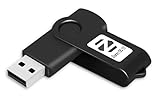
- Zorin OS 17 CORE is an alternative to Windows & macOS designed to make your computer faster, more powerful, secure, and privacy-respecting.
- Revive your old PC. Help the environment. Zorin OS works on computers as old as 15 years. Keep using your PC for longer to save money on upgrades and reduce e-waste to help the environment.
- More Speed---Your computer should work as fast as you do. Zorin OS is lightning-fast and stays that way, never slowing down over time. With apps that launch in an instant, you'll have more time to focus on what matters most – getting things done!
- Reliable---With an Ubuntu and Linux foundation, Zorin OS is built on the same Open Source software that powers government, research, and enterprise systems around the world.
- Dual Boot---You can install Zorin OS alongside Windows or macOS to keep your files and apps. You'll be able to choose which OS to use at each boot-up
Make the final choice with this decision sequence
- Decide between scheduled releases and rolling updates. Pick Fedora if the numbered-release model and periodic version upgrades fit you. Pick Tumbleweed or an Arch-based option if you deliberately want a rolling model and accept its ongoing update rhythm.
- Decide how much initial configuration you want. Choose Fedora’s curated desktop if you want a guided start; choose Tumbleweed if its installer options are a priority; choose EndeavourOS if project defaults with a terminal-centric Arch base appeal; choose Arch if a minimal base and maximum direct configuration are the point.
- Check the relevant ecosystem. Confirm that needed software and instructions exist for the package-management ecosystem of your selected distribution. Do not select based only on package-manager familiarity if a critical application remains unverified.
- Check requirements against your actual machine and workload. Published minimums can rule out an under-resourced machine, but they cannot predict how comfortable your chosen desktop and applications will be.
- Choose the recovery approach you will really use. If installer-provided snapshots matter, understand the implementation and still maintain separate backups. If a planned upgrade cycle is easier for you to manage, favor that predictability over a rolling model just because it sounds newer.
- Verify the current project details. Before committing, check the official image, support terms, and installation instructions for the distribution and release you plan to install. Release pages and procedures can change, so do not rely on a date, image, or tutorial from a previous installation.
In practical terms: start with Fedora Workstation for a curated desktop and a planned release cadence; start with openSUSE Tumbleweed for rolling updates plus the listed installer options; start with EndeavourOS for an Arch-based, project-configured, terminal-centric route; and choose Arch when you want to build and maintain a more minimal system yourself. If you prefer openSUSE without rolling releases, investigate Leap and verify its current support terms.
Frequently Asked Questions
Which should I choose: Fedora, openSUSE Tumbleweed, or EndeavourOS?
Choose Fedora Workstation if a curated desktop and planned, numbered-release upgrades suit you. Choose Tumbleweed for an openSUSE rolling release and installer choices such as Btrfs snapshots. Choose EndeavourOS if you want an Arch-based, terminal-centric system with project-provided defaults. The right option depends on your update habits, setup preferences, hardware, desktop, and software needs.
Is openSUSE Tumbleweed more stable than Arch?
The available facts do not support a universal reliability ranking. Both are rolling releases, so both involve ongoing updates. Tumbleweed’s installer offers options including Btrfs snapshots, while Arch starts from a minimal base. Consider update cadence, setup effort, and the recovery practices you will actually use rather than treating “stable” as a single score.
The Tool Desk
Outbyte Driver Updater FREEFix the driver behind crashes, sound loss and screen glitchesFind Drivers →Outbyte PC Repair FREERepair Windows errors before they cause bigger problemsFix Now →Is EndeavourOS a way to avoid Arch maintenance?
No. EndeavourOS is Arch-based and terminal-centric. Its project-provided defaults and pacman/AUR helper tooling offer a different starting experience from Arch’s minimal base, but do not remove the maintenance characteristics of an Arch-based rolling system.
How much space and memory do I need?
The Tumbleweed download page lists a 2 GHz dual-core processor or better, 2 GB physical RAM plus memory for the workload, and more than 40 GB free disk space. EndeavourOS lists 4 GB RAM, 15 GB free disk space, and a 64-bit dual-core Intel or AMD processor. These are published minimums, not guarantees of comfortable performance.
Do I need to buy a USB drive to install one of these distributions?
A USB flash drive is a common installation-media option, not a distribution purchase requirement. Fedora’s Media Writer workflow calls for at least 4 GB; openSUSE lists a USB port as an installation-media option. Check the current download instructions for the image you intend to install.
Are Btrfs snapshots a replacement for backups?
No. Tumbleweed’s installer lists Btrfs snapshots as an option, but selecting it does not guarantee every failure can be undone. Keep a separate backup of important personal files and learn how snapshots are configured and accessed on the installed system.
Should I choose openSUSE Leap instead of Tumbleweed?
Consider Leap if you want openSUSE’s non-rolling stable-release path rather than Tumbleweed’s rolling model. Verify the current lifecycle and support terms on the openSUSE project site before choosing based on a specific support duration.
The Bottom Line
Bottom line: Fedora Workstation is the clearest fit for a curated desktop and planned version upgrades; Tumbleweed for rolling updates with installer choices; EndeavourOS for an Arch-based, terminal-centric route with defaults; and Arch for a minimal base and maximum direct configuration. Choose by the update rhythm and setup effort you are prepared to maintain, and verify current requirements and installation guidance before changing disks.
Quick Recap
Product prices and availability are accurate as of the date/time indicated and are subject to change. Any price and availability information displayed on Amazon at the time of purchase will apply.




