Add the subject graphic as a source in the scene that produces your program: use text or an image for a fixed course, lesson, or instructor label, and a browser source when the label must update from a web page or data feed. Place it where it does not cover teaching material, then test the live output and saved recording separately. An overlay labels the video; it does not, by itself, keep playback running, restart a stream, or ensure recordings are saved unattended.
Choose an overlay method for the information you need to show
Start by deciding which fields viewers need—such as subject, course, lesson title, or instructor—and how often those fields change. Then identify where your program video is composed: OBS Studio, Vimeo’s browser production studio, Livestream Studio, or another system. The available controls and what persists between broadcasts differ by platform.
As an Amazon Associate I earn from qualifying purchases.
| Overlay method | Best fit | How it changes |
|---|---|---|
| Text source | A short label that an operator can edit, such as a lesson title | Update the text manually or switch to a prepared scene/source |
| Image source | A prepared subject graphic or branded label that rarely changes | Replace the image or select a different prepared graphic |
| Browser source | Information supplied by a web page or data feed | Depends on the page and its refresh behavior; test it in the actual production setup |
A browser source is not automatically a curriculum or timetable integration. No turnkey schedule connection is established here, so confirm that your chosen page or feed exists and behaves as required.
Recommended Free Tools
Add the overlay in OBS Studio
OBS describes scenes as the place to assemble a program layout and sources as the items that make up that layout. Its available source types include text and images, among other inputs. The exact controls can vary by installed version; check the interface in your current OBS build rather than assuming a particular browser-source workflow.
#1 Best Overall

- Flexible TAO Cloud Activation – Unlock premium functions via monthly or lifetime plans (not exceeding $100 total lifetime cost). Choose and pay only for the features you need, including PTZ control, Record and Chroma key, logo overlay .
- Step for ACTIVATION – Upgrade your Mini V3 to the LASTEST FRIMWARE before use. Connect the device to the internet with a Ethernet network cable. On the menu of Mini V3, go to Settings → IP Setting, enable DHCP, and wait for the device to receive an IP address. Then go to Settings → TAO Cloud, follow on‑screen instructions to get a verification code, log in to your TAO Cloud account, and bind the Mini V3. For full details, see the USER MANUAL.
- Compact 4K Video Switcher – Mini V3 features 4× HDMI inputs, 2 x1080P HDMI output, a 2.1" touch screen, and professional T-bar control, making it the ideal video switcher for live streaming and multi-cam productions.
- Dual HDMI Output & UVC Webcam Mode – Stream with dual HDMI outputs for program and preview, or connect via UVC for instant webcam recognition on YouTube, Facebook, and other platforms. Perfect as an HDMI switcher and 4K switcher. NOTE: For stable UVC streaming with OBS on Mac or PC, use the included USB 3.0 cable.
- HD Recording & Creative Effects – Record directly to USB drives up to 2TB, add PIP layouts, chroma key overlays, and 15 transition effects. Recording and selected advanced features are activated via optional TAO Cloud licensing. A versatile video switcher with touch screen 2.1" for entry-level content creation.
- Choose the program scene. In OBS, select the scene used for the education stream. If you have separate scenes for different lessons or subjects, decide whether to add the overlay to each scene or create a scene arrangement that can be reused.
- Add a source. In the selected scene, add a text source for an editable label or an image source for a prepared graphic. Use a browser source only when your workflow has a suitable web page or data feed and you have verified its refresh behavior.
- Enter or select the subject information. Use a clear, specific label—for example, the course and lesson title—and make sure the source matches the lesson that will actually be shown. For infrequent subject changes, prepare clearly named graphics or sources and have an operator select the correct one.
- Position and size it in the program composition. Keep the label out of the way of slides, demonstrations, captions, and other instructional content. Check its appearance at the intended output resolution; there is no established education-specific safe-area measurement to apply as a universal rule.
- Preview representative content. Check legibility over both light and dark scenes and verify the spelling and subject. Confirm that a changing source updates when expected, rather than relying on an untested refresh assumption.
- Test stream and recording outputs. OBS’s overview notes that advanced output mode can configure streaming and recording independently. Verify each output path and destination separately, then confirm that a test recording is saved and playable.
OBS Project’s OBS Studio Overview Guide, published August 25, 2021, explains the scene-and-source model and independent streaming and recording configuration. It does not establish a complete unattended recording or 24/7 recovery design.
Use platform-specific graphics carefully
Vimeo in-browser production studio
Vimeo’s Help Center describes support for lower-third graphics in its in-browser production studio. For recurring virtual events, graphics can be retained without being displayed automatically on each stream; an operator still needs to show or hide them during the scene. Check the event’s current scene state instead of assuming a saved graphic is active at the next broadcast.
Rank #2
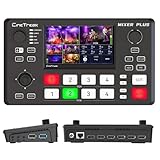
- BUILT-IN 4.5-INCH MULTIVIEW DISPLAY: Monitor all four HDMI inputs, Program, Preview, resolution status, and audio levels directly on the integrated screen. The compact all-in-one design reduces the need for a separate production monitor.
- 4-CHANNEL HDMI SWITCHING: Connect and switch between up to four HDMI video sources with 30 adjustable transition effects, including Mix and DIP. Landscape and portrait production modes support traditional broadcasts and vertical social media content.
- PTZ CONTROL AND PRODUCTION TOOLS: Control up to four compatible PTZ cameras through VISCA over IP, with four position presets available for each camera. Chroma key, luma key, PIP, DSK, and logo overlay tools help create polished live productions.
- USB 3.0 UVC LIVE STREAMING: Send uncompressed HD video to a computer through the USB 3.0 UVC connection for use with OBS and other UVC-compatible streaming or conferencing software. No separate USB capture card is required.
- FLEXIBLE VIDEO AND AUDIO WORKFLOW: Assign the AUX HDMI output to IN1–IN4, PGM, Clean PGM, PVW, Clean PVW, PAT, or Multi View for recording and monitoring. Two 3.5 mm audio inputs and a headphone output support external audio sources and real-time monitoring.
Livestream Studio
Livestream Studio’s help describes three graphics overlay channels and options to add a prebuilt template or create a custom graphic or layer. Confirm how your particular production is configured and which graphic is on air before leaving the system unattended.
The Tool Desk
Outbyte Driver Updater FREEFix the driver behind crashes, sound loss and screen glitchesFind Drivers →Outbyte PC Repair FREERepair Windows errors before they cause bigger problemsFix Now →Third-party OBS playout plugin
The 24/7 Playout Plugin for OBS repository describes playlist/rundown playback, loop mode, autostart/resume, and transparent browser overlays. It identifies a Windows x64 release and recommends OBS Studio 32.x or a compatible version. This is third-party software, not a requirement for adding a subject overlay. Before installing it, verify the current release, compatibility, security, and suitability for your institution’s operating requirements.
Rank #3

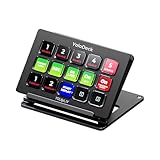
- ONE-TOUCH MACRO & CUSTOM HOTKEYS: Eliminate repetitive tasks instantly. Launch apps, files, system commands, or input text/GIFs with a single press. Create multi-step workflows (e.g., stream setup, editing shortcuts) without coding.
- 10 LCD KEYS & 4 SMART KNOBS: Fully customizable with GIF-supported icons. Features 10 LCD keys, 4 RGB backlit knobs (with touch displays), and an editable TouchBar per scene for unlimited layout and dynamic visual control.
- 500+ PLUGIN ECOSYSTEM: Seamlessly integrate with OBS, Discord, Spotify, and more. Includes utilities like clock, weather, and calendar for all productivity and streaming needs.
- PREMIUM BUILD WITH DESKTOP HUB: Carbon-fiber-like overlay with toggleable key haptics. Built-in 2× USB 3.0 + 1× USB-C non-powered hub for style and practicality.
- ERGONOMIC & PLUG-AND-PLAY: Includes an adjustable stand for optimal viewing. Cross-platform support for Windows 10+ and macOS 11.0+ via USB-C for instant setup.
Plan subject changes and recurring broadcasts
Choose a process that makes the displayed label agree with the lesson actually playing. For occasional changes, an operator can select a prepared image, text source, or scene. If labels must update based on a schedule or data, test the full update path—including delays, missed updates, and what viewers see when the source cannot load. Do not assume that a saved scene or graphic will display automatically after a restart; behavior varies by platform and event workflow.
- Name prepared sources and scenes so an operator can distinguish subjects quickly.
- Include the subject-switch process in rehearsal, not only the initial setup.
- Check the output after a restart or recurring-event launch, especially when the overlay must be manually shown or hidden.
- Define who verifies the current lesson label and the stream/recording status during unattended operation.
Test continuity and recording as separate requirements
A correct overlay only proves that the graphic is in the composed video. It does not prove that the source video continues playing, that a dropped stream restarts, or that a recording is retained. Test the complete workflow that will be used in production, including the recovery procedure and the destination where recordings are expected to appear. The available platform documentation does not establish a general uptime guarantee or end-to-end recording architecture for a 24/7 education deployment.
- Preview a representative lesson with the overlay on both light and dark content.
- Confirm the correct subject label after every planned change.
- Verify the live program output and the saved recording independently.
- Test restart and recovery procedures before relying on unattended operation.
- Check your platform version, operating system, staffing, and institutional security and continuity requirements.
Common problems and fixes
| Symptom | Likely issue | What to check |
|---|---|---|
| The label is missing after an event restart | The graphic was retained but not automatically shown, or the active scene differs | Inspect the current scene and explicitly show the graphic where the platform requires it |
| The label covers slides, captions, or a demonstration | Placement was checked without representative lesson content | Preview the actual program composition and reposition or resize the source |
| The subject name is stale or incorrect | The source was not updated, the wrong prepared graphic was selected, or a dynamic source did not refresh | Verify the active source and test its update timing and fallback behavior |
| The live stream works but no recording is available | Streaming and recording are separate output paths | Check recording configuration, destination, and a test file independently of the stream |
| The stream stops even though the overlay remains configured | An overlay does not provide playout continuity or recovery | Test the stream’s restart and recovery path separately; do not treat the overlay setup as a 24/7 reliability solution |
Or let it run in the cloud
If the recorded education stream is for YouTube, StreamNeo can loop uploaded videos from the cloud after you upload a recording, add your YouTube stream key, and go live. Nothing has to stay on at home; video streams as uploaded at any quality up to 4K 60fps for one flat price per slot, and StreamNeo automatically recovers if YouTube drops the stream. The first day is free with no card. Monthly pricing is $9.99 per month. StreamNeo plays uploaded videos rather than going live from a camera, and it streams to YouTube only. See StreamNeo for details, then start the free day.
Quick Recap
Best Value

- The FEELWORLD L1 PLUS is a mini live switcher that is easy to carry around. It has a 2-inch TFT touch screen with iconized touch screen control, and can also monitor the input signal
- PTZ camera to control the screen focus; LOGO overlay, chroma keying to create a wonderful studio. Five-way joystick, easy to control PTZ rotation, picture-in-picture position, logo overlay size
- USB 2.0 real-time recording; USB 3.0 fast push streaming, simple and easy to use, making live broadcasting more convenient
- FEELWORLD L1 PLUS 14 transitions and 8 PIP modes to bring the live feed to life and T-Bar to easily switch transitions and sources
- Support HDMI embedded audio and external audio mixing, support audio delay adjustment;Remote control via PC/smartphone APP
Product prices and availability are accurate as of the date/time indicated and are subject to change. Any price and availability information displayed on Amazon at the time of purchase will apply.




