Quick wins for a faster PC:
Clear out junk files and repair common Windows errorsFree Scan →Scan for outdated or missing drivers - takes under a minuteDriver Scan →DNA sensors detect disease-related molecules by pairing a biological recognition element with a readout that turns target recognition into a measurable signal. Research explores their use for pathogens, cancer-related biomarkers, and genetic disease, but a promising laboratory sensor is not automatically a clinically validated diagnostic test.
What is a DNA sensor?
A biosensor has two essential parts: a recognition element that interacts with a target, and a transducer that converts that interaction into a signal that can be measured. In a DNA sensor, the recognition element may use DNA sequence pairing or an engineered DNA structure that responds to a chosen target. The signal can be read optically, electrochemically, or through a piezoelectric approach; these are different ways to detect an event, not different names for the same sensor chemistry. A review of DNA-based nanobiosensors and a review of DNA biosensor designs describe these recognition and readout approaches.

As an Amazon Associate I earn from qualifying purchases.
The intended target matters. Some sensors seek a specific nucleic-acid sequence; others use DNA elements to detect a biomarker or another analyte. A device’s label as a “DNA sensor” alone does not tell you what it detects, how it recognizes it, or whether it can be used to make a medical decision.
How does recognition become a signal?
Hybridization sensors
In a hybridization sensor, a DNA probe is designed to recognize a complementary nucleic-acid sequence. When the target sequence binds the probe, the sensor’s chosen transducer registers a change. This approach is relevant to gene-specific detection, including research on pathogen-associated sequences. The review of gene-specific DNA sensors for pathogenic infections discusses nucleic-acid recognition alongside different sensor and transducer approaches.
#1 Best Overall

- TOP-SELLING CONSUMER DNA TEST: From your origins in over 3,600 places around the world to the most connections to living relatives, no other DNA test kit delivers an experience as unique and interactive as AncestryDNA.
- YOUR DATA, YOUR CONTROL: We give you full control over your genetic information. You decide what to share, and with whom.
- A FEW SIMPLE STEPS: Simply activate your DNA kit online and return your saliva sample in the prepaid package to our state-of-the-art lab. Your results will be available online in roughly six weeks.
- ORIGINS AND INHERITANCE: AncestryDNA provides more precise ancestral origins with greater geographic detail. Our innovative SideView technology takes your results even further by showing your origins and matches by parental side. *Some DNA features require an Ancestry subscription.
- BUILD YOUR FAMILY TREE: Combine what you learn from your DNA results with an Ancestry subscription and gain access to millions of family trees and the world's largest collection of online family history records. *Access to record collections varies depending on subscription level.
Functional DNA: aptamers and DNAzymes
Not all DNA sensors depend on matching a target sequence. Functional DNA elements can recognize or respond to targets through their structure or activity. Aptamers are used as target-recognition elements, while DNAzymes are catalytic DNA. In some designs, a DNAzyme can contribute both to recognition and to generating a signal. These mechanisms should not be treated as interchangeable with sequence hybridization. The DNA biosensor review covers these design families, and the review of the 10–23 DNAzyme in biosensing and diagnostics focuses on DNAzyme applications.
Optical, electrochemical, and piezoelectric readouts
A transducer determines how the recognition event is observed. Optical designs measure a light-related signal, electrochemical designs measure an electrical response, and piezoelectric designs use a physical response that can be measured. The readout choice affects the equipment and workflow required. It does not, by itself, establish that one design is more accurate or more suitable for clinical use than another. Reviews of DNA biosensors and pathogen-focused DNA sensors describe multiple approaches.
Rank #2
What diseases or biomarkers can DNA sensors target?
Research reviews describe DNA-based sensor applications for infectious, genetic, and cancer-related disease. For infections, a sensor may be designed to detect a pathogen-associated nucleic-acid sequence. Other work addresses disease-associated molecular biomarkers, including microRNAs and DNA methylation patterns. These are research areas, not proof that every reported design is available as a patient-ready test. See the reviews on disease detection with DNA-based nanobiosensors, pathogenic-infection sensors, and DNA biosensors for molecular biomarkers.
Do these 3 things before closing this tab:
1Repair Windows errors before they cause bigger problems2Fix the driver behind crashes, sound loss and screen glitches3Clear out junk files and repair common Windows errorsA sensor’s target also shapes what its result can mean. Detecting a disease-associated molecule is not necessarily the same as diagnosing a disease: interpretation depends on the intended use and evidence that the test performs appropriately in the relevant population and sample type.
Rank #3

- ABOUT THE TEST: The Genetrace DNA Paternity Test helps families conclusively determine if a man is the true father of a child.
- NO HIDDEN FEES: Kit includes all lab fees and sample return costs to test one (1) child and one (1) potential father.
- FAST RESULTS: Get secure, confidential results within 1-2 business days after testing begins. We'll keep you updated every step of the way.
- EASY SAMPLE COLLECTION: No needles, no blood, no doctors. Collect your samples with our easy-to-use mouth swabs, then return them to the lab with the provided prepaid return envelope. It's quick, easy & painless.
- ACCURATE & RELIABLE: Up to 27 genetic markers analyzed for over 99.999% accuracy. All tests performed TWICE in our AABB, ISO 17025 & CLIA accredited laboratory.
How to evaluate a DNA sensor claim
To compare two designs—or assess a claim that a sensor can detect a particular disease—look beyond the label and the headline sensitivity. Ask what was detected, under what conditions, and whether the reported evidence matches the proposed medical use.
- Target and recognition chemistry: Is the sensor detecting a complementary nucleic-acid sequence, using a functional DNA element to respond to a biomarker, or targeting something else?
- Readout and equipment: Is the signal optical, electrochemical, piezoelectric, or another type? What instruments and steps are needed to produce and interpret it?
- Sample and preparation: Was the sensor tested in a simple buffer, a prepared sample, or a clinically relevant biological matrix? Components of real biological samples can interfere with performance.
- Type of evidence: Analytical sensitivity or specificity measured under study conditions is not the same as clinical diagnostic accuracy or demonstrated usefulness for patient decisions.
- Robustness and workflow: Consider stability, operating conditions, sample handling, reproducibility, and whether sample preparation and detection can work together reliably.
There is no universally best DNA-sensor architecture established by these reviews. A meaningful ranking would require comparable evidence for the same target, sample type, and intended use. A lower detection limit alone does not show that a device will diagnose disease reliably in practice. Reviews of clinical translation and biomarker sensor performance distinguish research performance from clinical use.
Rank #4

- EXPRESS PATERNITY TEST: Get clear answers when timing matters. The Genetrace Express DNA Paternity Test helps determine whether a tested man is the biological father of a child, with fast, private results delivered securely online.
- PRIORITY RUSH TESTING, 7 DAYS A WEEK: Life doesn’t stop on weekends, and neither do we. While most labs pause on Friday, our Express Paternity Test expedites your kit to the front of the line and processes samples every single day. This non-stop service delivers conclusive results in just 1 to 2 days, with real-time updates along the way.
- EASY AT-HOME COLLECTION: Say goodbye to needles and doctor visits. Collect samples from home with simple cheek swabs, a painless process that's safe for infants, children, and adults.
- ALL-INCLUSIVE PRICING: Everything you need is covered upfront with zero hidden fees. Your purchase includes the complete collection kit for the alleged father and child, a prepaid return mailer, priority lab analysis, and secure online results.
- ANSWERS YOU CAN TRUST: We fast-track your kit, but never rush the science. Up to 27 genetic markers are analyzed for over 99.999% accuracy, and every sample is tested TWICE by an AABB, ISO 17025, and CLIA-accredited laboratory for absolute certainty.
What can limit performance outside a controlled assay?
Conditions that affect recognition or signal generation can also affect a sensor’s performance. Biological samples may introduce variation or interference; stability, reproducibility, and practical sample handling matter alongside the sensor’s core chemistry. For point-of-care testing in particular, combining sample preparation, detection, and transduction in a simple, reliable platform remains challenging. A review of point-of-care biosensors for infectious disease discusses sample-related variability and integration barriers.
Some limitations are design-specific. For the 10–23 DNAzyme, a review identifies suboptimal reaction temperature, low magnesium-ion concentration, nuclease-rich matrices, and restricted access to structured RNA targets as obstacles reported for that DNAzyme. These points should not be generalized to every DNA sensor or every DNAzyme design. The 10–23 DNAzyme review discusses those conditions.
Best Value
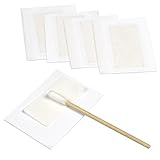
- This semen test kit contains 5 test strips, allowing you to do 5 complete tests with instant results that turn the test strip bright purple when positive, used in the field and in laboratories by forensic scientists
- Get results in seconds when testing any item for the presence of semen
- Used by actual forensic detectives in real crime scene investigations, not a consumer toy
- Contains 5 test strips for multiple testing applications
- No liquid chemicals to mix, ensuring failsafe results with simple application using included cotton swabs
Are DNA sensors used as clinical tests?
Research demonstrates a broad range of possible disease targets, but that does not establish that a particular sensor is authorized, clinically validated, or routinely available as a diagnostic. Clinical translation requires evidence suited to the test’s intended use, as well as stable and reproducible operation in the relevant workflow. Reviews of DNA-based nanobiosensors and point-of-care biosensors describe the gap between promising analytical demonstrations and practical clinical deployment.
For a named device, check its official product documentation and the responsible regulator’s records for the country where it will be used. Confirm the device’s authorized intended use rather than inferring clinical status from a research publication or a general claim that it detects a disease.
Quick Recap
Product prices and availability are accurate as of the date/time indicated and are subject to change. Any price and availability information displayed on Amazon at the time of purchase will apply.
What’s actually slowing this PC down?
Pick the symptom - the matching free tool is one click away.




