Quick wins for a faster PC:
Repair Windows errors before they cause bigger problemsFix Now →Fix the driver behind crashes, sound loss and screen glitchesFind Drivers →Clear out junk files and repair common Windows errorsFree Scan →Chicxulub is about 180 km wide, but it is not Earth’s largest confirmed impact structure: NASA ranks it third, behind Vredefort and Sudbury. The comparison needs a caveat. Chicxulub is buried and comparatively well preserved, while the older Vredefort and Sudbury structures have been heavily eroded or deformed, so their estimated original crater dimensions are not the same as the features visible today.
How the largest impact structures compare
The figures below describe different things: estimates of original crater size, a buried structure’s inferred boundary, or a surviving surface remnant. They are useful for scale, not a precise size contest.
As an Amazon Associate I earn from qualifying purchases.
| Structure | Approximate scale and age | What survives and why it matters |
|---|---|---|
| Chicxulub, Mexico | About 180 km across; around 65 million years old, according to NASA. | Buried beneath the Yucatán region and comparatively well preserved. The impact is associated with the Cretaceous–Paleogene extinction. |
| Vredefort, South Africa | The impact occurred about 2 billion years ago. NASA calls it the largest known impact structure; the present Vredefort Dome is about 90 km across. | The dome is an eroded, uplifted remnant, not the full original crater. See NASA Earth Observatory’s Vredefort account. |
| Sudbury, Canada | About 1.8 billion years old; NASA says the original crater is thought to have been at least 200 km across. | Heavily deformed and eroded. The region is also strongly associated with nickel and copper ore deposits. See NASA Earth Observatory’s Sudbury account. |
| Popigai, Russia | Nearly 100 km across and about 36 million years old, according to NASA Earth Observatory. | Relatively well preserved; NASA describes it as the fourth-largest verified structure, tied with Manicouagan. See NASA Earth Observatory’s Popigai account. |
| Manicouagan, Canada | About 100 km across; roughly 215 million years old. | A multi-ring structure. NASA lists it as the sixth-largest confirmed structure on its impact-crater page. |
Why rankings and diameters differ
An impact structure can be altered by erosion, later deformation, burial, and other geological processes. For Chicxulub, the measured diameter depends on which rim or structural boundary is counted. Vredefort’s roughly 90 km figure refers to its present dome, not the original crater; Sudbury’s estimate of at least 200 km refers to its inferred original crater. Those values cannot be compared as if they were measurements of three intact, circular bowls.
Windows Errors? Fix Them Before They Spread
Repair common Windows errors and clear accumulated junk for a smoother, more stable PC - no reinstall needed.Free scan · no reinstallCrashes, No Sound, or Screen Glitches?
Random freezes, missing sound and display glitches usually trace back to one bad driver. Find and replace yours safely.Free scan · under a minuteRichard Grieve and Ann Therriault’s 2000 comparative review treats Vredefort, Sudbury, and Chicxulub as the largest known terrestrial impact structures, while emphasizing differences in their present structures and uncertainty about original multi-ring morphology. A 2013 review notes that fewer than 200 terrestrial structures preserve the original impact population and identifies Sudbury and Vredefort as the only other structures comparable in size to Chicxulub. NASA has also reported 188 discovered terrestrial craters on its impact-crater page; that is the figure stated on that page, not a current database total.
#1 Best Overall

- THE ULTIMATE STEM PARTY PACK (24 SETS IN 1) – Make your child’s birthday legendary! This jumbo kit contains 24 individually wrapped dino eggs, each with its own chiseling tool and learning card. It acts as a perfect social catalyst for classroom activities, playdates, or distinct party favors that keep a whole group of kids engaged and quiet for hours.
- DISCOVER, LEARN & MATCH – We turn simple digging into a hands-on archaeological science lesson. After digging out the dinosaur, you can use a magnifying glass to observe the details of the dinosaur and combine it with the card to determine the name of the dinosaur. Each card reveals the dinosaur's history and characteristics, fostering a love for paleontology and biology while training fine motor skills and patience.
- INCLUDES EXCLUSIVE "MESS-FREE" MAT – Say goodbye to dusty tables. Unlike other kits, our set includes a specially designed excavation mat (Styled like an old newspaper, the content is a report about dinosaurs) to catch all the debris and plaster dust. Parents love the easy cleanup—simply fold up the mat and toss the dust, keeping your home spotless after the fun.(You can soak the dinosaur eggs in water for 5-10 minutes before digging to make it easier.)
- MYSTERY DINOSAUR EGGS – With dig tools,fell like a real paleontologist excavating up unique toy dinosaurs. Fun to guess which dinosaur you are digging by the dug up body parts, eg. a leg, part of the head etc.The excitement of not knowing which dino is inside the egg adds a thrilling "blind box" element that kids adore.
- PREMIUM QUALITY & SAFETY FIRST – Designed for the US market, our excavation bricks are made from non-toxic, odorless plaster that is safe for children. Packaged in a vibrant, gift-ready display box, it’s the ideal choice for Christmas, Easter Egg Hunts, science projects, and grand rewards. 100% satisfaction guaranteed.
Why Chicxulub is especially significant
Chicxulub’s distinction is not simply its size. A specialist review describes it as the only known terrestrial impact structure directly linked to a mass extinction and accompanied by a global ejecta layer. The 2013 comparison also singles it out for its preservation and unequivocal topographic peak ring. These characteristics make its connection to the end-Cretaceous extinction unusually clear.
That does not make Vredefort or Sudbury scientifically secondary. Their immense age and subsequent alteration expose evidence of deep crustal deformation; Sudbury also has major mineral associations. NASA describes Vredefort as the oldest and largest known impact structure, while its visible dome shows how much of an ancient structure can be reshaped over geological time.
Rank #2

- Dig Up 12 Dino Eggs & Discover 12 Unique Dinosaur Models: Feel like a real paleontologist excavating up unique toy dinosaurs from the dino eggs. Find a T-rex, Dilophosaurus, Ankylosaurus, and much more! Once dug up, find the appropriate card describing the history and characteristics of the dinosaur.
- Kit Includes: 12 Dino Eggs (with a unique toy dinosaur in each), 12 Chisel/Brushes, 12 Instruction Guides, and 12 full-colored beautiful learning cards - one for each dino. It all comes packaged in a sleek display box. Includes everything needed for the young scientist to excavate the dinos with ease and gain a deeper understanding of them.
- 12 Full-color Dinosaur Learning Cards: Includes 12 beautiful cards, each describing the history of a different dinosaur. After digging up a dino, try to match up the appropriate card to your dinosaur and learn more about it.
- A Fun And Educational Gift For All Ages: It's not often that a science project can be fun and engaging, but this kit achieves both! Great set for individual play or as a group activity. It fascinates children as soon as they pull it out of the box and is a perfect STEM project. It fosters a love for science and paleontology in a fun and exciting way.
What “crater” means in this comparison
Scientists and explanatory sources sometimes use “crater,” “basin,” and “impact structure” for features that are not intact surface depressions. Chicxulub lies beneath younger deposits; Vredefort is represented at the surface by an eroded dome; Sudbury is deformed. The 2000 review found multiple-ring attributes in all three, most commonly structural features, and morphological ring features in Chicxulub in the evidence it assessed. It cautioned that the evidence did not establish that any of the three originally had the same morphological characteristics as large lunar multi-ring basins. That is the review’s interpretation, not a universal settled classification.
Free tools Windows power users keep installed
One-click scans. No signup required.
Quick Recap
Best Value

- 【3 Kinds of Different Digging Fun】: 1. Dinosaur head fossil: Child can excavate 5 real dinosaur fossils including 2 tyrannosaurus teeth, 1 tyrannosaurus claw & 2 lava stones! 2. The dinosaur bones inside Brick can assemble a 3D T-rex skeleton. 3. 6 pieces Dino Eggs Dig Kit & discover 6 unique dinosaur designs. Feel like a real paleontologist excavating up unique toy dinosaurs from 3 digging styles.
- 【Fun and Educational】: A science project usually can be engaging, but not so funny. But the science kit achieves both! Great set for individual play or as a group activity. It fascinates children as soon as they pull it out of the box and is a perfect STEM project. It fosters a love for science and paleontology in a fun and exciting way.
- 【Environmentally Safe Materials】: The fossil digging dig kit is composed primarily of gypsum. No Pollution, Odorless, Safe and Non-toxic.
- 【A Gift with An Activity Inside】: The dinosaur toys will be dinosaur party favors for dino dino-themed birthday party. It is a great birthday gift/ dinosaur easter eggs gift/Christmas gift/graduation gifts for boys, girls, kiddos, nephews, nieces, or grandchild or even to your imaginative pupils in the kindergarten as fun educational toys.
- [Plan Your Dig]: Designed for kids ages 5-7, 8-12. Use a covered work surface or tray to catch plaster debris, and follow the included instructions. A hands-on activity for family afternoons and rainy-day play
Rank #4

- JUMBO-SIZED DIG BRICK - At over 6" tall, this giant dinosaur egg dig brick is our largest ever! Using the included dig tools, kids can unearth the dino figurines inside just like a professional paleontologist would do!
- EXCAVATE 12 DINOS - Inside the jumbo egg are 12 dinosaur figurines, including favorites like velociraptor, stegosaurus, brachiosaurus, and more! It's the perfect start to a collection for any kid interested in dinosaurs.
- REPLICA T. REX TOOTH - Also included inside the dig brick is a replica T. Rex tooth! At 3" long and molded from a real T. Rex tooth fossil, it's a high-quality, stunningly accurate specimen kids will love adding to their new dinosaur collection.
- IDENTIFY & LEARN ABOUT EACH DINO - As kids uncover the dinosaur figures inside the egg, the included Learning Guide will help them identify each one. It also includes fascinating facts including their diet, where and when they lived, and more!
- AWARD-WINNING PRODUCTS - Blue Marble, winner of the Toy Association's prestigious Toy of the Year Award, proudly develops products that foster education, imagination, and creativity, with a U.S. support team to ensure a stellar experience!
Rank #3
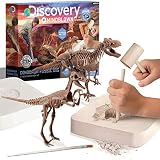
- ✔ EXCAVATE TWO DINOSAUR SKELETONS – Dig into prehistoric fun as you uncover a 15-piece T-Rex and 10-piece Velociraptor skeleton from clay dig bricks. Perfect science activity for budding paleontologists!
- ✔ ASSEMBLE & DISPLAY YOUR DISCOVERIES – Once excavated, fit the fossil pieces together like 3D puzzles to build full dinosaur skeletons. The dino models can be displayed on desktops and shelves in the bedroom or classroom.
- ✔ REAL DIG TOOLS INCLUDED – Comes with everything you need to start your jurassic excavation: 2 clay bricks, a wooden chisel, brush, mallet, and safety goggles for a realistic dig experience.
- ✔ LEARN THROUGH HANDS-ON PLAY – Encourages STEM learning with an engaging focus on paleontology, anatomy, and observation. The dinosaur figurines are great for classrooms, science fairs, or at-home discovery.
- ✔ FOR KIDS AGES 6+ – Easy to follow and fun to complete. A great gift for dinosaur lovers and science explorers. Adult supervision recommended during excavation.
The short comparison
- Largest by NASA’s description: Vredefort, though the present ~90 km dome is an eroded remnant rather than the full original crater.
- Largest stated original-crater estimate among these figures: Sudbury, thought to have been at least 200 km across before deformation and erosion.
- Best-preserved of the three largest: Chicxulub, which remains buried and is unusually well linked to a global extinction event.
- Smaller but relatively well preserved: Popigai, at nearly 100 km across, and Manicouagan, at about 100 km.
Product prices and availability are accurate as of the date/time indicated and are subject to change. Any price and availability information displayed on Amazon at the time of purchase will apply.




