Recommended Free Tools
A 2008 prototype showed that a conductor made from carbon nanotubes could remain electrically conductive while stretched—and could work with printed organic transistors in a rubberlike active matrix. The coated conductor reached 57 siemens per centimeter conductivity and 134% stretchability; the assembled sheet was tested separately at up to 70% stretch in both uniaxial and biaxial directions without mechanical or electrical damage.
What the researchers built
In “A rubberlike stretchable active matrix using elastic conductors,” Tsuyoshi Sekitani and colleagues described a composite conductor and an integrated prototype. The paper appeared in Science 321(5895), pages 1468–1472. PubMed lists 7 August 2008 as the article date and 12 September 2008 as the publication date; the authors were affiliated with the University of Tokyo’s Quantum-Phase Electronics Center, School of Engineering. PubMed’s record provides the abstract and bibliographic details.

As an Amazon Associate I earn from qualifying purchases.
From nanotubes to an elastic conductor
The team used the ionic liquid 1-butyl-3-methylimidazolium bis(trifluoromethanesulfonyl)imide to disperse single-walled carbon nanotubes (SWNTs) in a vinylidene fluoride-hexafluoropropylene copolymer matrix. The paper’s abstract reports that nanotube content could reach 20 weight percent without reducing the copolymer’s mechanical flexibility or softness. The composite film was then coated with dimethyl-siloxane-based rubber.
Quick wins for a faster PC:
Scan for outdated or missing drivers - takes under a minuteDriver Scan →Repair Windows errors before they cause bigger problemsFix Now →Fix the driver behind crashes, sound loss and screen glitchesFind Drivers →The silicone-rubber coating is part of the tested conductor, not a separate result. The abstract reports conductivity of 57 siemens per centimeter and stretchability of 134% for this coated elastic conductor. Those figures describe the material specimen, not the larger transistor-equipped sheet.
#1 Best Overall
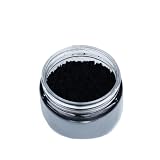
- Product name:High Quality carbon nanotube 5-15nm
- Tube diameter: 5-15 nm
- Tube length: ≤50 μm
- Ash content ≤1 wt%
- Applications:Electron field emitters for cathode ray lighting elements, gas discharge tubes in telecommunications networks, energy conversion, lithium battery anodes, hydrogen storage, nanotube composites (through filling or coating); sensors, reinforcement in composite materials, supercapacitors, etc.
Integrating transistors
The researchers combined the conductor with printed organic transistors to make a rubberlike active matrix with an effective area of 20 by 20 square centimeters. This was a research prototype, not a demonstrated retail display or commercially deployed product.
Why the stretch figures are different
The often-cited 134% and 70% values measure different things in different specimens. The 134% result is the reported stretchability of the coated conductor. The assembled active-matrix sheet, meanwhile, was reported to withstand 70% stretching both uniaxially and biaxially without mechanical or electrical damage. These values should not be treated as competing measurements of the same sample or as interchangeable limits.
Rank #2

- Product name:Wet/Dry-Granulated carbon nanotubes MWCNTs
- Appearance:Black powder,No caking and impurities
- Ash content:≤3.0 wt%;Powder resistivity:600 ~ 900 μΩ ·m;Specific surface area:200-280 ㎡/g
- Tamping density:0.15-0.25 g/cm³;PH:7-9 μm;Moisture Content:≤1%
- Granulated MWCNT Material,Multi-walled carbon nanotubes processed into granulated particles to improve material handling, feeding, weighing, and dosing compared with conventional fine CNT powders
The distinction matters for practical interpretation: a material-level result does not establish that a complete circuit can sustain the same deformation. The integrated-sheet result is the direct evidence for how the transistors and conductors performed together under stretching.
Do these 3 things before closing this tab:
1Fix the driver behind crashes, sound loss and screen glitches2Repair Windows errors before they cause bigger problems3Scan for outdated or missing drivers - takes under a minuteWhat the demonstration could enable—and what it did not prove
The Science abstract presents elastic conductors as a way to mount integrated circuits on curved surfaces or moving parts, including a robot-arm joint. Contemporaneous coverage also described possible flexible displays, wearable electronics, artificial skin for humanoid robots, and interactive surfaces. These are proposed applications, not deployments demonstrated by the study. An illustration of skin stretching over an elbow joint, for example, describes the idea of robot skin rather than a tested robotic system.
Rank #3

- Product name:Graphene composite powder
- Conductivity: 550-1000 S/cm
- Bulk density: 0.09-0.10 g/cm3
- Tapped density: 0.14-0.15 g/cm3
- Appearance: black powder
The result establishes a particular material and prototype demonstration from 2008. The cited sources do not establish commercial availability, subsequent adoption, or the current state of stretchable electronics, so the work should not be read as evidence that these applications became products.
Independent reader supportYour contribution helps us test, update, and keep practical guides available for everyone.Sources and historical context
- PubMed: “A rubberlike stretchable active matrix using elastic conductors” — bibliographic record and indexed abstract for the 2008 paper.
- Chemistry World: “Stretchy electronics” — contemporaneous reporting on the researchers’ proposed applications and attributed comments.
- Nature Nanotechnology — contemporaneous coverage of the study.
The numerical results above come from the indexed abstract of the original paper. Quotations attributed to Takao Someya and John Rogers in contemporaneous reporting should be understood as secondary-source quotations, not independently verified against a recording or the full paper.
Quick Recap
Best Value

- Product name:Graphene composite powder
- Conductivity: 550-1000 S/cm
- Bulk density: 0.09-0.10 g/cm3
- Tapped density: 0.14-0.15 g/cm3
- Appearance: black powder
Rank #4
Product prices and availability are accurate as of the date/time indicated and are subject to change. Any price and availability information displayed on Amazon at the time of purchase will apply.
Free tools Windows power users keep installed
One-click scans. No signup required.




