Free tools Windows power users keep installed
One-click scans. No signup required.
A synthetic ruthenium catalyst reported in 2022 reached a turnover frequency of 140 s−1 during chemically driven water oxidation at pH 1. Its enzyme-like molecular pocket helps position water molecules for oxygen–oxygen bond formation. The result was compared with the oxygen-evolving complex in plants’ photosystem II—but it is not a complete sunlight-powered system for making hydrogen.
What the catalyst is—and what it does
The catalyst, called M1, is a single-ruthenium molecular complex described by Niklas Noll, Ana-Maria Krause, Florian Beuerle and colleagues in a 2022 paper in Nature Catalysis. It is not a biological enzyme. Its ligand—a molecule bound to the ruthenium—forms a cleft that creates a confined environment around the reactive metal center. The ligand is based on 2,2′-bipyridine-6,6′-dicarboxylate, abbreviated bda, and is functionalized to form the pocket. (Noll et al., Nature Catalysis, published 3 October 2022.)
As an Amazon Associate I earn from qualifying purchases.
The design addresses a basic challenge in catalysis: bringing reactants into a useful arrangement. One water molecule coordinates to a Ru(III) center, while another is positioned by a hydrogen-bond network in the cleft. This arrangement supports a water-nucleophilic-attack pathway, in which the second water molecule attacks and an oxygen–oxygen bond forms. The paper reports that single-crystal X-ray analysis observed a seventh water ligand under catalytic conditions.
Recommended Free Tools
What the 140 s−1 result means
At pH 1, M1 achieved a reported turnover frequency of 140 s−1 for chemically driven water oxidation. Turnover frequency describes reaction turnovers per unit time; here, the figure applies to the oxygen-forming oxidation reaction under the paper’s stated conditions. The authors described it as comparable to the oxygen-evolving complex of photosystem II.
#1 Best Overall
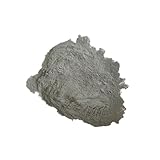
- Material: Metallic ruthenium
- Purity: 99.95%
- Weight: 1g
- Appearance: light gray powder
- Element symbol: Ru
That comparison is about the reported reaction rate, not proof that M1 matches plants in overall energy conversion, sunlight use, or long-term performance. Turnover frequency alone also does not say how many cycles a catalyst sustains. Chemistry World’s 12 October 2022 report quoted Carnegie Mellon renewable-energy chemist Stefan Bernhard asking, “But how many times will the catalyst actually turnover?” The report identified the durability of the section that organizes proton transfer as a consideration for practical use.
Does it make hydrogen from sunlight?
No integrated sunlight-powered hydrogen device is established by this result. Water oxidation removes protons and electrons from water and produces oxygen; it is one half of the chemistry involved in splitting water. Producing hydrogen also requires the complementary reduction reaction, along with components that supply and manage the energy and connect the two reactions.
Rank #2
- Material: Metallic ruthenium
- Purity: 99.95%
- Weight: 3g
- Appearance: light gray powder
- Element symbol: Ru
Julius-Maximilians-Universität Würzburg described combining the oxidation catalyst with light-harvesting dyes and reduction catalysts as a long-term goal, rather than a demonstrated outcome of the M1 study. The finding is therefore a molecular-catalyst advance in water oxidation, not a finished artificial leaf or a ready-to-use hydrogen generator. (JMU Würzburg, “Artificial Enzyme Splits Water,” 3 October 2022.)
Why the pocket matters—and what remains open
The cleft is intended to do more than hold the ruthenium atom in place: it helps organize water molecules and their hydrogen-bond interactions near the reactive center. That is the enzyme-like feature of the design. In a Chemistry World report, Würthner described embedding the catalyst in a macrocycle to use functional groups positioned on the opposite side of the pocket.
Rank #3

- Material: Metallic ruthenium
- Purity: 99.95%
- Weight: 0.1g
- Appearance: light gray powder
- Element symbol: Ru
The reported speed is one important measure, but it does not by itself establish whether the catalyst can keep working over many cycles or whether it can be integrated economically into a complete solar-fuel system. The cited sources do not provide a basis for ranking M1 against other catalysts across different reaction conditions or device designs.
Quick Recap
Best Value
- Material: Metallic ruthenium
- Purity: 99.95%
- Weight: 5g
- Appearance: light gray powder
- Element symbol: Ru
Rank #4
- Material: Metallic ruthenium
- Purity: 99.95%
- Weight: 0.5g
- Appearance: light gray powder
- Element symbol: Ru
Product prices and availability are accurate as of the date/time indicated and are subject to change. Any price and availability information displayed on Amazon at the time of purchase will apply.




