Hall-effect sticks avoid the sliding electrical contact used by conventional potentiometer sticks, so they remove one wear-related cause of drift—but they cannot guarantee that a controller will never register unintended movement. Feel, accuracy, and repairability depend on the complete controller: its mechanics, calibration, firmware, and whether the stick module can be replaced. The sensor label is useful, but it is not enough to choose or repair a controller.
How do potentiometer and Hall-effect sticks sense movement?
Potentiometer sticks use a sliding contact
A potentiometer is a variable resistor. In a typical controller stick, moving the stick shifts a wiper across a resistive track. The changing electrical resistance produces a voltage that the controller interprets as position. Separate sensing axes capture horizontal and vertical movement.
As an Amazon Associate I earn from qualifying purchases.
When the stick is released, the controller expects readings near its calibrated neutral position. Repeated movement can wear the track or affect the contact between the wiper and track. Contamination or a change in contact can also alter the signal. If the neutral reading shifts, the controller may interpret a stationary stick as movement. iFixit describes wear at the sliding contact as a common drift pathway.
What’s actually slowing this PC down?
Pick the symptom - the matching free tool is one click away.
The important point is that the potentiometer does not directly report “the stick is centered” as a mechanical fact. It supplies an electrical reading that the controller interprets. If the reading changes while the physical stick is at rest, or if the mechanism no longer returns consistently to the same position, the input may no longer match the player’s intention.
#1 Best Overall

- Compatible with Windows and Android.
- 1000Hz Polling Rate (for 2.4G and wired connection)
- Hall Effect joysticks and Hall triggers. Wear-resistant metal joystick rings.
- Extra R4/L4 bumpers. Custom button mapping without using software. Turbo function.
- Refined bumpers and D-pad. Light but tactile.
Hall-effect sticks sense a magnetic field without contact
A Hall-effect stick uses a magnet and a magnetic-field-sensitive sensor to infer stick position. There is no wiper rubbing across a resistive track at the sensing element. That removes the particular sliding-contact wear mechanism found in a potentiometer; it does not remove the stick’s moving parts or every possible source of incorrect readings.
Both designs still depend on a physical stick assembly, including parts such as the pivot, gimbal, spring, and mounting. They also rely on sensor electronics and calibration. The difference is how the position signal is sensed, not whether the controller has mechanical parts that can move, wear, or fall out of alignment.
That distinction is useful when evaluating claims such as “no drift.” Hall sensing avoids one specific type of wear at one specific interface. It does not establish that every other component will retain its original position, that every unit is assembled identically, or that the controller will always interpret readings perfectly.
Do these 3 things before closing this tab:
1Repair Windows errors before they cause bigger problems2Fix the driver behind crashes, sound loss and screen glitches3Clear out junk files and repair common Windows errorsDo Hall-effect sticks eliminate stick drift?
No. They avoid contact wear at the sensor interface, which can reduce the chance of drift caused by a worn potentiometer track or wiper. But “contactless” does not mean “incapable of error,” and the available evidence does not establish that every Hall-effect controller will remain drift-free or outlast every potentiometer controller.
In its December 2023-revised application note Joystick and Lever Design With Hall-Effect Sensors (Rev. A), Texas Instruments discusses sources of measurement error in Hall-effect joystick designs. They include mechanical tolerances, sensor offsets, magnet variation, temperature drift, external magnetic fields, nearby materials, supply tolerance, and measurement precision. The note also describes mechanical hysteresis and fulcrum slippage in a prototype. It is an engineering design document, not a consumer-controller lifespan comparison, but it illustrates why a Hall sensor alone cannot guarantee a perfect neutral reading over time.
These factors are not all the same kind of problem. Mechanical tolerances concern how components are positioned relative to one another. Sensor offsets and magnet variation can affect the signal used to infer position. Temperature, supply tolerance, nearby materials, and external magnetic fields can affect measurement conditions. Hysteresis means the measured position can depend partly on the direction of movement, while fulcrum slippage is a mechanical issue described in TI’s prototype. The application note identifies design considerations; it does not show that every retail controller experiences each issue or quantify how often one occurs.
Drift is a symptom: a controller reports movement when the stick is intended to be at rest. The sensor type helps explain one potential cause, but does not identify the cause in a particular controller. Calibration, mechanical behavior, sensor variation, and the controller’s signal processing can all matter. The sources available here do not establish independent comparative rates of drift, time-to-drift, or controller lifespan for the two sensor types.
PC Slower Than It Used to Be?
A free scan shows the junk files, broken settings and background clutter dragging Windows down - then fixes them in one click.Free scan · Windows 10 & 11Crashes, No Sound, or Screen Glitches?
Random freezes, missing sound and display glitches usually trace back to one bad driver. Find and replace yours safely.Free scan · under a minuteRank #2

- Versatile compatibility: supports Xbox Series X/S, Xbox One X/S consoles and PC Win10 and above (including the game platform Steam).
- Precise control: features Hall joysticks and Hall triggers for a comfortable feeling, long service life and improved game accuracy.
- Plug and Play Convenience: Wired USB connection (removable) for easy setup and instant play without the need for additional drivers.
- Customizable experience: Includes 2 custom backbuttons that allow users to eliminate false triggers and improve their gaming experience.
- Impressive gameplay: Provides a pulsating vibration trigger and an asymmetric vibration grip motor for intense tactile feedback.
This is why a universal promise of “drift-free” operation should be treated cautiously. A Hall-effect design can be attractive to someone concerned about potentiometer track wear, but it is not a guarantee that the stick will never need adjustment, repair, or replacement. Conversely, the sensor type alone does not establish that a particular potentiometer controller will develop drift by a specific date.
Do Hall-effect sticks feel different or work more precisely?
There is no universal feel or accuracy difference that can be assigned to the sensor alone. The sensor measures position; the assembled controller determines how the stick moves and how that measurement becomes an in-game input.
Among the factors that shape the experience are gimbal geometry, spring force, friction, stick-cap shape, travel range, firmware, calibration, dead-zone settings, and response curve. Two controllers with the same sensor type can therefore feel different, while two controllers with different sensor types may feel similar. The sources reviewed do not provide a controlled, like-for-like subjective comparison that establishes Hall-effect sticks as smoother, looser, firmer, or more precise.
It helps to separate tactile feel from reported position. The spring and gimbal influence how the stick moves under your thumb and returns toward center. Friction, cap shape, and travel affect how it feels to use. The sensor and signal processing affect how movement is represented to the controller. A particular model might feel better to one player because of its tension or shape, but that preference does not demonstrate that Hall-effect sensing itself caused the difference.
The Tool Desk
Outbyte Driver Updater FREEFix the driver behind crashes, sound loss and screen glitchesFind Drivers →Outbyte PC Repair FREERepair Windows errors before they cause bigger problemsFix Now →Precision claims need the same care. A manufacturer may advertise a small tracking increment, high accuracy, or a zero dead zone; that is a claim about its product, not independent proof of better performance than a potentiometer-equipped controller. For example, Thrustmaster advertises tracking within 0.01 degree for its HEART controller. That figure was not independently verified or compared with a potentiometer controller in the available sources.
What calibration and dead-zone settings change
Calibration tells a controller how to interpret the sensor’s readings, including where it should treat the stick’s neutral position. A dead zone is a region around that position in which small reported movements are ignored. A larger dead zone can mask small unintended inputs, but it also means small deliberate inputs may not register. A dead-zone adjustment changes the input threshold; it does not repair a worn contact, a slipping mechanical part, or a misaligned sensor.
Calibration and dead-zone controls are related but not interchangeable. Calibration sets or corrects how the controller interprets readings; a dead zone changes how much movement is ignored around the interpreted center. A setting might make unwanted input less noticeable, but it cannot restore a worn track or fix a mechanical part that no longer behaves consistently. If drift appears, changing a threshold may be a workaround rather than a repair.
Rank #3

- Tri-mode Connectivity: Wired for Xbox, 2.4G & Wired for PC, and Bluetooth for Android. The G7 Pro supports seamless connectivity across Xbox, PC, and Android. Effortlessly switch between modes using the convenient physical mode switch.
- TMR Sticks: The G7 Pro features GameSir's Mag-Res TMR sticks, combining Hall Effect durability with traditional potentiometer performance. This advanced technology delivers stable polling rates for smooth, drift-free gaming with low power consumption.
- Hall Effect Analog Triggers: The GameSir precision-tuned Hall Effect analog triggers provide unmatched smoothness and linear input for precise control. Featuring clicky Micro Switch trigger stops, gamers can easily switch based on their preferences.
- 1000Hz Polling Rate on PC: Experience ultra-responsive gaming with a 1000Hz polling rate on PC, available through both wired and 2.4G wireless connections. This ensures instantaneous input registration, reducing lag and optimizing your performance for the most competitive gameplay.
- GameSir Nexus App: The G7 Pro is compatible with the upgraded GameSir Nexus app, which brings a significant upgrade over the original. It introduces powerful new features such as gyro settings, stick curve adjustments, and button-to-mouse mapping, giving you deeper customization and more control than ever before.
If a controller offers calibration or dead-zone controls, assess the behavior using its actual settings and instructions rather than assuming its sensor label determines the result. The exact menu path and available options depend on the controller and platform; the sources here do not establish universal steps or shared settings across models.
Free tools Windows power users keep installed
One-click scans. No signup required.
Which design is easier to repair?
Repairability is mainly a question of construction, not sensor type. A replaceable module can be easier to service than a stick assembly soldered to a controller board—even if the replaceable module uses potentiometers and the soldered one uses Hall-effect sensing.
iFixit’s March 14, 2023 discussion of Sony’s DualSense Edge describes its stick modules as modular and replaceable, while noting that they remain potentiometer-based. That example separates two different questions: how a stick senses position, and how a controller is built for service. A modular potentiometer module can be replaced without replacing the whole controller; a Hall-effect assembly is not automatically modular or easy to remove.
As iFixit contributor Shahram Mokhtari put it when discussing the DualSense Edge: “For the first time ever in any console controller, we have hot swappable modular thumbsticks!” That is the contributor’s characterization of the modular feature, not a technical standard or a claim that the sticks use Hall-effect sensors. The practical lesson is that replaceable construction can matter more to serviceability than the sensor technology inside a module.
| Question | Potentiometer stick | Hall-effect stick |
|---|---|---|
| How is position sensed? | A wiper moves over a resistive track to produce a position-dependent voltage. | A magnet and magnetic-field-sensitive element are used to infer position without a sliding contact at the sensing element. |
| Does it have sliding-contact wear at the sensor? | Yes. Wear or changes in contact can alter the reading. | No sliding wiper-track contact at the sensing element; other mechanical and electrical issues remain possible. |
| Can it drift? | Yes; track wear, contamination, or changed contact can contribute to unintended input. | Yes. Calibration, alignment, mechanical tolerances, sensor and magnet variation, temperature, and other factors can affect readings. |
| Does the sensor type determine feel? | No. The assembly and controller tuning also shape feel. | No. The assembly and controller tuning also shape feel. |
| Does the sensor type determine repairability? | No. A module may be replaceable or soldered. | No. A module may be replaceable or soldered; a board-level swap may require soldering and calibration. |
| Independent comparative lifespan or drift-rate figure established in the sources cited here? | Not stated. | Not stated. |
For a module soldered to the board, replacement may involve desoldering and soldering skill, and the controller may require calibration afterward. iFixit’s discussion of Hall-effect joystick swaps notes that soldering skills may be needed for some repairs. Do not treat a replacement module as a drop-in upgrade merely because it uses Hall-effect sensing: compatibility and service requirements are specific to the controller.
Quick wins for a faster PC:
Fix the driver behind crashes, sound loss and screen glitchesFind Drivers →Repair Windows errors before they cause bigger problemsFix Now →Scan for outdated or missing drivers - takes under a minuteDriver Scan →Repairability also depends on whether replacement parts and instructions exist for the exact controller. A theoretically replaceable assembly is not especially useful if a compatible module cannot be found or the repair procedure is unclear. Before choosing a controller partly for its service life, check whether its stick assembly is modular, whether replacements are sold for that model, and what tools or skills the repair requires.
Can you replace a potentiometer stick with a Hall-effect module?
Sometimes a compatible replacement may be available, but “same sensor category” is not enough to establish compatibility. A module must fit and connect to the particular controller, and the controller must be able to use its readings correctly. The available sources do not provide a universal upgrade procedure or a list of compatible controller revisions.
Rank #4

- Compatible with Windows and Android.
- 1000Hz Polling Rate (for 2.4G and wired connection)
- Hall Effect joysticks and Hall triggers. Wear-resistant metal joystick rings.
- Extra R4/L4 bumpers. Custom button mapping without using software. Turbo function.
- Refined bumpers and D-pad. Light but tactile.
Before buying a module or opening a controller, check these points for the exact model and revision:
- Controller revision: Confirm the replacement is specified for the exact controller version, not just a similarly named model.
- Physical fit: Check module dimensions and how it mounts to the controller board.
- Electrical compatibility: Confirm the pinout and electrical interface, rather than assuming a module with the right shape will work.
- Calibration: Find out whether the controller supports calibration after replacement and whether the repair instructions include it.
- Repair method: Establish whether the original module is socketed, modular, or soldered, and whether the procedure requires soldering or desoldering.
- Documentation and support: Use instructions for the exact controller and replacement. Check warranty terms before opening the controller, and confirm the seller’s return policy if compatibility is uncertain.
A mismatched module can fail to fit, connect, or report usable positions. A repair that changes the sensor does not automatically correct a mechanical problem elsewhere in the stick assembly. If the repair instructions, compatibility information, or necessary skill are unclear, replacing the controller or using a qualified repair service may be more practical than attempting a board-level swap.
There is no general step-by-step swap procedure that applies to all controllers. A modular assembly designed for removal is a different repair from a board-mounted assembly that needs desoldering. For a board-level replacement, soldering and desoldering tools may be relevant, but the tools and module must match the controller and the documented procedure. Buying a Hall-effect module first and assuming it will fit can leave you with an incompatible part and a controller that still needs repair.
Independent reader supportYour contribution helps us test, update, and keep practical guides available for everyone.How to compare Hall-effect controllers with potentiometer controllers
Compare specific models rather than assuming every controller with one sensor type is better than every controller with the other. Sensor construction is one factor; the rest of the controller determines whether it suits your platform, hands, games, and repair preferences.
- Confirm platform and model compatibility. Check that the exact controller supports the console or computer and the features you need. Product families can include models with different platform support, so do not infer compatibility from a sensor label.
- Check the construction. Look for whether the stick is a replaceable module or attached to the board. If repairability matters, confirm that replacement modules are actually available for the exact model.
- Evaluate settings and behavior. Check whether the controller supports calibration and dead-zone adjustment, and consider how the response curve and stick travel suit your use. A setting can shape input behavior, but cannot substitute for a mechanical or electrical repair.
- Assess the complete feel. If possible, try the specific controller. Consider spring return, friction, cap shape, and travel rather than attributing a tactile difference to Hall-effect sensing without evidence.
- Read claims in context. Distinguish a manufacturer’s accuracy, longevity, or anti-drift statement from independent comparative testing. GameSir lists Hall-effect controllers and technology claims on its technology page; those statements are manufacturer information, not independent comparative results.
- Check ownership and service terms. Compare warranty coverage, return support, repair instructions, and replacement-part availability. A sensor that avoids one wear mechanism is not, by itself, a complete service plan.
Price belongs in the comparison too, but there is no current, verified price comparison here that establishes a general premium or saving for either sensor type. Compare the actual controller price and what it includes, then weigh that against platform support, warranty, returns, replacement-module availability, and the repair skills a future fix might require. Do not assume a higher price proves better drift resistance, or that an inexpensive controller is less repairable solely because of its sensor.
Thrustmaster lists its HEART controller as Hall-effect and identifies PC and Xbox platforms on its product page. Verify current regional compatibility, warranty, and product availability with the manufacturer before relying on a listing. Its performance language—including the tracking claim noted above—is promotional unless independently tested. GameSir’s product and longevity statements should likewise be read as the manufacturer’s claims, not as proof of a universal lifespan advantage. GameSir lists the Kaleid Classic among its Hall-effect controller products; its lifespan and drift figures are vendor claims rather than independently established comparative results.
These examples are useful for understanding how to read product pages, not for ranking the controllers. Confirm which exact model and region are on offer, whether the listed platform support fits your setup, and what warranty and return terms apply. A product page’s sensor label cannot answer whether the stick tension suits you, whether a replacement module is available, or whether a repair is practical.
Best Value
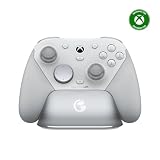
- Tri-mode Connectivity: Wired for Xbox, 2.4G & Wired for PC, and Bluetooth for Android. The G7 Pro supports seamless connectivity across Xbox, PC, and Android. Effortlessly switch between modes using the convenient physical mode switch.
- TMR Sticks: The G7 Pro features GameSir's Mag-Res TMR sticks, combining Hall Effect durability with traditional potentiometer performance. This advanced technology delivers stable polling rates for smooth, drift-free gaming with low power consumption.
- Hall Effect Analog Triggers: The GameSir precision-tuned Hall Effect analog triggers provide unmatched smoothness and linear input for precise control. Featuring clicky Micro Switch trigger stops, gamers can easily switch based on their preferences.
- 1000Hz Polling Rate on PC: Experience ultra-responsive gaming with a 1000Hz polling rate on PC, available through both wired and 2.4G wireless connections. This ensures instantaneous input registration, reducing lag and optimizing your performance for the most competitive gameplay.
- GameSir Nexus App: The G7 Pro is compatible with the upgraded GameSir Nexus app, which brings a significant upgrade over the original. It introduces powerful new features such as gyro settings, stick curve adjustments, and button-to-mouse mapping, giving you deeper customization and more control than ever before.
What the evidence can—and cannot—tell you
The underlying distinction is well-defined: a potentiometer senses position through a sliding wiper and resistive track; a Hall-effect design senses magnetic-field changes without that contact. That supports a specific conclusion about wear at the sensing interface, not a guarantee about the life or performance of the complete controller.
The sources discussed here do not establish a numerical, independent comparison of real-world drift incidence, time-to-drift, or lifespan between the two types. Texas Instruments’ application note explains engineering error sources in Hall-effect joystick design; it is not a consumer-controller lifetime test. Manufacturer figures and product descriptions identify what a company claims about its products, but do not replace controlled, comparable testing.
For a purchase, weigh the individual controller’s compatibility, feel, calibration options, modularity, repair support, warranty, and return terms alongside its sensor type. For a repair, start with the exact model and revision, then verify the module, electrical interface, instructions, and calibration requirements before ordering parts. There is no independently supported universal winner: the more useful choice depends on whether your priority is avoiding sliding-contact wear, a particular stick feel, convenient replacement, or a feature set that works with your platform.
Frequently Asked Questions
Do Hall-effect sticks eliminate stick drift?
No. They remove the sliding wiper-and-track contact that can wear in a potentiometer, but other mechanical, electrical, alignment, and calibration issues can still affect readings. The cited sources do not establish that Hall-effect controllers are guaranteed drift-free.
Do Hall-effect sticks feel different from potentiometer sticks?
Not necessarily. Sensor type alone does not determine tactile feel or precision. Gimbal geometry, spring force, friction, cap shape, travel, firmware, calibration, and dead-zone settings all contribute. The cited sources do not provide a controlled comparison showing one sensor type universally feels better.
Are Hall-effect controllers easier to repair?
Not automatically. Repairability depends on whether the stick module is replaceable or soldered, whether compatible replacement parts and instructions are available, and what tools or skills the repair requires. A modular potentiometer stick can be easier to replace than a soldered Hall-effect module.
Can I replace my controller’s potentiometer stick with a Hall-effect module?
Only if a compatible module exists for the exact controller model and revision. Check its physical fit, mounting, pinout, electrical compatibility, calibration support, and repair method. Some board-level swaps require soldering or desoldering; sensor type alone does not make a module a drop-in replacement.
Does increasing the dead zone fix stick drift?
A larger dead zone can ignore small reported movements around the center, but it may also suppress small intentional inputs. It changes the input threshold rather than repairing a worn contact, misalignment, or mechanical problem.
Which lasts longer, Hall-effect or potentiometer sticks?
The sources cited here do not establish an independent comparative lifespan, drift rate, or time-to-drift for real controllers. Hall-effect sensing avoids wear at the potentiometer’s sliding contact, but that fact alone does not establish the lifespan of the complete stick assembly.
The Bottom Line
Bottom line: Hall-effect sensing avoids the potentiometer’s sliding-contact wear mechanism, but it does not make a controller immune to drift or guarantee better feel, precision, or repairability. Compare the complete controller—its mechanics, calibration, platform support, warranty, and replaceable-part options—and verify exact compatibility before attempting a stick-module swap.
Quick Recap
Product prices and availability are accurate as of the date/time indicated and are subject to change. Any price and availability information displayed on Amazon at the time of purchase will apply.
Recommended Free Tools




