Google’s Street View cars were meant to collect Wi-Fi network identifiers for location services. In 2010, Google acknowledged that their software had also sampled communications sent over some open, non-password-protected networks. Canadian regulators later found that the samples included some complete emails and sensitive information, and concluded that Google had breached Canadian privacy-law principles on collection, purpose and consent.
What was the Google Street View Wi-Fi scandal?
While photographing streets, Google’s Street View vehicles also collected nearby Wi-Fi network information. Google initially described that information as network names, or SSIDs, and router MAC addresses—identifiers used to help determine location. On May 14, 2010, the company corrected its account: the cars’ software had also sampled payload data, meaning information being sent over open Wi-Fi networks.
As an Amazon Associate I earn from qualifying purchases.
Google said it had not used the captured payload in its products. It described the collection as unintended and said the cars did not capture traffic sent over secure, password-protected networks. Those are Google’s statements about its conduct; the Canadian regulator separately examined samples and assessed the company’s privacy practices.
Google’s initial account of the collection was published on April 27, 2010, and later corrected in its May 14 update.
#1 Best Overall

- Nest Wifi Pro is up to 2x faster than Wi-Fi 6, so you get super fast speeds and a reliable connection for your entire home[1]
- Three Wi-Fi routers provide up to 6600 square feet of fast, reliable Wi-Fi[2]; and you can customize your setup to create a mesh Wi-Fi system for the coverage you need
- Nest Wifi Pro uses the latest, most advanced Wi-Fi 6E technology[3], so it isn’t compatible with previous generations of Google Wifi or Nest Wifi
- Nest Wifi Pro automatically adjusts your Wi-Fi network’s performance and activity; it prioritizes video calls and helps websites load quickly
- It has built-in technology to make sure your connection is strong and consistent, even at the edge of your Wi-Fi network’s coverage[2]
How did the cars collect communications?
Network identifiers and payload are different
An SSID is a Wi-Fi network’s broadcast name, and a MAC address identifies a network device. Payload is the content transmitted over a network: for example, parts of messages or other information exchanged by connected devices. Collecting identifiers for a location service is not the same as collecting communications.
Google’s explanation of the software
Google said code written for an experimental Wi-Fi project in 2006 was incorporated into Street View software in 2007. According to the company, the mobile team intended to collect basic network information, not payload data. The Canadian regulator documented the code path and found that it had not received the privacy review Google’s procedures called for. Its report also criticized shortcomings in management controls and privacy awareness.
That distinction matters: Google’s account describes the collection as accidental, while the regulator’s findings address the deficient review and privacy safeguards. Neither should be presented as a substitute for the other.
Do these 3 things before closing this tab:
1Fix the driver behind crashes, sound loss and screen glitches2Clear out junk files and repair common Windows errors3Scan for outdated or missing drivers - takes under a minuteRank #2

- Each nest Wi Fi router provides up to 2200 square feet of fast, reliable Wi Fi coverage for your home. [1]
What data did Google Street View cars collect?
The Office of the Privacy Commissioner of Canada examined samples collected in Canada. It reported finding names, addresses, telephone numbers, email messages and headers, IP addresses, hostnames, cookie contents, instant messages and chat sessions. In some cases, the samples contained login credentials and sensitive medical or legal information.
The commissioner also cautioned that much of the data was fragmentary and could not always be linked to an identifiable person. Some information could be associated with people through matching or aggregation, however, and the examination found instances of complete communications and sensitive information. Google later acknowledged that inspections had found entire emails and URLs as well as passwords.
The Canadian report said that, by most estimates, Google collected approximately 600 gigabytes of data during its two years of Street View car operations. That figure covers the overall collection, not payload data alone; the report cautioned that not all of the data should be considered personal information.
Rank #3

- Google Wifi is a scalable, flexible mesh Wifi system that blankets your home in reliable coverage and keeps buffering at bay; 1 Google Wifi point replaces your router and additional points expand your network to keep the connection fast in every room[1]
- Google Wifi gives you whole home coverage[1]; 1 Pack covers up to 1500 square feet and 3 Pack covers up to 4500 square feet; points work together to create a mesh network for more coverage
- Intelligently works behind the scenes to make sure your Wifi remains fast, so you can stream with speed[1]
- Simple setup in a few steps; use the Google Home app to create your network and get online in minutes[2]
- Parental controls let you manage screen time, restrict certain kinds of adult content, and pause Wifi to specific devices on your mesh network whenever you want
What did Google do after discovering the collection?
Google said it grounded its Street View cars, segregated the data, contacted regulators and decided to stop collecting Wi-Fi information through the vehicles. In a July 2010 update, it said Wi-Fi reception equipment had been removed and described a process to remove related software before cars returned to the road. The company said Street View imagery collection continued.
Google also announced internal changes in October 2010: it appointed Alma Whitten as privacy director, enhanced privacy training and required engineering project leaders to maintain privacy design documents for management and internal audit review. These were announced controls; the announcements alone do not establish their long-term effectiveness.
What did regulators find in Canada and the United States?
Canada: findings under PIPEDA
In its 2011 report, Canada’s Privacy Commissioner found contraventions of principles under the Personal Information Protection and Electronic Documents Act (PIPEDA) relating to limiting collection, identifying purposes and consent. The commissioner recommended improved training, a privacy governance model, qualified privacy review, senior management accountability and deletion of the Canadian data to the extent permitted by law.
Rank #4
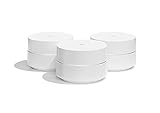
- A new type of connected system for seamless WiFi coverage throughout your home, helping eliminate dead zones and buffering
- Replaces your current router, and works your modem and internet service. It’s compatible with major internet service providers including Comcast, Time Warner, and Verizon Fios
- A single WiFi point covers up to 1,500 square feet, a set of three covers homes up to 4,500 square feet Wifi points work together so you can add more if you need additional coverage
- Network Assist technology keeps your connection fast by always selecting the clearest channel and fastest band for your devices
- A simple app gets you set up quickly and allows you to see what’s connected, prioritize devices, and pause the WiFi on kids devices. Family controls allow you to pause the WiFi on kids devices, like during
The report said safeguards for Canadian data after the discovery were adequate at that stage, while deletion remained pending subject to Canadian and U.S. law. That historical finding does not establish the data’s current status.
United States: an FCC proposal about the investigation
The FCC’s 2012 document proposed a $25,000 forfeiture over Google’s failures to identify employees, produce emails and provide compliant declarations during the investigation. The document discussed, but did not resolve, whether the payload collection itself violated the federal statute at issue. It is therefore inaccurate to describe that proposal as a final FCC finding that Google’s collection was unlawful or as a fine for wiretapping.
Recommended Free Tools
What does the incident show about privacy oversight?
The central lesson is that software reuse can expand collection beyond the purpose for which a system was approved. The Canadian regulator’s findings point to the importance of reviewing what code actually does before deployment, limiting collection to what a service needs, defining purposes clearly and addressing consent. Privacy governance also requires accountable management and staff who understand how technical choices affect people.
Best Value

- A new type of connected system that replaces your router for seamless wifi coverage throughout your home, helping eliminate dead zones and buffering
- Network assist technology keeps your connection fast by always selecting the clearest channel and fastest band for your devices; WiFi throughput: 1200 MPBS.
- A simple app gets you set up quickly and allows you to see what's connected, prioritize devices, and pause the WiFi on kids' devices
- A single WiFi point covers up to 1,500 square feet, a set of three covers homes up to 4,500 square feet WiFi points work together so you can add more if you need additional coverage
- 24/7 phone support from google; 1 year warranty; material: plastic
Google’s announced response and the commissioner’s recommendations describe steps and safeguards, not proof that similar failures cannot happen again. The official records discussed here do not establish a complete current global account of legal outcomes or a verified final deletion status for all collected data.
What Wi-Fi users can take from the incident
Google’s account limited the payload collection to open, non-password-protected networks. An open network can expose communications to collection, but this incident does not show that all Wi-Fi traffic is exposed. Use current security settings on your router and avoid leaving a home network open. These steps reduce exposure; they do not eliminate every privacy risk.
Quick Recap
Sources
- Google Public Policy Blog, May 14, 2010: Wi-Fi data collection update
- Google Public Policy Blog, October 22, 2010: Wi-Fi data collection update
- Office of the Privacy Commissioner of Canada, Report of Findings #2011-001, May 20, 2011
- Google Lat Long, July 8, 2010: Wi-Fi data collection update
- FCC DA 12-592, April 13, 2012
- Google Europe Blog, April 27, 2010: initial account, later corrected
Product prices and availability are accurate as of the date/time indicated and are subject to change. Any price and availability information displayed on Amazon at the time of purchase will apply.
What’s actually slowing this PC down?
Pick the symptom - the matching free tool is one click away.




