Free tools Windows power users keep installed
One-click scans. No signup required.
Gboard is the better first choice for most Android users who want Google search, glide typing, voice typing, translation and writing tools in one keyboard. Samsung Keyboard is the stronger fit for Galaxy owners who prefer Samsung’s layouts and controls, or for compatible Galaxy tablets where S Pen handwriting can be converted directly into text.
Neither keyboard has a documented universal advantage in speed, prediction quality or accuracy. The practical winner depends on your phone or tablet, languages, voice and translation providers, favorite layout and the way you type.
As an Amazon Associate I earn from qualifying purchases.
Gboard and Samsung Keyboard at a glance
| What matters | Gboard | Samsung Keyboard |
|---|---|---|
| Best starting point | Users who move between Android devices or want Google-integrated tools | Galaxy users who want Samsung’s controls, layouts and One UI integration |
| Documented tools | Glide typing, text correction, voice typing, search, translation, handwriting and writing tools; availability varies by device and account | Predictive text, auto replace, spelling and grammar corrections, shortcuts, themes, layouts, modes, handwriting, voice input and translation-provider selection |
| Voice input | Google voice typing through Gboard’s voice feature | Samsung voice input or Google Voice Typing can be selected on supported Galaxy devices |
| Translation | Translation is listed among Gboard help features; the exact languages and interface depend on device and version | Supported Galaxy devices can let you choose Samsung or Google as the translation provider |
| Handwriting | Handwriting is documented as a Gboard feature, but support varies | Handwriting controls are documented; compatible Galaxy tablets can turn S Pen writing into typed text |
| Language count | No directly comparable current count is established here | The Galaxy Store listing claims “over 370 languages”; the listing does not define the count or provide a publication date |
| Speed and accuracy | Not established as universally superior | Not established as universally superior |
Feature names and menu locations can differ by phone model, Android release, One UI version, region, language and app update. Treat the table as a decision guide, then confirm the options shown on your device.
What’s actually slowing this PC down?
Pick the symptom - the matching free tool is one click away.
Choose Gboard if Google’s keyboard tools are your priority
Gboard is designed as a broadly deployable Android keyboard rather than a Galaxy-only experience. Google’s setup documentation exposes separate controls for Glide typing, Text correction and Voice typing. Google’s help index also documents keyboard search, translation, handwriting and writing tools.
#1 Best Overall

- PRECISION MEETS STYLE: Use S Pen on your Galaxy Tab S9 FE with precision and control; Whether jotting notes, sketching or navigating your device, S Pen feels natural, is sensitive to pressure and is the ultimate tool for unleashing your creativity
- EASY TO CARRY, EASIER TO STORE: With IP68-certified water resistance, S Pen is ready for any outdoor adventure*; When not in use, attach it with a snap to the S Pen magnetic holder on the tablet, as it stays ready for your next bright idea
- HOVER. CLICK. GO: Pull up Air Command at the click of a button and personalize your S Pen actions; Simply hover S Pen over the screen and press the button to access features such as Smart Select, Screen Write, Live Messages and more
- COMPATIBILITY: Samsung S9 Galaxy Tab FE S Pen is compatible with the Samsung Galaxy Tab S9 FE tablet (sold separately)
Search from the keyboard
Gboard can search and send results from the keyboard interface where the feature is enabled. This is useful when you need to share a place, fact or other result without leaving the conversation. The exact search button and available results depend on the app, account and current Gboard build.
Glide typing and corrections
Glide typing lets you trace across letters instead of tapping each key. Gboard’s settings separate glide behavior from text-correction controls, so you can adjust them independently. If the keyboard changes names, punctuation or capitalization in ways you dislike, review Text correction rather than disabling the entire keyboard.
Voice typing
Gboard provides a Voice typing setting and microphone control. Voice recognition can vary with language, microphone quality, network conditions, app permissions and the device’s speech services. A feature being listed in Gboard help does not guarantee that every language or handset exposes it.
Translation and writing tools
Google’s help material lists translation, handwriting and writing tools in addition to ordinary typing. Some help pages describe features for devices with Gemini Intelligence; those capabilities should not be assumed on every Android device, region or account. Check the keyboard’s toolbar and settings to see which tools your installation supports.
Choose Samsung Keyboard if Galaxy controls and S Pen input matter
Samsung Keyboard is tightly connected to the input controls exposed by Galaxy phones and tablets. Samsung’s settings documentation covers language selection, predictive text, emoji and sticker suggestions, auto replace, spelling and grammar corrections, text shortcuts, themes, keyboard modes, size, transparency, layout, handwriting, voice input and translation.
More control over the keyboard’s appearance and layout
Samsung provides controls for keyboard mode, size and transparency, as well as layout and theme choices. These are useful if you need a split or floating arrangement on a tablet, want larger keys, or find a particular row or symbol placement more comfortable. Which modes appear depends on the device and orientation.
Predictive text, auto replace and shortcuts
Samsung separates predictive suggestions, automatic replacement, spelling and grammar correction, and user-created text shortcuts. That lets you keep suggestions while turning off only the replacement behavior that causes mistakes. Shortcuts can expand a brief sequence into a frequently used phrase, but they are device-specific settings you should review before moving to another keyboard.
The Tool Desk
Outbyte PC Repair FREEClear out junk files and repair common Windows errorsFree Scan →Outbyte Driver Updater FREEFix the driver behind crashes, sound loss and screen glitchesFind Drivers →Rank #2
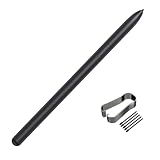
- Compatible For Samsung Galaxy Tab S7 /S7 FE
- Greate Quality : Brand New High Quality Stylus Pen (Without Bluetooth) .Before shippment, we will check every point include :the appearance ,touch , color and function to make sure that you got a High-Quality Satisfied Product
- Take A Note :it also work for Samsung Galaxy Note 20, Note 20 Ultra 5G. The Stylus Pen (Without Bluetooth) Can't use pen to control Bluetooth functions such as taking photos of mobile phone (please pay attention when purchasing)
- Hight Sensitivity:4096 levels of pressure sensitivity.Precise touch and control, support all menu functions.Perfect replacement. The Pen allows you to make quick notes, draw or edit along with all other typical touch-screen commands
- What in the Package : 1 Pen + 5 black tips,1 Tweezer
Voice-provider choice
On supported Galaxy devices, Samsung documents both Samsung voice input and Google Voice Typing as selectable options. This means changing the keyboard does not necessarily change the speech engine. If dictation sounds different after a switch, check the voice-input provider separately from the keyboard’s own settings.
Translation-provider choice
Samsung’s tablet guidance also describes choosing Samsung or Google as the translation provider. A Galaxy user can therefore keep Samsung Keyboard for its layout while using a different translation service, subject to the options shown on that tablet and in the selected languages.
S Pen handwriting on compatible Galaxy tablets
Samsung documents an S Pen to text workflow for compatible Galaxy tablets: write in search fields, address bars and other text areas, and the handwriting is converted into typed text. The same guidance describes pen-based editing actions. Its stated context is compatible tablets running Android 14 with One UI 6.1.1 or later; do not assume every Galaxy tablet or earlier software version supports the workflow.
You need a tablet and a compatible S Pen for this use case. Confirm compatibility for the exact tablet model before buying or replacing a pen. Phone users who never write with a stylus gain no comparable benefit from this tablet-specific feature.
Where the keyboards genuinely differ
Google integration versus One UI integration
Gboard’s documented advantage is access to Google-oriented functions such as keyboard search, Google voice typing and Google translation features. Samsung Keyboard’s documented advantage is the depth of Samsung’s input, layout and appearance controls inside Galaxy settings, plus the S Pen workflow on qualifying tablets.
These are different kinds of integration. A person who moves between brands may value a familiar Gboard setup, while someone who stays within Galaxy hardware may prefer Samsung’s menus and keyboard modes.
Languages and translation
Use the languages you actually type rather than relying on a headline language count. Samsung’s Galaxy Store listing currently claims support for “over 370 languages,” but it does not define whether that figure counts full keyboard layouts, handwriting, speech or other language components, and no publication date is shown in the listing. No directly comparable current Google count is established here, so the figures should not be used to declare a winner.
Rank #3

- Simply pragmatic: the S Pen adheres magnetically to the tablet so that it is always directly on the spot; also enjoy high pressure sensitivity with 4,096 pressure levels and fast response times
- Comfortable and solid: The S Pen writes with a barely noticeable input delay, so you almost feel like you're using a real pen
- Tailor-made accessories: the original Samsung S Pen is perfectly adapted to Samsung tablets and their uses and can thus offer optimal performance
For bilingual messaging, verify three separate things: whether the keyboard has a layout for each language, whether prediction and correction work in those languages, and whether the translation tool supports the direction you need. A keyboard can offer a language for typing without offering identical support for voice, handwriting or translation.
Handwriting needs
Both ecosystems document handwriting-related capabilities, but Samsung’s tablet instructions make the S Pen workflow especially explicit. If you annotate search fields, fill forms or write notes with a compatible Galaxy tablet, test the pen conversion in the apps you use. If you type with your thumbs or an external keyboard, this distinction is unlikely to decide your choice.
Layout and physical comfort
Comfort is highly personal. Key spacing, number-row placement, long-press symbols, toolbar position and one-handed or floating modes can change how many corrections you make. A keyboard that looks efficient in a screenshot may feel slower after several paragraphs. Compare both on your own screen size and in portrait and landscape orientations.
Prediction and correction quality
Current official materials do not establish that either keyboard predicts words more accurately or responds faster for all users. Predictions depend on language, personal vocabulary, app text fields, learned data, settings and software version. Forum anecdotes are not a controlled comparison. Treat prediction quality as something to test with your own messages rather than a universal specification.
How to switch keyboards safely
Android and One UI labels vary, but the process is usually reversible and does not delete your other keyboard.
Do these 3 things before closing this tab:
1Scan for outdated or missing drivers - takes under a minute2Clear out junk files and repair common Windows errors3Fix the driver behind crashes, sound loss and screen glitches- Install or update the keyboard. Use the official app store on your device and complete any requested setup.
- Open keyboard settings. On standard Android, look under Settings > System > Keyboard or On-screen keyboard. On Galaxy phones and tablets, look under Settings > General management > Keyboard list and default. The exact wording can differ by One UI release.
- Enable the keyboard. Turn on the keyboard you want to test. Android may display a warning about text that a keyboard could process; read it before proceeding.
- Set the default keyboard. In the same menu, choose Default keyboard and select Gboard or Samsung Keyboard.
- Configure languages and tools. Open the selected keyboard’s settings, add your writing languages, then review correction, glide, voice, translation and handwriting options.
- Test in several text fields. Use a messaging app, a browser address bar, a search field and a form. Apps can expose different keyboard toolbars and text-field behavior.
- Switch back if needed. Repeat the Default keyboard step and select the previous keyboard. Keep both enabled while comparing, or disable one later if you prefer a simpler chooser.
A practical 15-minute comparison test
Run the same test with both keyboards instead of relying on a general reputation. Do not treat the result as a laboratory benchmark; it is a personal-fit check.
- Use your real languages. Type a short paragraph in each language you regularly use, including names, slang and technical terms.
- Test correction behavior. Deliberately omit a few accents or make common typos. Note whether suggestions fix the error without replacing words you intended to keep.
- Try glide typing. Enter the same sentence by swiping. Record words that require manual correction, not just the total time.
- Dictate a representative message. Include punctuation, proper nouns and numbers. Compare the transcript in the same quiet environment and check which voice provider is active.
- Use translation if you need it. Test the exact language pair and app where you normally translate. On Galaxy tablets, note whether Samsung or Google is selected as the provider.
- Check the layout. Try portrait, landscape, one-handed and floating modes where available. Look for the number row, symbol access and backspace position.
- Try handwriting when relevant. On a compatible Galaxy tablet, write in a search field and an address bar with the S Pen. Check conversion and pen-based editing rather than judging from a notes app alone.
- Choose the one that needs fewer corrections. Your final decision should reflect repeated use across your apps, not a single unusually good or bad sentence.
Common problems and fixes
The keyboard does not appear in the default list
Return to the keyboard list and default menu and make sure the app is enabled. A work profile, parental-control policy or device administrator can restrict keyboards. Restarting after an app or system update can also refresh the list.
Rank #4
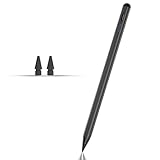
- Compatible with for Samsung Galaxy Tab A11+/A11/A9+/A9 android Stylus Pen
- Precise and sensitive:Galaxy Tab A11+ Stylus Pen has premium 1.5 mm nib, pixel precision and sensitive touch technology provides better accuracy and compatibility without delays and disconnections, allowing you to create with maximum precision at all times.There is magnetic suction
- Convenient and easy: No apps to install. Just double-click the pen cap to let you easily enjoy smooth writing or drawing
- Efficient and durable: The product comes with a USB charging port and a built-in battery that allows you to use it for 10 hours after only 0.5 hour of charging
- packing:which can extend the life of the stylus, 1 stylus, 2 replacement nib, 1 Type C charging cable, and 1 user manua
Voice typing uses the “wrong” service
Check the voice-input setting independently of the keyboard. Samsung devices can expose Samsung voice input and Google Voice Typing as separate choices. Also verify microphone permission, selected language and network access where required.
A feature shown online is missing
Feature availability can depend on Android, One UI, keyboard version, region, account, language and device hardware. Update the keyboard and system, then inspect the current on-device menus. Gboard help pages that mention Gemini Intelligence, for example, do not mean the same writing tools are available to every user.
Recommended Free Tools
Predictions are poor after switching
Give the keyboard time to adapt to your vocabulary, add the correct languages and review text-correction settings. Compare the same apps and text fields on both keyboards. A newly installed keyboard may have less learned vocabulary than one you have used for years.
S Pen writing is not converted to text
Confirm that the tablet, Android release, One UI version and S Pen meet Samsung’s compatibility requirements. The documented workflow applies to compatible tablets in the Android 14 and One UI 6.1.1-or-later context; it is not a guarantee for every Galaxy tablet. Test in a supported text area such as a search field or address bar.
The layout feels cramped or distracting
Adjust size, mode, transparency, theme and toolbar options before abandoning the keyboard. Samsung exposes extensive appearance controls; Gboard’s settings focus more on typing, correction and tool behavior. If neither arrangement works, try one-handed or floating mode where your device provides it.
Which keyboard should you try first?
Pick Gboard first when
- You use several Android brands and want a consistent keyboard experience.
- Keyboard search, Google-oriented voice typing or translation is central to your workflow.
- You want glide typing and correction controls presented in a relatively device-independent app.
- You are willing to verify which writing tools your specific device and account support.
Pick Samsung Keyboard first when
- You use a Galaxy phone or tablet and prefer Samsung’s input menus, themes and layouts.
- You need detailed controls for auto replace, shortcuts, modes, size or transparency.
- You want to choose between Samsung and Google voice or translation providers where your device supports that choice.
- You write with an S Pen on a compatible Galaxy tablet running the required software.
Keep both available when
- You switch between apps with different toolbar behavior.
- One keyboard handles a particular language or correction pattern better for you.
- You are still deciding and want to compare without losing your existing settings immediately.
What cannot be settled from feature lists
A settings page cannot prove that one keyboard is faster, more accurate, more private or better at prediction for every person. Those outcomes vary with hardware, language, learned vocabulary, permissions, network conditions and personal technique. No dated, directly comparable benchmark establishes a universal winner between the current versions of Gboard and Samsung Keyboard.
Quick wins for a faster PC:
Fix the driver behind crashes, sound loss and screen glitchesFind Drivers →Clear out junk files and repair common Windows errorsFree Scan →Use the documented feature differences to narrow your options, then make the final choice from your own test. Recheck the settings after major Android, One UI or keyboard updates because menus and availability can change.
Bottom line for Android users
Start with Gboard if you want Google’s integrated keyboard tools or a keyboard that travels easily across Android devices. Start with Samsung Keyboard if you value Galaxy-specific customization or use S Pen handwriting on a qualifying tablet. If neither description fits, install both, configure your real languages and compare correction, voice input, layout and comfort in the apps you actually use. The right keyboard is the one that reduces friction in your daily typing, not the one with the broadest feature list.
Quick Recap
Product prices and availability are accurate as of the date/time indicated and are subject to change. Any price and availability information displayed on Amazon at the time of purchase will apply.




