Quick wins for a faster PC:
Repair Windows errors before they cause bigger problemsFix Now →Scan for outdated or missing drivers - takes under a minuteDriver Scan →Clear out junk files and repair common Windows errorsFree Scan →Yes—hydrocarbons can form through non-biological chemistry. But showing that this chemistry is possible does not show that it supplies petroleum deposits in commercial quantities. A 2009 laboratory experiment produced ethane, propane, and butane from methane under extreme pressure and temperature; geological research describes abiogenic hydrocarbons as a minor source for global hydrocarbon reservoirs.
What “fossil fuels without the fossils” means
The phrase refers to abiogenic petroleum: hydrocarbons generated by non-biological chemical reactions, rather than from ancient organic matter. It raises two separate questions: can non-biological processes make hydrocarbons, and do those processes explain a major share of commercial petroleum? Evidence supports the first; the sources discussed here do not establish the second.
As an Amazon Associate I earn from qualifying purchases.
“What if fossil fuels were not fossil after all?” is one way to frame the question, but it should not be mistaken for a measured popular search query or a settled description of how most oil forms.
Do these 3 things before closing this tab:
1Clear out junk files and repair common Windows errors2Scan for outdated or missing drivers - takes under a minute3Repair Windows errors before they cause bigger problemsWhat the 2009 experiment demonstrated
In a paper published in Nature Geoscience on 26 July 2009, Anton Kolesnikov, Vladimir G. Kutcherov, and Alexander F. Goncharov used laser-heated diamond-anvil cells and in situ Raman spectroscopy to study methane under conditions associated with the upper mantle. Above 2 GPa and at 1,000–1,500 K, some methane reacted to form ethane, propane, and butane, along with molecular hydrogen and graphite. Ethane subjected to similar conditions produced methane, indicating that the reaction could also run in reverse. Read the paper.
#1 Best Overall
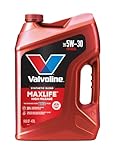
- Formulated for engines with 75,000 miles or more, Valvoline MaxLife High Mileage synthetic blend is formulated with seal conditioners to help prevent oil leaks and reduce oil consumption
- Delivers 20% better wear protection and 15% better sludge defense than industry standards to help prevent engine breakdown
- Extra detergents safeguard against friction, corrosion and deposits to keep high-mileage engines clean
- Advanced friction-fighting additives help maximize performance and improve fuel efficiency
- Provides performance benefits for high mileage, new and re-built engines alike
The figures describe the experiment’s pressure and temperature, not a resource estimate or a measure of natural petroleum production. The study showed that these molecules can form under the tested laboratory conditions. It did not measure how quickly such reactions occur in Earth, how much hydrocarbon they might generate, whether the products migrate into crustal reservoirs, or whether they could accumulate in commercially recoverable quantities.
What natural geological evidence establishes
Abiogenic methane and higher hydrocarbons have been reported in crystalline rocks, including in studies of the Canadian Shield. Sherwood Lollar and colleagues’ 2002 Nature paper used isotope analyses to distinguish abiogenic hydrocarbons from thermogenic ones. It described natural hydrocarbons as “largely formed by the thermal decomposition of organic matter (thermogenesis) or by microbial processes (bacteriogenesis)” and abiogenic alkane formation as a minor source for global hydrocarbon reservoirs. Read the paper.
Rank #2

- 6X better wear protection on critical engine parts than industry standards**
- 1.3X better sludge protection than industry standards*
- 3X Stronger against viscosity breakdown than leading full synthetic^
- Protection for 10,000 miles between oil changes
- Meets or exceeds the following specifications: API SP/SN PLUS/SN | ILSAC GF-6 | GM dexos1 Gen 3 | Meets Ford WSS-M2C947-B1 | Meets Ford WSS-M2C962-A1 |
Those observations support the existence of abiogenic hydrocarbons; they do not establish that most oil fields are filled by hydrocarbons rising from the mantle. The 2002 paper’s qualitative description of a “minor” source is not a global percentage, and the cited sources do not quantify the abiogenic share of commercial petroleum.
Free tools Windows power users keep installed
One-click scans. No signup required.
How the competing explanations differ
| Formation pathway | Mechanism | Evidence described in the cited sources |
|---|---|---|
| Thermogenic | Thermal decomposition of organic matter | Isotope and source-rock evidence; described as a principal way natural hydrocarbons form |
| Microbial | Hydrocarbon formation through microbial processes | Described as another major way natural hydrocarbons form |
| Abiogenic | Non-biological reactions involving inorganic precursors | Laboratory synthesis under high pressure and temperature, plus reported natural occurrences |
These pathways are supported by different kinds of evidence and at different scales. Laboratory synthesis establishes that a reaction can happen under specified conditions; finding hydrocarbons in a geological setting establishes natural occurrence. Neither alone demonstrates that a pathway supplies commercial deposits. That broader claim would also require evidence about generation, migration, accumulation, and recoverability.
Rank #3

- 3X Stronger than the leading full synthetic*
- 10X Better high stress performance**
- 20,000 miles between oil changes***
- Viscosity breakdown as measured in Kurt Orbahn test on 5W-30 grade
- As measured in Seq IX test under high load/torque conditions vs. API SQ test limits
What the evidence does—and does not—say about commercial oil
The 2009 paper’s authors noted that “There is widespread evidence that petroleum originates from biological processes.” A contemporary Scientific American report quoted petroleum geologist Wayne Ahr saying, “I don’t think anybody in the research field doubts that methane could be formed this way,” and geochemist Barry Katz saying, “I disagree with the idea of commercial quantities.” Those were reported comments in 2009, not a current survey of professional opinion. Read the report.
The experiment does not support claims that oil is continually replenished or that major petroleum deposits are abiogenic. The cited sources also do not supply a current global percentage for abiogenic petroleum. The evidence-based conclusion is narrower: abiogenic hydrocarbons can form and occur naturally, while the cited geological account describes them as a minor source and does not establish a major commercial contribution.
Quick Recap
Best Value

- Designed for vehicles with 75,000 miles or more, Valvoline MaxLife Full Synthetic High Mileage Motor Oil helps maximize engine life and performance for the many miles still ahead
- Formulated with seal conditioners to help prevent oil leaks, reduce oil consumption, and improve fuel economy
- Delivers 50% stronger wear protection than industry standards for superior defense against friction and wear
- Provides 20% stronger sludge defense than industry standards to protect against harmful buildup and deposits
- Offers 2.5X better heat protection than industry standards to safeguard engines in extreme conditions
Rank #4

- 3X Stronger than the leading full synthetic*
- 10X Better high stress performance**
- 20,000 miles between oil changes***
- Viscosity breakdown as measured in Kurt Orbahn test on 5W-30 grade
- As measured in Seq IX test under high load/torque conditions vs. API SQ test limits
Product prices and availability are accurate as of the date/time indicated and are subject to change. Any price and availability information displayed on Amazon at the time of purchase will apply.
Recommended Free Tools




