Quick wins for a faster PC:
Fix the driver behind crashes, sound loss and screen glitchesFind Drivers →Clear out junk files and repair common Windows errorsFree Scan →Yes—an unreliable mushroom guide can contribute to a dangerous mistake, and AI-generated text may describe a species confidently while getting important details wrong. But the 2023 reporting that prompted this warning did not establish that any particular AI-generated book caused a poisoning. The practical rule is clearer: use books and apps as references, not as permission to eat a wild mushroom; get a positive identification from a qualified local expert first.
Why experts raised concerns about AI mushroom books
On August 31, 2023, Futurism reported that apparently AI-generated mushroom-foraging books were appearing on Amazon. The report described formulaic writing, questionable or apparently fabricated author identities, and books that generally did not disclose AI use. The New York Mycological Society urged readers to buy books by known authors and foragers, warning that the choice could be “life or death.”


As an Amazon Associate I earn from qualifying purchases.
Sigrid Jakob, the society’s president, told 404 Media that North America has hundreds of poisonous fungi, including several deadly species. A poor description can lead a reader to mistake a poisonous mushroom for an edible one. That risk is unusually serious because many mushrooms have look-alikes, and a misleading detail in a guide can undermine an identification.
Are AI-generated mushroom guides dangerous?
They can be unsafe if readers rely on inaccurate species descriptions to decide what to eat. Generative AI can produce plausible-sounding text without establishing that its claims are correct; in mushroom identification, a wrong description of a key feature can have severe consequences.
#1 Best Overall
The evidence needs a careful boundary: the 2023 reporting documented apparently AI-generated books and expert concerns, but did not show that a specific book caused a poisoning. Separate poisoning data demonstrate that wild-mushroom mistakes are a real hazard, not that AI books caused those cases.
- The CDC reported approximately 7,500 poisonous-mushroom ingestions annually in U.S. data analyzed in 2021, drawing on poison-control and health-care records. It advises that wild mushrooms should not be eaten unless identified by an expert.
- In a Northern California outbreak from November 2025 through March 2026, the CDC reported 39 amatoxin poisoning cases, three liver transplants, and four deaths. The agency noted that toxic mushrooms can resemble edible species and urged public education and expert identification.
How to assess a mushroom field guide
No single book can guarantee that a mushroom is safe to eat. A guide is more useful as a learning reference when its authorship and scope are transparent and its descriptions help readers recognize both a species and its dangerous look-alikes.
- Check who wrote it. Look for a verifiable author with relevant mycological experience or an affiliation with a credible local mycological organization. Treat uncheckable credentials or identities as a warning sign.
- Match the region. Prefer a guide explicitly covering the place where you forage. A book focused on another region may omit local species or look-alikes.
- Look for diagnostic detail. The guide should describe multiple identifying features and explain how similar species differ, rather than relying on a short generic description.
- Evaluate the images and sourcing. High-quality photographs and transparent references can help readers check details. A single attractive image is not enough to confirm identity.
- Read the safety language. A responsible guide warns about toxic look-alikes and calls for expert confirmation. Do not use a guide that encourages tasting an unknown mushroom or treats a book-based match as proof of edibility.
- Check the edition date. A recent edition may reflect updated information, but recency alone does not establish accuracy or expertise.
These checks can help you reject a weak reference; passing them still does not make the guide an authority on whether a particular specimen is edible. No specific book can be named as the safest choice on the available evidence.
The Tool Desk
Outbyte PC Repair FREEClear out junk files and repair common Windows errorsFree Scan →Outbyte Driver Updater FREEFix the driver behind crashes, sound loss and screen glitchesFind Drivers →Can a book or app tell you whether a wild mushroom is edible?
Not safely on its own. A field guide or identification app can help you learn terminology, narrow down possibilities, and prepare questions for an expert. It cannot reliably replace a positive identification by a qualified person familiar with local fungi. Do not eat a mushroom because a book, app, online post, or image match says it looks edible.
Independent reader supportYour contribution helps us test, update, and keep practical guides available for everyone.What to do if someone may have eaten a wild mushroom
Do not wait for symptoms or try to make the mushroom safe by cooking it. Poison Control says cooking does not make a poisonous mushroom safe, and symptoms can be delayed for many hours. Contact Poison Control or seek medical advice promptly if someone has eaten a wild mushroom; when severe symptoms occur, seek emergency medical care. Keep any remaining mushroom or a clear photograph available to help with identification, but do not delay getting help.
Quick Recap
Best Value
Rank #4
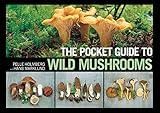
- A Must Buy Item.
- Built To Last.
- Great Item To Give as A Gift.
Product prices and availability are accurate as of the date/time indicated and are subject to change. Any price and availability information displayed on Amazon at the time of purchase will apply.




