Quick wins for a faster PC:
Repair Windows errors before they cause bigger problemsFix Now →Fix the driver behind crashes, sound loss and screen glitchesFind Drivers →Edifier’s R1280 powered bookshelf speakers are popular because they offer a simple, affordable upgrade over built-in TV speakers, basic computer speakers, and entry-level turntable setups. The challenge is that the R1280T, R1280Ts, R1280DB, and R1280DBs look similar at first glance, but their connectivity and upgrade options can make one model much better suited to your setup than the others.
The biggest differences come down to inputs and expansion. The R1280T keeps things simple with analog RCA connections, the R1280Ts adds a subwoofer output, the R1280DB adds digital inputs and Bluetooth, and the R1280DBs combines digital connectivity, Bluetooth, and subwoofer support. Those changes matter if you’re connecting a turntable, desktop PC, TV, streamer, or powered subwoofer.
As an Amazon Associate I earn from qualifying purchases.
This comparison breaks down how the four models differ in features, sound, controls, pricing, and real-world use, so you can quickly choose the right Edifier R1280 speaker without paying for connections you do not need.
Edifier R1280 Series at a Glance
The Edifier R1280 family is built around the same core idea: affordable powered bookshelf speakers that do not need a separate amplifier. Each pair includes amplification inside the speaker cabinet, making the series popular for desks, small living rooms, turntables with built-in phono preamps, TVs, and casual music systems. The four models share a similar size, classic wood-style cabinet design, 4-inch mid/bass driver, and 13mm tweeter, but they differ in connectivity and subwoofer support.
#1 Best Overall

- BLUETOOTH WIRELESS - Popular classic bookshelf speakers now can be enjoyed without the hassle of wires. Simply connection to an iPhone, Android, Tablet, PC or Mac.
- STUDIO SOUND QUALITY - Naturally fine tuned sound reproduction from 4 inch bass and 13mm silk dome tweeter.
- OPTICAL AND COAXIAL INPUTS - Digital inputs to enable lossless connection to most TV and computers.
- REMOTE CONTROL - Adjust the volume and toggle inputs at your fingertips. Bass and treble control located on the side of main speaker.
- SIDE PANEL CONTROLS - Use the side panel knobs to adjust the EQ to your liking. The controls are located on the active/powered speaker.
The easiest way to understand the lineup is to split it into two groups. The R1280T and R1280Ts are analog-focused models with RCA inputs, while the R1280DB and R1280DBs add digital inputs and Bluetooth. The models ending in “s” add a dedicated subwoofer output, which is the main upgrade if you want deeper bass from an external powered subwoofer.
| Model | Best For | Main Inputs | Bluetooth | Subwoofer Out |
|---|---|---|---|---|
| Edifier R1280T | Basic desktop audio, turntables with phono preamp, budget music listening | Dual RCA | No | No |
| Edifier R1280Ts | Analog setups that may add a powered subwoofer later | Dual RCA | No | Yes |
| Edifier R1280DB | TVs, computers, Bluetooth streaming, mixed digital and analog use | RCA, optical, coaxial | Yes | No |
| Edifier R1280DBs | TV or desktop setups with Bluetooth and subwoofer expansion | RCA, optical, coaxial | Yes | Yes |
For many buyers, the choice comes down to the source device. If you are connecting a turntable, CD player, DAC, or computer through an analog output, the R1280T already covers the basics. If your TV has optical audio out, the R1280DB or R1280DBs is much more convenient because you can connect directly without buying a separate digital-to-analog converter. If you want wireless playback from a phone, tablet, or laptop, only the DB models include Bluetooth.
Subwoofer support is the other major divider. The R1280T and R1280DB can still sound full for their size, especially at a desk or in a small room, but they do not include a dedicated sub out. The R1280Ts and R1280DBs are better choices if you want to add a powered subwoofer for movies, gaming, electronic music, hip-hop, or larger-room listening. In short, the R1280T is the simple budget pick, the R1280Ts is the analog pick with bass expansion, the R1280DB is the flexible digital/Bluetooth pick, and the R1280DBs is the most complete version in the lineup.
Key Specs and Feature Differences
The four Edifier R1280 models share the same basic formula: compact powered bookshelf speakers with a built-in amplifier, a 4-inch mid-bass driver, a 13mm silk-dome tweeter, and a classic wood-grain cabinet style. They are all designed for nearfield listening, small rooms, desks, turntables, TVs, and casual music setups. The main differences are not size or power, but connectivity and subwoofer support.
| Model | Analog Inputs | Digital Inputs | Bluetooth | Subwoofer Output | Best Fit |
|---|---|---|---|---|---|
| Edifier R1280T | Dual RCA | No | No | No | Turntables, PCs, simple wired setups |
| Edifier R1280Ts | Dual RCA | No | No | Yes | Analog setups with a powered subwoofer |
| Edifier R1280DB | RCA | Optical, coaxial | Yes | No | TVs, Bluetooth music, mixed digital sources |
| Edifier R1280DBs | RCA | Optical, coaxial | Yes | Yes | TV or desktop systems with subwoofer expansion |
Power output is broadly similar across the range, with Edifier typically rating these speakers at 42 watts RMS total. That is enough for a desk, bedroom, kitchen, small office, or modest TV area, but these are not party speakers or replacements for a full home theater system. The sound character is also closely related across the lineup: warm, easy to listen to, and more full-bodied than most small computer speakers. The “s” models do not add more amplifier power to the main speakers; their major advantage is the dedicated subwoofer output.
The R1280T is the simplest and often the most affordable option. It gives you two RCA input pairs, so you can connect two analog sources at once, such as a turntable with a built-in phono preamp and a desktop PC. The R1280Ts keeps that same analog-first approach but adds a sub out, making it the better choice if you want deeper bass later without replacing the speakers. For vinyl listeners and desktop users who do not need Bluetooth or TV-friendly digital inputs, these two are usually the most direct options.
The R1280DB and R1280DBs are the more flexible models for modern living-room and multi-device setups. Both add optical and coaxial digital inputs, which are useful for TVs, streamers, CD players, and game consoles with compatible audio outputs. They also include Bluetooth, so you can play music from a phone, tablet, or laptop without running a cable. The R1280DBs is the most feature-complete version because it combines digital inputs, Bluetooth, and a subwoofer output in one package.
Feature hierarchy
- Most basic: R1280T, with wired analog RCA only.
- Best analog model with upgrade room: R1280Ts, thanks to its subwoofer output.
- Best for wireless and TV use: R1280DB, due to Bluetooth, optical, and coaxial inputs.
- Most versatile overall: R1280DBs, combining Bluetooth, digital inputs, and sub out.
Connectivity: RCA, Optical, Coaxial, Bluetooth, and Sub Out
Connectivity is where the Edifier R1280 models separate most clearly. The R1280T and R1280Ts are the simpler analog-focused options, while the R1280DB and R1280DBs add digital inputs and Bluetooth for TVs, streamers, computers, and phones. If your setup is built around a turntable, desktop DAC, CD player, or basic line-level source, the analog models may be enough. If you want one speaker pair to handle a TV, laptop, phone, and wired source without extra adapters, the DB models are more flexible.
Rank #2
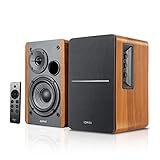
- BLUETOOTH 5.0 - Pair the speaker with your smartphone, tablet, Mac, or laptop to play music wirelessly, no need to deal with messy wires.
- SUB OUT AND OPT/COAX INPUTS - Subwoofer output with automatic detection and built-in crossover. Optical and coaxial inputs to ensure a lossless connection to TVs and computers.
- DISTORTION-FREE SOUND - Fill your room with beautiful sound with its 42W continuous undistorted power, 13mm silk dome tweeter unit, and 4-inch sub-woofer unit. Enhance your listening experience with Soundfield Spatializer.
- UPDATED REMOTE CONTROL - Wireless remote for easy control of volume, mute/unmute, switch to OPT/COAX mode, line-in, and Bluetooth modes. Bass, treble, and volume control located on the side panel.
- SIDE PANEL CONTROLS - Use the side panel knobs to adjust the EQ to your liking. The controls are located on the active/powered speaker.
| Model | RCA inputs | Optical | Coaxial | Bluetooth | Sub out |
|---|---|---|---|---|---|
| Edifier R1280T | Yes, dual RCA line inputs | No | No | No | No |
| Edifier R1280Ts | Yes, dual RCA line inputs | No | No | No | Yes |
| Edifier R1280DB | Yes, RCA line input | Yes | Yes | Yes | No |
| Edifier R1280DBs | Yes, RCA line input | Yes | Yes | Yes | Yes |
The R1280T is best understood as a two-input analog speaker. It usually includes two RCA-style line inputs, so you can leave two wired sources connected, such as a turntable with a built-in phono preamp and a desktop PC, or a CD player and a small DAC. It does not have optical, coaxial, Bluetooth, or a subwoofer output. That makes it clean and inexpensive, but less convenient for modern TV and wireless setups.
The R1280Ts keeps the same analog-first layout but adds a sub out. This is the main reason to choose it over the R1280T. The subwoofer output lets you connect a powered subwoofer for deeper bass, which is useful for games, movies, and fuller music playback in a small room. Like the R1280T, it still relies on wired analog inputs, so a TV with only optical audio or a phone without a headphone jack may require an adapter or DAC.
The R1280DB is the better fit when digital convenience matters. Optical and coaxial inputs allow direct connection to many TVs, media streamers, desktop sound cards, and CD transports, avoiding the need for a separate digital-to-analog converter. Bluetooth also makes casual listening easier because you can stream from a phone, tablet, or laptop without plugging in a cable. The trade-off is that the R1280DB does not include a subwoofer output, so bass expansion is less straightforward.
What’s actually slowing this PC down?
Pick the symptom - the matching free tool is one click away.
The R1280DBs is the most complete model in the group because it combines the R1280DB’s optical, coaxial, RCA, and Bluetooth connectivity with a dedicated sub out. For a TV desk setup, compact living room system, or multi-source music station, it is the easiest model to grow with. Connect a TV over optical, keep a turntable or DAC on RCA, stream over Bluetooth, and add a powered subwoofer later if you want more low-end impact. For buyers who are unsure what they will connect next year, the R1280DBs offers the most breathing room.
Sound Quality and Performance Comparison
Across the Edifier R1280T, R1280Ts, R1280DB, and R1280DBs, the core sound signature is more similar than different: warm, easygoing, and fuller than most compact desktop speakers. Each model uses a 4-inch mid-bass driver and 13mm silk-dome tweeter, so the basic character remains consistent. These are not analytical studio monitors; they are tuned for enjoyable everyday listening, with a slightly rounded treble, solid vocal presence, and enough bass weight for near-field music, YouTube, podcasts, and casual TV use.
The R1280T and R1280Ts are the most straightforward-sounding versions because they rely on analog RCA inputs. With a clean source, they sound smooth and balanced, especially at a desk or in a small bedroom. The R1280T has a pleasing midrange that works well for acoustic music, vocals, jazz, and older rock recordings. The R1280Ts sounds very similar on its own, but its subwoofer output changes the performance ceiling: once paired with a powered sub, the main speakers can hand off the lowest frequencies, giving music and movies more depth and impact than the R1280T can deliver alone.
The R1280DB and R1280DBs add digital inputs and Bluetooth, which can slightly change the listening experience depending on the source. Using optical or coaxial from a TV, DAC, or streamer often produces a cleaner signal than feeding the speakers from a noisy headphone jack. The R1280DB has the same general warm tone, but it is more convenient for mixed use because it can handle TV audio, Bluetooth music, and wired sources without extra adapters. The R1280DBs again has the advantage when bass expansion matters, since the sub out makes it better suited to small living rooms, gaming setups, and movie watching.
Outdated Drivers Are Slowing You Down
One free scan finds every outdated or missing driver and matches the right update for your exact hardware.Free scan · exact hardware matchPC Slower Than It Used to Be?
A free scan shows the junk files, broken settings and background clutter dragging Windows down - then fixes them in one click.Free scan · Windows 10 & 11How They Differ in Real Listening
- R1280T: Best if you want the classic R1280 sound at the lowest price. Bass is respectable for the size, but it will not feel cinematic or room-shaking.
- R1280Ts: Sounds almost the same as the R1280T by itself, but becomes more flexible with a powered subwoofer. This is the better analog-only pick for fuller bass.
- R1280DB: Similar tonal balance to the R1280T, with the practical benefit of digital inputs and Bluetooth. It is often the better performer with TVs and modern streamers because the connection path is cleaner.
- R1280DBs: The most complete model for sound expansion. It keeps the digital and Bluetooth convenience of the R1280DB while adding subwoofer support for stronger low-end performance.
None of these speakers is ideal for very large rooms or high-volume party playback. They perform best at close to moderate listening distances, where their warm tuning and compact size make sense. At a desktop, they can sound impressively full without needing much volume. In a living room, they are better for casual TV, background music, and apartment-friendly listening than for serious home theater dynamics.
Rank #3
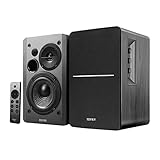
- BLUETOOTH 5.0 - Pair the speaker with your smartphone, tablet, or laptop to play music wirelessly, no need to deal with messy wires.
- SUB OUT AND OPT/COAX INPUTS - Subwoofer output with built-in auto crossover detection. Optical and coaxial inputs to ensure a lossless connection to TVs and computers.
- DISTORTION-FREE SOUND - Fill your room with beautiful sound with its 42W continuous undistorted power, 13mm silk dome tweeter unit, and 4-inch sub-woofer unit. Enhance your listening experience with Soundfield Spatializer.
- UPDATED REMOTE CONTROL - Wireless remote for easy control of volume, mute/unmute, switch to OPT/COAX mode, line-in, and Bluetooth modes. Bass, treble, and volume control located on the side panel.
- SIDE PANEL CONTROLS - Use the side panel knobs to adjust the EQ to your liking. The controls are located on the active/powered speaker.
If sound quality is the only priority and you do not need digital inputs or a subwoofer, the R1280T remains a strong value. If you want deeper bass, the R1280Ts and R1280DBs are the smarter long-term choices. If you want the cleanest and most flexible setup for a TV or Bluetooth playback, the R1280DB and R1280DBs have the edge, with the DBs standing out as the best performer once a subwoofer is added.
Design, Controls, and Remote Differences
All four Edifier R1280 models share the same basic powered bookshelf speaker format: one active speaker with the amplifier and inputs built in, plus one passive speaker connected by speaker wire. The cabinet shape is nearly identical across the R1280T, R1280Ts, R1280DB, and R1280DBs, so they take up about the same amount of space on a desk, TV stand, shelf, or turntable cabinet. Visually, they keep Edifier’s familiar retro-inspired look with wood-effect side panels, gray front grilles, and a compact rectangular profile that blends more like furniture than studio gear.
The biggest day-to-day difference is not the cabinet design, but how much control you get from the speaker and the remote. Each model includes physical knobs on the side of the active speaker for quick adjustment. The R1280T and R1280Ts have volume, bass, and treble controls, making them easy to tune by hand when used on a desktop or near a turntable. The digital-input models, R1280DB and R1280DBs, also provide side controls, but they add input selection because they can switch between analog, optical, coaxial, and Bluetooth sources.
Free tools Windows power users keep installed
One-click scans. No signup required.
Physical controls
- R1280T: side-mounted volume, bass, and treble controls for simple analog setups.
- R1280Ts: the same basic side controls as the R1280T, with added subwoofer output on the rear panel.
- R1280DB: side controls for tone and volume, plus source switching for wired digital and Bluetooth playback.
- R1280DBs: similar controls to the R1280DB, with the added benefit of subwoofer output support.
The remotes are another area where the models separate. The R1280T usually includes a very basic remote focused on volume and mute, which is enough if the speakers are connected to a PC, turntable preamp, or simple line-level source. The R1280Ts remote is also straightforward, though some package versions may include slightly revised button layouts depending on region and production run. For most buyers, the experience remains simple: adjust volume from the couch or desk without walking over to the speaker.
The R1280DB and R1280DBs are better suited to users who want source control from the listening position. Their remotes typically include buttons for Bluetooth, optical/coaxial, and line inputs, along with volume and playback-related controls. This matters most for TV and multi-device setups. For example, you can leave a TV connected through optical, a phone paired over Bluetooth, and a turntable or DAC connected through RCA, then switch sources without touching the speaker.
Practical design differences in daily use
| Model | Control style | Remote experience | Best fit |
|---|---|---|---|
| R1280T | Simple analog knobs | Basic volume/mute remote | Desktops, turntables, simple music setups |
| R1280Ts | Analog knobs plus rear sub out | Basic remote | Analog setups that may add a subwoofer |
| R1280DB | Tone, volume, and input switching | More useful for multiple sources | TVs, Bluetooth listening, mixed digital/analog setups |
| R1280DBs | Digital/analog controls plus sub out | Most flexible remote control | TV or desktop systems with optional subwoofer expansion |
If you mostly sit within arm’s reach of the speakers, the R1280T or R1280Ts controls feel perfectly adequate. If the speakers will sit across the room beside a TV, the R1280DB or R1280DBs make more sense because the remote handles input switching more conveniently. None of these models has a large display or app-based control, so the experience stays traditional and tactile. The tradeoff is simplicity: once the tone knobs are set, most users only need the remote for volume and source changes.
Best Model for Turntables, TVs, Desktops, and Subwoofer Setups
The best Edifier R1280 model depends less on raw speaker performance and more on what you plan to plug in. All four models share the same general powered bookshelf format, so the decision usually comes down to three things: whether you need digital inputs, whether you want Bluetooth, and whether you plan to add a subwoofer. For a simple analog setup, the R1280T is still the value pick. For a more flexible setup with bass expansion, the R1280DBs is the most complete option.
Do these 3 things before closing this tab:
1Fix the driver behind crashes, sound loss and screen glitches2Repair Windows errors before they cause bigger problems3Scan for outdated or missing drivers - takes under a minuteBest for turntables
For turntables, the Edifier R1280T is the easiest recommendation if your record player already has a built-in phono preamp or you are using an external phono preamp. Its dual RCA inputs let you keep a turntable connected while also leaving room for another analog source, such as a CD player, cassette deck, or desktop DAC. The sound is warm and forgiving, which suits many entry-level turntable systems well.
Rank #4

- 2 x AUX INPUT - Convenient connection to any device that has a 3.5mm headphone output or dual RCA output. Connect to two devices via AUX at the same time, no plugging and switching needed.
- STUDIO SOUND QUALITY - Natural sound reproduction from 13mm silk dome tweeter and 4 inch full range unit
- REMOTE CONTROL - Adjust volume at your figure tips. Bass and treble control located on the side of main speaker.
- CLASSIC WOOD FINISH - High quality MDF wood build finished with wood effect vinyl serves as a great compliment to any home decor.
- SIDE PANEL CONTROLS - Use the side panel knobs to adjust the EQ to your liking. The controls are located on the active/powered speaker.
If you want to add a subwoofer later, choose the R1280Ts instead. It keeps the same analog-focused setup as the R1280T but adds a subwoofer output, making it better for listeners who want fuller low-end response from vinyl without replacing the whole speaker system. Avoid choosing the R1280DB or R1280DBs only for a turntable unless you also need Bluetooth or digital inputs for other devices.
Best for TVs
For TVs, the R1280DB and R1280DBs are the better choices because they include optical and coaxial digital inputs. Most modern TVs no longer have analog RCA outputs, so the optical input is the cleanest and simplest connection. With either model, you can connect the TV directly to the speakers without needing a separate digital-to-analog converter.
The R1280DBs is the stronger TV pick if you care about movie impact or gaming immersion because its subwoofer output gives you a clear upgrade path. The R1280DB is fine for smaller rooms, casual streaming, and dialogue-heavy viewing, but it cannot easily grow into a 2.1 system. If your TV setup is in a bedroom, office, or apartment living room, the R1280DB may be enough; if it is your main entertainment setup, the R1280DBs is more practical.
Best for desktops
For desktop use, the R1280T is often the best budget choice. It works well with a PC, laptop dock, audio interface, or USB DAC that has analog outputs. The side-mounted bass and treble knobs are convenient at arm’s length, and the compact bookshelf size fits many desks better than larger studio monitors. For near-field listening, all four models provide enough volume for typical office and bedroom setups.
Choose the R1280DB if your desktop setup benefits from Bluetooth or digital input. Bluetooth is useful for quickly switching between a computer and a phone, while optical or coaxial can be useful with certain PCs, TVs used as monitors, or gaming setups. If your desk has space for a compact subwoofer, the R1280Ts or R1280DBs will be more flexible than the non-s models.
Best for subwoofer setups
- Best analog 2.1 setup: R1280Ts, thanks to RCA inputs plus subwoofer output.
- Best digital/Bluetooth 2.1 setup: R1280DBs, thanks to optical, coaxial, Bluetooth, RCA, and subwoofer output.
- Best no-sub budget setup: R1280T, if you only need wired analog connections.
- Best no-sub TV/music setup: R1280DB, if you want digital inputs and Bluetooth but do not plan to add a subwoofer.
In short, buy the R1280T for a simple turntable or desktop system, the R1280Ts for the same kind of setup with future subwoofer support, the R1280DB for TVs and Bluetooth convenience, and the R1280DBs if you want the most versatile model in the series. For most buyers starting from scratch, the R1280DBs is the safest long-term pick, while the R1280T remains the best low-cost option when analog inputs are all you need.
Independent reader supportYour contribution helps us test, update, and keep practical guides available for everyone.Which Edifier R1280 Speaker Should You Buy?
For most buyers, the choice comes down to two questions: do you need digital or Bluetooth inputs, and do you plan to add a subwoofer? The four Edifier R1280 models share a similar compact powered bookshelf format, warm tuning, side-mounted tone controls, and enough output for nearfield listening, bedrooms, small living rooms, and casual TV use. The differences are mainly about connection flexibility and upgrade potential rather than a dramatic jump in speaker quality.
The Tool Desk
Outbyte PC Repair FREEClear out junk files and repair common Windows errorsFree Scan →Outbyte Driver Updater FREEFix the driver behind crashes, sound loss and screen glitchesFind Drivers →Buy the Edifier R1280T if you want the lowest-cost analog setup
The R1280T is the simplest and usually the cheapest option. It makes the most sense for a desktop PC, laptop with a headphone output, CD player, cassette deck, or a turntable that already has a built-in phono preamp. It gives you dual RCA inputs, basic remote volume control, and the familiar R1280 sound without paying for features you may never use. Avoid it if your TV only has optical output, if you want Bluetooth built in, or if you know you want to add a powered subwoofer later.
Best Value

- 2 x AUX INPUT - Convenient connection to any device that has a 3.5mm headphone output or dual RCA output. Connect to two devices via AUX at the same time, no plugging and switching needed.
- STUDIO SOUND QUALITY - Natural sound reproduction from 13mm silk dome tweeter and 4 inch full range unit
- REMOTE CONTROL - Adjust volume at your figure tips. Bass and treble control located on the side of main speaker.
- CLASSIC WOOD FINISH - High quality MDF wood build finished with wood effect vinyl serves as a great compliment to any home decor.
- SIDE PANEL CONTROLS - Use the side panel knobs to adjust the EQ to your liking.
Buy the Edifier R1280Ts if you want analog simplicity with subwoofer support
The R1280Ts is the better analog-only pick if you like the value of the R1280T but want a cleaner upgrade path. Its subwoofer output makes it easier to add low-end extension for games, movies, and fuller music playback. This model is especially sensible for a desk or small room where the speakers will sit close to a computer, audio interface, turntable preamp, or simple RCA source. If the price difference over the R1280T is small, the R1280Ts is usually the smarter long-term buy.
Buy the Edifier R1280DB if you need Bluetooth and TV-friendly inputs
The R1280DB is the practical choice for mixed-use setups. It adds Bluetooth, optical, and coaxial inputs, making it much easier to connect to TVs, streamers, game consoles, and modern digital sources. It is the model to choose if you want a compact speaker pair for a bedroom TV, casual living-room listening, or a desktop that also receives wireless audio from a phone or tablet. The trade-off is that the standard R1280DB does not include a subwoofer output, so it is less ideal if deeper bass expansion is part of your plan.
Buy the Edifier R1280DBs if you want the most flexible version
The R1280DBs is the safest recommendation for buyers who are not sure how their setup may change. It combines the digital and wireless convenience of the R1280DB with the subwoofer output of the R1280Ts. That makes it the most versatile speaker in this comparison for TVs, desktops, music streaming, and future 2.1-channel upgrades. It usually costs more, but the extra flexibility is worthwhile if you want one speaker system that can handle several sources without adapters or replacement later.
Recommended Free Tools
| Model | Best for | Skip it if |
|---|---|---|
| R1280T | Budget analog desktop or turntable setups | You need Bluetooth, optical input, or sub out |
| R1280Ts | Analog setups that may add a subwoofer | You need TV digital inputs or wireless streaming |
| R1280DB | TVs, Bluetooth music, and digital sources | You want a dedicated subwoofer output |
| R1280DBs | All-around use with Bluetooth, digital inputs, and sub support | You only need basic RCA and want the lowest price |
If you are buying purely on value, choose the R1280T for the lowest price or the R1280Ts if the subwoofer output costs only a little more. If you are connecting to a TV, the R1280DB or R1280DBs is the better fit because optical input avoids the hassle of headphone-jack adapters and usually gives cleaner day-to-day operation. If you want the best one-speaker answer across desktops, TVs, phones, and possible subwoofer upgrades, choose the Edifier R1280DBs.
Frequently Asked Questions
What is the main difference between the Edifier R1280T, R1280Ts, R1280DB, and R1280DBs?
The R1280T is the basic wired RCA model, while the R1280Ts adds a subwoofer output. The R1280DB adds Bluetooth, optical, and coaxial inputs for TVs and digital sources, and the R1280DBs combines those digital features with a subwoofer output.
Which Edifier R1280 model should I buy for a turntable?
For a turntable with a built-in phono preamp, the R1280T or R1280Ts is usually enough because both have RCA inputs. If your turntable does not have a phono preamp, you will still need an external phono preamp before connecting it to any R1280 model. Choose the R1280Ts if you think you may add a subwoofer later.
Are the R1280DB or R1280DBs better for a TV than the R1280T?
Yes, the R1280DB and R1280DBs are better choices for most TVs because they include optical and coaxial digital inputs. This lets you connect directly to many modern TVs without relying on analog headphone outputs or adapters. The R1280DBs is the better option if you also want to add a powered subwoofer.
Do the Edifier R1280 speakers sound different from each other?
They are very similar in overall sound because they use the same general speaker design and power rating. The biggest practical sound difference comes from subwoofer support on the R1280Ts and R1280DBs, since adding a sub can improve bass depth and reduce strain on the speakers. Without a subwoofer, expect warm, balanced sound with limited deep bass across the lineup.
Is Bluetooth on the R1280DB and R1280DBs good enough for everyday music listening?
Yes, Bluetooth is convenient and good enough for casual listening from a phone, tablet, or laptop. A wired RCA, optical, or coaxial connection can still be more reliable and may offer cleaner sound depending on the source. If you mainly want quick wireless playback, the R1280DB or R1280DBs is worth choosing over the RCA-only models.
Bottom Line
If you just need affordable powered bookshelf speakers for a desk, turntable, or simple music setup, the R1280T is the value pick, while the R1280Ts is the better choice if you might add a subwoofer later. For TVs, phones, and more flexible everyday use, the R1280DB adds Bluetooth and digital inputs, and the R1280DBs is the most complete option thanks to those inputs plus subwoofer output.
Choose based on the connections you actually need: analog-only for the T/Ts models, Bluetooth and optical/coaxial for the DB/DBs models, and the “s” versions if bass expansion matters. If prices are close, the R1280DBs is usually the safest long-term buy; if not, save money with the model that matches your current setup.
Quick Recap
Product prices and availability are accurate as of the date/time indicated and are subject to change. Any price and availability information displayed on Amazon at the time of purchase will apply.




