Quick wins for a faster PC:
Repair Windows errors before they cause bigger problemsFix Now →Fix the driver behind crashes, sound loss and screen glitchesFind Drivers →Clear out junk files and repair common Windows errorsFree Scan →Digital ID is developing worldwide, but there is no single, verified country-by-country inventory that establishes which systems are operational, who can use them, and what services accept them. The latest broad World Bank comparison described here uses 2024 data published in 2025; it measures several different aspects of identification, not one universal measure of digital ID. The country examples below show why registration, issued identity numbers, and active service users must be kept distinct.
What counts as digital ID—and what the global data measures
An official identity document, a digitized government register, an online authentication service, and a mobile credential are related but not interchangeable. A person can have official proof of identity without being able to authenticate online, and a country can digitize identity records without offering a broadly usable online credential.
As an Amazon Associate I earn from qualifying purchases.
The World Bank Group’s ID4D Global Dataset is a useful global starting point. Its latest release described in the catalog was published in 2025 and uses 2024 data. It brings together indicators about adult and child identification coverage and foundational systems’ digital capabilities, drawing on sources that include the Global Findex ID module and UNICEF birth-registration data. The dataset does not provide a live count of digital-ID systems or users in 2026.
The World Bank cautions that there is no single globally recognized measure covering proof of legal identity across all ages and the digital capabilities of foundational systems. The dataset’s indicators should therefore be read separately: check the population, definition, geography, and reference year for the particular measure rather than treating it as a complete description of a country’s digital identity system.
#1 Best Overall
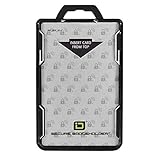
- Blocks RFID chips in cards from being read without permission
- Holds 2 ISO7810 ID-1 (standard credit card size) contactless smart cards
- Open face design allows for clear visual inspection of cards while in holder
- 100% Made in USA
- FIPS 201 Approved Products
Three measures that answer different questions
- Official ID ownership: indicates whether people report having an official identity document under the measure’s definition. It does not establish that they have an online account or digital credential.
- Birth registration: concerns whether a child’s birth has been registered. It is a distinct population and measure, not a substitute for adult identity coverage.
- Online digital identity availability or system capability: indicates aspects of whether foundational systems can support digital identity online. It does not by itself explain the credential, its legal recognition, adoption, accepted transactions, or privacy protections. The ID4D DataBank provides access to the indicators; consult each series’ definition and year before comparing countries.
What the latest global figures do—and do not—say
People without official proof of identity
In a 2025 blog post, the World Bank estimated that more than 800 million people still lacked official proof of identity, compared with 850 million in 2021 and just over 1 billion in 2017. These are estimates about official proof of identity, not counts of people without digital ID. The Bank discusses the figures and their context in Global progress in identification: 3 findings from the latest data.
Program reach is not a census of working systems
The World Bank’s Identification for Development (ID4D) initiative page describes its reach as more than 60 countries and 550+ million people impacted. That is initiative impact language; it does not establish that every person counted actively uses an online credential.
Separately, a World Bank Group results page dated 6 May 2026 says the Global Digital Public Infrastructure Program has helped 80 countries introduce safe and inclusive digital identity systems since 2015. The program also supports related cash assistance through identity, payments, and data sharing. This is a program-reported support figure, not a verified census of every country’s current operational status. The two reach figures describe different program reporting and should not be added together or treated as equivalent measures.
Rank #2

- This RFID protection card holder holds one or two cards which are size as standard credit card. This badge holder have RFID blocking function so good choice for all contactless cards due to RFID protection for improving security.
- This RFID blocker badge holder is made by RFID protection material which blocking RFID reading when cards are in the ID card holder. The NFC RFID blocking function improves security level, because it protects your contactless card from unauthorized reading which might be nowadays possible by criminals. That´s why this RFID blocking badge holder is important to use for cards as cac card, twic card HSPD 12 PIV credentials PIV card, smart card, Fed ID card and for personal contactless debit card.
- When you need to present your card to reader, you can easily remove your card from the card holder and put the card back to the holder. You can put one card to both sides of the badge holder so this holds two cards. To other side you can insert and remove the card from the top. To other side you can insert and remove the RFID card sliding from the side. And you can also slide the card about halfway out easily with one hand when you need present the card to the access control door reader.
- This RFID safe badge holder is GSA FIPS 201 Approved.
- This RFID blocker badge holder is compatible also with the ReelStrap which is very useful adjustable retractable lanyard ID holder. Together the ReelStrap and the RFID blocking card holder are perfect lanyard badge holder.
Selected country examples: different systems, different counts
The World Bank highlights Ethiopia, Nigeria, and Singapore, but the reported figures measure different things. They illustrate the variety of national approaches; they are not comparable rankings or regional averages.
| Country and system | Reported figure and date | What the figure represents | What it does not establish |
|---|---|---|---|
| Ethiopia — Fayda ID | Over 36.6 million residents registered, as reported by the World Bank Group in 2026. | A program-reported registration figure. | By itself, it does not establish full adult-population coverage, universal online acceptance, or the credential’s legal effects. |
| Nigeria — National Identity Number (NIN) | Over 100 million NINs issued, as reported by the World Bank Group in 2026; the report notes inclusion of women and people with disabilities. | Numbers issued under the NIN program. | Issuance is not necessarily the same as unique, current, active online users. |
| Singapore — SingPass | Almost 5 million users, according to a World Bank ID4D blog post published in 2025. | A reported user count for an online identity service. The World Bank says SingPass enables citizens and residents to complete transactions online, including birth registration, tax filing, and business setup. | The figure should not be compared directly with registrations or identity numbers issued in the other examples. |
The figures and service descriptions in this table are reported by the World Bank, not presented here as independently verified national totals. See its 2026 program results page for Fayda and NIN, and its 2025 ID4D blog for SingPass.
How to compare digital identity systems by country
A useful country comparison needs more than a system name or a headline enrollment figure. For each country, readers should be able to tell what is being issued, who is eligible, whether the service is operating, and what people can actually use it for. The World Bank’s work on digital public infrastructure identifies legal and regulatory foundations, secure design, interoperability, and inclusion as important considerations; it does not supply one comparable country score for each.
Rank #3

- TWO CARD HOLDER - Holds two 30 mil (standard credit card size) ID cards - mifare, Iclass, PIV, CAC, TWIC and Frac cards - HSPD 12 Badge Holder
- RFID CARD PROTECTION - Shielded to protect info on 13.56MHz RFID Cards - Great for Corporate Access, University & School IDs, Public Transit, Hotel Key Cards, Payment, Gift Cards, Event and Conference Badges
- VERTICAL OR HORIZONTAL DISPLAY - Hard Plastic Slot Hole for Portrait or Landscape Hold - Attaches Well with Vinyl Strap Clip or Plastic Clips - Hang from Lanyard or Badge Reel
- MADE IN USA - Meets BAA (Buy America Act) & TAA (Trade Agreement Act)- Proudly Made in USA
- EASY REMOVAL ACCESS - Thumb Notch Removal Openings on Both Sides of Holder - Slide out Fully or Partially for Scanning
- System and credential: distinguish a foundational civil or national ID, a digitized record, an online identity provider, a mobile credential, or a combination.
- Implementation stage: label a system as announced, in design or procurement, piloted, operational, or in scaled use, with an as-of date and an official source.
- Population and inclusion: state who is eligible, age rules, enrollment, accessibility, and known coverage gaps. Keep adult ID ownership separate from child birth registration.
- Authentication and use: identify whether verification works online, offline, or both, and name the public or private transactions that accept it.
- Law and governance: check legal recognition, data-controller responsibilities, oversight, routes for redress, data protection, and limits on mandatory use.
- Interoperability and security: look for evidence about cross-service acceptance and the safeguards the system describes.
- Evidence quality: identify whether a figure comes from a government source or an independently collected indicator, when it was measured, and whether it counts registrations, issued numbers, active accounts, or transactions.
The World Bank’s digital public infrastructure implementation material discusses these foundational considerations. They are comparison questions, not evidence that every country has adopted the same legal model or technical safeguards.
Crashes, No Sound, or Screen Glitches?
Random freezes, missing sound and display glitches usually trace back to one bad driver. Find and replace yours safely.Free scan · under a minuteWindows Errors? Fix Them Before They Spread
Repair common Windows errors and clear accumulated junk for a smoother, more stable PC - no reinstall needed.Free scan · no reinstallWhy global indexes cannot fill in a country directory
The World Bank’s GovTech Maturity Index (GTMI) includes shared digital infrastructure among its indicators and covers 48 indicators across four areas. The Bank says the index is not intended to rank countries or assess readiness. It is a broad GovTech maturity tool, not a digital-ID league table, and cannot be used on its own to establish a country’s digital identity status.
For the same reason, global program reach, national identity coverage, and individual online-service uptake should not be collapsed into a single “digital ID adoption” figure. Each can illuminate part of the picture, but none alone answers whether a particular person can use a legally recognized credential for a particular transaction.
Rank #4
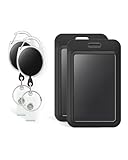
- 2-Card Holder: Inner size: 3.9" L x 2.2" W. Suitable for 2 standard-sized cards like credit cards, ID cards, access cards, passes or clipper cards. But fit 1 proximity card or RFID badge ONLY!
- Quick Access: Easy to open the case by sliding the back cover up and close the case by sliding it down. A cinch to encase or remove your badges or cards without effort.
- Dual-purpose: Ideal for displaying your ID card due to its clear front window. And easy to hide the magnetic card on the back for frequent scanning without removing the case.
- Heavy-duty: Sturdy plastic case is resistant to heat, wear or breaking. Stainless steel badge reel endures 100,000 pulls. And its retractable nylon cord allows for smooth extension up to 24 inches.
- Easy to Carry: Each case comes with a removable carabiner and a sturdy belt clip. Easily carry it around by securing it onto your pocket, belt loop, backpack or zipper.
Is there a complete current list of countries with digital ID?
The global indicators and selected examples described here do not amount to a verified current directory for every country. A defensible country-by-country list would need fresh official-source checks for each entry, including implementation stage, legal status, eligible population, accepted services, and the meaning and date of any usage figure. Without that country-level verification, naming countries as though they all have an operational national digital ID would overstate what the available evidence establishes.
For readers asking “which countries have digital ID?”, the most accurate answer is that identity systems and online credentials are developing across countries, but “has digital ID” can mean very different things. Use a clearly defined indicator for broad comparisons, and check official country documentation for current launch status and real-world acceptance.
Do these 3 things before closing this tab:
1Repair Windows errors before they cause bigger problems2Fix the driver behind crashes, sound loss and screen glitches3Clear out junk files and repair common Windows errorsQuick Recap
Product prices and availability are accurate as of the date/time indicated and are subject to change. Any price and availability information displayed on Amazon at the time of purchase will apply.




