Crashes, No Sound, or Screen Glitches?
Random freezes, missing sound and display glitches usually trace back to one bad driver. Find and replace yours safely.Free scan · under a minutePC Slower Than It Used to Be?
A free scan shows the junk files, broken settings and background clutter dragging Windows down - then fixes them in one click.Free scan · Windows 10 & 11For most players, start with emulation. An established emulator covers an entire console or arcade family, preserves the original machine’s behavior, and works even when no modern port exists. Pick a maintained decompilation, recompilation, or native port instead when the particular game has one and you want modern rendering, easier operating-system integration, accessibility features, widescreen support, or extensive modding.
There is no universal winner. A project’s maturity, the exact regional release, required original files, controller support, and current compatibility matter more than the label. The two approaches can also overlap: a decompilation may produce a ROM that you then run in an emulator.
As an Amazon Associate I earn from qualifying purchases.
The short answer: choose by game, not by technology label
Emulation recreates the behavior of the original console, computer, or arcade board so the unmodified game software can run. It is usually the best default when you want a broad library, faithful hardware behavior, or a title with no maintained native project.
Recommended Free Tools
A decompilation reconstructs source code from an existing executable. A recompilation translates that reconstructed program for another processor and replaces console-specific services such as graphics, audio, storage, and input. An engine recreation implements compatible behavior in a new engine. When the resulting program runs directly on a modern operating system without an emulator or compatibility layer, it is generally described as a native port.
#1 Best Overall

- 20000+ Classic Games & 3000mAh Battery – SF3000 Retro Handheld powers over 14 emulators with no setup required, it will let you play many kinds of games. The 3000mAh battery delivers 5–7 hours of playtime, perfect for travel or commuting.
- 4.5” HD Screen – This SF3000 Retro Game Console is equipped with a IPS full-angle display with 854x480 resolution brings classic games to life with vivid color and sharp detail. Adjust volume and brightness freely for any environment.
- Strong Performance Configuration with OTG Function – Dual-core 1.2G processor and 2G DDR3 RAM keep gameplay smooth and lag-free. The OTG port lets you connect USB drives or external controllers to expand storage and play more your way.
- Multi-Function Retro Gaming Console – This SF3000 Handheld Console Works as a handheld game console and an emergency power bank. Connect to your TV via HD output for big-screen play, watch HD videos, browse photos, read e-books or listen to music and support multi-languages.
- Foldable Stand & Great Gift Idea – This Retro Game Console built-in foldable stand on the back flips out for stable movie watching and folds away for handheld gaming. Sleek, minimalist design makes it an ideal gift for birthdays, Christmas and other holidays.
Those categories describe different layers. A rebuilt game can still be packaged as a ROM and launched through an emulator, while a native port may use original game assets without emulating the original CPU. “Decompilation” therefore does not automatically mean “native,” and “emulation” does not automatically mean inferior.
How the approaches work
Emulation
An emulator models the original machine’s processor, memory map, graphics hardware, audio chips, timing, controllers, and peripheral behavior. The original game executable or disc image runs inside that model. One emulator can therefore support many games made for the same hardware family, although individual titles can still have different compatibility and performance.
Decompilation
Developers work function by function from an existing executable and other evidence to recreate the program’s source. The goal may be a matching binary, readable and portable code, or a foundation for a new build. A decompilation project can remain incomplete, require the original executable or assets, and be limited to one title.
The Tool Desk
Outbyte Driver Updater FREEScan for outdated or missing drivers - takes under a minuteDriver Scan →Outbyte PC Repair FREERepair Windows errors before they cause bigger problemsFix Now →Recompilation and engine recreation
Recompilation translates the reconstructed program ahead of time and supplies replacements for the original console’s operating-system and graphics layers. An engine recreation instead reimplements game behavior in a new engine. Both can produce a modern executable, but neither guarantees perfect behavior: timing-sensitive scenes, obscure hardware quirks, online services, and unused content may need additional work.
Native ports
A native port runs directly on a target such as Windows, Linux, macOS, or Android without emulating the original machine. OpenPortsGames describes this as a modern release that does not need an emulator or compatibility layer. Whether a project is truly native depends on its implementation, not on marketing language.
Comparison at a glance
| Question | Emulation | Decompilation, recompilation, or native port |
|---|---|---|
| How many games can it cover? | Potentially an entire hardware family; each title still needs testing. | Usually one game or a closely related series. |
| What software runs? | The original executable, ROM, or disc image. | Rebuilt code, often combined with original game data. |
| Hardware fidelity | Models the original machine; preservation is a central goal of projects such as MAME. | Recreates behavior in new code; accuracy depends on the project’s completeness. |
| Modern integration | Depends on emulator features and configuration. | Can expose native resolutions, operating-system input, accessibility, and mod APIs. |
| Performance | Includes the cost of modeling the original hardware. | May avoid emulating the original CPU and platform services, but gains are project- and system-dependent. |
| Required files | Usually the original ROM, disc image, firmware, or other legally obtained data. | May require the original executable, ROM, disc data, or assets for the build process or at runtime. |
| Maintenance risk | Established emulators can support many releases; compatibility varies by version. | A project can stop at an unfinished or title-specific stage. |
| Modding | Mods are possible, but often constrained by the original binary and emulator features. | Rebuilt code can be easier to extend when the project exposes it. |
Library breadth and compatibility
If your priority is playing many games from one console or arcade platform, emulation is normally the practical choice. You install one mature emulator, obtain the firmware and game files you are entitled to use, and consult its compatibility information for each title. A native project, by contrast, is generally tied to a single game and may not exist for the release you own.
Compatibility is not a binary promise. A tracker can record that a title boots while still noting broken audio, missing effects, controller problems, or poor performance. The xemu compatibility tracker associates each official title with a particular build and a reporter’s system. Its reports are observations for that version and computer, not a guarantee for every machine.
Quick wins for a faster PC:
Scan for outdated or missing drivers - takes under a minuteDriver Scan →Clear out junk files and repair common Windows errorsFree Scan →Rank #2

- 【Dual Android 10 System with WiFi for YouTube & TikTok】 Powered by Qualcomm Gen1 quad-core CPU and Mali 450 GPU, this handheld runs full Android 10 dual system with built-in WiFi. You can freely connect network to browse YouTube, scroll TikTok besides retro gaming, integrate entertainment in one device. It supports tons of emulators and preloaded 20000+ classic games for smooth lag-free gameplay
- 【4.2 Inch OCA Full Laminated HD IPS Screen】 4.2-inch full-fit MiPi IPS display with 720*720 resolution, OCA lamination cuts screen reflection and color deviation. Equipped with RGB glowing joysticks, the eye-care panel reduces visual fatigue for long-hour gaming and video watching
- 【Expandable Large Storage Space】 Built-in 1GB RAM + 8GB EMMC memory, supports TF card expansion from 16GB to 256GB to store more games and videos. Plug-and-play design, no complicated setup to access arcade, RPG, racing and puzzle retro games anytime
- 【Pocket Portable & Long-Lasting Battery】 Compact 210g lightweight body easy to slip into pocket or bag for travel. 3500mAh lithium battery provides up to 8 hours continuous use for gaming or watching videos, full charge only takes 2 hours via Type-C port. Built-in 8W cavity speaker delivers clear audio
- 【Multi-Functional & Perfect Nostalgic Gift】 Supports local room multiplayer real-time battle, available in transparent black/red/purple shells with cool RGB joysticks. Combines retro gaming and online video playback, an ideal stress relief gift for retro game lovers, teens and adults
When emulation is the safer bet
- You want a whole library rather than one specific game.
- No maintained native project exists, or its release status is unclear.
- The title relies on unusual hardware behavior, peripherals, or timing.
- Preservation of the original software and machine matters more than modern presentation.
When a native project is worth seeking
- The project documents support for your exact game edition and operating system.
- You need features such as modern display modes, remappable input, accessibility options, or integrated mod support.
- The emulator has a known issue with the title that the native project explicitly fixes.
- You are comfortable keeping the original files separately if the project requires them.
Fidelity and preservation
Emulation keeps the original program intact and attempts to reproduce the machine it expected. MAME states that its purpose is to document hardware and preserve decades of software history; usability is used to validate that the documentation is accurate. This makes emulation especially valuable for arcade boards and consoles whose behavior is part of the historical record.
A native rebuild can be more accurate in some visible or practical areas and less accurate in others. It may correct a frame-pacing issue, add a modern renderer, or expose an option the original hardware could not provide. It can also omit obscure timing behavior, unused code paths, regional differences, or peripherals that were not needed for the port. Treat “accurate” as a set of specific claims—graphics, timing, audio, controls, saves, and network behavior—rather than a single project-wide score.
Performance and modern platform integration
A native executable does not have to model the original CPU instruction by instruction or reproduce every console service. That can reduce overhead and make features such as high resolutions, modern window modes, operating-system audio, and fast loading easier to implement. OpenGOAL, for example, describes itself as a native x86-64 port and lists performance, accuracy, compatibility, accessibility, and mod support among its goals.
Those are project claims, not a universal benchmark. A poorly optimized port can run worse than an efficient emulator, and a mature emulator may use hardware acceleration effectively. Performance also changes with resolution, enhancement settings, shader choices, operating-system drivers, and the host computer. Look for measurements or reproducible issue reports for the exact project and version rather than assuming that “native” means faster.
Features to check before choosing
- Native widescreen or ultrawide rendering versus a stretched or cropped image.
- Frame pacing, refresh-rate options, and whether the game’s original timing is preserved.
- Resolution scaling, texture filtering, shader support, and post-processing.
- Save-state support, memory-card handling, pause behavior, and suspend/resume.
- Accessibility options such as remapping, text scaling, color adjustments, or subtitle controls.
- Online or local multiplayer support, including whether the original service still exists.
Mods, fixes, and new content
Native code can be easier to modify when the rebuilt project exposes symbols, scripting, tools, or a documented build process. OpenGOAL identifies modifications and new content as a major goal. A project may therefore support bug fixes, quality-of-life options, new levels, randomizers, or modern controller features that are difficult to add to an untouched ROM.
Mod support is not automatic. Check whether the project accepts plugins, scripts, patched assets, or source changes; whether mods work on your operating system; and whether updates can break them. Emulators can also support patches, texture packs, cheat files, and fan translations, often across a wider range of games, but each enhancement may alter the original behavior or complicate troubleshooting.
Original files, ROMs, and discs
Neither approach is a blanket “ROM-free” solution. Decomp Games, OpenPortsGames, and xemu all describe dependence on original or legally obtained game content in relevant situations. A native build may contain executable code while still requiring your copy of the game’s data, and a decompilation-built ROM can still be launched inside an emulator.
Rank #3
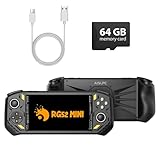
- 【Portable Dual System&RGBOX Dual Systems & RK3562 Chip Performance】 EmuELEC&RGBOX Dual Systems with Powerful RK3562 Chip: Experience seamless gaming with flexible dual-system support. Powered by the advanced Rockchip RK3562 quad-core Cortex-A53 2.0GHz processor and 2+4GB RAM, this console delivers fast, responsive performance, smooth multitasking, and enhanced capabilities for a wide range of emulators.
- 【5.5-Inch IPS Full HD Display】 5.5-Inch HD IPS Fully Laminated Display:** Immerse yourself in crystal-clear visuals on the vibrant 5.5-inch IPS screen with a sharp 720x1280 HD resolution. The fully laminated display and anti-glare finish ensure excellent color reproduction and wide viewing angles, significantly reducing eye strain for comfortable extended gameplay. Whether playing classic 2D titles or fifth-generation 3D games, every frame is rendered with stunning clarity and detail.
- 【RG52MIN Compatible with multi retro game】NEW Upgrade RG52MIN handheld game console , 64GB Built in 5000+ classic games, support more than 10+ game format, open source systems and downloading games in relevant formats. RG52MINI Supports 2D&fifth-generation 3D games and ported games, which can be played immediately after addition. RGBOX can also access the RGBOX APP via a WiFi downloader to play over 22,000 classic retro game for a richer gaming experience, Built-in 2.4G WiFi enables wireless local multiplayer for head-to-head battles or co-op play with friends – no extra accessories needed.
- 【All-in-One Multi-Function Game Console】 Precise Controls with Dual 3D Joysticks & Immersive Audio: Take command with dual 3D joysticks featuring a confirmation key and responsive mechanical buttons, including Hall linear triggers for precise analog control. The built-in vibration motors provide tactile feedback, while the joystick ambient lights offer 7 customizable color combinations to enhance your gaming atmosphere. Rich, dynamic audio is delivered through the hi-fi BOX cavity speaker or a private 3.5mm headphone jack.
- 【Fast Charging & Expandable Storage】 5000mAh Battery, Expandable Storage & Multiple Output Options: Enjoy up to 8 hours of gameplay on a single charge thanks to the powerful 5000mAh polymer lithium battery, with convenient USB Type-C fast charging. Expand your storage up to 1TB via the TF card slot. Connect to a larger screen with the HDMI output for TV play, or use the TYPE-C port for OTG, charging, and DP output, offering versatile connectivity for any gaming setup.
Before downloading or compiling anything, read the project’s file list. It may require one or more of the following:
Free tools Windows power users keep installed
One-click scans. No signup required.
- A ROM dump from a particular regional or revision-specific cartridge.
- A disc image, sometimes with a precise sector layout or checksum.
- Console firmware, BIOS, keys, or other system files.
- Extracted textures, audio, levels, or archives from your original copy.
- A legally obtained executable used only to verify or generate the rebuilt program.
Do not assume that a website offering a downloadable ROM is distributing only code. Hosting the project separately from game data does not automatically make a distribution ROM-free or lawful. Keep a backup of your own dumps and record the exact revision used, because a project built against one release may fail with another.
Operating systems, controllers, and hardware requirements
Confirm platform support before committing to a project. xemu documents Windows, macOS, and Linux support and requires a GPU capable of OpenGL 4.0. Its documentation also cautions that performance varies by system. An emulator or native port may support a platform in principle while lacking a package, installer, or tested controller mapping for your particular version.
MAME’s 0.289 documentation covers joystick and game-controller input, but “supports controllers” does not identify every compatible device or layout. Check the project’s input page for button names, analog-axis behavior, hot-plugging, rumble, light guns, steering wheels, and multiplayer limits. On a native port, verify whether the game expects keyboard codes, XInput, SDL mappings, or another API.
Minimum pre-install checklist
- Operating-system version and CPU architecture.
- Graphics API and driver capability, not only the GPU model.
- Storage space for the program, shaders, caches, and game files.
- Controller type, number of players, and required adapters.
- Exact game region, revision, language, and disc or cartridge format.
- Current project release, known issues, and last documented compatibility update.
Legal and preservation considerations
“Emulator,” “decompilation,” and “native port” are not universal legal categories. Rights-holder positions and reverse-engineering rules differ by country, platform, purpose, and distribution method. Nintendo UK states that unauthorized emulators can encourage pirate copies and that unlawful circumvention is illegal. OpenPortsGames says its catalog distributes no original game files, expects players to own the original, and advises checking the law where they live.
What’s actually slowing this PC down?
Pick the symptom - the matching free tool is one click away.
Ownership of a cartridge or disc does not automatically answer every question about making a dump, downloading firmware, bypassing technical protection, sharing files, or distributing a rebuilt executable. Read the project license, the rights-holder’s published policy, and applicable local law. When the legal position is uncertain, use an officially supported modern release where one is available and avoid downloading copyrighted game data from unverified sources.
Independent reader supportYour contribution helps us test, update, and keep practical guides available for everyone.A practical decision process
1. Start with the exact title and edition
Write down the console or arcade board, region, language, revision, and whether you need a cartridge, disc, digital, or arcade version. Compatibility and required files can change between editions.
Rank #4

- 128GB STORAGE & 31,000+ GAMES — This retro handheld game console includes a 128GB TF card preloaded with more than 31,000 classic and fifth-generation 3D games. Its open-source Linux system provides a straightforward interface, so you can browse the game library and start playing without a complicated setup. Built-in Wi-Fi also supports two-player gaming with compatible games and devices.
- RK3562 PERFORMANCE & ACTIVE COOLING — Powered by a Rockchip RK3562 quad-core processor running at up to 2.0GHz, the handheld supports responsive emulation across classic and 3D gaming systems. Built-in active cooling and ventilation help manage heat during longer sessions for more consistent performance.
- 5.5-INCH IPS DISPLAY & HDMI OUTPUT — Enjoy clear detail, rich color, and wide viewing angles on the fully laminated 1280 × 720 IPS screen. The anti-glare finish improves visibility in different lighting conditions, while the HDMI port lets you connect the console to a compatible TV or monitor for big-screen gaming.
- HALL CONTROLS, RGB LIGHTING & VIBRATION — Hall-effect L1/L2/R1/R2 controls provide precise and consistent input, while dual 3D joysticks support smooth analog movement. Customizable 16-million-color RGB light rings and a built-in vibration motor add visual atmosphere and tactile feedback to supported games.
- 5000mAh BATTERY FOR GAMING ON THE GO — The built-in 5000mAh battery provides up to 8 hours of playtime under applicable conditions, making it a practical gift for adult retro gaming fans. Actual runtime varies by game, screen brightness, volume, Wi-Fi, RGB lighting, and vibration use. For safe charging, use the included cable with a 5V/2A power source and do not use a power source that supplies more than 5V.
2. Search for a maintained native project
Look for a release that names your game, platform, and current version. Distinguish a playable build from a proof of concept, an incomplete decompilation, or a source tree that still needs the original executable. Read the issue tracker or compatibility notes for audio, saves, controls, cutscenes, and multiplayer.
3. Compare the features you actually need
If broad library access and hardware fidelity lead your priorities, choose emulation. If modern rendering, accessibility, native input, or mods matter more and the project documents them for your title, a native build may be the better fit.
Do these 3 things before closing this tab:
1Fix the driver behind crashes, sound loss and screen glitches2Clear out junk files and repair common Windows errors3Scan for outdated or missing drivers - takes under a minute4. Verify files and legal terms
Confirm which original files are required, how they are obtained legally in your jurisdiction, and whether the project redistributes any copyrighted data. Check hashes or revision names where the documentation provides them.
5. Test a representative session
Before migrating a large library, test boot, a save and reload, every controller, a demanding area, audio, suspend/resume, and any feature you rely on. Keep the emulator or native build’s version number with your configuration so you can reproduce the setup.
Using both approaches is often sensible
You do not have to select one technology permanently. Use an emulator for a console library and a native project for the one game that benefits from widescreen rendering or extensive mods. Keep the original files organized separately, and do not expect save files, patches, or controller profiles to transfer between implementations without conversion.
A decompilation-built ROM may also be useful when you want the rebuilt code’s fixes but prefer the emulator’s established video, audio, shader, and save-state features. In that case, the decompilation and emulator are complementary layers rather than competing products.
Troubleshooting by symptom
The game does not boot
- Check the required region and revision; a compatible project may reject a different dump.
- Verify the ROM, disc image, firmware, or extracted assets against the project’s documented requirements.
- Install the current stable release or the specific build named by the compatibility report.
- Remove enhancement patches and test a clean configuration before changing graphics settings.
Video is missing, distorted, or too slow
- Confirm the graphics API and driver requirements, including OpenGL capability where documented.
- Disable high-resolution textures, shaders, and post-processing to isolate the problem.
- Return to the original resolution and refresh rate, then add enhancements one at a time.
- Compare with a known compatibility report for your operating system and hardware.
Controls or multiplayer are wrong
- Use the project’s documented input mapping rather than assuming console button names match PC labels.
- Check analog dead zones, axis inversion, hot-plug behavior, and player order.
- Test one controller at a time, then add adapters or additional devices.
- For native ports, confirm whether the build expects XInput, SDL, keyboard codes, or another input API.
Saves or mods fail after an update
- Back up save files and configuration before upgrading.
- Read the release notes for format changes and migration instructions.
- Disable mods to determine whether the base game still works.
- Keep the previous project version if a required mod or save format has not been updated.
Examples of what the evidence supports
MAME is a strong example of emulation chosen for hardware documentation and software preservation, with controller input documented in its 0.289 materials. xemu illustrates why compatibility must be read as version- and machine-specific: its tracker records individual titles, while its documentation lists Windows, macOS, Linux, and an OpenGL 4.0-capable GPU requirement.
OpenGOAL illustrates the native-port model. It describes a fully fledged native x86-64 port and promotes performance, accuracy, compatibility, accessibility, and mod support. Those statements explain what a mature project can target; they are not proof that every decompilation is faster, more accurate, or more compatible than emulation.
Bottom line
Use emulation first when you need the widest classic-game library, original hardware behavior, or dependable preservation. Choose a maintained decompilation, recompilation, or native port for a particular title when its documented support matches your edition and you value modern integration, accessibility, performance goals, or mods. Check the exact build, original-file requirements, controller mapping, operating-system support, compatibility notes, and local law before installing. The best choice is the implementation that reliably supports the game you actually own and the features you actually need.
Quick Recap
Product prices and availability are accurate as of the date/time indicated and are subject to change. Any price and availability information displayed on Amazon at the time of purchase will apply.




