Free tools Windows power users keep installed
One-click scans. No signup required.
Reliable customer messaging integrations assume that requests and callbacks can be delayed, repeated, or left with an uncertain outcome. Build around durable queues, stable identifiers, bounded retries, verified webhooks, and a message state model that distinguishes provider acceptance from delivery. The implementation details vary by provider: Google’s RCS guidance and Salesforce’s messaging materials illustrate useful patterns, not universal guarantees.
1. Acknowledge webhooks quickly and process them asynchronously
A webhook endpoint should do only enough synchronous work to establish that an event is authentic and durably received. Verify it, write the event or a work item to durable storage, then return a success response promptly. A worker can perform slower tasks such as updating a CRM record, triggering a workflow, or reconciling message status.

As an Amazon Associate I earn from qualifying purchases.
This separation prevents a slow downstream service from holding up the webhook request. It also gives the integration a local copy of work to recover if processing fails. Google’s RCS webhook guidance recommends asynchronous processing and describes retries when an endpoint does not return success. Treat the exact retry behavior as provider-specific; a shared endpoint that is slow or unhealthy can affect more than one message.
2. Assign stable identities and make handlers safe to replay
Give each outgoing operation a stable message key where the provider supports it, and retain the provider’s event or message identifier for incoming activity. Before applying an event, check whether that identifier has already been processed. Enforce uniqueness in durable storage rather than relying only on an in-memory check, which can fail across workers or restarts.
#1 Best Overall
![MixPad Free Multitrack Recording Studio and Music Mixing Software [Download]](https://m.media-amazon.com/images/I/71ltIxIuz1L._SL160_.jpg)
- Create a mix using audio, music and voice tracks and recordings.
- Customize your tracks with amazing effects and helpful editing tools.
- Use tools like the Beat Maker and Midi Creator.
- Work efficiently by using Bookmarks and tools like Effect Chain, which allow you to apply multiple effects at a time
- Use one of the many other NCH multimedia applications that are integrated with MixPad.
Design event handlers to be idempotent: replaying the same event should not create a second customer record, send another notification, or repeat another side effect. Salesforce’s integration patterns describe tracking unique message identifiers for deduplication and using upsert behavior to avoid duplicate records. Google’s RCS best practices likewise recommend checking incoming message IDs and using unique outgoing IDs.
3. Retry according to failure type, with a hard limit
A retry policy should distinguish temporary failures from requests that cannot succeed without a change. For transient errors and failures the provider explicitly marks retryable, use exponential backoff and respect documented rate-limit guidance. Add a cap on attempts and on total elapsed retry time; after that, move the operation to a failure state that an operator can inspect.
- Usually retryable when the provider says so: temporary service or network failures.
- Do not treat as transient: invalid request data or authentication failures. Correct the request or credentials instead.
- After the limit: retain enough context to diagnose and safely replay the work rather than retrying forever.
Google’s RCS best-practices guidance recommends exponential backoff and discusses unique IDs and deduplication. Apply the provider’s specific retry and rate-limit rules rather than assuming the same status codes or timing work across services.
The Tool Desk
Outbyte Driver Updater FREEFix the driver behind crashes, sound loss and screen glitchesFind Drivers →Outbyte PC Repair FREERepair Windows errors before they cause bigger problemsFix Now →4. Treat a send timeout as an unknown outcome
If a client times out while waiting for a send request, the provider may still have accepted the message. A timeout describes what the client observed, not necessarily what happened remotely. Blindly issuing a new send can deliver a duplicate.
Rank #3
![MixPad Multitrack Recording Software for Sound Mixing and Music Production Free [Mac Download]](https://m.media-amazon.com/images/I/51kaO82jYOL._SL160_.jpg)
- Mix an audio, music and voice tracks
- Record single or multiple tracks simultaneously
- Intuitive tools to split, trim, join, and many other editing features
- Loaded with audio effects including EQ, compression, reverb, and more.
- Load an audio file and export to all popular audio formats from studio quality wav to high compression formats
Where available, reuse the provider’s idempotency key or message-key semantics, or query the status of the original operation before deciding whether to send again. Salesforce’s Transactional Messaging API best practices connect message keys with status retrieval. Confirm how a provider defines keys and status responses; those semantics are not interchangeable across APIs.
5. Verify every webhook and limit sensitive data exposure
Authenticate incoming callbacks using the provider’s documented signature or other verification mechanism before accepting them as trusted events. For Google RCS, the webhook guide documents checking X-Goog-Signature against a hash generated with the message body and client token. Follow that provider’s exact procedure; do not treat the header name alone as proof of authenticity.
Rank #4
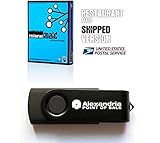
- Ships on a USB Flash Drive. POS, Inventory, Unlimited Item/Service Buttons and Category Buttons
- Split Bills, Kitchen / Bar Messaging, Bird's Eye View of Restaurant & Bar Floor, Reservations
- Accounting, Inventory, Payroll (hourly/commission), Returns, Layaway, Labels Printing/Scanning
- Customer Management, Credit/Debit/Gift Card Processing, Receipts or Invoices (customizable)
- Many Reports, Low Stock Alerts, Imp/Exp Data To Excel, Mailing Lists
Keep logs useful for operations without making them a second copy of customer conversations. Prefer correlation IDs, event IDs, state changes, and error categories over message bodies, credentials, or unnecessary personal data. Restrict access to the data the integration must retain.
Do these 3 things before closing this tab:
1Fix the driver behind crashes, sound loss and screen glitches2Clear out junk files and repair common Windows errors3Scan for outdated or missing drivers - takes under a minute6. Model delivery as an asynchronous state machine
Represent submission acceptance separately from final delivery. A successful API response may mean only that a provider accepted the request; later callbacks or status queries may report delivery, failure, or a still-unknown result. Correlate each receipt or query result with the original message identifier and preserve state transitions so that delayed or repeated events can be reconciled.
Best Value
![WavePad Audio Editing Software - Professional Audio and Music Editor for Anyone [Download]](https://m.media-amazon.com/images/I/B1fcLEGCs6S.png._SL160_.png)
- Full-featured professional audio and music editor that lets you record and edit music, voice and other audio recordings
- Add effects like echo, amplification, noise reduction, normalize, equalizer, envelope, reverb, echo, reverse and more
- Supports all popular audio formats including, wav, mp3, vox, gsm, wma, real audio, au, aif, flac, ogg and more
- Sound editing functions include cut, copy, paste, delete, insert, silence, auto-trim and more
- Integrated VST plugin support gives professionals access to thousands of additional tools and effects
This distinction matters when a workflow has a fallback channel. Google’s RCS best-practices page states: “Always check for delivery receipts before triggering a fallback message.” A fallback sent merely because an initial request timed out or was accepted but has no receipt yet may duplicate communication. Salesforce’s transactional messaging guidance also describes message keys as useful for retrieving delivery status.
7. Make recovery observable and safe to operate
Record a correlation ID and meaningful state transitions across the send request, provider response, callback, and any status query. Monitor queue age, retry volume, failures, and callback lag: together, these reveal whether work is accumulating, repeatedly failing, or simply awaiting provider updates.
Failed work should be reviewable and replayable without repeating completed side effects. Salesforce’s integration-pattern guidance highlights explicit handling across synchronous API boundaries, including acknowledgments and custom retry logic. Operationally, that means keeping enough durable context to diagnose a failure, while relying on the same idempotency controls for manual replay as for automatic processing.
Recommended Free Tools
How to evaluate a provider or integration design
Compare the behavior that determines failure recovery, not just the happy-path send API. Google’s and Salesforce’s official materials demonstrate that these details vary by provider; they do not establish a universal vendor ranking or cross-provider benchmark.
Quick Recap
- Delivery semantics, including whether events may be replayed and how duplicates are identified.
- Idempotency or message-key support for sends and status lookups.
- Webhook authentication requirements and retry behavior when your endpoint fails.
- Rate-limit guidance and which failure classes the provider considers retryable.
- Status-query support and the availability and meaning of delivery receipts.
- Failure isolation: whether one slow or broken handler can delay unrelated events or messages.
Product prices and availability are accurate as of the date/time indicated and are subject to change. Any price and availability information displayed on Amazon at the time of purchase will apply.




