Outdated Drivers Are Slowing You Down
One free scan finds every outdated or missing driver and matches the right update for your exact hardware.Free scan · exact hardware matchPC Slower Than It Used to Be?
A free scan shows the junk files, broken settings and background clutter dragging Windows down - then fixes them in one click.Free scan · Windows 10 & 11Intel’s Core i7-6950X arrived as the flagship of the Broadwell-E high-end desktop lineup, bringing 10 cores and 20 threads to the consumer enthusiast platform for the first time. Built for X99 motherboards and quad-channel DDR4 memory, it targeted users who needed workstation-class throughput without stepping fully into Xeon territory.
This review examines how the i7-6950X performs across heavily threaded workloads, gaming scenarios, and day-to-day responsiveness, while also looking at its power draw, thermal behavior, and overclocking headroom. Its premium pricing makes value a central question, especially against both Intel’s other HEDT chips and competing high-core-count alternatives.
As an Amazon Associate I earn from qualifying purchases.
Core i7-6950X Specifications and Platform Overview
The Intel Core i7-6950X sits at the top of the Broadwell-E desktop stack and was designed for Intel’s high-end desktop platform rather than the mainstream LGA1151 ecosystem. Its headline specification is the move to 10 cores and 20 threads, enabled by Hyper-Threading, making it the first consumer-facing Extreme Edition chip from Intel to reach double-digit core counts. Built on Intel’s 14 nm process, it targets users who need workstation-class throughput without stepping fully into Xeon platforms.
At stock settings, the Core i7-6950X runs at a 3.0 GHz base clock with a maximum Turbo Boost frequency of up to 3.5 GHz under favorable lightly threaded workloads. It also supports Intel Turbo Boost Max Technology 3.0, which identifies the best-performing core and prioritizes lightly threaded tasks on it, provided the proper driver and BIOS support are in place. The chip carries 25 MB of shared L3 cache, a 140 W TDP, and an unlocked mullier for manual overclocking.
#1 Best Overall
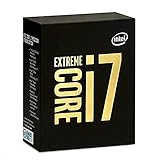
- 10 Core/20 Thread
- LGA 2011-v3
- 4 Channels DDR4 2400; one DIMM per Channel
- 140W Tdp
- Up to 40 Lanes PCIe 3.0 (2x16+1x8)
| Specification | Core i7-6950X |
|---|---|
| Architecture | Broadwell-E |
| Process | 14 nm |
| Cores / Threads | 10 / 20 |
| Base Clock | 3.0 GHz |
| Max Turbo Clock | Up to 3.5 GHz |
| L3 Cache | 25 MB |
| TDP | 140 W |
| Socket | LGA2011-v3 |
| Memory Support | Quad-channel DDR4 |
| PCIe Lanes | 40 PCIe 3.0 lanes |
The processor uses the familiar LGA2011-v3 socket and is paired with Intel’s X99 chipset, which means many existing X99 motherboards can support it after a BIOS update. This continuity was a major advantage for owners of earlier Haswell-E systems, since upgrading did not necessarily require a new motherboard or memory kit. The platform supports quad-channel DDR4 memory, typically validated around DDR4-2400 for Broadwell-E, though enthusiast boards commonly allow much higher memory speeds through XMP profiles and manual tuning.
Platform bandwidth is one of the Core i7-6950X’s defining strengths. With 40 PCIe 3.0 lanes from the CPU, it can support multi-GPU configurations, PCIe storage cards, capture devices, and high-speed networking without the same lane constraints found on mainstream desktop platforms of the period. X99 also provides a broad set of storage and I/O options, including SATA 6 Gb/s, USB 3.0, and motherboard-dependent support for M.2 and U.2 NVMe devices. Compared with standard Core i7 desktop chips, the 6950X is less about peak clock speed and more about core density, memory bandwidth, and expansion flexibility.
In practical terms, the Core i7-6950X platform is aimed at users building around heavy parallel workloads: 3D rendering, video encoding, scientific computation, software development, and content creation pipelines that benefit from both thread count and memory capacity. It is also an enthusiast product in the traditional Extreme Edition sense, offering unlocked tuning and premium motherboard ecosystems. Its specifications make clear that this is not a simple gaming-first CPU; it is a high-end desktop processor built to anchor systems where compute throughput and platform connectivity matter as much as raw single-threaded speed.
Broadwell-E Architecture and 10-Core Design
The Core i7-6950X is built on Intel’s Broadwell-E architecture, a high-end desktop adaptation of the 14nm Broadwell design. Compared with the previous Haswell-E flagship, the Core i7-5960X, the headline change is the move from 8 cores and 16 threads to 10 cores and 20 threads. That makes the 6950X the first consumer-facing Intel desktop processor to reach a 10-core configuration, although its roots are clearly tied to workstation and server silicon rather than mainstream gaming CPUs.
Broadwell-E retains the familiar X99 platform and LGA2011-v3 socket, but the die itself brings several refinements. The 14nm process allows Intel to fit more cores within a similar enthusiast-class power envelope, while also increasing cache resources. The Core i7-6950X includes 25MB of shared L3 cache, up from 20MB on the 8-core i7-5960X. Each core also has private L1 and L2 cache, and the chip continues to use Intel’s ring bus interconnect to move data between cores, cache, memory controllers, and PCIe resources.
What the 10-core layout changes
The extra cores are most valuable in workloads that can split work cleanly across many threads. Rendering, video encoding, software compilation, scientific simulation, virtualization, and heavy multitasking are the kinds of tasks where the 6950X can pull clearly ahead of lower-core CPUs. In these scenarios, the processor’s 20-thread capability via Hyper-Threading gives it a large scheduling pool, letting demanding applications keep the chip saturated for long periods.
- 10 physical cores: a major increase over quad-core mainstream desktop CPUs of the same era.
- 20 threads: Hyper-Threading helps improve throughput in well-parallelized software.
- 25MB L3 cache: useful for large datasets and multi-core workloads with frequent shared data access.
- Quad-channel DDR4 memory: higher memory bandwidth than dual-channel mainstream platforms.
- 40 PCIe 3.0 lanes: well suited for multi-GPU setups, PCIe storage, and capture or accelerator cards.
Architecturally, Broadwell-E is not a dramatic per-core leap over Haswell-E. Instructions-per-clock gains are modest, and the Core i7-6950X runs at relatively conservative clock speeds compared with many quad-core desktop chips. Its base clock is 3.0GHz, with Turbo Boost frequencies that rise under lighter thread loads. This means the processor’s strength is not peak single-thread speed, but sustained parallel throughput. In lightly threaded applications, a cheaper high-clocked Core i7 can feel just as fast or faster.
Recommended Free Tools
Rank #2

- Game Without Compromise. Play harder and work smarter with Intel Core 14th Gen processors
- 20 cores (8 P-cores plus 12 E-cores) and 28 threads. Integrated Intel UHD Graphics 770 included
- Up to 5.6 GHz with Turbo Boost Max Technology 3.0 gives you smooth game play, high frame rates, and rapid responsiveness
- Compatible with Intel 600-series (with potential BIOS update) or 700-series chipset-based motherboards
- DDR4 and DDR5 platform support cuts your load times and gives you the space to run the most demanding games
Intel also introduced Turbo Boost Max Technology 3.0 with Broadwell-E, designed to identify the best-performing core on the chip and push lightly threaded work toward it. On the 6950X, this helps offset the lower default clock speeds and improves responsiveness in workloads that cannot use all 10 cores. Early implementation depended on software support and drivers, so its benefit varied by system configuration, but it was a useful step toward making many-core enthusiast CPUs more flexible in everyday use.
The design tradeoff is clear: the Core i7-6950X prioritizes core count, memory bandwidth, cache capacity, and expansion over raw frequency. For users running professional or semi-professional workloads on a desktop platform, Broadwell-E’s 10-core design represented a meaningful jump in capability. For users focused mainly on gaming or lightly threaded desktop tasks, the architecture’s advantages were less dramatic, making the chip’s appeal highly dependent on the software being used.
Productivity and Multi-Threaded Benchmark Performance
The Core i7-6950X is most convincing when the workload can keep all 10 cores and 20 threads busy. In heavily threaded productivity tests, it moves well beyond the quad-core desktop chips of its era and establishes a clear lead over earlier six- and eight-core Extreme Edition models. Applications such as 3D rendering, video encoding, software compilation, scientific compute, and high-resolution content creation are the natural fit for this processor, especially when paired with fast DDR4 memory and an X99 motherboard configured with sufficient cooling and power delivery.
In rendering benchmarks, the 6950X’s advantage is straightforward: more cores produce more completed work per unit of time. In Cinebench R15 multi-core, for example, the chip typically lands around the 1,800 to 2,000-point range at stock settings, depending on memory speed and motherboard behavior. That places it noticeably ahead of the 8-core Core i7-5960X, which commonly scores in the mid-1,300s to low-1,400s, and far ahead of mainstream quad-core Core i7 parts that often sit below 1,000 points. Single-threaded scores are less dramatic, as Broadwell-E prioritizes core count over high clock speed, but the architecture remains responsive enough for mixed desktop use.
Video production workloads show a similar pattern. In HandBrake or Adobe Media Encoder, the Core i7-6950X shortens export times most clearly with 4K source footage, multi-pass encodes, and CPU-heavy codecs. The performance uplift versus the 5960X is not always a perfect 25 percent despite the extra two cores, because clock speeds, cache behavior, memory bandwidth, and software scaling all matter. Still, for creators processing long timelines, batch transcodes, or archival encodes, the time savings can be meaningful over repeated daily jobs. A render that takes an hour on an older high-end desktop chip can often be reduced by several minutes, and that gain compounds quickly in production environments.
Where the 6950X performs best
- 3D rendering: CPU renderers such as Cinebench, V-Ray, and Blender benefit strongly from 20 available threads.
- Video encoding: Long-form H.264 and H.265 exports scale well when the encoder can distribute work efficiently.
- Content creation suites: Heavy multitasking across Premiere Pro, After Effects, Photoshop, and background exports suits the large core pool.
- Development workloads: Large codebase compilation and virtual machine use benefit from both core count and the X99 platform’s memory capacity.
- Scientific and workstation tasks: Parallel numerical workloads can take advantage of the processor’s cache and thread resources when properly optimized.
The main limitation is that not every professional application scales cleanly to 20 threads. Some photo-editing tasks, CAD operations, office workloads, and lightly threaded filters still depend more on per-core frequency than on total core count. In those cases, a faster-clocked quad-core or six-core CPU can feel just as quick, and sometimes quicker, for individual actions. The 6950X is therefore less about making every click faster and more about raising throughput when mulle demanding tasks run at once or when a single job can be divided efficiently across many threads.
Compared with competing high-end desktop processors available around its launch, the Core i7-6950X stood at the top of Intel’s consumer workstation stack for multi-threaded performance. It delivered a tangible step forward over Haswell-E while retaining platform strengths such as quad-channel memory and abundant PCIe lanes. Its benchmark profile makes it clear that this is not merely a luxury gaming CPU; it is a productivity-focused flagship aimed at users who can turn additional cores into saved time, higher output, and smoother multitasking under sustained professional workloads.
Rank #3

- Game Without Compromise. Play harder and work smarter with Intel Core 14th Gen processors
- 20 cores (8 P-cores plus 12 E-cores) and 28 threads. Discrete graphics required
- Up to 5.6 GHz with Turbo Boost Max Technology 3.0 gives you smooth game play, high frame rates, and rapid responsiveness
- Compatible with Intel 600-series (with potential BIOS update) or 700-series chipset-based motherboards
- DDR4 and DDR5 platform support cuts your load times and gives you the space to run the most demanding games
Gaming Performance and Real-World Responsiveness
The Core i7-6950X is not a gaming-first processor in the way a high-clocked quad-core chip is, but it is still a very capable gaming CPU when paired with a strong graphics card. Its 10 cores and 20 threads rarely translate into proportional frame-rate gains in games from its era, since most titles depend more heavily on per-core performance, cache behavior, memory latency, and GPU horsepower. With a base clock of 3.0GHz and typical turbo behavior below the fastest mainstream Core i7 models, the 6950X can trail chips such as the Core i7-6700K or later high-frequency desktop CPUs in lightly threaded game engines.
Do these 3 things before closing this tab:
1Clear out junk files and repair common Windows errors2Fix the driver behind crashes, sound loss and screen glitches3Repair Windows errors before they cause bigger problemsAt 1080p with a flagship GPU, where CPU differences are easiest to expose, the 6950X generally delivers excellent but not class-leading results. In titles that favor high single-thread throughput, minimum and average frame rates can sit slightly behind faster-clocked quad-core parts. In more parallel workloads, such as large mullayer matches, strategy simulations, open-world games with heavy background systems, or newer engines that distribute rendering and asset tasks across more threads, the gap narrows. Moving to 1440p or 4K shifts more of the load to the graphics card, making the 6950X effectively indistinguishable from other premium CPUs in many real-world gaming scenarios.
Where the 10-core design helps during play
- Game streaming: The extra threads give software encoders more room to operate while the game remains responsive, especially when using CPU-based x264 presets.
- Background workloads: Voice chat, browsers, capture tools, launchers, monitoring utilities, and file transfers have less impact on frame pacing than they would on a lower-core CPU.
- Content creation alongside gaming: Users can record high-bitrate footage, process media, or keep editing applications open without making the desktop feel constrained.
- Frame-time stability: In CPU-heavy multitasking situations, the 6950X can maintain smoother responsiveness even when average FPS does not dramatically exceed cheaper processors.
Real-world responsiveness is one of the 6950X’s stronger qualities. The X99 platform, quad-channel DDR4 support, and abundant PCIe lanes make it well suited for systems with mulle GPUs, NVMe storage, capture cards, and professional peripherals. Launching applications, switching between a game and a browser, running a stream preview, or exporting a video in the background all feel fluid because the processor has substantial scheduling headroom. This is the kind of benefit that may not stand out in a simple average-FPS chart but becomes noticeable in a workstation-style gaming setup.
The trade-off is that buyers focused strictly on gaming performance per dollar would not get the best return from the Core i7-6950X. Its premium is spent on cores, cache, platform bandwidth, and workstation flexibility rather than maximum gaming clocks. For a dedicated gaming rig, a less expensive high-clocked CPU can match or beat it in many titles. For users who game, stream, capture, edit, and multitask on the same machine, the 6950X provides a more versatile experience, delivering high-end frame rates while keeping the rest of the system responsive under heavy concurrent workloads.
Power Consumption, Thermals, and Overclocking
The Core i7-6950X carries a 140 W TDP, which is typical for Intel’s high-end desktop chips of this era, but its real-world behavior depends heavily on workload type, motherboard power limits, voltage, and cooling. At stock settings, the chip is relatively efficient for a 10-core Broadwell-E processor, especially in lightly threaded tasks where only a few cores boost aggressively. Under sustained all-core rendering, encoding, or scientific workloads, however, total system draw climbs quickly, particularly when paired with a high-end GPU and quad-channel memory.
In stock multi-threaded operation, the i7-6950X generally remains manageable with a quality 240 mm or 280 mm liquid cooler, or a large dual-tower air cooler with strong case airflow. Broadwell-E is built on Intel’s 14 nm process, which helps contain leakage compared with older 22 nm Haswell-E models, but ten physical cores still concentrate a lot of heat under the integrated heat spreader. Long all-core workloads tend to be more demanding than short benchmark bursts, so cooler performance should be judged by extended Blender, HandBrake, or Prime95-style runs rather than quick synthetic tests.
Stock power and thermal behavior
- Idle power: usually modest for an enthusiast platform, though X99 motherboards, extra PCIe devices, and multiple memory sticks raise baseline consumption.
- Light workloads: responsive and efficient, with high boost clocks on fewer active cores and limited thermal stress.
- All-core workloads: substantially heavier, with sustained package power often approaching or exceeding the nominal TDP depending on motherboard settings.
- Cooling requirement: premium air or liquid cooling is strongly recommended if the system will be used for rendering, compiling, or media production for long periods.
Overclocking is possible, but the i7-6950X is not a simple “free performance” chip. Most samples tend to land around the low-to-mid 4 GHz range for daily use when paired with strong cooling, with many systems targeting roughly 4.0 to 4.3 GHz across all cores. Better samples can go higher, but voltage and temperature rise sharply as frequency increases. Because this is a 10-core CPU, a voltage level that seems moderate on a quad-core part can translate into much more heat and platform power draw here.
Rank #4

- Intel Core i7 3.60 GHz processor offers more cache space and the hyper-threading architecture delivers high performance for demanding applications with better onboard graphics and faster turbo boost
- The Socket LGA-1700 socket allows processor to be placed on the PCB without soldering
- 11 MB L2 and 25 MB L3 cache offers supreme performance for computation intensive apps
- Intel 7 Architecture enables improved performance per watt and micro architecture makes it power-efficient
For practical daily tuning, an all-core overclock around 4.0 GHz often gives the best balance between performance, thermals, and noise. Moving beyond that can improve Cinebench, rendering, and encoding scores, but diminishing returns set in quickly. The extra power draw may require louder fans, a larger radiator, or custom liquid cooling to keep temperatures comfortable during sustained work. Memory tuning also matters on X99: DDR4-3000 to DDR4-3200 is a common target range, though stability with four or eight DIMMs depends on the CPU’s memory controller and motherboard firmware.
| Configuration | Expected behavior | Best suited for |
|---|---|---|
| Stock settings | Controlled power draw, lower heat, reliable boost behavior | Workstations prioritizing stability and reasonable noise |
| Mild all-core overclock | Noticeable productivity gains with manageable cooling demands | Rendering, video encoding, compiling, mixed professional use |
| Aggressive overclock | High power consumption, steep thermal increase, more tuning required | Benchmarking or users with top-tier cooling |
The main concern is that overclocking the i7-6950X can erase much of Broadwell-E’s efficiency advantage. A tuned chip can deliver excellent throughput, but the platform becomes noticeably less elegant once voltage is pushed hard. For most owners, the strongest setup is a conservative overclock, careful voltage control, and a cooler capable of handling prolonged all-core load without thermal throttling. In that form, the Core i7-6950X remains a powerful enthusiast CPU, but one that rewards restraint more than brute-force tuning.
Quick wins for a faster PC:
Clear out junk files and repair common Windows errorsFree Scan →Fix the driver behind crashes, sound loss and screen glitchesFind Drivers →Repair Windows errors before they cause bigger problemsFix Now →Price, Competition, and Final Value Assessment
The Core i7-6950X launched as Intel’s halo desktop processor, and its pricing reflected that status. With an introductory price around $1,723, it sat far above the already-expensive Core i7-6900K and Core i7-6850K, asking buyers to pay a substantial premium for two more cores, four more threads, and the prestige of owning the first 10-core consumer-oriented desktop CPU from Intel. For users who could keep all 20 threads busy every day, the 6950X delivered workstation-class throughput on the familiar X99 enthusiast platform. For everyone else, the price was difficult to justify.
Against the rest of the Broadwell-E stack, the value gap was clear. The Core i7-6900K offered 8 cores and 16 threads at a much lower price, while retaining the same platform features that mattered to most high-end desktop users: quad-channel DDR4 memory, abundant PCIe lanes, unlocked mulliers, and compatibility with existing X99 motherboards after a BIOS update. In lightly threaded workloads and games, the 6900K often felt just as fast, and in some cases its similar or higher attainable clock speeds narrowed the gap even further. The 6950X earned its premium mainly in sustained multi-threaded rendering, encoding, compiling, simulation, and heavy content creation workflows.
| CPU | Cores / Threads | Platform | Best Fit |
|---|---|---|---|
| Core i7-6950X | 10 / 20 | X99 | Top-end multi-threaded production workloads |
| Core i7-6900K | 8 / 16 | X99 | High-end creation and enthusiast gaming |
| Core i7-6850K | 6 / 12 | X99 | PCIe-heavy gaming and workstation builds |
| Core i7-6700K | 4 / 8 | Z170 | Gaming and lightly threaded desktop use |
Competition at the time was also shaped by AMD’s position before Ryzen arrived. AMD’s FX processors could not challenge the 6950X in per-core performance, platform bandwidth, or serious workstation throughput, which left Intel mostly competing with itself in the high-end desktop market. The real decision for buyers was not whether the 6950X was the fastest option in its class, but whether its extra cores were worth the jump in cost over Intel’s own 6-core and 8-core models. In that comparison, the 6950X was a specialist product rather than a broadly sensible upgrade.
For professional users billing time against compute-heavy tasks, the value case could be strong. If a 3D artist, video editor, software developer, or scientific user saved meaningful time every week through faster renders, shorter encodes, or quicker batch processing, the premium could be recovered through productivity. The chip also offered a long-lived platform with strong memory bandwidth and enough PCIe connectivity for mulle GPUs, NVMe storage, capture cards, or other expansion devices. In that context, the 6950X functioned less like a luxury gaming CPU and more like a compact workstation processor.
For enthusiasts focused on gaming, general desktop responsiveness, and occasional content creation, the final assessment is less favorable. The Core i7-6950X was technically impressive, efficient for its core count, and dominant in heavily threaded benchmarks, but it was never the best value in Intel’s lineup. Its appeal rested on needing the highest multi-threaded performance available on X99 and being willing to pay disproportionately for the last tier of performance. As a flagship, it succeeded; as a rational purchase for most high-end PC builders, the Core i7-6900K or even lower Broadwell-E models made far more sense.
Best Value

- 20 cores (8 P-cores + 12 E-cores) and 28 threads. Integrated Intel UHD Graphics 770 included.
- Performance hybrid architecture integrates two core microarchitectures, prioritizing and distributing workloads to optimize performance
- Up to 5.4 GHz unlocked. 33MB Cache
- Compatible with Intel 600-series (with potential BIOS update) and 700-series chipset-based motherboards
- Turbo Boost Max Technology 3.0 Frequency, and PCIe 5.0 & 4.0 support. DDR4 and DDR5 Memory support. RM1 thermal solution included.
Frequently Asked Questions
Is the Core i7-6950X still good for productivity workloads?
The Core i7-6950X can still handle heavily threaded work such as video encoding, 3D rendering, compression, and workstation multitasking thanks to its 10 cores and 20 threads. However, modern mainstream and workstation CPUs offer much higher per-core performance, better efficiency, and stronger platform features. It makes the most sense if you already own an X99 system and can get the chip cheaply.
How does the Core i7-6950X perform in games?
Gaming performance is generally solid, but the 6950X is not a top gaming CPU by modern standards. Its lower clock speeds and older Broadwell-E architecture can hold back frame rates in CPU-limited games, especially at 1080p with a high-end GPU. At higher resolutions like 1440p or 4K, the graphics card usually matters more, so the gap is less noticeable.
What motherboard and memory does the Core i7-6950X need?
The Core i7-6950X uses the LGA 2011-v3 socket and requires an Intel X99 motherboard with proper BIOS support for Broadwell-E processors. It supports quad-channel DDR4 memory, which was one of the platform’s major advantages over mainstream Intel systems of its era. Before buying one used, check the motherboard vendor’s CPU support list and BIOS version.
What’s actually slowing this PC down?
Pick the symptom - the matching free tool is one click away.
Can the Core i7-6950X be overclocked, and what cooling does it need?
Yes, the Core i7-6950X is an unlocked Extreme Edition CPU and can be overclocked on X99 boards with suitable power delivery. Many chips can reach around the low-to-mid 4 GHz range depending on silicon quality, voltage, and cooling. A high-end air cooler or 240 mm to 360 mm liquid cooler is recommended because power draw and temperatures rise quickly when overclocked.
Is the Core i7-6950X worth buying used today?
It is usually only worth buying if the price is very low or you are upgrading an existing X99 workstation without replacing the motherboard and memory. For a new build, newer CPUs from Intel and AMD are faster in most tasks, use less power, and provide newer platform features such as PCIe 4.0 or PCIe 5.0, faster memory, and better storage support. The 6950X is more appealing as a niche upgrade than as the foundation for a fresh high-end PC.
Bottom Line
The Core i7-6950X remains a landmark enthusiast CPU: its 10-core Broadwell-E design delivers excellent multi-threaded performance, strong workstation capability, and the platform flexibility that made Intel’s high-end desktop lineup so appealing. For rendering, encoding, heavy multitasking, and prosumer workloads, it was a serious step forward over earlier 6- and 8-core chips.
Its biggest drawback is value, especially given its launch price, power demands, and the fact that newer CPUs now offer better performance per dollar. If you are considering one today, buy it only at a steep discount for an existing X99 build; otherwise, a modern high-core-count Ryzen or Core platform is the smarter next step.
The Tool Desk
Outbyte PC Repair FREEClear out junk files and repair common Windows errorsFree Scan →Outbyte Driver Updater FREEScan for outdated or missing drivers - takes under a minuteDriver Scan →Quick Recap
Product prices and availability are accurate as of the date/time indicated and are subject to change. Any price and availability information displayed on Amazon at the time of purchase will apply.




