The Tool Desk
Outbyte PC Repair FREERepair Windows errors before they cause bigger problemsFix Now →Outbyte Driver Updater FREEFix the driver behind crashes, sound loss and screen glitchesFind Drivers →Yes—research shows that carefully timed tutoring can help some birds learn songs that have faded or disappeared from their populations. But “AI tutor” is not a fair description of the best-established conservation example: regent honeyeaters learned a traditional song from live adult birds, sometimes with recordings added. A separate study used a computer-generated song as an acoustic tutor for chingolos, also called rufous-collared sparrows.
Why a lost bird song matters
Birdsong is not always an entirely innate sound that every member of a species produces in the same way. In some birds, young individuals learn songs by hearing adults, and local song traditions can be passed from one generation to the next. If a population shrinks or young birds lose access to adult tutors, a traditional song can fade while a different pattern takes hold.
| # | Preview | Product | Price | |
|---|---|---|---|---|
| 1 |

|
Bird Songs: 250 North American Birds in Song | $24.05 | Buy on Amazon |
| 2 |

|
The Backyard Birdsong Guide Eastern and Central North America: A Guide to Listening | $32.49 | Buy on Amazon |
| 3 |

|
The Little Book of Backyard Bird Songs | $18.79 | Buy on Amazon |
| 4 |

|
The Little Book of Woodland Bird Songs | $18.83 | Buy on Amazon |
| 5 |
|
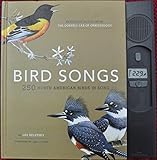
Bird Songs: 250 North American Birds in Song | $58.90 | Buy on Amazon |
As an Amazon Associate I earn from qualifying purchases.
That cultural change may matter for conservation. Regent honeyeaters with limited opportunities to hear adult members of their species developed songs unlike the traditional wild variants. The researchers describe this divergence as a potential barrier to reintroduction: restoring the bird population may also require restoring the song tradition. The Australian National University said in a March 2, 2026 summary that fewer than 250 regent honeyeaters remained in the wild at that time; that is a dated institutional figure, not a timeless census. ANU’s summary
What the regent honeyeater experiment found
Across three breeding seasons, researchers tested tutoring approaches in an applied zoo-breeding program at Taronga Zoo and Taronga Western Plains Zoo. The comparison was not simply “technology versus nature”: it tested whether playback recordings, live adult tutors, or both could help juveniles reproduce the traditional Blue Mountains song.
#1 Best Overall
| Approach | What juveniles heard | Result against the traditional reference |
|---|---|---|
| Playback only | Recorded song, without a live adult tutor | Did not reproduce the target wild song. Playback-only birds did show greater song complexity than untutored birds. |
| Small-cohort live tutoring | Live adult tutors, without playback supplementation | Songs were statistically indistinguishable from the typical Blue Mountains reference. |
| Small-cohort live tutoring plus playback | Live adult tutors and recordings | Songs were statistically indistinguishable from the typical Blue Mountains reference. |
The distinction is important: recordings were not useless, but playback alone did not achieve the same result as access to live tutors. The strongest outcome came when juveniles learned in small groups with live adults, whether or not recordings supplemented that tutoring. The experiment was adapted over time within the practical constraints of a zoo-breeding program. The 2026 study in Scientific Reports
The intervention also began to pass the tradition onward. Some zoo-bred males that learned the traditional song in an earlier cohort later became tutors themselves. At the end of the experiment, 32 males—42% of the zoo male population at that point—sang songs statistically indistinguishable from the typical Blue Mountains reference, according to the 2026 study.
Where AI and synthetic songs fit
A different project, involving wild chingolos in Argentina, used computational tools to recreate a song that had disappeared locally. As National Geographic reported on March 7, 2025, the team at the University of Buenos Aires used historical musical notation, a model of song acoustics and vocal mechanics, and a neural network to assess which documented songs remained in the population. Researchers then broadcast a synthetic version of the vanished tune during the juveniles’ sensory learning period. Some birds incorporated it; one syllable differed in a way that could reflect local dialect or other influences. National Geographic’s account of the chingolo study
This is a case of computational analysis and synthetic sound serving as a tutor—not AI translating bird communication or independently teaching birds. It is also not the regent honeyeater experiment: the species, setting, and intervention were different. Gabriel Mindlin, a University of Buenos Aires researcher and co-author, told National Geographic, “Here, we made an extinct song fashionable, and it is a case of how an entire culture can be reintroduced if necessary.”
Rank #3
Why timing and social context matter
Birds do not all learn in the same way or on the same schedule. A 2018 field experiment with wild Savannah sparrows found preferential learning of songs heard during two windows: the natal summer and the beginning of the birds’ first breeding season. The researchers used simulated vocal tutors over year-long sessions, showing why a tutoring program needs to match the species’ developmental timeline rather than assume that playback will work at any age. The 2018 Current Biology study
For regent honeyeaters, the successful small-cohort treatments combined access to live adults with a low tutor-to-juvenile ratio. That points to social access as part of the intervention, not merely the sound file itself. Across these examples, “tutor” can mean a live bird, a simulated vocal tutor, or an acoustic device broadcasting a synthetic song—but those methods are not interchangeable.
Rank #4
What the results do—and do not—prove
Matching a reference song is a meaningful conservation outcome, but it does not by itself prove that a restored song improves survival or recovery in the wild. The regent honeyeater study did not measure female preference, pair formation, breeding outcomes, or population recovery after release. Its authors identify those questions, along with the optimal timing of tutoring, as matters for further study.
Recommended Free Tools
There is also a real conservation tension: the traditional song being restored had been disappearing in the wild. Researchers still need to understand how restoring that historic pattern interacts with mate preferences and song variants now present in wild birds. The result should therefore be read as evidence that tutoring can restore a learned cultural trait in a managed program—not proof that a single song or tutoring recipe will benefit every bird species.
Best Value
- book and audio for 250 north american birds in song
What this means for conservation
These studies show that lost songs are not necessarily beyond recovery. For some species, researchers can use live tutors, recorded playback, or carefully modeled synthetic songs to give young birds access to a missing tradition during the right learning window. The regent honeyeater work offers evidence that live tutoring can restore a traditional song in captive-bred birds and that some trained males can then teach the next cohort. The chingolo case suggests a synthetic song can also be learned in a different species and setting.
The next test is whether restoring those songs translates into better outcomes for birds after release. Until that is established, AI and playback are best understood as potentially useful conservation tools within species-specific programs, not as universal solutions for animal culture.
Quick Recap
Product prices and availability are accurate as of the date/time indicated and are subject to change. Any price and availability information displayed on Amazon at the time of purchase will apply.
Free tools Windows power users keep installed
One-click scans. No signup required.




