For competitive or timing-sensitive games, a wired headset or a gaming headset with its own low-latency wireless transmitter is usually the safer choice than conventional Bluetooth audio. But Bluetooth is not one uniform technology: newer LE Audio and the Bluetooth Gaming Audio Profile offer gaming-oriented options when both the headset and the device you play on support them.
Why Bluetooth audio can feel late in games
Audio latency is the time between a sound being created and when you hear it. If a shot, footstep, or menu sound arrives noticeably after its on-screen cause, the game can feel less immediate. Microsoft defines latency this way in its Windows low-latency audio documentation.
As an Amazon Associate I earn from qualifying purchases.
Conventional Bluetooth Classic audio can add delay through its transport and buffering. The Bluetooth SIG explains that Classic Audio uses asynchronous ACL transport and buffering that can make it less suitable for interactive uses such as games. The amount of delay a player experiences is not fixed: it depends on the headset, source device, software, selected audio mode, and the rest of the audio chain.
Bluetooth options are not all the same
Bluetooth Classic audio
This is the traditional Bluetooth audio path. Its delay can be perceptible in games, particularly when the connection uses a high-quality playback mode rather than a low-latency mode. A headset supporting a particular codec does not mean every connected device will use that codec or mode.
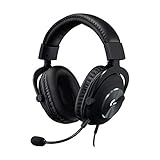
#1 Best Overall

- Enjoy expansive cinematic sound. Big 50 mm audio drivers deliver an incredible sound experience
- Hear Enemies From All Sides. DTS Headphone:X 2.0 surround sound(1) lets you hear enemies sneaking behind you, special ability cues, and immersive environments. It’s positional clarity that can make the difference between victory and defeat. Experience three-dimensional audio that goes beyond 7.1 channels to make you feel like you’re right in the middle of the action. (1) DTS Headphone:X 2.0 requires Logitech G HUB Software.
- Be Heard Loud and Clear. The big 6 mm boom mic makes sure you’re heard by gaming partners and mutes when flipped up.
- Use One Headset For Most Game Platforms. Your headphones work with your PC or Mac via USB DAC or 3.5 mm cable, mobile devices with 3.5 mm cable or with gaming consoles including PlayStationⓇ 5 and PlayStationⓇ 4 (USB wireless stereo sound only), Nintendo Switch (wireless stereo sound when docked)
- Game for Hours in Comfort. Everything about these headphones is about comfort: The deluxe lightweight leatherette ear cups and headband are made to keep pressure off your ears. Ear cups rotate up to 90 degrees for convenience.
LE Audio and the Gaming Audio Profile
Bluetooth LE Audio uses LE Isochronous Channels, which the Bluetooth SIG says can reduce buffering and shorten delay compared with conventional Classic Audio. The SIG has also adopted Gaming Audio Profile (GMAP) 1.0, a specification for interoperable configurations of audio services and profiles intended to enable gaming-specific features. These standards create gaming-oriented possibilities; they do not guarantee a particular end-to-end delay or mean that every Bluetooth headset supports them. Check support on both the source and headset. See the Bluetooth SIG LE Audio overview and its GMAP 1.0 announcement.
Low-latency codec modes
Some codec implementations offer a lower-latency mode, but codec branding alone is not proof that the connection is using it. Qualcomm describes aptX Adaptive as having a dynamic low-latency mode for gaming and video; whether a specific source-headset pair supports and selects that mode matters.
Rank #2

- TRIFORCE TITANIUM 50 MM DRIVERS — Our cutting-edge proprietary design divides the driver into 3 parts for the individual tuning of highs, mids, and lows—producing brighter, clearer audio with richer highs and more powerful lows
- HYPERCLEAR CARDIOID MIC — An improved pickup pattern ensures more voice and less noise as it tapers off towards the mic’s back and sides, with the sweet spot easily placed at the mouth because of the mic’s bendable design
- ADVANCED PASSIVE NOISE CANCELLATION — Sturdy closed earcups fully cover the ears to prevent noise from leaking into the headset, with its cushions providing a closer seal for more sound isolation
- LIGHTWEIGHT DESIGN WITH MEMORY FOAM EAR CUSHIONS — At just 240 g, the headset features thicker headband padding and memory foam ear cushions with leatherette to keep gaming in peak form during grueling tournaments and training sessions
- WORKS WITH WINDOWS SONIC — Make the most of the headset’s powerful drivers by pairing it with lifelike surround sound that places audio with pinpoint accuracy, heightening in-game awareness and immersion
RTINGS’ published guidance reports aptX Adaptive latency of roughly 200–300 ms in high-quality mode and 50–100 ms in low-latency mode, with below 70 ms offered as its good-value guidance for the latter. Its guidance says LDAC tends to measure around 200–300 ms. These are RTINGS testing findings and guidance, not universal codec constants. Fraunhofer IIS, the developer of LC3plus, says its low-delay modes can reach 7 ms end-to-end; that is a codec capability statement, not a promise for every product or complete audio system. See RTINGS’ Bluetooth codec latency guidance and Fraunhofer IIS’ LC3plus information.
Recommended Free Tools
What happens when you use voice chat
Using a headset microphone can change the playback-and-capture configuration. Microsoft documents a limitation of conventional Bluetooth audio in which playback can drop to mono while the microphone is active. Windows LE Audio support can retain stereo playback during microphone use, but that depends on compatible hardware and drivers. Microsoft distinguishes default-mode game playback from bidirectional communications use and documents formats for game audio with voice chat; confirm that the specific computer, headset, and drivers support the mode you want. Details are in Microsoft’s Windows LE Audio documentation.
Rank #3
- Detachable pro grade microphone featuring real time Blue Voice technology, including noise reducer, compressor, limiter and more for cleaner, professional sounding voice comms; Requires included USB external sound card, Windows PC, and Logitech G HUB software
- Next gen 7.1 and object based surround sound for greater in game positional, distance, and object awareness during gameplay. Requires included USB external sound card, Windows PC, and Logitech G HUB software
- Soft memory foam ear-pads with your choice of premium passive noise canceling leatherette or soft, breathable velour for supreme comfort
- Built to last with a durable aluminum fork and steel headband. Impedance - 35 Ohm
- Advanced PRO G 50 millimeter drivers deliver clear and precise sound imaging with improved bass response. Hear footsteps and environmental cues with clarity to give you the competitive advantage in game
Which connection should you use?
| Connection | What to expect | Best fit |
|---|---|---|
| Wired analog or USB headset | Avoids Bluetooth transport; total latency can still depend on the device and audio path. | Players who want a straightforward way to minimize connection delay. |
| Dedicated 2.4 GHz gaming transmitter | A separate wireless link, not Bluetooth. Check the headset’s measured performance and platform compatibility. | Players who want wireless use without relying on a conventional Bluetooth audio link. |
| Bluetooth Classic | Delay varies by codec, mode, device pair, and implementation; microphone use may also affect playback behavior. | Casual play or situations where convenience matters more than tight audio timing. |
| Bluetooth LE Audio or GMAP | Designed to enable shorter-delay, gaming-oriented configurations, but actual performance and availability depend on both devices and their implementation. | Players who want Bluetooth and have confirmed compatible source and headset support. |
These categories are useful starting points, not guarantees about a particular model. RTINGS identifies wired headsets and dedicated low-latency wireless gaming headsets as options for gaming; its connectivity guide explains why measured results in the connection mode you will use are more useful than labels alone.
Independent reader supportYour contribution helps us test, update, and keep practical guides available for everyone.How to check whether your Bluetooth setup is suitable
- Identify the exact connection mode. Check the headset and the gaming device’s specifications or settings to see whether they use Bluetooth Classic, LE Audio, GMAP, or a named low-latency codec mode.
- Verify both ends. The source and headset must both support the intended standard or codec. A codec name on the headset box alone does not establish compatibility or show which mode is active.
- Test with voice chat enabled. Listen for increased lag, a change from stereo playback to mono, or other quality changes when the microphone is active.
- Look for measurements of the actual mode and pairing. Prefer independent latency measurements for the specific headset, source, and mode you expect to use. Do not treat a codec’s best-case capability as the delay of the full system.
- Choose based on the game and your priorities. For competitive timing-sensitive play, favor wired audio or a dedicated gaming transmitter if Bluetooth delay is noticeable. For casual play, wireless convenience may be a reasonable trade-off; also consider connection stability, battery life, comfort, microphone quality, and platform support.
What Windows can—and cannot—fix
Microsoft reports a 4.5–16 ms reduction in round-trip latency in Windows 10 and later compared with Windows 8.1. That figure describes changes to the Windows audio stack, not the total delay from a Bluetooth headset. Supported drivers, buffer sizes, and low-latency APIs can also affect system latency, but an operating-system improvement cannot by itself guarantee a low-latency Bluetooth connection.
Quick Recap
Rank #4

- JBL QUANTUMSOUND SIGNATURE: From the faintest footsteps to the loudest explosion, this wired gaming headset puts you at the center of every scene—immersive, accurate audio that turns every match into a competitive edge.
- DETACHABLE DIRECTIONAL MICROPHONE: Rally your squad without repeating yourself. The voice-focus directional microphone detaches when you're flying solo and includes a mute option—because this mic headset knows when to talk and when to stay quiet.
- MEMORY FOAM COMFORT: Marathon sessions hit different in these over-ear headphones—lightweight build, breathable fabric ear cushions, and memory foam padding keep you locked in without the fatigue. Game longer. Complain less.
- SPATIAL SOUND COMPATIBILITY: Hear exactly where sound is coming from. This wired headset is fully compatible with Windows Sonic spatial sound on Windows 10 PCs and Xbox ONE—so the game world feels like it's happening around you.
- CROSS-PLATFORM READY: One 3.5mm jack, every platform—PC, PlayStation, Xbox, Nintendo Switch, Mobile, Mac, and VR. This cross-platform gaming headset goes wherever the game is.*
Product prices and availability are accurate as of the date/time indicated and are subject to change. Any price and availability information displayed on Amazon at the time of purchase will apply.
Quick wins for a faster PC:
Fix the driver behind crashes, sound loss and screen glitchesFind Drivers →Clear out junk files and repair common Windows errorsFree Scan →Scan for outdated or missing drivers - takes under a minuteDriver Scan →



