The best router for Comcast Xfinity depends first on what connects to your home. On coaxial cable service, a standalone router needs a separate compatible cable modem or Xfinity gateway; it cannot connect directly to the coax feed. If you have Xfinity fiber delivered to your unit, Xfinity says you can use a standard third-party router that matches your speed tier. Before buying, check the exact device against your address and plan in Xfinity’s My Device Info tool.
Start by identifying the equipment your service needs
“Router” and “modem” describe different jobs. A router creates your home network and distributes Wi-Fi. On coaxial Xfinity service, a cable modem connects that network to the provider’s coax line. A gateway combines modem and router functions in one device.
As an Amazon Associate I earn from qualifying purchases.
- You already have an Xfinity gateway or compatible modem: You can add a standalone router, though the setup may require configuring the gateway for use with your router.
- You want to replace a coaxial gateway: Choose a compatible modem/router combo, or buy a supported cable modem and a separate router.
- You have Xfinity fiber delivered to your unit: Xfinity says a standard third-party router that supports your speed tier may be used. Follow the instructions for your specific fiber setup.
Xfinity’s My Device Info is the key compatibility check: sign in for personalized results or enter your address to see device information. Compatibility and speed eligibility can depend on your location and subscribed tier, so don’t treat a router’s Wi-Fi rating or another household’s experience as proof that a device will work with your service.
Recommended Free Tools
Best router options for different Xfinity setups
Standalone Wi-Fi router: TP-Link Archer BE770
The Archer BE770 is an example for customers who already have a modem or gateway and want to supply their own Wi-Fi router. Tom’s Guide’s 2026 Wi-Fi 7 router review names it best overall and lists BE18000 / 802.11be, a 10 Gbps WAN port, a 10 Gbps LAN port, four 1 Gbps LAN ports, and two USB 3.0 ports. In that outlet’s lab, it measured 2.181 Gbps of wireless throughput at 15 feet. The router is physically large, according to the review.
#1 Best Overall

- MAXIMIZE YOUR CABLE INTERNET AND WHOLE-HOME WIFI: A cable modem and WiFi router in one device unlocks the full potential of your home internet with faster downloads, smoother WiFi for gaming and video calls, and reliable coverage in every room.
- APPROVED FOR YOUR PROVIDER AND PLAN: Works with Xfinity internet plans up to 800Mbps, Spectrum up to 1Gbps, and Cox up to 1Gbps. Not compatible with Verizon, AT&T, CenturyLink, DirecTV, DISH, or bundled voice plans. ISP activation required after setup.
- MULTI-GIG DOCSIS 3.1 SPEEDS: Get Gigabit+ cable download speeds on today's fastest plans, with headroom for the upgrades ahead. Real-world speeds depend on your plan and ISP network.
- WIFI 6 COVERAGE FOR THE WHOLE HOME: Stay connected in every room with dual-band AX2700 WiFi 6 covering up to 2,000 sq ft and capacity for 25+ connected devices. Real-world coverage depends on home size, layout, and building materials.
- WIRED CONNECTIONS FOR YOUR FASTEST DEVICES: Four Gigabit Ethernet ports keep gaming consoles, desktops, and streaming devices hardwired for the lowest latency and the most stable connection in your home.
Those are product and lab details reported by Tom’s Guide, not an Xfinity compatibility test or a promise of the speed you’ll get from your internet plan. For coaxial Xfinity service, the Archer BE770 still needs an upstream modem or gateway. Its 10 Gbps ports may be useful for a multi-gig local network, but they do not upgrade the speed tier supplied by Xfinity. Wi-Fi 7 benefits also depend on client devices that can use its features. Read Tom’s Guide’s 2026 Wi-Fi 7 router review.
All-in-one cable modem and router: NETGEAR CAX80
Xfinity’s available recommended-device PDF lists the NETGEAR CAX80 as a DOCSIS 3.1 modem/router with built-in Wi-Fi, no telephone support, and up to 2.36 Gbps wired download. This is an example to check, not a blanket assurance that it is eligible for every address or speed tier. Xfinity says its recommendations are refreshed quarterly; confirm the current result in My Device Info before buying.
Rank #2

- DUAL-BAND WIFI 6 ROUTER: Wi-Fi 6(802.11ax) technology achieves faster speeds, greater capacity and reduced network congestion compared to the previous gen. All WiFi routers require a separate modem. Dual-Band WiFi routers do not support the 6 GHz band.
- AX1800: Enjoy smoother and more stable streaming, gaming, downloading with 1.8 Gbps total bandwidth (up to 1200 Mbps on 5 GHz and up to 574 Mbps on 2.4 GHz). Performance varies by conditions, distance to devices, and obstacles such as walls.
- CONNECT MORE DEVICES: Wi-Fi 6 technology communicates more data to more devices simultaneously using revolutionary OFDMA technology
- EXTENSIVE COVERAGE: Achieve the strong, reliable WiFi coverage with Archer AX1800 as it focuses signal strength to your devices far away using Beamforming technology, 4 high-gain antennas and an advanced front-end module (FEM) chipset
- OUR CYBERSECURITY COMMITMENT: TP-Link is a signatory of the U.S. Cybersecurity and Infrastructure Security Agency’s (CISA) Secure-by-Design pledge. This device is designed, built, and maintained, with advanced security as a core requirement.
If you use Xfinity Voice, note that the listed CAX80 does not provide telephone capability. You’ll need an appropriate voice-enabled device or to retain the equipment required for your voice service. See Xfinity’s recommended-device list.
Separate cable modem: ARRIS SURFboard S33
The same Xfinity PDF lists the ARRIS SURFboard S33 as a DOCSIS 3.1 modem with no built-in Wi-Fi, no telephone support, and up to 2.33 Gbps wired download. It is an option to investigate for a two-device setup, not a Wi-Fi router: you must connect a separate router to provide wireless networking. Check current address and speed-tier eligibility before purchasing, and account for its lack of telephone support if you have Xfinity Voice. Xfinity’s device list notes that recommendations are refreshed quarterly.
Rank #3

- Compatible with major cable internet providers including Xfinity and Cox. NOT compatible with Verizon, Spectrum, AT&T, CenturyLink, DSL providers, DirecTV, DISH and any bundled voice service. Best for cable provider plans up to 800Mbps.
Xfinity Gateway and Pro WiFi Extender
Xfinity describes its Gateway as a combined modem and router. For the gateway described on its product page, the listed features include DOCSIS 3.1, tri-band 2.4, 5, and 6 GHz Wi-Fi, maximum data throughput of 2.5 Gbps, and one 2.5 Gbps plus three 1 Gbps Ethernet ports. Xfinity also markets app management and security features, as well as a Pro WiFi Extender and optional battery backup, subject to service and geographic restrictions. These are Xfinity’s product descriptions, not independent comparative test results.
Plan terms matter when comparing provider equipment with buying your own. Xfinity says its gateway is included at no extra cost in the latest monthly plan for new members; check the terms of your own plan rather than assuming a rental charge or a particular saving. See Xfinity’s Gateway details.
Rank #4
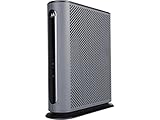
- 16x4 DOCSIS 3.0 cable modem plus a built-in AC1900 Dual Band (2.4 GHz and 5 GHz) WiFi Gigabit Router with four Gigabit (GigE) Ethernet ports, a firewall DFS, Power Boost, and more. This product is recommended for actual cable Internet service speeds up to 375 Mbps. A Broadcom cable modem chipset provides security from Denial of Service attacks. WiFi performance is exceptionally good, even in multi-dwelling units with lots of WiFi noise from neighbors. DFS and Power Boost are key
- Requires cable Internet service. Approved by and for use with Comcast Xfinity and Xfinity X1, Cox, Charter, Time Warner Cable, Suddenlink, WOW., CableOne and other cable service providers. Eliminate cable modem rental fees up to 156 dollars per year. (Savings are shown for Xfinity and vary by cable service provider. No cable modem is compatible with fiber optic, DSL, or satellite services from Verizon, AT&T, CenturyLink, Frontier, and others. Model MG7550 has no phone jack.)
- Built-in high-speed Wi-Fi router with AC1900 Wi-Fi, and Power Boost, and DFS provides Internet access for Wi-Fi devices including smartphones, notebooks, tablets, game stations, HDTVs, Amazon Echo, Google Home, Chromecast, Roku, Amazon Fire TV, and AppleTV. Four 10/100/1000 Gigabit Ethernet LAN ports provide wired connections to Windows and Mac computers, HDTVs, game stations, streaming TV devices, and other Ethernet-capable devices.
- Wireless Power Boost adds high-performance WiFi power amplifiers to boost the wireless signals to the legal limit, giving a significant boost in speed and range. The router can work on WiFi DFS frequencies, unlike most routers, so it is much less vulnerable to WiFi interference from neighbors. In addition, AnyBeam beamforming at both 2.4 GHz and 5 GHz frequencies focuses the signal on wireless clients to further enhance performance and range.
- Integrating the cable modem and router creates a reliable connection that reduces unwieldy wiring and power adapter clutter while conserving desk space. The vertical design minimizes shelf space and improves cooling while looking great in any home or office. A two-year warranty plus rugged lightning and power surge circuits protect your investment.
Compare candidates against your home and plan
| What to check | Why it matters |
|---|---|
| Equipment role | A standalone router needs an upstream modem or gateway on coaxial service. A combo includes both modem and router functions; a separate modem still needs a router for Wi-Fi. |
| Address and speed-tier eligibility | Check the exact model in My Device Info. A manufacturer’s Wi-Fi throughput rating does not establish Xfinity compatibility or the speed your plan delivers. |
| Telephone support | If you keep Xfinity Voice, verify that the modem or gateway supports telephone service. The CAX80 and S33 entries in Xfinity’s cited device list say they do not. |
| Coverage and layout | Room arrangement, floors, walls, and router placement can matter more than a headline speed rating. A single router may suit a smaller layout; mesh or an extender may help with distant rooms or dead zones. |
| Wi-Fi generation and devices | Newer Wi-Fi features help only when your devices can use them. Don’t assume one router’s support for Wi-Fi standards or features applies to another model. |
| Ethernet ports | Count wired devices and compare port speeds, especially if you have a multi-gig plan or local network. The Archer BE770’s reviewed port mix includes one 10 Gbps WAN, one 10 Gbps LAN, and four 1 Gbps LAN ports. |
| Upkeep and support | With customer-owned equipment, Xfinity says you are responsible for updates, security, Wi-Fi security management, and troubleshooting. Weigh that responsibility against the support and features in your plan. |
When mesh or an extender makes sense
Consider adding coverage equipment when a well-placed router still leaves weak areas, especially in a large, multi-story, or irregularly shaped home. Mesh systems use multiple nodes to extend coverage; an extender can address a more localized weak spot. Wired backhaul, when available, can connect mesh nodes over Ethernet. None of these options guarantees coverage by itself: placement and the building’s layout affect results.
The Tool Desk
Outbyte PC Repair FREEClear out junk files and repair common Windows errorsFree Scan →Outbyte Driver Updater FREEFix the driver behind crashes, sound loss and screen glitchesFind Drivers →Xfinity offers WiFi Extenders and a Pro option, with eligibility or service restrictions described by the provider. Compare those terms with a third-party mesh setup and your existing gateway before adding equipment. Xfinity’s gateway page describes its extender options; Tom’s Guide discusses mesh as a possibility for larger or irregular multi-story layouts in its router review.
Best Value

- 𝐅𝐮𝐭𝐮𝐫𝐞-𝐑𝐞𝐚𝐝𝐲 𝐖𝐢-𝐅𝐢 𝟕 - Designed with the latest Wi-Fi 7 technology, featuring Multi-Link Operation (MLO), Multi-RUs, and 4K-QAM. Achieve optimized performance on latest WiFi 7 laptops and devices, like the iPhone 16 Pro, and Samsung Galaxy S24 Ultra.
- 𝟔-𝐒𝐭𝐫𝐞𝐚𝐦, 𝐃𝐮𝐚𝐥-𝐁𝐚𝐧𝐝 𝐖𝐢-𝐅𝐢 𝐰𝐢𝐭𝐡 𝟔.𝟓 𝐆𝐛𝐩𝐬 𝐓𝐨𝐭𝐚𝐥 𝐁𝐚𝐧𝐝𝐰𝐢𝐝𝐭𝐡 - Achieve full speeds of up to 5764 Mbps on the 5GHz band and 688 Mbps on the 2.4 GHz band with 6 streams. Enjoy seamless 4K/8K streaming, AR/VR gaming, and incredibly fast downloads/uploads.
- 𝐖𝐢𝐝𝐞 𝐂𝐨𝐯𝐞𝐫𝐚𝐠𝐞 𝐰𝐢𝐭𝐡 𝐒𝐭𝐫𝐨𝐧𝐠 𝐂𝐨𝐧𝐧𝐞𝐜𝐭𝐢𝐨𝐧 - Get up to 2,400 sq. ft. max coverage for up to 90 devices at a time. 6x high performance antennas and Beamforming technology, ensures reliable connections for remote workers, gamers, students, and more.
- 𝐔𝐥𝐭𝐫𝐚-𝐅𝐚𝐬𝐭 𝟐.𝟓 𝐆𝐛𝐩𝐬 𝐖𝐢𝐫𝐞𝐝 𝐏𝐞𝐫𝐟𝐨𝐫𝐦𝐚𝐧𝐜𝐞 - 1x 2.5 Gbps WAN/LAN port, 1x 2.5 Gbps LAN port and 3x 1 Gbps LAN ports offer high-speed data transmissions.³ Integrate with a multi-gig modem for gigplus internet.
- 𝐎𝐮𝐫 𝐂𝐲𝐛𝐞𝐫𝐬𝐞𝐜𝐮𝐫𝐢𝐭𝐲 𝐂𝐨𝐦𝐦𝐢𝐭𝐦𝐞𝐧𝐭 - TP-Link is a signatory of the U.S. Cybersecurity and Infrastructure Security Agency’s (CISA) Secure-by-Design pledge. This device is designed, built, and maintained, with advanced security as a core requirement.
Buying checklist
- Identify your connection: Confirm whether your Xfinity service reaches your home over coaxial cable or fiber to your unit.
- Decide what you are replacing: If you need Wi-Fi only, choose a standalone router. If replacing coaxial equipment, compare a supported combo with a separate supported modem and router.
- Check exact eligibility: Search the model using My Device Info for your address and plan.
- Confirm Voice needs: If you subscribe to Xfinity Voice, verify telephone capability before removing existing equipment.
- Match features to the home: Consider room layout, Wi-Fi client devices, Ethernet needs, and whether mesh or an extender is warranted.
- Compare total plan terms: Check your actual gateway, support, security, and equipment terms before assuming that buying your own will save money.
What Wi-Fi 7 claims do—and don’t—tell you
Wi-Fi 7 is a wireless networking standard, not a faster Xfinity plan. Comcast’s XB10 explainer says, “Data automatically shifts to a clear path” and gives a response-time figure “as low as 5 milliseconds” for Wi-Fi 7 with XB10. That is Comcast Corporation’s vendor-published comparison claim, not a general measurement for every Wi-Fi 7 router, home, or Xfinity connection. Read Comcast’s Wi-Fi 7 and XB10 explainer.
Likewise, the Archer BE770’s lab throughput is a router review result under the outlet’s test conditions; it should not be read as the speed an Xfinity subscriber will receive. Your plan, modem or gateway, router placement, client capabilities, and home layout all affect the result.
Quick Recap
Product prices and availability are accurate as of the date/time indicated and are subject to change. Any price and availability information displayed on Amazon at the time of purchase will apply.
Free tools Windows power users keep installed
One-click scans. No signup required.




