Do these 3 things before closing this tab:
1Clear out junk files and repair common Windows errors2Fix the driver behind crashes, sound loss and screen glitches3Repair Windows errors before they cause bigger problemsBelkin has announced that certain Wemo smart home experiences will be discontinued as part of a broader shutdown affecting Wemo products in 2026. Even if your devices still power on today, the cloud services that enable remote control and many app features may be what’s ending.
That creates a practical problem: you need to know which of your Wemo devices will be impacted, what will break first, and how to migrate without losing routines, automations, and your home’s day-to-day reliability.
As an Amazon Associate I earn from qualifying purchases.
This guide is a bookmark-worthy reference: it shows how to confirm your model’s status, what to do before 2026, the best migration options (Apple Home, Google Home, Alexa, or Home Assistant), and what to try when things stop working.
Quick wins for a faster PC:
Clear out junk files and repair common Windows errorsFree Scan →Scan for outdated or missing drivers - takes under a minuteDriver Scan →Repair Windows errors before they cause bigger problemsFix Now →What Belkin’s Wemo shutdown in 2026 means (and what it might not)
When a smart home brand shuts down services, the biggest change is usually not the hardware itself—it’s the service layer (cloud authentication, remote connectivity, and sometimes integration endpoints).
#1 Best Overall
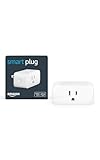
- Amazon Smart Plug works with the Alexa app and compatible Alexa devices to add voice control to any electrical outlet.
- Simple setup - No smart home hub required. Just plug it in, open the Alexa app and follow the stress-free directions to get started in minutes.
- Compatible with many lamps, fans, coffee makers, and other household devices with a physical on/off switch.
- Make any outlet a smart outlet. Compact design keeps your second outlet free for an additional smart plug.
- Use as a timer for lights or create lighting schedules for when you are away from your home.
In most real-world shutdowns of this type, you can expect some combination of the following:
- Remote control breaks (you can’t use the Wemo app when you’re away from home).
- Schedules and routines may stop if they depend on cloud execution.
- Third-party integrations may stop working (Alexa/Google/IFTTT connections can fail if the Wemo integration endpoint changes).
- Voice assistant control may degrade if it relied on Wemo’s cloud bridge.
What may still work depends on your specific device and whether it supports local control (control directly on your home network without calling Wemo cloud). Some smart plugs, switches, and sensors can still respond on local Wi‑Fi, but features like offsite access and many automation triggers often require cloud services.
Which Wemo devices are affected: how to confirm your exact model
The hardest part is that “Wemo products” is a category, not a single product line. The affected scope can vary by:
- Model number (printed on the label and shown in the Wemo app).
- Connectivity type (Wi‑Fi, hub/bridge-based, or older networking methods).
- Whether the device uses cloud-only features for schedules, events, or API integrations.
Do this to identify your situation precisely:
- Open the Wemo app on your phone (iPhone or Android) and look at each device’s Model/Device Info screen.
- On the physical device, find the model number and hardware revision (often on the bottom/back label).
- Find Belkin’s official shutdown/discontinuation notice for Wemo products in 2026 (the exact list is usually tied to model numbers and service names).
- Match your model numbers against the official list to see whether it’s service-discontinued, app-discontinued, or integration-discontinued.
If you don’t have the notice on hand, a quick workaround is to search by your model number plus keywords like discontinued, shutdown, or 2026. If Belkin provides a support article, it’s usually the most authoritative source.
What will stop working: remote access, schedules, integrations, and notifications
Even if your lights and plugs can still switch on locally, expect these breakpoints:
1) Remote control from outside your home
Most Wemo setups rely on cloud authentication to enable offsite control. Once the service endpoint changes or shuts down, you’ll see symptoms like “device unreachable,” “connection failed,” or controls that work only when you’re on the home network.
2) Schedules, timers, and rule engines
Many schedules in smart home apps are executed by the cloud service. When the cloud goes away, schedules may stop triggering entirely. Some local-capable devices keep their last programmed schedule, but you shouldn’t count on it unless the device specifically documents local execution.
Crashes, No Sound, or Screen Glitches?
Random freezes, missing sound and display glitches usually trace back to one bad driver. Find and replace yours safely.Free scan · under a minutePC Slower Than It Used to Be?
A free scan shows the junk files, broken settings and background clutter dragging Windows down - then fixes them in one click.Free scan · Windows 10 & 11Rank #2

- Voice control: Kasa smart plugs that work with Alexa and Google Home Assistant. Enjoy the hands free convenience of controlling any home electronic appliances with your voice via Amazon Alexa or Google Assistant
- Easy set up and use: 2.4GHz Wi-Fi connection required. Plug in, open the case app, follow the simple instructions and enjoy. Kasa app reqiured
- Scheduling: Use timer or countdown schedules set your smart plug to automatically turn on and off any home electronic appliances such as lamps, fan, humidifier, Christmas lights etc.
- Smart Outlet Control from Anywhere: Turn electronics on and off from anywhere with your smartphone using the Kasa app, whether you are at home, in the office or on vacation.
- Trusted and Reliable: Kasa is trusted by over 6 Million users and being the Reader’s Choice of PCMag 2020. UL certified for safety use. 2-year warranty.
3) Integrations: Alexa, Google, Apple Home, and smart home automation hubs
Integrations typically depend on one of three layers:
- Wemo-to-assistant cloud linkage (voice assistant control fails when Wemo integration endpoints stop).
- Hub/bridge linkage (a local bridge may keep working but the assistant may not discover devices).
- Third-party API access (webhooks and recipes can break if an API is retired).
4) Notifications and event history
Motion, contact, and other events often generate cloud logs for push notifications. When cloud goes offline, you may lose alerts even if the device still toggles power.
Before the shutdown: steps to protect your smart home setup
Start now, because migration is rarely one-click. Here’s what to do before anything changes in 2026.
Inventory everything (write it down)
Create a list of each device with its model number, where it’s installed, and what automations depend on it.
Recommended Free Tools
| Room | Device type | Model number | Used for | Depends on |
|---|---|---|---|---|
| Living room | Smart plug | Wemo model XYZ | TV power cycle | Daily schedule + Alexa routine |
| Front door | Contact sensor | Wemo model ABC | Door open notification | Push alerts + automation |
Even a spreadsheet works. The point is to know what breaks first and what you need to replace first.
Export and document automations
Smart home automations don’t always export cleanly. Document them manually by capturing:
- Schedule times (including time zones).
- Trigger conditions (motion, door open, sunrise/sunset, device state).
- Action targets (specific device names and which app they live in).
Test whether your devices already support local control
Try a practical test today:
- Open the Wemo app while you’re on the home Wi‑Fi and confirm you can toggle devices normally.
- Then turn on Airplane Mode (or disable Wi‑Fi and use mobile data) and confirm whether you can still control the device.
- If control fails offsite but works onsite, that’s consistent with cloud dependency.
Local control is the main insurance policy for continued functionality after service shutdown.
Rank #3

- 【Easy Setup, One Control】With Matter, Skip the step of downloading and registering multiple manufacturers' apps every time you buy a new device. Instead, head straight to certified smart home platforms like Apple Home, Alexa, Google Home, SmartThings, or AiDot to control all your Matter devices.【TIP】Matter-certified hub or controller (HomePod, Echo Dot, Nest, SmartThings Hub) is required for Apple Home/Alexa/Google Home/SmartThings platforms. Alternatively, the AiDot app can be used without hub
- 【Offline-Ready Control】Once you've set up your Matter-certified devices on your LAN, they'll be able to communicate with each other directly, using the Matter protocol. This means that if your home internet connection goes offline, your Matter-certified devices will still be able to communicate and be controlled within your LAN, without relying on the internet or cloud services.
- 【Remote Control from Anywhere】Use the app to turn electronics on before you arrive home and off after you leave, no matter where you are. Using the smart plug that work with alexa manage your power usage and save money.
- 【Hands-free Voice Control】Control linkind homekit plug using simple voice commands through Apple HomeKit, Siri, Amazon Alexa, Google Assistant, and SmartThings, without the need for physical input such as buttons or switches.
- 【Flexible Scheduling & Timer】Effortlessly reduce energy usage with automatic device shutdown after a set time. For example Chrismas Tree, TV, Lamp, Fan, Humidifier,Blenders, Lightbulbs
Check your network setup for future migration
Many migration options require stable networking. Before 2026, ensure your Wi‑Fi settings are consistent (especially if you use multiple SSIDs or guest networks).
- Keep smart devices on a standard 2.4 GHz SSID (many smart devices don’t support 5 GHz).
- Verify your router isn’t blocking device-to-device traffic.
- If you use VLANs or guest networks, plan to move smart devices to a network that allows local discovery.
Migration paths that actually work after Wemo services change
You’ve got four realistic paths. Pick based on what you want: minimal hardware changes, strong automation, or future-proofing.
Apple Home (HomeKit) route
If you use an iPhone, iPad, or Apple TV as a home hub, Apple Home can provide a stable automation layer—often more consistent than relying on one vendor’s cloud service.
- Verify you have a Home Hub: Apple TV 4K or HomePod (any generation that supports home hub features).
- For each Wemo device that’s failing in 2026, buy a compatible HomeKit (or Matter-over-Thread/Wi‑Fi) replacement if needed.
- Recreate automations in the Home app using scenes and triggers (time, sensor states, occupancy).
- Test outside the home to confirm remote access through iCloud works for your new devices.
Google Home route
Google Home can be a strong option if you already use Google Assistant routines and want voice control plus cloud-based automation.
- Update your Google Home app and confirm your existing assistant routines are documented.
- Replace nonfunctional Wemo devices with Google Home-compatible models (Matter where possible).
- Create new routines in the Google Home app for each trigger/action pair you used in Wemo.
- Confirm device discovery works by adding devices while on your home network.
Amazon Alexa route
If your Wemo devices currently respond through Alexa, you’ll want to ensure Alexa can still discover and control new devices after 2026.
What’s actually slowing this PC down?
Pick the symptom - the matching free tool is one click away.
- In the Alexa app, open your device list and name everything clearly (e.g., “Front Door Plug”).
- For each Wemo device that stops working, replace with an Alexa-compatible equivalent (again, Matter is a good direction).
- Rebuild routines inside the Alexa app using the same trigger concept (schedules, door open, motion).
- Test end-to-end: voice command + routine trigger while you’re both at home and remote.
Home Assistant route
Home Assistant is the most flexible path if you’re comfortable running local automation. It reduces dependency on a single brand’s cloud (depending on integrations).
- Pick your deployment: a small PC, NAS VM, or supported container. (Home Assistant supports add-ons and local logs.)
- For each device, install or configure a local-capable integration.
- Migrate automations by recreating them in Home Assistant dashboards (YAML or UI-based) so triggers don’t rely on Wemo’s cloud.
- Keep a backup snapshot of your configuration before the migration wave.
If you have any automations that are safety-adjacent (heaters, locks, water shutoffs), prioritize migrating those first.
Rank #4

- VOICE Control Wemo hands-free using your voice
- PROTECT Enable Away Mode and look like you're home even when you're not.
- SCHEDULE Control and schedule lights and appliances from anywhere.
- STACK Space-saving design won't cover the whole outlet
Replacing Wemo hardware: what to buy instead (by device type)
Since the exact affected Wemo models in 2026 may vary, the right approach is to replace by capability rather than by brand. Below is a practical “device type” mapping so you can select compatible replacements.
Smart plugs and power switches
Look for devices that support local control and integrations you’ll still use after 2026 (Apple Home, Google Home, Alexa, or Matter). If a plug requires Wemo’s cloud to function at all, it’s a risky replacement.
The Tool Desk
Outbyte Driver Updater FREEScan for outdated or missing drivers - takes under a minuteDriver Scan →Outbyte PC Repair FREEClear out junk files and repair common Windows errorsFree Scan →Prioritize replacements that list support for:
- Local switching without cloud dependency.
- Home automation standards (Matter is ideal when available).
- Energy monitoring if you used it for usage-based automations.
Motion, contact, and window/door sensors
For sensors, the biggest risk is notifications and automation triggers. Choose replacements that support push notifications (via your hub) and reliable local state updates.
Bridges and hubs
If you have Wemo bridges (or any hub-like device), confirm whether they’re part of the shutdown scope. If you’re moving to a local automation hub, it may be better to eliminate the bridge entirely and adopt devices that pair directly to your hub ecosystem.
Cutover checklist for 2026 (a timeline you can follow)
Even if the official shutdown date is in 2026, you’ll want a staged migration so your home doesn’t lose functionality all at once.
30–90 days before the cutoff
- Finish your device inventory spreadsheet.
- Decide your primary ecosystem (Apple Home, Google Home, Alexa, Home Assistant).
- Order replacement devices for your top 20% highest-impact locations (entry points, daily routines, safety-adjacent items).
During the transition window
- Create parallel automations in the new system (keep Wemo automations running until you confirm stability).
- Test triggers: time-based, sensor-based, and voice control.
- Verify notifications: test from outside the home to confirm remote delivery.
The week of switchover
- Disable or remove Wemo automations after you confirm the new system is fully controlling the devices.
- Log the last working day for remote access in case you need support later.
- Keep the Wemo app installed for reference, but don’t rely on it for mission-critical actions.
Troubleshooting when devices go offline or stop responding
When shutdown-related changes land, the symptoms can look like standard connectivity issues. Here’s how to narrow it down quickly.
Symptom: Device works on Wi‑Fi but not remotely
That strongly suggests cloud dependency. Try:
- Switch your phone’s network (Wi‑Fi off, mobile data on) and confirm failure pattern.
- Check whether other cloud-connected devices on the same Wi‑Fi are also failing remotely.
- Migrate remote control to your new ecosystem (Home Assistant, Home Hub, Alexa/Google routines) instead of Wemo app remote access.
Symptom: Device toggles locally but automations don’t run
Automations often depend on the cloud scheduler. If you can’t trigger automations reliably, rebuild them in your new system and don’t assume Wemo schedules will persist.
Best Value

- 【Matter: All-Round Compatibility】With Matter, users are no longer tied to specific platforms and works with all certified smart home platforms, such as Apple Home, Amazon Alexa, Google Home and Samsung SmartThings. You can control all your smart home devices from a single app, reducing the need for multiple apps for different devices.
- 【Matter: Smooth LAN Control】All Matter-certified devices in your local area network (LAN) will work smoothly even when your home internet goes offline. Matter allows effective communication directly between devices, without the need for a specific 'forwarding' device. For example, a Matter smart switch or sensor can turn on/off a Matter bulb directly without being connected to a cloud service, or other specific action. Once configured, communication and control between Matter devices can be achieved directly on the local network.
- 【Matter: Future-Proofing】Matter devices will be compatible with future updates and advancements in technology, ensuring that your smart home system remains up-to-date and compatible with new devices and features.
- 【Compact & Flame Retardant Design】Avoid blocking additional outlets with its compact design, and plug in your WiFi smart plug with confidence thanks to its UL certified flame retardant design and 2-year limited warranty.
- 【App & Voice Control】Control your WiFi smart plug from anywhere, anytime via the free Tapo App or just give voice commands to Siri, Amazon Alexa, Google Assistant or Samsung SmartThings. Your favorite smart assistant enables you to have a truly hands-free experience.
Symptom: Voice assistant can’t discover devices after 2026 changes
- In your assistant app, remove and re-add devices only if the integration supports it.
- If discovery fails entirely, replace Wemo devices with ones that pair directly (or via Matter) to your ecosystem.
- For Home Assistant, verify the entity states update locally (check logs for integration errors).
Symptom: Devices won’t pair or keep disconnecting
This can happen during migration if you have multiple routers, roaming SSIDs, or guest networks. Try:
- Pair on a dedicated 2.4 GHz SSID.
- Temporarily disable “client isolation” and certain AP isolation modes.
- Power-cycle the device and router.
- Confirm your router doesn’t block DNS resolution to required endpoints (for the new devices’ setup process).
Common mistakes to avoid
- Waiting until the last month: you’ll likely discover you need a different device class for local control.
- Assuming local control exists: test offsite behavior now so you’re not surprised in 2026.
- Not documenting schedules: you’ll lose the “why” and “when” behind automations and rebuild them wrong.
- Relying on one ecosystem integration: if your Alexa/Google integration depends on Wemo cloud, it can fail even if basic switching still works locally.
- Forgetting about energy monitoring: if your automations depend on kWh or watts, you’ll need replacements that measure power.
FAQs about Belkin Wemo shutting down in 2026
Does my Wemo device stop working in 2026, even if it’s still plugged in?
Not necessarily. Many shutdowns affect cloud features first (remote control, schedules, integrations). Some devices may still toggle locally, but you should confirm model-specific behavior using the official Belkin notice and real tests.
Will my Wemo app stop working entirely?
It depends on the scope of the discontinuation. Some cases keep the app installed for local status but retire remote account functionality or integration features. The official model list is the only reliable way to know.
Can I keep using Alexa or Google after Wemo services end?
Sometimes yes, but only if the integration path you use remains supported. In many migrations, replacing Wemo devices with Matter-capable models (or models that pair directly to your assistant ecosystem) is the most reliable long-term option.
What’s the most future-proof migration path?
For many households, Matter-compatible devices and a hub-based automation layer (Apple Home with a home hub, Home Assistant, or a direct assistant-compatible device) reduce dependence on one vendor’s cloud.
Where do I find the authoritative list of affected Wemo models?
Look for Belkin’s official support/discontinuation announcement tied to the year 2026 and match by model number (from the device label and the Wemo app’s device details screen).
Bottom Line
Belkin’s Wemo shutdown in 2026 is a planning event, not a panic event. The safest approach is to confirm which Wemo models are affected, test local versus remote behavior now, then migrate automations to an ecosystem that doesn’t depend on Wemo’s cloud.
Free tools Windows power users keep installed
One-click scans. No signup required.
If you act in phases—document, replace the highest-impact devices first, and rebuild routines in Apple Home, Google Home, Alexa, or Home Assistant—you can keep your smart home functioning normally long after the Wemo service changes.
Quick Recap
Product prices and availability are accurate as of the date/time indicated and are subject to change. Any price and availability information displayed on Amazon at the time of purchase will apply.




