Free tools Windows power users keep installed
One-click scans. No signup required.
Sometimes—but there is no blanket yes. Rechargeable lithium-ion AA and AAA batteries that explicitly provide a regulated 1.5 V output may be designed as alkaline replacements. Other lithium batteries, including cells with a different voltage or an incompatible charging system, are not automatically suitable. Physical fit alone proves nothing about electrical compatibility or safe charging.
Before installing any rechargeable lithium-ion AA or AAA cell, check the exact device manual, the battery maker’s instructions and the charger requirements. Panasonic’s consumer guidance is direct: “Check the device manual to ensure battery compatibility.”
As an Amazon Associate I earn from qualifying purchases.
Why an alkaline-sized lithium-ion battery is not automatically equivalent
AA and AAA describe physical dimensions, not chemistry, voltage behavior or charging requirements. A device designed around alkaline cells may have been engineered for the way an alkaline battery’s voltage changes during use. A rechargeable cell with the same shape can behave differently even when its label shows 1.5 V.
Panasonic lists alkaline AA and AAA cells at 1.5 V and describes nickel-metal hydride (NiMH) rechargeable cells as having a different, steadier output profile. Lithium-ion products add another distinction: some AA and AAA models include regulation that presents a stated 1.5 V output, while other lithium cell formats do not. Treat these as separate categories rather than treating every rechargeable battery as interchangeable.
#1 Best Overall

- Battery and Charger Bundle: Includes 4-bay rapid battery charger (ONLY for NiMH batteries), 4-pack of AA 2000mAh batteries, 4-pack of AAA 800mAh batteries
- LED Light Indicator: 1) Battery is charging: LED blinks slow. 2) Battery is fully charged: LED is solid white. 3) The charger detects an error (defective battery or alkaline battery): LED blinks fast. 4) Every time the charger is connected to power all LEDs power up and power off in a quick sequence.
- Long Battery Life: Pre-charged and ready-to-use rechargeable batteries can be recharged up to 1000 times
- Low Self-Discharge: Batteries maintain 80% capacity for up to 12 months
- Fast Charging: Fully charges 2 AA within 3.5 hours, 4 AA within 7 hours; 2 AAA within 2 hours, 4 AAA within 4 hours
Manufacturers’ phrases such as “replace regular AAA alkaline batteries” or “compatible with everyday AAA alkaline powered devices” apply to the named product and its stated conditions. They are not a universal safety certification for every appliance, camera, toy or medical device that accepts an alkaline cell.
What “regulated 1.5 V” means
A regulated 1.5 V lithium-ion AA or AAA battery uses internal electronics to provide a controlled output intended to resemble the voltage expected by an alkaline-powered device. SmallRig, for example, lists USB-C rechargeable AA and AAA lithium-ion cells with regulated 1.5 V output and markets them as alkaline replacements.
That specification is useful, but it does not answer every compatibility question. The device may impose a current demand, low-voltage cutoff, battery-identification requirement or charging arrangement that the cell was not designed to handle. Regulation also means the output may not decline in the same way as an alkaline cell. A battery gauge that estimates remaining power from voltage can therefore be inaccurate, remain “full” for much of the discharge and then drop quickly, or trigger a low-battery shutdown earlier than expected.
Recommended Free Tools
Rank #2

- 【1500 Recycle & Low Self-Discharge】Low self-discharge design retains 80% capacity after 3 years of storage. Up to 1500 recharge cycles
- 【Intelligent Safety Protection】 Automatic power-off and thermal protection prevent overheating, monitored by red/green LED charging indicators
- 【Independent Charging】 8 isolated circuits charge 1-8 AA/AAA batteries simultaneously, compatible with mixed NiMH/NiCD sizes
- 【Trickle Charge Mode】 Uses trickle charge to maintain long-lasting performance and maximize battery capacity
- 【Packing List】BEVIGOR 8 Bay AA/AAA NiMH/NiCD Battery Charger x 1, 4-pack AA and AAA rechargeable batteries, TYPE-C Charging Cable x 1, User Manual x 1
Do not confuse a regulated 1.5 V AA/AAA product with an unregulated lithium cell, a bare lithium-ion cell or a lithium battery in another format. A matching label or adapter does not make those products safe substitutes.
Compatibility checks to make before you buy or install one
1. Read the device’s battery specification
Look for the exact chemistry and voltage wording in the manual, battery compartment and manufacturer support page. “AA” or “AAA” alone is insufficient. The instructions may list alkaline only, alkaline and NiMH, or particular rechargeable cells. Follow the most specific current guidance for your model.
2. Check the rechargeable battery’s output claim
Confirm that the exact model is an AA or AAA lithium-ion product with a stated regulated 1.5 V output. Note whether the manufacturer specifies a continuous output limit, a permitted device type or restrictions on series use. If the documentation does not clearly state regulated 1.5 V output, do not assume it has that feature.
Rank #3

- 1300 Recycles & High Capacity: Enjoy up to 1300 recharges with Granicell's 2800mAh AA and 1100mAh AAA batteries, offering long-lasting power and excellent cycle stability
- Independent Charging Slots:Freely charge any number of AA or AAA Ni-MH/Ni-Cd batteries simultaneously for easier charging
- High Performance & Long Lifespan:Batteries can be recharged up to 1300 times with 2800mAh high capacity, eco-friendly and free of harmful substances
- Versatile Compatibility:Works well with a variety of electronics under 1.5V, including high-power devices like digital cameras, electric toothbrushes, and flashlights
- USB High-Speed Charging:Type-C input allows convenient charging from an adapter, car, power bank, or computer, anywhere and anytime
3. Compare the charging instructions
Determine whether the cells charge through an integrated USB-C port, a dedicated charging module or another specified method. A charger intended for NiMH cells is not automatically suitable for lithium-ion cells. ANSMANN’s Pure Power charging module, for instance, is designed for its own Pure Power 1.5 V lithium-ion AA/AAA line. Use only the charging method named for the particular cells.
4. Look for restrictions on mixing
Do not combine lithium-ion, alkaline and NiMH cells in one device. Also avoid mixing different brands, capacities, ages or charge states unless the device manufacturer explicitly permits it. Panasonic warns that unequal cells can increase over-discharge and leakage risk. Replace a complete set together when the device requires multiple cells.
How the main AA and AAA options differ
| Cell type | Output behavior stated by the cited manufacturer material | Charging requirement | Compatibility question |
|---|---|---|---|
| Alkaline AA/AAA | Panasonic lists these cells at 1.5 V; voltage normally changes as the cell is used. | Single-use; do not place in a rechargeable-cell charger. | Use where the device specifies alkaline cells or otherwise permits them. |
| NiMH rechargeable AA/AAA | Panasonic describes a different, steadier output profile from alkaline. | Requires a charger intended for the specific NiMH cells. | Use only where the device manual permits NiMH or the exact model is approved. |
| Regulated 1.5 V lithium-ion AA/AAA | Some products, including the SmallRig models described in product material, state regulated 1.5 V output. | Use the cell maker’s specified USB or charging module; do not assume a NiMH charger works. | Check both the device manual and the exact battery instructions; marketing language is product-specific. |
| Other lithium formats or unregulated lithium cells | Not established as equivalent to 1.5 V alkaline output. | Requires the charger and protection system specified for that format. | Do not substitute solely because the cell can be made to fit. |
A safe installation procedure
- Identify the device model. Record the manufacturer’s exact model number, especially for cameras, flashes, test instruments and equipment with a dedicated battery menu.
- Read the permitted-cell list. If the manual names only alkaline cells, obtain confirmation from the device maker before trying a regulated lithium-ion replacement. If it names a particular rechargeable chemistry or brand, follow that wording rather than a retailer’s generic compatibility statement.
- Verify polarity and physical condition. Install cells in the marked orientation. Do not use a cell with a damaged wrapper, bent terminal, swelling, corrosion or a loose charging connector.
- Install a matched set. Use cells of the same type, model, capacity, age and charge state. Never combine a partially used cell with a freshly charged one in a multi-cell device.
- Test the device under normal load. Watch for unexpected shutdowns, error messages, excessive heat, unusual noise or a battery indicator that behaves erratically. Stop using the cells if any of these occur and consult the device or battery manufacturer.
- Charge outside the device unless the instructions say otherwise. Follow the specified cable, charging module, charging environment and completion indication. Do not improvise with a charger made for another chemistry.
Why device manuals matter more than a generic “replacement” claim
Battery acceptance is a design decision made for a particular model. A camera may regulate its own supply, monitor voltage thresholds or expect a particular rechargeable profile. A toy or flashlight may be less selective, while a precision instrument can shut down when its voltage curve differs from the one anticipated by its firmware.
Rank #4

- 【1.5V Constant Voltage & High-Capacity Batteries】Rechargeable AA lithium batteries delivers 3400mWh and Rechargeable AAA lithium batteries offers 1100mWh, providing significantly longer runtime than typical Ni-MH batteries. The 1.5V constant voltage output ensures steady power without voltage drop, ideal for high-drain devices like keyboards, mice, toys, and remotes.
- 【16 Slot AA & AAA Mixed Charging with Full Protection】Rechargeable AA and AAA batteries with charger features 16 independent slots to charge 8 AA and 8 AAA batteries simultaneously. Equipped with a smart microcomputer chip, it monitors each battery individually to prevent overcharging, overheating, and short circuits, ensuring safety and extending battery life. Compatible only with 1.5V AA/AAA rechargeable lithium batteries.
- 【Smart 16-Slot Charger with Fast Charging】The included 16-bay charger intelligently charges your batteries individually. It features a convenient Type-C input for fast and flexible power delivery from wall adapters, power banks, laptops, or car chargers. The charger's design also doubles as a compact storage case, eliminating clutter.
- 【Long-Lasting Value with 1600 Charge Cycles】 Say goodbye to disposable batteries. These lithium rechargeable aa batteries and rechargeable aaa batteries can be recharged up to 1600 times. This exceptional cycle life, combined with a long shelf life, offers a significant cost-saving and eco-friendly alternative to thousands of single-use batteries.
- 【Complete Value Pack with 2-Year Warranty】This rechargeable AA and AAA batteries with charger set includes: 4 AA lithium batteries (3400mWh), 4 AAA lithium batteries (1100mWh), 16-slot AA/AAA battery charger. Perfect for home, office, photography, and more— in one package. Backed by a 2-year warranty and reliable customer service for a worry-free purchase.
A Canon camera manual illustrates this model-specific approach: it names alkaline AA cells and Canon AA NiMH cells, and it specifies a charger for those NiMH batteries. That example should not be treated as current guidance for unrelated Canon products or for another manufacturer’s lithium-ion AA/AAA cells. It demonstrates why the model’s own manual is the controlling source.
Independent reader supportYour contribution helps us test, update, and keep practical guides available for everyone.Battery indicators and runtime can be misleading
Alkaline-powered equipment often estimates remaining capacity from a declining voltage. A regulated 1.5 V lithium-ion cell can hold its output near the stated level for much of its discharge, so the device may not see the gradual decline it expects. Possible results include a gauge that is inaccurate, a sudden low-battery warning or an abrupt shutdown near the end of the cell’s usable charge.
The Tool Desk
Outbyte Driver Updater FREEScan for outdated or missing drivers - takes under a minuteDriver Scan →Outbyte PC Repair FREERepair Windows errors before they cause bigger problemsFix Now →These behaviors do not by themselves prove that the battery is defective, but they can make an otherwise compatible combination inconvenient or unsuitable for equipment that must provide a reliable warning before power loss. Check the battery maker’s runtime information and the device maker’s guidance rather than assuming an alkaline runtime estimate transfers directly.
Best Value
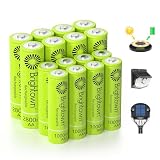
- 【 30% Precharged for Ready Use 】 For transportation safety purposes, these batteries are only precharged with 30% power, so charge them before use for longer working. In addition, recharging the battery every 3 months can make its lifespan longer
- 【 High Performance and Long Lasting 】AA batteries feature a 2800mAh high-capacity rating for longer working time in power-hungry devices, while AAA batteries offer a reliable 1000mAh capacity for everyday electronics. Unlike NiCD batteries, these NiMH cells maintain their maximum capacity over time without memory effect
- 【 Wide Daily Uses 】 Can be widely used for battery string lights, toys, TV remote, flashlight, wireless mouses, portable audio players, game controllers, smart home devices, digital cameras, and other everyday electronics
- 【 Solar and Standard Charging 】 These rechargeable NiMH batteries can be charged via solar or standard charging units. Using a fast charger is a better choice since it has a large capacity
Charging and handling rules that prevent avoidable problems
- Use only the charger, charging module or USB method specified for the exact lithium-ion AA/AAA model.
- Never put a non-rechargeable alkaline cell in a charger.
- Do not charge lithium-ion cells in a NiMH-only charger unless the manufacturer explicitly states that the charger supports that exact product.
- Keep charging instructions, polarity and connector requirements for each product; similarly sized cells can use different charging systems.
- Remove a cell from service if it becomes swollen, leaks, overheats or shows physical damage. Do not attempt to repair or rewrap it yourself.
- Store and transport cells as directed by their manufacturer, with terminals protected from accidental contact.
These steps address chemistry and charging differences that a size label cannot reveal. They are especially important when a battery includes electronic regulation or protection circuitry.
If the device does not work after installation
No power or an immediate low-battery warning
Remove the cells and confirm polarity, charge state and contact cleanliness. Recheck that the product is genuinely a regulated 1.5 V model and that the device manual permits the combination. If the device lists only alkaline or a specific rechargeable chemistry, stop substituting and ask the device maker.
Intermittent operation or sudden shutdown
Try a fully matched set and inspect the contacts. If the problem persists, the device may be responding poorly to the regulated cell’s output behavior or current requirements. Do not mix chemistries to “balance” the set; obtain model-specific guidance instead.
What’s actually slowing this PC down?
Pick the symptom - the matching free tool is one click away.
Heat, odor, leakage or swelling
Turn the device off, disconnect it from power and move the affected cell away from combustible material only if it is safe to do so. Do not continue charging or using a damaged cell. Contact the battery manufacturer for disposal and incident instructions.
A practical decision rule
Use a rechargeable lithium-ion AA or AAA battery in an alkaline-designed device only when all three conditions are met:
- The battery is the exact AA/AAA model and explicitly states regulated 1.5 V output.
- The device manufacturer’s instructions allow that battery type or confirm compatibility.
- You can charge the cells with the method specified by their manufacturer and install them as a matched set.
If any condition is missing, choose the chemistry listed in the device manual or obtain written confirmation from the manufacturer. “It fits” and “it says 1.5 V” are useful starting checks, not a complete safety assessment.
Quick Recap
Product prices and availability are accurate as of the date/time indicated and are subject to change. Any price and availability information displayed on Amazon at the time of purchase will apply.




