Freedom251 › Log Management Software
Oracle Log Analytics
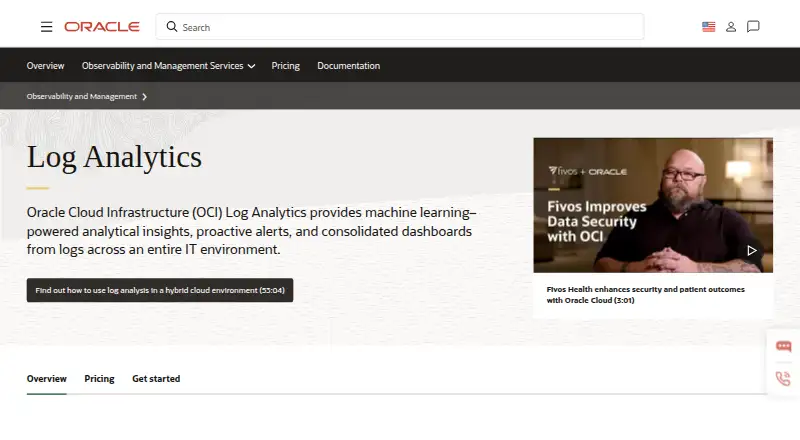
What Oracle Log Analytics is
Oracle Log Analytics is a cloud service for collecting and working with logs from applications and infrastructure, whether they run in the cloud or on premises. It indexes, enriches, searches, analyzes, correlates, visualizes, and monitors log data. Machine-learning-based analytics can help teams narrow log data toward root causes during troubleshooting. Users can customize dashboards, while operators can also monitor systems with dashboards, email reports, and alarms. The service includes more than 250 prebuilt parsers, geolocation enrichment, data masking, and active and archival storage. Collection options range from agents and service connectors to streaming, SQL, Syslog, Object Storage, APIs, and SDKs. Oracle lists integrations with products and services including Oracle Database, OCI Kubernetes Engine, OCI audit logs, and Oracle Enterprise Manager. Deployment is cloud based, with API, Linux, web, and Windows platforms. The first 10 gigabytes of log storage are free; further active and archival storage is metered by Log Analytics Storage Units. Oracle links to an OCI Free Tier trial for eligible services.
Who it suits
It suits DevOps teams, developers, administrators, operators, and IT or business teams that need to monitor or troubleshoot application and infrastructure logs. Teams seeking dashboards, log enrichment, and root-cause analysis tools may find its listed capabilities relevant.
What it does well
- First 10 gigabytes of log storage are free.
- Includes more than 250 prebuilt parsers.
- Supports multiple log collection approaches.
- Archived logs can be recalled in minutes.
- Offers customizable dashboards, reports, and alarms.
What to know first
- Further storage is metered by Storage Units.
- Deployment option listed is cloud.
- Query language is proprietary.
- Data retention is listed as 90 days.
Limits
The first 10 gigabytes of log storage are free. Additional active storage is charged per Log Analytics Storage Unit per month, and archival storage per Storage Unit per hour; each unit represents 300 gigabytes stored during the applicable period.
Plans
| Plan | Billed and limits | Price |
|---|---|---|
| First 10 gigabytes of log storage | First 10 gigabytes of log storage · First 10 gigabytes of log storage | Free |
| Archival Storage | Per Log Analytics Storage Unit per hour; each Storage Unit is 300 gigabytes of logs stored during the hour · Archival storage | On request |
| Active Storage | Per Log Analytics Storage Unit per month; each Storage Unit is 300 gigabytes of logs stored during the month · First 35 units per month · Greater than 35 and less than 103 units per month · Greater than 103 units per month | On request |
As oracle.com lists them, read 7 Oct 2026. The maker's own page has the final word.
Getting started
- Visit the Oracle Log Analytics website.
- Use the linked OCI Free Tier trial, which includes US$300 in credits for up to 30 days on eligible services.
- Choose a collection approach, such as agents, Fluentd, service connectors, streaming, Syslog, APIs, or SDKs.
- Configure access using OCI IAM policies and compartments.
- Create dashboards, reports, or alarms to monitor log data.
Overview
Oracle Log Analytics is a cloud service for collecting, searching, analyzing, and monitoring logs from applications and infrastructure, whether they run on OCI or on premises. It is best suited to operations and development teams that want log analysis closely connected to Oracle Cloud services. Its broad collection and analysis toolkit is compelling, but cloud deployment and metered storage make it a less obvious fit for teams seeking self-hosted log management or predictable storage costs.
Key features
Collection options include containerized agents, Fluentd, Fluent Bit, Management Agent, service connectors, streaming, SQL, Syslog, Object Storage, APIs, and SDKs. That breadth can accommodate varied environments, but teams still need to choose and configure collection paths for their systems. Structured parsing, more than 250 prebuilt parsers, geolocation enrichment, and data masking help turn incoming records into material operators can search and use.
Machine-learning-based analytics are designed to help narrow log data toward root causes during troubleshooting. Users can customize dashboards, while operators can monitor systems through dashboards, email reports, and alarms. Log pipelines and archive export extend its log-handling capabilities; custom metrics and SLO tracking give it a role beyond basic search.
Oracle identifies monitoring integrations for E-Business Suite, Oracle Database, OCI Kubernetes Engine, OCI audit logs, other OCI services, and Oracle Enterprise Manager. Its security posture solution connects with Oracle Cloud Guard and Oracle Threat Intelligence Service. Logs are encrypted in transit over HTTPS and at rest with AES-256 by default; customers can request OCI Vault keys. OCI IAM policies and compartments govern access to resources including log groups, entities, purge policies, and collection rules. Oracle describes unlimited active and archival storage, with archived logs recallable in minutes, while the stated data retention is 90 days.
Pricing
The freemium model starts with the first 10 gigabytes of log storage free. That allowance offers a low-cost way to begin, but teams handling larger volumes should account for separate active and archival storage charges.
| Plan | Price | What it means |
|---|---|---|
| First 10 gigabytes of log storage | free | The first 10 gigabytes of log storage are free. |
| Active Storage | Custom pricing | Billed per Log Analytics Storage Unit per month; each unit represents 300 gigabytes of logs stored during the month. Pricing tiers are first 35 units, greater than 35 and less than 103 units, and greater than 103 units. |
| Archival Storage | Custom pricing | Billed per Log Analytics Storage Unit per hour; each unit represents 300 gigabytes of logs stored during the hour. |
Oracle Cloud Free Tier provides US$300 in credits for up to 30 days on eligible OCI services, and Oracle links this trial to Log Analytics. That can help teams evaluate eligible services, but it is time-limited and distinct from the first-10-gigabyte storage allowance. Additional active and archive storage use different billing units, so estimate both before committing to a workload. Customers with active support contracts can direct technical questions and service requests to My Oracle Support.
Platforms
The service is cloud-deployed and lists API, Linux, web, and Windows support. This combination covers common operating systems and programmatic access, but the cloud deployment makes it unsuitable for organizations that require a self-hosted analytics service.
Who it's for
DevOps teams, developers, administrators, operators, and IT or business teams troubleshooting and monitoring applications or infrastructure are its intended audience. It is especially apt for teams already using Oracle services, given the identified OCI and Oracle product integrations. Teams whose priority is self-hosting or a single predictable storage price should weigh those constraints against its analysis and monitoring breadth.
Pros and cons
- Pro: Multiple collection methods, structured parsing, and more than 250 prebuilt parsers support varied log sources and make data more workable.
- Pro: Dashboards, email reports, alarms, machine-learning-based analysis, and SLO tracking support monitoring as well as troubleshooting.
- Pro: OCI encryption and IAM controls provide defined safeguards for stored logs and access to service resources.
- Con: Only the first 10 gigabytes of log storage are free; active and archival storage beyond that are metered separately, with custom pricing.
- Con: Cloud deployment rules it out for teams that need to host the analytics service themselves.
- Con: The 90-day stated retention period may not suit teams that need longer-term searchable logs, despite the service's archival storage option.
Alternatives
Choose ELK Stack if self-managed Elastic Stack features or its usage-priced Logs Essentials plan better match your deployment and billing needs. Google Cloud Logging is another freemium cloud option, with its logging storage plan showing a first 50 GiB per project per month free. Amazon CloudWatch Logs may suit readers comparing a paid, pay-as-you-go ingestion option; its published rate varies by region and tier.
Oracle Cloud Infrastructure Logging is a related Oracle option with a 10 GB monthly free allowance and a listed usage plan. Consider Sumo Logic if its free tier's 20 daily credits and 7-day log retention fit your needs, with up to three users. Fluentd is a free, open-source data collector rather than the cloud analysis service described here. Grafana Loki offers self-hosted Loki and a free Grafana Cloud Logs tier with 50 GB ingested per month and 14-day retention. Logstash is a free option for readers seeking its default distribution under the Elastic License.
For adjacent categories, browse Log Management Software, Metrics Monitoring Tools, or Distributed Tracing Tools.
Verdict
Oracle Log Analytics is a strong choice for DevOps and IT teams that want a broad, OCI-connected service for collecting, analyzing, and monitoring logs. Its varied ingestion paths, parsing and enrichment, monitoring tools, and Oracle integrations make a coherent package. Look elsewhere if self-hosting is essential or if storage costs beyond the free first 10 gigabytes must be fixed and easy to forecast.
Verdict
Oracle Log Analytics brings log collection, analysis, monitoring, and storage into a cloud service with a free initial storage allowance. Consider its cloud deployment and metered storage when assessing fit.
Questions
Is Oracle Log Analytics free?
The first 10 gigabytes of log storage are free. Oracle Cloud Free Tier also provides US$300 in credits for up to 30 days on eligible OCI services.
Which platforms are listed?
The listed platforms are API, Linux, web, and Windows.
Where can its logs come from?
Oracle lists collection approaches including agents, Fluentd, Fluent Bit, Management Agent, service connectors, streaming, SQL, Syslog, Object Storage, APIs, and SDKs.
What integrations does it list?
Oracle identifies monitoring support for E-Business Suite, Oracle Database, OCI Kubernetes Engine, OCI audit logs, other OCI services, and Oracle Enterprise Manager. Its security posture solution integrates with Oracle Cloud Guard and Oracle Threat Intelligence Service.
How is additional storage billed?
Active storage is billed per Log Analytics Storage Unit per month, and archival storage per Storage Unit per hour. Each unit represents 300 gigabytes stored during the month or hour, respectively.
How long are logs retained?
The listed data retention is 90 days. Oracle also describes unlimited active and archival storage, with archived logs recallable in minutes.
Facts from Oracle Log Analytics's own pages
- Access control
- The service uses OCI IAM policies and compartments to govern access to resources such as entities, log groups, purge policies, and collection rules. · docs.oracle.com, 7 Oct 2026
- Archive export
- Yes · oracle.com, 22 Sept 2026
- Dashboards
- Users can create and customize dashboards, and operators can use dashboards, email reports, and alarms to monitor systems. · oracle.com, 7 Oct 2026
- Deployment options
- cloud · oracle.com, 22 Sept 2026
- Encryption
- Oracle says logs in OCI are encrypted in transit over HTTPS and at rest with AES-256 server-side encryption enabled by default; customers can request use of OCI Vault keys. · docs.oracle.com, 7 Oct 2026
- Enrichment and masking
- Oracle says the service includes more than 250 prebuilt parsers, geolocation enrichment, data masking, and active and archival storage. · oracle.com, 7 Oct 2026
- Founded
- 1977 · oracle.com, 28 Sept 2026
- Free plan
- Yes · oracle.com, 22 Sept 2026
- Headquarters
- Austin, Texas, United States · oracle.com, 28 Sept 2026
- Ingestion
- Supported collection approaches listed by Oracle include containerized agents, Fluentd, Fluent Bit, Management Agent, service connectors, streaming, SQL, Syslog, Object Storage, APIs, and SDKs. · oracle.com, 7 Oct 2026
- Integrations
- Oracle identifies monitoring support for Oracle E-Business Suite, Oracle Database, OCI Kubernetes Engine, OCI audit logs, other OCI services, and Oracle Enterprise Manager integration. · oracle.com, 7 Oct 2026
- Intended users
- Oracle describes use by DevOps teams, developers, administrators, operators, and IT or business teams troubleshooting and monitoring applications and infrastructure. · oracle.com, 7 Oct 2026
- Log pipelines
- Yes · oracle.com, 22 Sept 2026
- Machine learning
- The product uses machine learning based analytics to help narrow log data to root causes during troubleshooting. · oracle.com, 7 Oct 2026
- Pricing detail
- Oracle's pricing page lists the first 10 gigabytes of log storage as free and meters additional active and archival storage by Log Analytics Storage Units. · oracle.com, 7 Oct 2026
- Purpose
- Oracle Log Analytics is an OCI cloud service that indexes, enriches, searches, analyzes, correlates, visualizes, and monitors logs from applications and infrastructure on cloud or on premises. · docs.oracle.com, 7 Oct 2026
- Retention
- The product page describes unlimited active and archival storage, with archived logs recallable in minutes. · oracle.com, 7 Oct 2026
- Security integrations
- The security posture solution integrates with Oracle Cloud Guard and Oracle Threat Intelligence Service. · oracle.com, 7 Oct 2026
- Structured log parsing
- Yes · oracle.com, 22 Sept 2026
- Support
- Oracle directs customers with active support contracts to My Oracle Support for technical questions and service requests. · oracle.com, 7 Oct 2026
- Trial
- Oracle Cloud Free Tier provides US$300 in credits for up to 30 days on eligible OCI services, and Oracle's Log Analytics page links to that free trial. · oracle.com, 7 Oct 2026
Where Oracle Log Analytics stands on Freedom251
- Log Management Software#12 of 111
- Log Monitoring Tools#12 of 28
- Log Analysis Software#11 of 24