Freedom251 › Progressive Delivery Software
Kanary
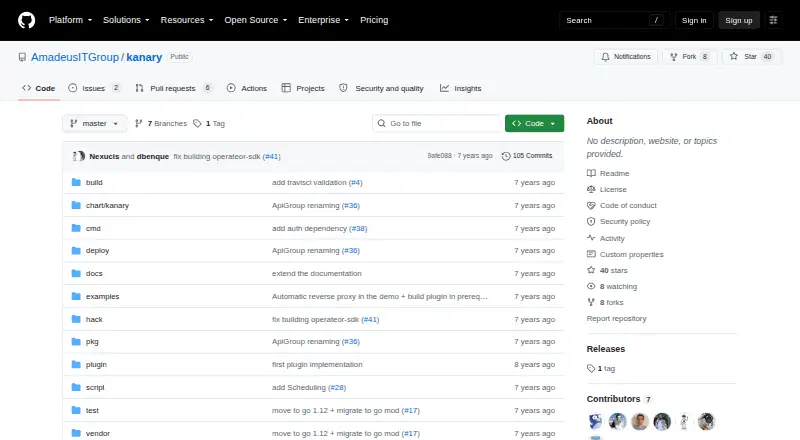
What Kanary is
Kanary is a self-hosted tool for automating canary deployments on Kubernetes. It uses a custom resource definition and controller to manage the canary’s scheduling, scaling, traffic, validation, and rollout. After a canary passes validation, Kanary can move its template into the regular deployment. Traffic can come from the production service, a dedicated Kanary service, both, mirrored traffic, or no service traffic. Validation can use manual status, label watching, or PromQL queries against Prometheus metrics. Canary instances can use a fixed replica count or a HorizontalPodAutoscaler.
For Istio, the project provides examples that create PromQL validations for response-time P99 and success rate. The kubectl kanary plugin can generate a KanaryDeployment artifact from an existing Deployment and retrieve Kanary deployments. Installation is documented through Helm or Kubernetes resource manifests. The controller removes related canary resources after success or failure, while preserving the original deployment history and classic rollback capability. Kanary is open-source software under the MIT License and costs nothing. The repository’s Releases page states that there are no releases.
Who it suits
Kanary suits Kubernetes users who want to automate canary scheduling, scaling, traffic routing, validation, and rollout in a self-managed environment. It may fit teams using Istio examples or Prometheus metrics as part of validation.
What it does well
- Automates canary rollouts on Kubernetes.
- Supports manual, label-based, and PromQL validation.
- Traffic can use production, dedicated, mirrored, or no service traffic.
- Can scale canary instances with a HorizontalPodAutoscaler.
- Install using Helm or Kubernetes resource manifests.
- MIT-licensed and free.
What to know first
- Requires self-managed Kubernetes deployment.
- The repository's Releases page states there are no releases.
Limits
Kanary is self-managed on Kubernetes. The repository's Releases page states that there are no releases.
Plans
| Plan | Billed and limits | Price |
|---|---|---|
| Open-source Kanary | MIT-licensed software · self-managed Kubernetes deployment | Free |
As github.com lists them, read 30 Sept 2026. The maker's own page has the final word.
Getting started
- Open the Kanary project website at https://github.com/AmadeusITGroup/kanary.
- Install Kanary with Helm or by applying Kubernetes resource manifests.
- Use the kubectl kanary plugin to generate a KanaryDeployment artifact from an existing Deployment, or retrieve Kanary deployments.
- Configure traffic routing, canary scaling, and validation for the deployment.
- Run the canary and promote its template to the regular deployment after successful validation.
Verdict
Choose Kanary if you need an open-source controller for managing Kubernetes canary traffic, validation, scaling, and promotion. Look elsewhere if you need a managed deployment service or require a project with published releases.
Questions
How much does Kanary cost?
The listed plan, Open-source Kanary, is free.
Is Kanary open source?
Yes. The repository specifies the MIT License, which permits use, copying, modification, distribution, sublicensing, and sale of copies.
What platforms does Kanary support?
Kanary is listed as self-hosted and automates canary deployments on Kubernetes.
How can Kanary be installed?
The project documents installation with Helm or by applying Kubernetes resource manifests.
What validation options does Kanary support?
It supports manual status, label watching, and PromQL queries against Prometheus metrics.
Does Kanary support automatic rollback?
Automatic rollback is listed. The project also says it preserves the original deployment history and classic rollback capability.
Facts from Kanary's own pages
- Cleanup and rollback
- The controller cleans up related canary resources after success or failure, and the README says the original deployment history and classic rollback capability are preserved. · github.com, 30 Sept 2026
- CLI plugin
- The kubectl kanary plugin can generate a KanaryDeployment artifact from an existing Deployment and retrieve Kanary deployments. · github.com, 30 Sept 2026
- Deployment flow
- It can run a canary deployment and, after successful validation, roll the template into the regular deployment. · github.com, 30 Sept 2026
- Install
- The project documents installation with Helm or by applying Kubernetes resource manifests. · github.com, 30 Sept 2026
- Intended users
- The README describes a tool for Kubernetes users who want to configure and automate canary deployment scheduling, scaling, traffic, validation, and rollout. · github.com, 30 Sept 2026
- Istio integration
- The README gives Istio examples that generate PromQL validations for response time P99 and success rate. · github.com, 30 Sept 2026
- License
- The repository's license file specifies the MIT License and grants permission to use, copy, modify, distribute, sublicense, and sell copies of the software. · github.com, 30 Sept 2026
- Purpose
- Kanary automates canary deployments on Kubernetes through a custom resource definition and controller. · github.com, 30 Sept 2026
- Releases
- The repository's Releases page states that there are no releases. · github.com, 30 Sept 2026
- Scaling
- Canary instances can use a static replica count or a HorizontalPodAutoscaler. · github.com, 30 Sept 2026
- Security reporting
- The security policy asks users to report vulnerabilities at [email protected] and says there are no published security advisories. · github.com, 30 Sept 2026
- Traffic routing
- Traffic sources include the production service, a dedicated Kanary service, both, mirrored traffic, or no service traffic. · github.com, 30 Sept 2026
- Validation
- Validation options include manual status, label watching, and PromQL queries against Prometheus metrics. · github.com, 30 Sept 2026
Where Kanary stands on Freedom251
- Progressive Delivery Software#18 of 29