Do these 3 things before closing this tab:
1Repair Windows errors before they cause bigger problems2Scan for outdated or missing drivers - takes under a minute3Clear out junk files and repair common Windows errorsMachine learning can add a useful layer to intrusion detection on edge and IoT systems, mainly as anomaly detection that compares local device and network behavior against a learned baseline. That case is strongest when ML complements signature rules for known threats rather than replacing them. It does not guarantee detection of unknown attacks, and the model, its training data and its update process introduce security risks of their own. Whether it helps in a given deployment depends on where the sensor sits, what the edge node can afford to run, and whether the team can maintain the model over time.
What “AI-native” means in this context
“AI-native” is not a term defined in the NIST, NSA or ENISA material discussed here. In this article it means a detection pipeline in which a learned model is a central detection component rather than an optional add-on to rules. Nothing below assumes such a system is better than a rules-based one by default.
As an Amazon Associate I earn from qualifying purchases.
“Edge” means sensors and gateways close to IoT devices, industrial equipment or a local network segment, rather than in a central data center. The conclusions apply to that setting and should not be extended to cloud-scale detection without separate evidence.
Signature-based and anomaly-based detection
Intrusion detection systems (IDS) generally follow one of two approaches. Signature-based detection checks observed events against a database of known intrusion patterns. Anomaly-based detection learns what normal system behavior looks like and reports events that deviate from it. Machine learning is most often discussed in the second category. The two are concepts rather than mutually exclusive product labels, and many deployments use both.
#1 Best Overall

- SonicWall TZ670 with 2 Year APSS - SecureUpgradePlus (02-SSC-5685) - Top-performing desktop firewall in the TZ family with 5 Gbps firewall throughput, 2.5 Gbps threat prevention, and support for up to 1.5 million concurrent connections.
- Advanced Protection Service Suite (APSS) offers next-generation security combining Gateway AV, IPS, Application Control, Content Filtering, 24×7 Support, Capture ATP sandboxing, and RTDMI. Protects against ransomware, zero-day exploits, and encrypted attacks with multi-layered threat prevention and scalable, enterprise-grade performance.
- Engineered for distributed enterprises and midsize organizations that need robust scalability and multi-gigabit performance for cloud and collaboration traffic.
- Protects against encrypted malware and zero-day attacks with RTDMI, IPS, anti-malware, and Capture ATP multi-engine sandboxing.
- The SonicWall Secure Upgrade Plus program allows organizations to replace a qualifying SonicWall or non-SonicWall firewall with a current Gen 7 model and a service subscription of choice, including Essential, Advanced, or Managed Protection Service Suites. Proof of ownership of a valid device is required to participate. This program ensures that businesses move to stronger next-generation protection while maintaining service continuity and access to SonicWall’s latest security innovations.
Signature-based detection
A signature rule matches a known pattern: a specific payload, a malformed protocol sequence or a known command sequence. When a rule matches, the alert is usually specific and easy to explain. The weakness is coverage. An attack that matches no stored pattern passes unless someone writes a rule for it, so the rule set has to be kept current.
Anomaly-based detection
An anomaly detector builds a baseline from observed traffic or device behavior, such as which devices communicate, how often, at what volume and in what sequence. It then scores new activity against that baseline. Machine learning supplies the scoring model. This is the approach that can flag behavior no one has written a rule for. Its weakness is that a deviation is not automatically an attack. A firmware update, a newly installed sensor, a seasonal change in a process or a misconfigured device can all produce alerts that look the same to the model.
| Question | Signature-based | Anomaly-based (ML) |
|---|---|---|
| What it compares against | Stored patterns of known intrusions | A learned baseline of normal behavior |
| Known attacks with a stored pattern | Strong match; this is its core use | Can flag them; the cited sources do not establish how reliably this compares with rules |
| Behavior never seen before | Missed unless a matching rule exists | Can be flagged if it deviates from the baseline; not guaranteed |
| Main dependency | A rule set kept current | Quality and cleanliness of training data and the baseline window |
| Typical failure | Misses novel or rewritten attacks | Benign change raises alerts; malicious activity that looks normal passes |
| Explaining an alert | Usually names the matched rule | Depends on the model; explainability has to be designed in |
| Alert volume and analyst workload | Not quantified in the cited sources | Not quantified in the cited sources; depends on baseline tuning |
Why deployment location changes the design
Where a sensor sits determines what it can see. NIST Special Publication 800-94, Guide to Intrusion Detection and Prevention Systems (IDPS), published February 20, 2007, groups IDPS into four classes. The guide is older than current ML-based detection practice, so use it for placement concepts rather than as guidance on machine learning.
| NIST SP 800-94 class | What it observes | Edge consideration |
|---|---|---|
| Network-based | Traffic on the network segments it can see | Needs a position on the segment, such as at a gateway, or access to a traffic mirror; encrypted payloads limit content inspection |
| Wireless | Wireless traffic within radio range | Relevant where devices use radio links; coverage is limited to what the sensor can receive |
| Network behavior analysis | Patterns across network flows | Can work from flow-level data, with less payload detail than packet inspection |
| Host-based | Activity on an individual host | Requires software on the host, which may not be feasible on constrained or vendor-locked devices |
Edge deployments add constraints that decide whether any detection method fits. The cited sources do not supply values for these, so they must be measured on the actual node:
Rank #2
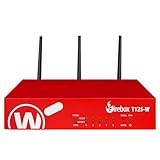
- Watchguard T125-W Firebox with 5 Year Basic Security Suite License (WGT126035) - The T125-W adds Wi-Fi 7 capability to the powerful Firebox T125 platform. Designed for branch or remote offices, it delivers 510 Mbps UTM throughput, advanced security services, and full wireless coverage in a single, compact appliance.
- The Basic Security Suite activates core protections on your Firebox, including intrusion prevention, gateway antivirus, URL filtering, and spam blocking in WatchGuard Cloud. Upgrade to Total Security Suite to add AI-powered malware detection, cloud sandboxing, DNS filtering, and advanced correlation.
- The Basic Security Suite equips your WatchGuard Firebox with a robust set of foundational security tools. This bundle delivers intrusion prevention, gateway antivirus, URL filtering, and spam blocking, all managed through WatchGuard Cloud. It’s a cost-effective choice for organizations that need reliable, essential protection without unnecessary extras.
- Interfaces and deployment: Wi-Fi 7 plus 1x 2.5Gb and 4x 1Gb Ethernet for coverage, clean uplinks, and straightforward VLAN segmentation with Cloud visibility.
- Performance and scale: UTM up to 510 Mbps with inspection on; add sites confidently with scalable VPN.
- Latency: how long the model takes to score an event or window, compared with the time an operator needs to act.
- Compute and memory: whether the model and its inputs fit beside the device’s real workload.
- Power: the energy cost of continuous scoring on battery or low-power hardware.
- Connectivity: whether the node can receive model updates and send logs, and what it does when the link is down.
A 2020 arXiv survey by Spadaccino and Cuomo, posted December 2, 2020, frames both opportunities and challenges in combining edge computing with machine learning for IoT intrusion detection. Its abstract does not establish universal performance benefits or quantify them, which is why these constraints should be tested rather than assumed.
Can machine learning detect unknown attacks on IoT devices?
It can flag some activity that no signature covers, because an anomaly model scores deviation from a learned baseline instead of matching a stored pattern. That is the defensible claim. It is not a guarantee of zero-day detection, and the cited sources do not show that ML at the edge detects novel attacks more often than other approaches. Three limits follow from how the method works:
- An attack that stays within normal-looking behavior, such as a slow, low-volume command sent from a device that normally sends commands, may score as normal.
- A baseline built from a narrow period misses legitimate activity. The result is more alerts, and operators learn to ignore them.
- A detector can only judge events it observes. A network-based sensor that never sees a lateral movement path cannot score that path.
The test for the detection claim in your own environment is step 4 of the deployment sequence later in this article.
Recommended Free Tools
What the current evidence does and does not establish
The evidence base is thinner than the topic’s popularity suggests, and its sources differ in age. The most recent items here date from late 2025 and the IoT survey from 2020, so check newer literature before relying on the framing of any single source.
Rank #3

- SonicWall NSa3700 with 1 Year EPSS - TotalSecure (02-SSC-8719) - Engineered for enterprises that require high throughput, low latency, and strong scalability across campus, branch, and data center environments.
- Essential Protection Service Suite (EPSS) delivers comprehensive firewall security with Gateway Anti-Virus, Intrusion Prevention, Application Control, Content Filtering, and 24×7 Support with firmware updates. Provides full-spectrum defense against known and emerging threats while simplifying renewals and licensing for small and mid-sized businesses.
- Stops sophisticated attacks in clear and encrypted traffic using DPI-SSL, IPS, anti-malware, and Capture ATP with RTDMI zero-day detection.
- High port density with a mix of 1 GbE and 10 GbE SFP+ interfaces supports complex, high-bandwidth architectures and rapid growth.
- The SonicWall TotalSecure Trade Up program enables customers with an eligible SonicWall or third-party firewall to upgrade to a new Gen 7 appliance bundled with a protection service suite such as Essential or Advanced. This all-in-one option simplifies purchasing by combining next-generation hardware with active security services, helping organizations modernize defenses and maintain continuous protection in a single package.
- Taxonomy (NIST SP 800-94, February 20, 2007). Useful for IDPS classes and deployment concepts. It predates current ML-based detection, and its 2012 revision draft was retired without becoming final. Treat it as foundational rather than current.
- Edge ML survey (Spadaccino and Cuomo, arXiv, posted December 2, 2020). A framing source on opportunities and challenges for IoT intrusion detection, not a measurement study.
- Adversarial ML taxonomy (NIST AI 100-2 E2025, final report dated March 24, 2025). Covers attack methods, lifecycle stages, attacker goals and capabilities, and mitigations, with a glossary. The publication page records a corrected PDF uploaded April 1, 2025, and a notice that an error on page x was identified for possible future update. Check the current version before quoting page-level detail.
- Government guidance on AI integration (NSA releases dated November 27, 2023 and December 3, 2025, and ENISA’s AI and next-generation technology topic page). General AI-system and OT security guidance. None of these certifies an IDS product or a specific model.
The cited sources do not include an independent, cross-product, edge-specific performance benchmark. No accuracy gain, false-positive reduction, or compute or latency advantage for ML at the edge is established by them. Any such claim needs directly applicable measurements that name the metric, dataset, year and conditions.
Independent reader supportYour contribution helps us test, update, and keep practical guides available for everyone.The ML layer adds its own attack surface
A model creates targets that a rule set does not. NIST’s adversarial ML taxonomy treats security as a lifecycle issue: adversaries may target the model, its data, the surrounding software, its workflows or its supply chain. NSA’s release on the joint “Guidelines for Secure AI System Development,” prepared with NCSC-UK, CISA and partners, makes the same point, names training-data poisoning as an example, and organizes guidance around secure design, development, deployment and operation. NSA Cybersecurity Director Rob Joyce framed the broader stake this way: “We wish we could rewind time and bake security into the start of the internet. We have that opportunity today with AI. We need to seize the chance.” (NSA release, November 27, 2023.) ENISA makes a dual-role point as well: AI can be used to manipulate outcomes, and AI techniques can strengthen security operations, while AI tools used for cybersecurity need their own trust and security measures.
Training-data poisoning
An anomaly model learns whatever it is shown during training. If an attacker can influence traffic or device behavior during the baseline window, the model may learn malicious activity as normal. Controls include a documented, supervised training window, screening of training data against known-bad indicators, and comparing the new baseline with the previous one before deployment.
Free tools Windows power users keep installed
One-click scans. No signup required.
Evasion
An attacker who learns where the detector’s boundary lies can shape activity to stay inside it, for example by spreading actions across long periods or by matching normal traffic volumes. NIST AI 100-2 categorizes these attack methods. Its mitigations are general and have to be adapted to the specific detector.
Rank #4

- [Shared Protection Network] Create a safety net by sharing device access with family members or trusted neighbors through the app. perfect for frequent travelers or vacation homes this feature ensures someone always receives alerts and can respond quickly to potential water emergencies.
- [Early Leak Detection] Protect your home from costly water damage with our advanced wifi water leak detector. this smart sensor instantly alerts you to even leaks allowing you to take quick action before damage occurs. ideal for safeguarding furniture walls floors carpets and valuable electronics from water damage.
- [Smart Home Integration] This tuya-compatible flood alarm seamlessly connects with other smart home devices creating a comprehensive home security system. enjoy automated responses like shutting off water valves when leaks are detected for peace of mind and home protection.
- [Instant Smart Notifications] Stay informed wherever you are with real-time alerts sent directly to your smartphone via the tuyasmart life app. the wifi water sensor keeps you connected 24/7 ensuring you're immediately notified of any water leaks or flooding incidents even when you're away from home.
- [Versatile Monitoring Solution] Our water detector adapts to numerous environments including dishwashers washing machines sinks water heaters refrigerators aquariums water pipes bathrooms basements and more. it's also ideal for monitoring preset water levels in bathtubs pools and other containers.
Model, library and update supply chain
Pre-trained models, third-party libraries, and firmware or model updates are all inputs to the detector. A compromised update path can change what the detector flags. NSA guidance treats hardware, software, workflows and supply chains as possible entry points for AML attacks. Require signed artifacts where the platform supports them, and keep the previous known-good version available for rollback.
Telemetry, privacy and retention
Effective ML detection usually needs rich telemetry, and telemetry can contain personal data, operational details or sensitive configuration. Decide before deployment which fields leave the node, how long they are kept, who can read them, and whether the organization is permitted to use that data for training. The cited guidance does not settle these questions for any particular jurisdiction.
Explainability and investigation
An alert that says only “anomalous” is hard to act on. Operators need the features or behavior that drove the score, the baseline it was compared against, and the model version that produced it. If those are not recorded, the team cannot investigate a false alert or prove that a detection was correct.
The Tool Desk
Outbyte Driver Updater FREEScan for outdated or missing drivers - takes under a minuteDriver Scan →Outbyte PC Repair FREEClear out junk files and repair common Windows errorsFree Scan →How to run an ML-based IDS on an edge node
The lifecycle matters as much as the initial model. A workable sequence:
- Define the decisions the alerts will drive. Alert-only, analyst review and automatic action carry very different risk. Start with alert-only.
- Choose the sensor class from the placement table, and confirm the node can see the traffic or host activity you need to monitor.
- Set a documented baseline window. Confirm it is free of known compromise, or screen it, and record which devices and behaviors it includes.
- Validate offline. Use recorded normal traffic from a held-out period that was not used for training, plus a controlled set of malicious activity run in a lab or staging network. Record the detection rate and false-alert count for each device type, and repeat the test after every model change.
- Run signature rules alongside the model, and send both into one review queue so the team can see which detector raised each alert.
- Version every model and its baseline. Keep the previous known-good version, and write rollback triggers before deployment, such as a sustained rise in false alerts or a failed integrity check.
- Re-baseline only through change management, so that a new device or process change is not absorbed silently into “normal.”
- Test failure modes. Decide what the node does when the model cannot run, when it loses power, or when its uplink is down. The fallback should be logging and signature detection, not silence.
Operational technology needs a stricter boundary
In OT environments, a wrong action can reach physical processes and safety functions. NSA’s release dated December 3, 2025, describing multi-agency guidance on AI in OT, says AI integration introduces safety and security risks to OT environments and critical functions. Its recommendations include understanding AI risks, using AI only where clear benefits outweigh those risks, governance and assurance, testing and monitoring, human involvement in critical decisions, and fail-safe mechanisms.
For an ML detector, that points to a clear default: alerts go to operators, and any automated interruption of a process requires a validated safety case and a fail-safe design. The guidance does not rule out automation, but it does not support assuming it. Before deployment, name the specific OT risk the model addresses and the operational cost of its false alerts.
Quick Recap
When to hold back
- The device fleet is still being commissioned, so there is no stable period of normal behavior to learn from.
- No named team is accountable for reviewing anomaly alerts, so they would likely be ignored.
- The model does not fit the node’s latency, memory and power limits when measured on the real hardware.
- There is no secure update path or tested rollback for the model.
- An alert would trigger action in a safety-relevant process without validated fail-safes.
- Coverage for known threats is weak. Fix signature coverage and basic hygiene first, because ML complements those controls rather than substituting for them.
Product prices and availability are accurate as of the date/time indicated and are subject to change. Any price and availability information displayed on Amazon at the time of purchase will apply.




