Use a specialized AI hardware advisor when you need a parts list tied to a component catalog or compatibility data; use a general-purpose chatbot to learn hardware basics, clarify requirements, and compare trade-offs. For a purchase, verify the proposed parts, regional availability, and the complete current price yourself. The available examples do not establish that one type is universally more accurate.
What separates a hardware advisor from a general-purpose chatbot?
A specialized advisor may be connected to product data
A hardware advisor is useful when its chat flow draws on a parts catalog, compatibility rules, or retailer listings. For example, Newegg says its PC Upgrader uses a PC’s specifications, use case, and budget to suggest upgrades with links to Newegg product pages. Newegg’s Shopping Tools and AI Mode descriptions also present its assistant as connected to a component catalog and compatibility data, with a workflow for adding parts to a Newegg cart. These are descriptions of Newegg’s own tools, not independent proof that every recommendation is correct or that the catalog covers every market.
As an Amazon Associate I earn from qualifying purchases.
A general chatbot is better suited to open-ended explanation
A general-purpose chatbot can help you describe what you want a computer to do, understand unfamiliar terms, or explore trade-offs such as prioritizing graphics performance over storage capacity. Unless a chatbot is explicitly connected to suitable current product and compatibility data, however, a plausible-sounding parts list is not evidence that products are available, compatible, or priced within your budget.
The distinction is not simply “AI versus no AI.” A general chat interface can be combined with specialized retailer data, as Newegg’s PC Builder ChatGPT plugin article and AI Mode descriptions illustrate. What matters is what information the tool actually uses and shows you.
#1 Best Overall

- Stability: Can be used stably for a long time
- Design: Robust design, easy to maintain
- Easy to install: simple operation, easy to install
- Application Scenario:Widely used in many industrial environments
- Correct use:Correct use can extend the service life of the product
Which tool fits your task?
| Your task | Better starting point | What to check |
|---|---|---|
| Learn what a component does or understand a technical term | General-purpose chatbot | Ask it to explain the concept plainly and identify any assumptions in its explanation. |
| Turn a vague idea into requirements, such as a computer for gaming or work | General-purpose chatbot | Clarify the workload, target resolution or performance, budget, and upgrade constraints before choosing parts. |
| Find upgrades based on an existing PC | A hardware advisor that accepts your current specifications | Confirm it used your actual components and check its suggested parts against manufacturer specifications. |
| Build a shopping list | A tool that exposes its catalog, compatibility checks, regional listings, and assumptions | Check that the total includes every required component and fits your budget at current prices. |
| Compare the strengths and weaknesses of different build approaches | General-purpose chatbot for exploring the trade-offs; a specialized advisor for checking candidate parts | Separate general advice from claims about specific products, compatibility, availability, and price. |
This is a practical division of labor, not the result of a controlled, head-to-head accuracy test.
How to assess a parts-list tool before relying on it
1. Check its catalog and regional coverage
Ask whether it uses a current catalog for your country or merely generates product names. A retailer’s catalog can make a shopping flow convenient, but listings from that retailer are not necessarily a market-wide comparison. Newegg’s own tools, for instance, link recommendations to Newegg product pages or a Newegg cart.
Rank #2

- Stability: Can be used stably for a long time
- Design: Robust design, easy to maintain
- Easy to install: simple operation, easy to install
- Application Scenario:Widely used in many industrial environments
- Correct use:Correct use can extend the service life of the product
2. Look for visible compatibility checks
A useful tool should make clear what it checked, rather than labeling a list “compatible” without showing the basis. Verify the relevant specifications yourself, including processor and motherboard socket, motherboard form factor, memory support, power requirements, and whether the parts fit the case. Newegg’s PC Upgrader guidance specifically recommends checking component specifications even when its AI performs a compatibility check.
3. Confirm the complete, current cost
Check whether prices are current and local, and whether the total includes all the components your build needs. A recommendation that stays within budget for the headline parts but omits supporting components—or uses stale prices—does not meet the budget in practice. Treat a budget entered into a prompt as a constraint to verify, not a guarantee that the tool honored it.
Rank #3

- Stability: Can be used stably for a long time
- Design: Robust design, easy to maintain
- Easy to install: simple operation, easy to install
- Application Scenario:Widely used in many industrial environments
- Correct use:Correct use can extend the service life of the product
4. Check whether it understood the goal
Good recommendations depend on the workload, performance target, budget, and upgrade constraints. If the tool does not ask about these, provide the details yourself and look for assumptions it has made. A recommendation can be technically plausible yet poorly matched to what you intend to do.
5. Demand explanations and room to revise
The tool should explain its trade-offs and let you replace or exclude components. If it asks you to make an unfamiliar choice—such as selecting AMD or Intel before offering a build—ask it to explain the consequences in terms you understand. PC Gamer reported that MSI’s beta EZ PC Builder did this in its October 16, 2025 coverage; a chat interface does not remove the need to understand the decisions in a build.
Rank #4

- VOICE AI & DISPLAY DEVELOPMENT KIT: Built-in dual microphones and speaker support voice interaction, combined with a 3.5" TFT display and DVP camera interface for AI-powered human–machine interaction projects.
- POWERFUL MCU & RICH INTERFACES: ARMv8-M (M33) MCU with WiFi 2.4GHz and Bluetooth LE 5.4, featuring 56 GPIOs, SPI, I2C, UART, I2S, USB, TF card, and camera interfaces for flexible hardware expansion.
- DEVELOPER RESOURCES AVAILABLE: Supports TuyaOS-based development. Hardware documentation, SDKs, and firmware examples are available for developers through the Tuya Developer Platform.
- DESIGNED FOR DEVELOPERS: Ideal for prototyping, evaluation, and embedded development. To access setup guides and sample projects, search: “T5AI-Board TuyaOS Developer Documentation”
- FOR IOT & SMART DEVICE PROJECTS: Suitable for smart home devices, voice control panels, AI terminals, and custom IoT solutions. This product is intended for development and testing purposes, not as a finished consumer device.
Why an AI-generated parts list still needs checking
Compatibility assistance is not a purchasing guarantee
Compatibility involves specific product specifications and physical constraints. Even when an advisor says a set of parts is compatible, check the relevant manufacturer specifications and the dimensions or requirements that matter for your build. The advisor’s label alone does not establish that every configuration detail has been checked.
The Tool Desk
Outbyte PC Repair FREERepair Windows errors before they cause bigger problemsFix Now →Outbyte Driver Updater FREEScan for outdated or missing drivers - takes under a minuteDriver Scan →A stated budget may not survive the recommendation
In October 2025 coverage of MSI EZ PC Builder, Tom’s Hardware reported that the tool recommended a build costing substantially more than the stated $1,000 budget. PC Gamer’s report the next day described the beta assistant as lacking price information. These are observations about MSI’s beta tool at that time, not findings about current versions, other advisors, or a general AI failure rate. They illustrate why budget compliance and price freshness need their own checks.
Best Value
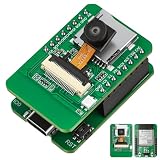
- Stop Struggling with External Flashers: The Ultimate Plug-and-Play Solution: Tired of messy wiring and unreliable external programmers? Our ESP32-S3 CAM features a unique dual-layer design with an Integrated USB Debugger (CH340) and physical buttons. Flash, debug, and power your AI Camera Development Board directly via a single USB cable. Experience the seamless development workflow you deserve—get your project running in minutes, not hours
- Eliminate Memory Bottlenecks: Pro-Grade Performance for Edge AI: Frustrated by memory overflow when running complex vision algorithms? Powered by the ESP32-S3-WROOM-1 module with N16R8 (16MB Flash + 8MB PSRAM), this board provides the massive headroom needed for high-resolution image processing and local data logging. Perfect for AI Edge Computing Engineers seeking rock-solid stability for face detection and object recognition projects. Upgrade to pro-spec hardware today
- Crystal Clear Vision & Massive Storage: Your All-in-One IoT Hub: Why settle for low-quality visuals or limited storage? Equipped with an GC2145 Camera and an integrated TF Card Slot, our ESP32-S3 CAM kit enables high-definition image capture and extensive local storage. Whether you are a Smart Home Controller R&D Engineer or a hobbyist, this AI Camera Development Board is your gateway to advanced vision-based automation. Capture every detail and store it with ease
- Dual Antenna Options for Maximum Flexibility: Features a high-gain onboard PCB antenna for compact builds, plus an IPEX connector for external 2.4G antennas to ensure stable long-range connectivity
- Accelerate Learning & Deployment: The STEM Educator’s Choice: Struggling to find a reliable platform for your IoT curriculum? This ESP32-S3 CAM kit is fully compatible with Ar duino and MicroPython, backed by detailed tutorials and open-source libraries. Educational IoT Curriculum Developers can now provide students with a professional-grade AI Camera Development Board that bridges the gap between classroom theory and real-world AI applications. Empower the next generation of innovators now
A product connection can shape what you see
A tool tied to one retailer’s catalog can make it easier to move from suggestions to listings or a cart, but that connection also defines which products it presents. Distinguish convenience from an independent comparison across retailers, brands, and regional availability.
Independent reader supportYour contribution helps us test, update, and keep practical guides available for everyone.A reliable workflow for using both kinds of tool
- Define the need. Use a general-purpose chatbot to turn your intended workload, performance target, budget, and upgrade constraints into a clear brief. Ask it to explain terms or assumptions you do not understand.
- Generate candidates. If you need a parts list or upgrades, give that brief and your existing PC specifications to a hardware advisor with relevant catalog and compatibility data. Treat its output as a candidate list.
- Inspect the evidence. Check the tool’s stated compatibility constraints, product listings, assumptions, and any available price information. Ask it to justify or revise choices that do not match your brief.
- Verify before buying. Check specifications, physical fit, current regional availability, and the complete current total against manufacturer information and the actual listings. Do not rely on a generated list or budget estimate alone.
What the available examples establish—and what they do not
Newegg’s Knowledge Base description of PC Upgrader, updated July 21, 2026, describes an intake based on existing specifications, use case, and budget, followed by suggested upgrades linked to Newegg product pages; it also advises checking specifications. Newegg’s July 21, 2026 PC Builder ChatGPT plugin article describes hardware comparisons and compatibility assistance. Its Shopping Tools and AI Mode pages describe retailer catalog and compatibility-data connections. Together, these examples show how catalog data and a chat or recommendation flow can be combined. They do not independently measure recommendation accuracy or establish coverage for every country.
The MSI EZ PC Builder reports from Tom’s Hardware (October 17, 2025) and PC Gamer (October 16, 2025) document specific limitations observed in coverage of a beta tool at that time. They do not establish how current versions perform or provide a controlled comparison with general-purpose chatbots.
Crashes, No Sound, or Screen Glitches?
Random freezes, missing sound and display glitches usually trace back to one bad driver. Find and replace yours safely.Free scan · under a minutePC Slower Than It Used to Be?
A free scan shows the junk files, broken settings and background clutter dragging Windows down - then fixes them in one click.Free scan · Windows 10 & 11No universal winner follows from these examples. Choose by task and inspect what the tool can demonstrate: catalog coverage, compatibility evidence, regional and current prices, fit to your stated goal, and transparent assumptions.
Quick Recap
Product prices and availability are accurate as of the date/time indicated and are subject to change. Any price and availability information displayed on Amazon at the time of purchase will apply.




