A regex data-loss-prevention (DLP) layer at an LLM gateway can block or redact known-format secrets and identifiers before a request is forwarded to a model. It is a partial control. Patterns catch only the formats they describe, the filter cannot remove history that is already stored, and it says nothing about how the upstream model provider retains data. Build it as one stage in a request path that you verify end to end, not as proof that prompts are clean.
The request path the filter sits on
A gateway-side filter only protects what it actually inspects. Before choosing patterns, confirm that the gateway sees the same payload the model will receive. A workable order of operations looks like this:


As an Amazon Associate I earn from qualifying purchases.
- Assemble the complete outbound request: system prompt, every earlier user and assistant turn, tool messages, and any retrieved or pasted text.
- Scan every message, not only the newest user input. Multiline content and delimiter variations should be covered by the test set described below.
- Where the detector offers validation for a class of identifier, apply it to reduce false positives before acting on a match.
- Apply the action your policy assigns to each class: block, redact, or warn.
- Forward only the content that passed. Account separately for logs, caches, stored response IDs, traces, and provider-side handling, because the filter does not govern them.
This sequence is a recommended design. Gateways differ in how they assemble history and where they place scanning, so confirm the order on your own deployment rather than assuming it.
Recommended Free Tools
Blocking API keys at the gateway
For credentials, blocking is usually the right default. A secret rarely helps a model complete a task, and redacting it can leave the surrounding text intact while still letting the value travel elsewhere in the request. Block the request, return a clear error to the calling application, and let the developer remove the credential from the prompt.
#1 Best Overall
The LLM Gateway documentation describes a guardrails example that scans API request messages and supports sensitive-data rules, custom regex matches, and configurable block, redact, or warn actions. That guardrails feature is documented as Enterprise-only, so confirm your plan includes it before designing around it.
Choosing among block, redact, and warn
| Action | Effect on the model call | Privacy exposure | Application usability |
|---|---|---|---|
| Block | Request is not forwarded; no model call occurs | No matched content reaches the model from that request | Caller must handle an error; suits credentials and classes that should never be sent |
| Redact | Request is forwarded with the match replaced | Reduced to unmatched content, provided the pattern matched correctly | Prompt keeps working if the replaced value was not needed for the task; can degrade answers that depended on it |
| Warn | Request is forwarded unchanged | Same as no control for that match | Least disruptive; useful for tuning rules, not for enforcement |
Masking IDs without breaking the prompt
Redact only the identifier classes your policy requires. Masking every number-like string makes prompts harder for the model to use and increases false positives. The gateway documentation describes validated PII detection with safeguards against treating every bare number as a phone number, which is the kind of behavior you should test rather than assume.
When the model must refer back to an entity, replace each value with a stable placeholder such as CUST_01, and use the same placeholder for the same entity throughout the conversation. Keep the mapping from placeholder to original value outside the model path. If a placeholder changes between turns, the model will treat one customer as two, and answers will drift.
The Tool Desk
Outbyte PC Repair FREEClear out junk files and repair common Windows errorsFree Scan →Outbyte Driver Updater FREEFix the driver behind crashes, sound loss and screen glitchesFind Drivers →Regex-only versus validated detection
Custom regular expressions match text shape. They do not know whether a match is a real credential or an unrelated string that happens to look like one. The trade-offs are summarized below.
| Approach | Format coverage | False positives | Maintenance | Unusual representations |
|---|---|---|---|---|
| Custom regex rules | Limited to the formats you write | Depends on pattern width; lookalike values can match | You update patterns when formats change | Split, re-encoded, or spaced values are missed unless the pattern anticipates them |
| Built-in validated detection | Vendor-defined classes; full class list not stated in the cited example | Vendor describes validation intended to reduce them; measured rate not stated | Vendor-maintained for the classes it covers | Not stated in the cited documentation |
In practice, use built-in detection for the classes it covers and add custom regex rules for internal formats it does not know. Neither layer should be described as complete detection of secrets or personal data.
Sensitive text earlier in the conversation
Chat clients often resend the whole conversation on every call. A secret pasted in turn one can therefore reach the gateway again in turn twenty, even though the newest message is clean. This is a design inference, but it follows directly from how multi-turn requests are built: the filter must inspect the full assembled request.
Rank #3
Blocking a request that carries an old secret can also trap the conversation, because every retry resends the same history. The fix belongs in the client. Remove or redact the stored turn in the application’s own history, then let the next request assemble cleanly.
Free tools Windows power users keep installed
One-click scans. No signup required.
What to do with chat history
Two different problems are easy to confuse. Preventing new sensitive content from being forwarded is what a request filter does. Removing content that was already stored is a retention and deletion problem. A request filter does not erase earlier logs, cached responses, stored response state, or provider records.
The LLM Gateway data-retention documentation (undated; accessed October 5, 2026) describes the storage settings below. These details belong to that product and should be checked against your own configuration.
| Setting or item | What is kept | Retention stated in the cited documentation |
|---|---|---|
| Metadata-only (default for standard organizations where retention settings apply) | Request metadata without full payloads | Period not stated in the cited documentation |
| Retain All Data | Full request and response payloads | Stored payloads cleared automatically after 30 days; self-hosted deployments need the cleanup job enabled for that deletion to occur |
| Responses API items | Items created through the Responses API | Held up to 30 days regardless of the organization’s retention level, unless the call sets store: false |
Turning off payload retention does not clear everything
Do not assume that a metadata-only setting removes all stored chat content. The Responses API exception above means items can persist even when payload retention is minimal. Confirm that the deployed API calls send store: false where you need that behavior, and check the exact behavior of your deployed API version.
Zero-data-retention prerequisites
In the documented zero-data-retention setup, metadata-only retention and disabled response caching are prerequisites, and Responses API calls must set store: false. Provider compliance checks fail closed when provider attributes are unknown, so a request can be refused rather than quietly routed. Plan for that refusal in your application’s error handling.
Quick wins for a faster PC:
Clear out junk files and repair common Windows errorsFree Scan →Scan for outdated or missing drivers - takes under a minuteDriver Scan →Recovering from a secret that was already stored
- Rotate the exposed credential first; deletion does not make a leaked key safe.
- Identify every store that could hold the request: gateway logs, caches, traces, stored response items, and the application’s own history.
- Run the deletion process for each store, and confirm that scheduled cleanup jobs are active where they are required.
- Record which provider received the request, so you can ask that provider about its retention for that data.
Gateway retention versus provider handling
Gateway settings do not establish what the chosen model provider keeps. The LLM Gateway privacy policy, last updated August 20, 2026, states that Customer Data is not used to train models and that retention of request content follows organizational settings. That is a vendor statement about its own service. Read the terms of each upstream provider you route to, including its retention period and any training-use terms, before relying on the gateway’s policy.
Best Value
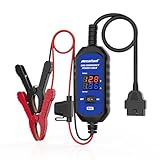
- [Upgraded OBDII Memory Saver Cable] MRCARTOOL Car Memory Saver is specifically designed for automotive battery replacement.When replacing the vehicle battery, connect a spare battery and the vehicle's OBD2 interface to the B80 emergency power cable to prevent loss of vehicle operating data.
- [Voltage and Current Display]Automotive Memory Saver with Real-Time Voltage and Current Display.Voltage Display: Shows battery voltage during replacement (prevents using depleted batteries; ensures uninterrupted power).Current Display: Detects circuit leaks or measures vehicle quiescent current in ignition-off state.
- [Auto Leakage Detection] The OBD memory saver can also be used for preliminary detection of electrical leakage in vehicles. Connect it to a charged spare battery and the OBD port to monitor current/voltage. Sequentially pull fuses while watching current. A sudden drop indicates potential drain in that circuit. Cross-reference the wiring diagram to pinpoint affected components.
- [Protection Function] During battery replacement, disable door light triggers, ensure full vehicle power shutdown, and deactivate all electrical appliances to prevent current surges. This OBD2 memory saver operates at 10-14V (triggering audible alarms at 14V), featuring triple electrical protection (over-current/over-voltage/reverse-polarity) with a reinforced 3A fast-blow fuse. Automatic power-off activates when voltage exceeds 16V.
Testing the layer before you rely on it
Your own test run is the only evidence that the filter behaves as intended in your environment. Build a test set that includes:
- Representative credential formats your applications use, including internal ones.
- Identifier variants: different separators, spacing, leading zeros, and partial values.
- Benign lookalikes: strings that match a pattern but are not real credentials or identifiers.
- Unicode and delimiter variations, such as full-width characters and unusual separators.
- Multiline content, including secrets split across lines.
- Tool messages and retrieved documents, not only typed user input.
- Earlier conversation turns in multi-turn sessions.
Measure two numbers separately: missed detections, and false positives that block or alter legitimate prompts. Reducing one usually increases the other, so set the thresholds with both in view.
Checks before writing deployment-specific rules
The vendor documentation describes one gateway’s behavior, not your architecture. Establish the following before finalizing rules:
- Which components store or forward request bodies, and at what point.
- How the chat history is assembled for each request.
- Whether response caching, tracing, and logging are enabled, and where their data goes.
- Which model provider receives each request, and that provider’s retention terms.
- Which deletion APIs or schedules exist for each store, and who can run them.
Once these answers are known, the block, redact, and retention settings can be written against your real request path.
Quick Recap
Product prices and availability are accurate as of the date/time indicated and are subject to change. Any price and availability information displayed on Amazon at the time of purchase will apply.




