A chemical time capsule turns a changing chemical signal into a visible record: a reactant moves through a porous material, meets a target chemical, and forms bands that preserve when those encounters occurred. The idea was reported as a research prototype in 2014—not as a commercially available monitor.
How does a chemical time capsule work?
The prototype uses a one-dimensional porous substrate with one end open to the surrounding environment and the other connected to a reservoir of a reactant. The reactant diffuses through the substrate. When it encounters the target analyte—the chemical being detected—a precipitation reaction creates an optical signal. Repeated encounters can produce visible bands. The researchers described the device in a 2014 paper, “Time capsule: an autonomous sensor and recorder based on diffusion–reaction.”
As an Amazon Associate I earn from qualifying purchases.
This arrangement converts a changing signal into a spatial pattern. Rather than relying on an electrical system to log each event as it happens, the device leaves a physical record in the material through diffusion and precipitation.
What’s actually slowing this PC down?
Pick the symptom - the matching free tool is one click away.
How do the bands preserve a timeline?
The inspiration is a tree ring: a sequence of conditions is stored in a material and read later. In the chemical device, the bands’ positions and profiles encode when the analyte was present. The resulting pattern can therefore be examined after exposure to reconstruct the timing of chemical events. The 2014 account describes the design as autonomous and self-powered, relying on diffusion and precipitation rather than an electrical recording system.
#1 Best Overall

- The kit contains enough materials for 15 groups.
- Teacher’s Manual and student study guide copymasters are included.
- Non Regulated
What uses did the researchers envision?
The team’s stated aim was to develop recorders for places that are difficult to access. The contemporary report named two possible applications:
- Tracing unidentified sources of environmental contamination by recording when relevant chemical exposure occurred.
- Collecting information about downhole conditions during oil exploration.
These were proposed future applications, not demonstrations of a deployed product or established field performance. The available 2014 reporting does not establish whether the prototype was later commercialized or used in the field.
Rank #2
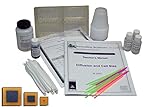
- Kit for study of diffusion and cell size activity
- Activity for creating simulated cells (agar blocks) of different sizes to examine how effectively substance diffuses into cell in set period of time
- Indicator in cells for allowing students to visualize the degree of diffusion
- Materials for 15 groups of students for hands-on learning
- Teacher's manual and student study guide copymasters for instructional use
What would have to be solved for practical use?
A useful chemical timeline must distinguish the intended target from other substances and keep its recording chemistry contained. The contemporary account identified these development needs:
Quick wins for a faster PC:
Fix the driver behind crashes, sound loss and screen glitchesFind Drivers →Clear out junk files and repair common Windows errorsFree Scan →Scan for outdated or missing drivers - takes under a minuteDriver Scan →- Improve the reactant’s specificity for the reagent of interest, so a band can be attributed to the intended analyte.
- Control release of the timer reactant through the substrate.
- Prevent the reactant from leaching into the environment.
The 2014 coverage does not establish that these engineering challenges were later resolved. Without reliable selectivity and containment, a visible record could be difficult to interpret or unsuitable for the environment being monitored.
Rank #3

- For 10 lab groups
- Complete in 60-90 min
- Kit includes: instructions, orange indicator dye, violet dye, sucrose, NaCl solution, powdered sucrose, dialysis tubing
- All you need: beakers, thermometers, scale, 1, 5, and 10 ml pipets, cork borers, graph paper, potatoes, distilled water
- Materials and dialysis tubing are provided to perform procedures involving diffusion, dialysis, water potential and to determine osmotic potential
What did experts say?
Hongkai Wu, a microfluidics expert at the Hong Kong University of Science and Technology, described the approach as “a creative way of using well-known phenomena for new and intriguing applications.”
Independent reader supportYour contribution helps us test, update, and keep practical guides available for everyone.What is—and is not—established?
The published concept is a way to turn the timing of chemical encounters into a spatial record. The cited 2014 reporting supports the diffusion-and-precipitation mechanism and the researchers’ proposed applications, but provides no named quantitative performance result for sensitivity, accuracy, recording duration, or field operation. It also does not establish current commercial availability.
Quick Recap
Best Value

- OBSERVE OSMOSIS || Study the movement of water and nutrients across a cell membrane and observe osmosis using plant tissue! Investigate the relationship between surface area and volume as it relates to cells and diffusion
- ENGAGING ACTIVITY || Experiment examines the concept of molarity and how it relates to osmotic potential and movement of water. Demonstrates how cell size and shape affect overall rate of nutrient intake and water elimination
- EXCELLENT FOR REMOTE LEARNING || Great for Distance Learning and home - kit includes instruction manual, worksheets and enough materials for 4 groups of students
- MATERIALS INCLUDED || Kit includes agar, bromothymol blue concentrate, hydrochloric acid, agar block casting trays, plastic cups, knives and stirrers, metric rulers, dialysis tubing, microscope slides, coverslips, cork borer, food coloring and sodium, glucose and ovalbumin and sucrose QuickSolutions to make the 6 different solutions required for the experiment
Rank #4

- HANDS-ON LEARNING OF CELL SIZE TO RATES OF DIFFUSION || Visually demonstrate how a smaller volume creates a more favorable condition for the exchange of material across a cell membrane.
- DESIGNED BY SCIENCE EXPERTS || Labs are written by teachers and scientists and bench-tested for success, using materials designed to cut down on prep time and waste.
- COMPREHENSIVE INSTRUCTIONS || Separate Teacher's Manual and Student Guide copymasters provide objectives, background info, step-by-step procedures, and data analysis questions.
- HIGH QUALITY CHEMICALS || Includes chemicals manufactured in the USA, with GHS-compliant labels and SDS for safety and storage information.
- ALIGNED TO THE NEXT GENERATION SCIENCE STANDARDS (NGSS) || Designed to meet specific objectives in the Next Generation Science Standards, which are listed in the Teacher's Manual.
Product prices and availability are accurate as of the date/time indicated and are subject to change. Any price and availability information displayed on Amazon at the time of purchase will apply.
The Tool Desk
Outbyte Driver Updater FREEFix the driver behind crashes, sound loss and screen glitchesFind Drivers →Outbyte PC Repair FREEClear out junk files and repair common Windows errorsFree Scan →



