Neither protocol is universally better. Choose a Zigbee contact sensor when you already have a compatible hub and want dependable local automations; choose a direct Wi‑Fi sensor when your platform is built for Wi‑Fi devices and you accept its router-and-cloud alert path. An alarm system that uses Wi‑Fi for its hub may still use a different radio for the sensors, so the label alone is not enough.
Before buying, verify the exact hub, what still works when Wi‑Fi or internet access fails, how a phone alert is delivered, battery expectations, and whether the sensor fits your existing alarm platform. The examples below show why two products described as Zigbee or Wi‑Fi can behave very differently.
As an Amazon Associate I earn from qualifying purchases.
What a door sensor actually does in an alarm
A contact sensor has two parts mounted on a door or window. When the magnetic contact separates, the sensor reports an open event; when it closes again, it reports a closed event. The sensor does not, by itself, provide professional monitoring or dispatch emergency services. A hub, alarm controller, app, or cloud service must decide what the event means and what action to take.
Outdated Drivers Are Slowing You Down
One free scan finds every outdated or missing driver and matches the right update for your exact hardware.Free scan · exact hardware matchWindows Errors? Fix Them Before They Spread
Repair common Windows errors and clear accumulated junk for a smoother, more stable PC - no reinstall needed.Free scan · no reinstallFor a smart-home alarm, the important path is therefore sensor to network or hub to automation or siren to phone. A protocol comparison that looks only at the first radio link misses the parts that determine whether a local siren sounds, whether a scene runs during an outage, and whether a remote notification reaches you.
#1 Best Overall

- Accurate Open/Close Monitoring & AAA Battery Powered The sensor requires a Zigbee hub to operate. You can monitor door or window open/close status via App and receive instant phone alerts. Powered by replaceable AAA batteries for long-lasting, stable performance.
- Tamper Alert & Instant Phone Notification Built-in tamper-prevent button allows you to receive real-time phone alerts when the device is removed, enhancing door security.
- Smart Automation for Home Security and more The sensor requires a Zigbee hub to operate. When the open/close/tamper status changes, it can trigger smart scenes such as alarms when open, camera recording, smart lights on, or voice notifications. Perfect for home security, child safety, pet monitoring, and energy-saving automation.
- Versatile Installation to Fit Most Doors & Windows Supports horizontal and vertical magnet installation with up to 30mm detection distance. Ideal for wide door gaps, narrow door frames, apartments, garages, and office security setups.
- Compatible with other Zigbee Ecosystems Easily integrates with Home Assistant via SONOFF Zigbee Dongles and works with Alexa and SmartThings through compatible Zigbee hubs.
How the different architectures move an alarm event
Zigbee sensor with a dedicated hub
Zigbee contact sensors normally communicate with a Zigbee coordinator or hub rather than joining your router directly. The hub then runs automations, connects the sensor to an app, or forwards an alarm to other services. This extra device is a requirement, not an optional accessory, and compatibility is specific to the product.
For example, the Aqara Door and Window Sensor uses Zigbee and requires an Aqara hub sold separately. Aqara’s US listing says the sensor is not compatible with hubs from other brands. In the product’s alarm mode, Aqara describes the hub sounding an alarm and sending a phone notification when the sensor detects that a door or window has opened. That description is a manufacturer feature statement; it does not establish how the alarm behaves during every possible internet or power failure.
Another Zigbee implementation: SONOFF SNZB-04P
The SONOFF SNZB-04P is a Zigbee 3.0 contact sensor that also requires a hub. Its manufacturer lists compatible SONOFF controllers and the Echo Plus 2nd generation as examples. Do not infer that any Zigbee coordinator will accept it simply because both devices use Zigbee; use the model’s compatibility list.
Recommended Free Tools
SONOFF says local scenes between powered Zigbee devices can continue while Wi‑Fi is disconnected. That can allow a local light, siren, or other Zigbee action to respond without an active internet connection, depending on the configured scene and controller. The statement applies to the documented setup, not to every Zigbee product or every hub.
Direct Wi‑Fi sensor design
A direct Wi‑Fi sensor joins the home router. Tuya’s developer documentation, updated 2024-06-20, describes a Wi‑Fi and Bluetooth LE door-and-window sensor sending an event to the router, reporting it to a cloud platform, and then surfacing a phone alert. The documented feature set includes door state, battery level, tamper and offline alerts, automations, and over-the-air updates.
Rank #2

- [Notes] An Aqara Hub is required and sold separately. (Not compatible with hubs from other brands.) Requires a secure 2.4GHz Wi-Fi connection for Hub M2, M1S, E1, M1S Gen2, G2H Pro, and G2H; or 2.4/5GHz Wi-Fi for Camera Hub G3. (Hub M2 also supports wired Ethernet via RJ45.)(*Note: To ensure a stable connection, place the Door and Window Sensor main unit between the accessory unit is no more than 22 mm )
- [Proximity] For a sturdy connection, ensure that the Aqara Door and Window Sensor is within 400 inches of the Aqara Zigbee hub, and the hub is within the same range from the Wi-Fi router. Additionally, make sure the hub and the router are on the same local area network (LAN). Zigbee2MQTT and comparable third-party USB dongles are not officially supported by Aqara. Full product functionality may be limited or unavailable.
- [Unauthorized Entry Detection & Home Automation] The Zigbee Door Sensor alerts your phone and triggers the Aqara Hub's local alarm upon unexpected door/window openings. It also controls other Aqara devices based on door/window status. Conveniently check your door or window, kids room and anywhere you want to be notified. ***Requires Aqara Hub,not third-party hub.
- [0.86 Inch Wide Gap Allowed]The Aqara Door and Window Sensor works with most types of doors, windows, and other fixtures with similar mechanism, such as drawers, cabinets, and more.(Note: Please ensure that the surface where you plan to stick the Aqara Zigbee Door and Window Sensor is flat and easily adhesive, and the allowed gap between the door is up to 0.86 inch.) The main sensor unit dimension:1.61*0.87*0.43 inch, the magnet dimension:0.79*0.39*0.39 inch.
- [Hands-Free Voice Control]Compatible with Apple HomeKit, Alexa for a hands-free experience.- no need to go downstairs or pick up your phone again. You'll always know whether your home door is opening or closing (The Aqara Door and Window Sensor is not compatible with SmartThings currently.)
This is platform design documentation rather than confirmation of a particular currently available retail model. Its event path makes the outage trade-off clear: a router or cloud interruption can prevent the documented phone notification unless the specific device and automation provide another local path. A Wi‑Fi radio does not automatically mean that a local siren or scene will keep working without the cloud.
Wi‑Fi-connected alarm hub with a separate sensor radio
Some complete alarm systems use Wi‑Fi only for the hub’s connection to your network. In the Arlo Home Security System, the Keypad Sensor Hub uses 2.4 GHz Wi‑Fi, while the All-in-One Sensor communicates with that hub over Arlo’s SecureLink radio. The sensor therefore is not a direct Wi‑Fi sensor, even though the system has a Wi‑Fi connection.
Arlo lists a built-in hub siren and says the system can continue operating when power or Wi‑Fi is down through cellular and battery backup. Backup duration varies with settings, usage, and environment. This is a complete-system resilience feature, not evidence that SecureLink or Wi‑Fi is inherently more reliable than Zigbee.
Comparison at a glance
| Decision axis | Zigbee examples | Wi‑Fi or Wi‑Fi-connected examples | What to verify |
|---|---|---|---|
| Sensor-to-network path | The sensor uses Zigbee and communicates with a compatible hub or coordinator. | Tuya’s documented design sends the event to the router and then cloud. Arlo’s sensor uses SecureLink to a Wi‑Fi-connected hub. | Identify every link instead of relying on the product’s headline radio label. |
| Hub requirement | Aqara and SONOFF’s cited sensors require hubs; their compatibility lists differ. | Tuya documents a Wi‑Fi sensor design without a separate Zigbee hub. Arlo’s sensors require its Keypad Sensor Hub. | Confirm whether your existing controller is supported and whether a proprietary hub is required. |
| Local response during Wi‑Fi loss | SONOFF documents local Zigbee scenes continuing while Wi‑Fi is disconnected when Zigbee devices remain powered. Aqara documents hub alarm and phone notification behavior but does not establish the same outage behavior. | Tuya’s described phone alert passes through the router and cloud. Arlo advertises cellular and battery backup for the complete system. | Test or confirm local siren and automation behavior separately from remote notifications. |
| Battery claim | Aqara: over two years under normal usage. SONOFF: five years claimed. | Arlo SecureLink All-in-One Sensor: one year listed. | Treat these as model-specific manufacturer claims, not protocol measurements. |
| Ecosystem fit | Aqara’s sensor is hub-specific; SONOFF publishes a hub list. | Arlo’s sensor is tied to its own hub; Tuya’s page describes a development platform rather than one identified retail model. | Choose the device confirmed for your exact app, hub, and alarm controller. |
What happens when Wi‑Fi, internet, or power fails?
These are three different failures. A local Wi‑Fi outage can stop a device from reaching the router while leaving the house powered. An internet outage can leave the local network working but prevent cloud services and remote phone alerts. A power outage can disable the router, hub, or siren unless batteries or another backup source keep them running.
Local siren and automation
A local response is an action performed inside the home: a hub siren sounds, a light turns on, or a Zigbee scene runs. SONOFF explicitly describes local scenes between powered Zigbee devices continuing when Wi‑Fi is disconnected. Whether a particular siren responds depends on the hub and scene you configure. Aqara describes the hub sounding an alarm in alarm mode, but the cited page does not promise operation through every network outage.
Rank #3

- ZIGBEE STANDARD COMPATIBLE DOOR SENSOR: Works with compatible Zigbee hubs or Echo devices with Zigbee hub built-in. Such as Echo (4th Gen), Echo Plus (1st Gen and 2nd Gen), Echo Studio, Eero 6, Eero Pro 6, Home Assistant, Home Assistant, SmartThings 2015/2018, Aeotec, Hubitat, Homey Bridge, Homey Pro, Third reality Hub and Third Reality Smart Speakers.
- HASSLE-FREE SETUP: Installs in a few seconds. Just make sure device in paring mode and compatible Echo device automatically discovers it by saying “Alexa, discover devices”.
- SUIT FOR MOSTLY DOORS AND WINDOWS OF THE HOUSE AND 2-YEARS LONG BATTERY LIFE: Door Sensor uses two AAA 1.5V Alkaline batteries for power, the batteries can last for up to 2 years and it is very easy to replace them. Note: Indoor use only and do not install the Door Sensor on metal door or window.
- MORE FUN WITH ALEXA ROUTINES: Using the Alexa app, create your own routines that are triggered When door or window is open, turn on a light, send an alert to your phone, let Alexa make a voice alarm or make a joke, etc.
- UPGRADED THIRD REALITY APP AND SKILL FUNCTIONS: Connected with Third Reality Hub/Speaker, you can check the battery level in the APP, then replace the batteries in time; history record is also open to the users, so you can know when the state of the movement has been detected and deal with it in time. Enabled Third Reality Skill in the Alexa APP, you will have a low battery warning by emails.
Remote phone notification
A phone alert delivered outside the home normally needs a route beyond the sensor. In Tuya’s documented path, the event travels through the router to the cloud before reaching your phone. If the router, internet service, or cloud connection is unavailable, that documented route may not deliver the alert. A local siren can still work in some systems even when a remote notification cannot.
Cellular and battery backup
Arlo states that its complete system can work during power or Wi‑Fi loss using cellular and battery backup. The available backup time depends on settings, use, and environment, so it is not a fixed guarantee. A Zigbee hub paired with a battery-backed router or cellular alarm communicator could be designed for similar resilience, but that behavior must be confirmed for the actual equipment rather than assumed from the protocol.
Battery life: useful figures, limited conclusions
Battery life depends on the sensor’s battery chemistry and size, radio design, reporting frequency, temperature, signal quality, tamper events, and the hub’s polling behavior. The following figures are manufacturer statements for different products; no independent, controlled Zigbee-versus-Wi‑Fi contact-sensor comparison establishes that one protocol always lasts longer.
| Product | Battery and stated life | Qualification |
|---|---|---|
| Aqara Door and Window Sensor | CR2450; over two years | Aqara’s US product page says this is under normal usage; the year of the claim is not stated on that page. |
| SONOFF SNZB-04P | CR2477; five years | SONOFF/ITEAD claims five years; the year of the claim is not stated on the cited page. |
| Arlo SecureLink All-in-One Sensor | One year listed | Arlo’s product page lists one year for this sensor; it is a SecureLink device, not a direct Wi‑Fi sensor. |
Plan replacement around the actual model’s battery type and the app’s low-battery warnings. A larger coin cell can support a longer claim, but it does not make a five-year expectation transferable to another sensor. Keep a spare of the specified type and check whether the sensor loses its pairing or tamper state during replacement.
Compatibility is the first buying constraint
Check the exact hub, not just the radio logo
For Aqara, the cited sensor requires an Aqara hub and is listed as incompatible with hubs from other brands. For SNZB-04P, consult SONOFF’s current compatibility list, which includes specified SONOFF controllers and Echo Plus 2nd generation among its examples. A generic statement that a hub supports Zigbee does not override a manufacturer’s device list.
What’s actually slowing this PC down?
Pick the symptom - the matching free tool is one click away.
Rank #4

- Broad Zigbee Compatibility: Keep your home safe and smart with Zigbee door sensors compatible with SmartThings, Alexa devices with built-in Zigbee hub, Home Assistant, Hubitat, Aeotec, and Homey. Easily monitor doors, windows, kids’ rooms, or cabinets and stay informed of important activity throughout your home.
- Compact Design: Designed for convenience, the compact sensor installs in minutes with adhesive backing—no drilling or complicated tools required. Simply put the sensor into pairing mode and connect it to your Zigbee hub to start using it right away.
- Easy Installation: The simple screw-mounting design allows for quick setup on various surfaces, providing a secure installation without complex tools or professional assistance.
- Mini Size and Discreet Placement: The compact sensor fits neatly on door and window frames, blending seamlessly with your home decor while providing reliable monitoring.
- Versatile Use: Ideal for integration with smart home security systems, this sensor helps monitor entry points in residential spaces, including doors, windows, cabinets, and other important areas.
Account for proprietary sensor links
Arlo’s All-in-One Sensor requires the Arlo Keypad Sensor Hub because its sensor-to-hub link is SecureLink. Buying a Wi‑Fi-capable router or alarm hub does not make that sensor directly addressable over Wi‑Fi. Ask whether replacement sensors, extra hubs, and the app you use are all part of the same ecosystem.
Distinguish a platform from a finished product
Tuya’s Wi‑Fi and Bluetooth LE documentation explains how a solution can be built, including event fields, cloud reporting, automations, tamper status, offline alerts, and OTA updates. It does not identify one retail sensor with a guaranteed feature set, battery specification, or outage behavior. Treat platform documentation as an architecture reference until a specific product page confirms the details.
Which option fits common smart-alarm goals?
Choose a Zigbee sensor when…
- You already own a hub confirmed to support the exact sensor model.
- You want local sensor-to-device scenes and the hub remains powered during a Wi‑Fi interruption.
- You prefer a low-power mesh device and are willing to maintain a separate coordinator.
- You can accept that hub compatibility is manufacturer-specific rather than universal across Zigbee brands.
Consider a direct Wi‑Fi sensor when…
- Your existing smart-home platform explicitly supports that model without an additional Zigbee coordinator.
- You are comfortable with the router-and-cloud path used for remote alerts.
- You have verified what remains available locally when internet access is lost.
- You value platform features such as cloud automations, tamper status, offline alerts, or OTA updates and the specific product documents them.
Choose a complete Wi‑Fi-connected alarm ecosystem when…
- You want one vendor’s hub, keypad, sensors, siren, app, and backup communications.
- The system’s sensor radio is acceptable even if it is not Wi‑Fi.
- Cellular and battery backup are important and the stated duration suits your risk model.
- You have confirmed subscription, emergency-contact, and notification requirements separately; a contact sensor alone is not professional monitoring.
Installation and reliability checks
Radio protocol cannot compensate for a poor physical installation. Before mounting any sensor, perform these checks:
- Measure the closed-door gap and compare it with the manufacturer’s permitted sensor-and-magnet alignment. A sensor that cannot close reliably will create false open events.
- Place the hub where the manufacturer’s radio range is practical, away from large metal objects and sources of interference. For mesh Zigbee devices, confirm that the hub can hear the sensor at the intended location.
- Use the app to confirm open, closed, tamper, and low-battery states before applying permanent adhesive or screws.
- Test the alarm with the door open, then restore it to closed status and verify that the system returns to its expected armed state.
- Test a local siren separately from a phone notification. A successful app event does not prove that the siren works during an internet outage.
- If outage resilience matters, disconnect internet access without removing power and observe local behavior. Then test a router or hub power interruption only if the system’s instructions permit it.
Troubleshooting by symptom
The sensor pairs but will not trigger an alarm
Check that the alarm mode is armed, the contact and magnet are aligned when closed, and the automation references the correct device and state. In a hub-specific ecosystem, confirm that the sensor was added through the supported hub rather than through an unsupported generic coordinator.
Do these 3 things before closing this tab:
1Repair Windows errors before they cause bigger problems2Fix the driver behind crashes, sound loss and screen glitches3Clear out junk files and repair common Windows errorsThe local action works but the phone alert does not
This usually indicates that the local automation path is intact while the remote route is not. Check router and internet status, cloud account sign-in, notification permissions, and any platform-specific alert settings. Do not assume that a working siren proves that cloud notifications are available.
Best Value
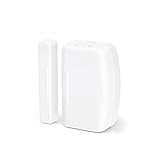
- ZIGBEE STANDARD COMPATIBLE DOOR SENSOR: Works with compatible Zigbee hubs or Echo devices with Zigbee hub built-in. Such as Echo (4th Gen), Echo Plus (1st Gen and 2nd Gen), Echo Show 8 Gen3, Echo Show 10 (Gen2 and Gen3).Echo Studio, Eero 6, Eero Pro 6, Home Assistant, SmartThings 2015/2018, Aeotec, Hubitat, Homey Bridge, Homey Pro, Third reality Hub and Third Reality Smart Bridge.
- HASSLE-FREE SETUP: Installs in a few seconds. Just make sure device in paring mode and compatible Echo device automatically discovers it by saying “Alexa, discover devices”.
- SUIT FOR MOSTLY DOORS AND WINDOWS OF THE HOUSE AND 2-YEARS LONG BATTERY LIFE: Door Sensor uses two AAA 1.5V Alkaline batteries for power, the batteries can last for up to 2 years and it is very easy to replace them. Note: Indoor use only and do not install the Door Sensor on metal door or window.
- MORE FUN WITH ALEXA ROUTINES: Using the Alexa app, create your own routines that are triggered When door or window is open, turn on a light, send an alert to your phone, let Alexa make a voice alarm or make a joke, etc.
- UPGRADED THIRD REALITY APP AND SKILL FUNCTIONS: Connected with Third Reality Hub/Speaker, you can check the battery level in the APP, then replace the batteries in time; history record is also open to the users, so you can know when the state of the movement has been detected and deal with it in time. Enabled Third Reality Skill in the Alexa APP, you will have a low battery warning by emails.
The phone alert arrives late or not at all during an outage
Identify which link failed: sensor-to-hub radio, hub-to-router Wi‑Fi, internet service, or cloud delivery. A direct Wi‑Fi design documented by Tuya relies on the router and cloud for the described phone alert. An alarm system with cellular backup may use a different route, but its backup status and duration must be checked in the system’s own settings.
Battery life is shorter than the headline claim
Manufacturer estimates assume stated usage conditions. Frequent openings, cold temperatures, weak links that require retransmissions, repeated tamper events, and poor alignment can increase consumption. Check the battery type, inspect the contact gap, and review event history before concluding that the radio protocol is responsible.
A buyer’s checklist
- Write down the exact sensor model. Similar names can hide different radios, hubs, and battery cells.
- Confirm compatibility. Read the manufacturer’s hub list and verify support for your app or alarm controller.
- Map the event path. Note whether the sensor talks to a Zigbee coordinator, directly to a router, or to a proprietary alarm hub.
- Define the required response. Decide whether you need a local siren, a local automation, a remote phone alert, or all three.
- Check outage behavior. Look for explicit documentation on Wi‑Fi loss, internet loss, power loss, cellular fallback, and battery backup.
- Read battery details. Record the cell type, the manufacturer’s qualified life estimate, and how low-battery warnings are delivered.
- Inspect physical fit. Verify the permitted gap, mounting method, tamper protection, and access for battery replacement.
- Test before relying on it. Trigger open and closed events, test local actions, and perform an outage test appropriate to the system.
Verdict
Zigbee is usually the practical choice for a home that already has a compatible hub and prioritizes local scenes that can survive a Wi‑Fi interruption. Direct Wi‑Fi can simplify connectivity when the platform supports the exact sensor, but its documented alert path may depend on the router and cloud. A Wi‑Fi-connected alarm system may provide stronger whole-system resilience through cellular and battery backup while using a separate sensor radio.
Buy the architecture that matches your failure plan, not the protocol name on the box. Confirm the hub, local response, remote notification route, outage behavior, battery claim, and physical fit for the exact model before installing it.
Product documentation: Aqara Door and Window Sensor; Aqara product information; SONOFF SNZB-04P; Arlo Home Security System; Tuya Wi‑Fi and Bluetooth LE Door and Window Sensor documentation; Tuya Door Window Sensor solution.
Quick Recap
Product prices and availability are accurate as of the date/time indicated and are subject to change. Any price and availability information displayed on Amazon at the time of purchase will apply.

