Recommended Free Tools
Yes—an office conversation, image or work activity can be exposed without the room feeling “bugged.” Video-meeting settings, employer-monitoring software, personal phones and collaboration records can all create visibility. Treat an office and a virtual meeting as controlled spaces, not automatically private ones.
How an ordinary office becomes observable
There is no reliable global rate for covert office eavesdropping, and the existence of monitoring tools does not prove that every employer uses them. The practical risk is broader: systems installed for meetings, security, productivity or compliance can capture more than a worker expects, especially when defaults and retention settings are unclear.
As an Amazon Associate I earn from qualifying purchases.
Conference cameras and microphones
The U.S. Federal Trade Commission warns that a camera and microphone may be enabled by default when someone joins a video conference. A participant who assumes the call starts muted can therefore transmit sound or images before checking the controls. Mute the microphone and disable video before speaking; then verify the platform’s status indicators after joining.
Outdated Drivers Are Slowing You Down
One free scan finds every outdated or missing driver and matches the right update for your exact hardware.Free scan · exact hardware matchWindows Errors? Fix Them Before They Spread
Repair common Windows errors and clear accumulated junk for a smoother, more stable PC - no reinstall needed.Free scan · no reinstallEmployer surveillance systems
The U.S. Government Accountability Office’s 2024 review collected 217 public comments from 211 stakeholders, including workers, unions, researchers, technology developers and trade associations. The tool classes stakeholders mentioned most often were cameras, microphones, computer-monitoring software, geolocation, tracking applications and wearable devices. A 2025 GAO evidence review assessed 122 studies published from 2020 through 2024 and found both beneficial and harmful effects on workers, with results depending on how systems were designed and used.
#1 Best Overall

- ENDLESS POWER FROM SOLAR ENERGY: Just 45 minutes of direct sunlight powers the camera for a full day of use, while the built-in battery lasts up to 180 days on a single charge during cloudy days. Solar charging requires temperatures above 32°F.△
- EASY WIRE-FREE INSTALLATION: Place the Tapo SolarCam C402 KIT where you need it without relying on nearby outlets. Install the camera and solar panel together or separately using the included 13 ft cable for flexible placement.
- PRIORITIZE WHAT MATTERS: Set activity zones to monitor specific areas for motion or people. Free person and motion detection helps reduce unwanted alerts and notifies you when activity is detected.
- VERSATILE VIDEO STORAGE: Store footage locally via a microSD card (up to 512GB)* or via cloud with a Tapo Care cloud subscription. Tailor your security to suit your needs, whether indoor or outdoor, you have the storage option you need.
- FULL-COLOR 1080P, DAY AND NIGHT: See clearly in low light with a large-aperture lens and built-in spotlights. Capture full-color night vision up to 30 ft away to monitor for possible intruders or motion.
These tools can capture different things: room video, call audio, screens, keystroke or application activity, location, device identifiers and other metadata. A system that does not record room audio may still log when a device connected, which account joined or what file was accessed.
Personal phones and BYOD
A personal phone used for work can become a route to data loss or a privacy compromise if it is inadequately secured. Notifications, photos, messaging apps, location services and work applications may coexist on one device. Use organization-issued equipment for sensitive work when feasible. If a personal device is permitted, keep its operating system and applications updated, use a strong screen lock and separate work data according to your employer’s policy.
Collaboration and “ephemeral” messages
In January 2024, the FTC and the Department of Justice said preservation duties can apply to collaboration tools and ephemeral messaging when a company or person is involved in an investigation or litigation. “Ephemeral” does not automatically mean unreviewable. The relevant question is whether the information exists, can be retrieved or was required to be preserved—not whether a chat was designed to disappear.
The Tool Desk
Outbyte PC Repair FREEClear out junk files and repair common Windows errorsFree Scan →Outbyte Driver Updater FREEScan for outdated or missing drivers - takes under a minuteDriver Scan →Rank #2

- Get the whole picture – Watch over your home day or night in 1080p HD video with Live View and Color Night Vision.
- Video previews – Record a few extra seconds before every motion event with Advanced Pre-Roll to get a more complete picture of what happened.
- Privacy at your fingertips – Turn off your camera and mic with the manual Privacy Cover, then reactivate with a simple swivel.
- Get important alerts – Get real-time alerts when the camera detects movement, and choose exactly what your camera covers so you only get notified above movement that matters.
- Versatile mounting options – Find the perfect angle on a table, or mount up high with the flexible swivel mount. Indoor Cam is plug-in, making it easy to move where you need it.
Protect a sensitive virtual meeting before anyone speaks
NIST’s guidance on preventing eavesdropping and protecting privacy in virtual meetings recommends layered controls. Use this sequence for a confidential call:
- Create a unique meeting ID or PIN. Do not reuse a standing access code. As NIST’s Jeff Greene put it in 2020: “Who hasn’t been finishing one call when attendees of the next call start joining – because the access code is the same?”
- Enable a waiting room or equivalent admission queue. Keep people outside the conversation until the host can check them.
- Identify every participant. Remove unknown names, generic accounts and unexpected dial-in numbers before discussing sensitive material.
- Restrict screen sharing to the host. Grant presenter access only when a participant has a specific need.
- Mute and disable your camera before joining. Check both the application controls and the physical device indicators. A meeting can begin with either feed active.
- Check the recording status. Confirm whether the host or platform is recording, who can access the file and whether transcription is enabled. Record only when it is necessary.
- Lock the meeting after attendance is confirmed. This prevents late, uninvited entry through a copied link or credential.
- Protect and dispose of recordings. NIST recommends encrypting recordings, protecting them with a passphrase and deleting provider-stored copies when they are no longer needed.
These measures reduce accidental exposure; they cannot stop a participant from independently photographing a screen, recording audio on another device or repeating what was said.
What each privacy control can—and cannot—stop
| Control | What it addresses | Who controls it | Coverage gap |
|---|---|---|---|
| Physical sliding webcam cover | Visual capture through a laptop camera | Employee | Does not block microphones, room sensors, employer software or another participant’s camera |
| Mute and camera-off settings | Audio and video sent by the meeting application | Employee and meeting host | Defaults can change; a separate device or application may still capture sound or images |
| Unique ID, waiting room and attendee checks | Uninvited access to the virtual meeting | Meeting host or organization | Does not prevent an admitted participant from recording or sharing information |
| Host-only screen sharing | Unwanted display of a participant’s screen or content | Meeting host | Does not control what is visible in the host’s own shared screen |
| Encryption, passphrase and deletion | Access to stored meeting recordings | Organization and platform provider | Cannot erase copies already downloaded or captured elsewhere |
| Device security and separation of work data | Loss or compromise of work information on phones and computers | Employee and organization | Does not determine what an employer’s monitoring system collects on a managed device |
What employers should be able to explain
Workplace monitoring should begin with a defined security, safety or operational purpose. The least intrusive tool that can meet that purpose is preferable. Employers should tell workers what is monitored, why it is monitored, who can access the information and how long it is kept. Access should be limited, retention should have an end point and the decision should be documented and periodically reviewed.
Rank #3
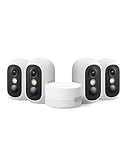
- Magnetic & Screw-free Mounting: Enjoy effortless installation in seconds. The powerful magnetic base snaps onto any metal surface for a rock-solid hold, or can be placed on any flat surface. No drills, no damage, perfect for both indoors and out. NOTE: For smooth operation of your eufyCam C35, please update your eufy App to version 5.2.10_16477001 (iOS) or 5.2.10_17014 (Android) or newer.
- Spotlight-free Color Night Vision: See true colors, even in total darkness. Our advanced sensor technology reveals critical details like faces and license plates without any spotlight, ensuring clear evidence and zero disturbance.
- Smarter Security with HomeBase Mini: The included HomeBase Mini is the brain of your system, unlocking advanced AI features like Facial Recognition and Cross-Camera Tracking for a truly intelligent and connected experience.
- All Features, Zero Monthly Fees: Unlike other brands, your one-time purchase includes everything—no mandatory subscriptions for cloud storage, no extra charges for AI, and no battery replacement costs.
- Flexible Local Storage: Store footage centrally and securely indoors on the HomeBase Mini (expandable up to 1TB) for ultimate peace of mind. The camera itself also supports a separate microSD card slot for direct local recording (up to 256GB, at least 32GB recommended, card not included).
UK guidance illustrates the higher bar for audio. The Information Commissioner’s Office says workplace audio monitoring should be used only in rare circumstances, targeted at areas of particular risk, and accompanied by workforce consultation and a data-protection impact assessment. GOV.UK guidance says an employer must justify monitoring, explain what is collected and why, and make relevant policies available to employees.
Covert monitoring is described in that UK guidance as an exception for a specific investigation when advance notice would make suspected-crime detection difficult. It should stop when the investigation ends. Those are UK rules and guidance, not a worldwide standard; workers elsewhere should check the law that applies to their employer, location and data.
Continuous audio monitoring of ordinary conversations deserves especially careful scrutiny because it captures incidental speech from people who may not be the investigation’s subject. A clear purpose, narrow coverage, notice, proportionality and deletion schedule are stronger safeguards than a general claim that monitoring improves productivity.
Rank #4

- Capture it all with Retinal 2K video — See every detail of your home or business in full view — powered by Retinal 2K. (Video quality may vary based on internet bandwidth and device temperature.)
- Zoom in 4x — Catch details at a distance with up to 4x Enhanced Zoom.
- True color, even in low light — With Low-Light Sight, just a little ambient light gives you true color video. In total darkness, your camera switches to crisp black-and-white to keep details sharp.
- Get real-time alerts, not interruptions — Receive real-time alerts on your phone when motion is detected.
- Connect to who’s there — See and respond to activity with Live View & Two-Way Talk.
Questions to ask before assuming a room is private
- Is a camera, microphone, screen recorder or location service active on any device in the room?
- Who owns and administers the device or meeting account?
- Is the session being recorded, transcribed or stored, and where can those files go?
- Can a host, administrator, employer or provider retrieve activity later?
- What is the retention period, and is deletion verified rather than merely promised?
- Does the applicable jurisdiction require notice, consultation, an impact assessment or consent?
The answers distinguish a preventive control—such as a meeting lock—from a detective or retrospective one, such as an access log. They also reveal coverage gaps: a webcam cover protects one lens, while a meeting policy governs only the platform it names.
The practical bottom line for workers
Assume that an office can expose conversations, images, activity and records unless you have checked the equipment, meeting settings and applicable policy. Use organization-issued devices for sensitive work when possible, verify audio and video status before joining, restrict admission and sharing, and treat recordings and “disappearing” messages as potentially durable records. Privacy is a set of technical and governance choices—not a property guaranteed by being inside an office.
Quick wins for a faster PC:
Clear out junk files and repair common Windows errorsFree Scan →Scan for outdated or missing drivers - takes under a minuteDriver Scan →Quick Recap
Product prices and availability are accurate as of the date/time indicated and are subject to change. Any price and availability information displayed on Amazon at the time of purchase will apply.

