For buyers in India, the OPPO K13 Turbo Pro 5G has the stronger listed performance, battery and gaming hardware, while the Xiaomi Redmi Note 15 5G offers a more versatile rear camera setup, a lighter listed weight and a publicly stated software-support commitment. The price gap is small on the listing we looked at, but it is not fixed and should be checked on the day you buy.
This comparison covers only the India 5G models: the Redmi Note 15 5G and the OPPO K13 Turbo Pro 5G (model CPH2731). It does not cover the Redmi Note 15 4G, other regional variants, or the standard OPPO K13 Turbo.
As an Amazon Associate I earn from qualifying purchases.
Price difference: what the numbers show
Two price points are available, and they answer different questions.
What’s actually slowing this PC down?
Pick the symptom - the matching free tool is one click away.
- Launch price. Xiaomi India announced the Redmi Note 15 5G at a starting price of ₹22,999, with sales beginning January 9, 2026 on mi.com, Amazon India and authorised retail partners, according to a Moneycontrol report from 2026. This is historical launch pricing, not the current price.
- Listing price. A 91mobiles India comparison page, accessed October 4, 2026, displayed ₹28,999 for the Redmi Note 15 and ₹29,999 for the OPPO K13 Turbo Pro, a difference of ₹1,000.
The ₹1,000 figure is not a standing gap. Retailer, stock, storage and RAM configuration, and offers can each move the price on a given day. The sources available for this article do not establish OPPO’s official launch price from a primary price source, so a like-for-like launch-price difference cannot be stated.
#1 Best Overall

- USA MARKET ONLY WORK ON TMOBILE MINT TELLO OR ANY UNDER TMOBILE NETWORK PHONE NEEDS A SIM CARD ALREADY ACTIVATED ,OUTSIDE USA WORKS ANY GSM CARRIER SIM GSM FCC ID: 2AFZZRA29G
- Dual SIM (nano SIM + nano SIM or nano SIM + eSIM) NO MICRO SD SLOT. 5G: n1/2/3/5/7/8/12/20/26/28/38/40/41/48/66/77/78 - 4G: LTE FDD: 1/B2/B3/B4/B5/B7/B8/B12/B13/B17/B18/B19/B20/B26/B28/B32/B66 4G: LTE TDD: B38/B40/B41/B42/B48 - 3G: WCDMA: B1/B2/B4/B5/B6/B8/B19 - 2G: GSM: B2/B3/B5/B8
- 6.83" AMOLED displayResolution: 1.5K (2772 x 1280)Refresh rate: Up to 120HzTouch sampling rate: Up to 480HzInstantaneous touch sampling rate: 2560Hz*Activated in Game Turbo modeBrightness: 3200 nits peak brightnessBrightness: HBM 1800 nitsColor depth: 12bitContrast ratio: 8000000:1DCI- P3 wide color gamut447PPICorning Gorilla Glass Victus 2Sunlight displayHDR10+ | Dolby Vision16,000-step automatic brightness adjustment3840Hz PWM dimming|TÜV Rheinland Low Blue Light (Hardware Solution) Certified | TÜV Rheinland Circadian Friendly Certified | TÜV Rheinland Flicker Free Certified
- MediaTek Dimensity 7400-Ultra4nm manufacturing process technologyCPU: Octa-core processor, up to 2.6GHzGPU: Mali-G615
- 200MP main cameraOptical Image Stabilization (OIS)0.56μm, 16in1, 2.24μmf/1.77P lens1/1.4" sensor size8MP ultra-wide cameraf/2.2Rear camera video recording4K at 30 fps1080p at 30/60 fps720p at 30 fps / Front Camera 20MP front camera1/4" sensor sizef/2.24P lensFront camera video recording1080p at 30/60 fps720p at 30 fps
Specs at a glance
| Feature | Redmi Note 15 5G | OPPO K13 Turbo Pro 5G | Edge |
|---|---|---|---|
| Chipset | Snapdragon 6 Gen 3 | Snapdragon 8s Gen 4 | OPPO (higher performance tier) |
| Display | 6.77-inch curved AMOLED, 2392 × 1080, 120Hz; 3,200-nit peak brightness (Xiaomi claim) | 6.8-inch-class flat AMOLED, 2800 × 1280, 120Hz; 1,600-nit typical HBM (OPPO spec) | OPPO for resolution; brightness figures are not directly comparable |
| Rear cameras | 108MP main with OIS; 8MP ultrawide | 50MP main with OIS; 2MP monochrome | Redmi for lens variety |
| Video | 4K recording promoted by Xiaomi | 4K video support per OPPO spec | Not established as different |
| Battery | 5,520mAh | 7,000mAh typical (6,830mAh rated) | OPPO |
| Wired charging | 45W; 18W reverse charging | Up to 80W SUPERVOOC/UFCS | OPPO |
| Cooling | No cooling fan described in the Xiaomi material used here | Built-in variable-speed fan (up to 18,000 rpm) and vapour chamber | OPPO |
| Weight | 178g (comparison listing) | 208g (OPPO specifications) | Redmi, by 30g |
| Water and dust resistance | IP65/IP66 described on Xiaomi’s product material | IP ratings on OPPO’s product page | Check the exact codes on each product page |
| Storage expansion | microSD expansion listed by Xiaomi (confirm for your variant) | Storage card not supported (OPPO spec) | Redmi |
| Software support | Four years of Android updates and six years of security updates (Xiaomi India, January 2026) | ColorOS 15; official support period not established from a primary OPPO source | Redmi, on its stated commitment |
| AnTuTu score | 868,311 (91mobiles comparison page, October 4, 2026) | 2,029,394 (same comparison page) | OPPO, third-party listing figure |
Performance, gaming and cooling
Chipset and benchmark figures
The Snapdragon 8s Gen 4 in the OPPO sits in a higher performance tier than the Snapdragon 6 Gen 3 in the Redmi. On the 91mobiles comparison page, the Redmi scored 868,311 and the OPPO 2,029,394 on AnTuTu. Those are third-party listing figures, and benchmark results depend on software version, device configuration and benchmark release. Treat the gap as a clear direction rather than a measure of everyday speed.
OPPO’s own product page cites a 2,200,000 AnTuTu score and a 120fps gaming claim from its own lab tests, noting that results vary with conditions. These are vendor figures from a different setup, so they should not be averaged with the third-party scores.
Rank #2

- USA MARKET ONLY WORK ON TMOBILE MINT TELLO OR ANY UNDER TMOBILE NETWORK PHONE NEEDS A SIM CARD ALREADY ACTIVATED ,OUTSIDE USA WORKS ANY GSM CARRIER SIM GSM FCC ID: 2AFZZRA8E
- Dual SIM (nano SIM + nano SIM or nano SIM + eSIM) (NoT MICRO SD SLOT) 5G: n1/2/3/5/7/8/20/28/38/40/41/48/66/77/78 / 4G: LTE FDD:1/2/3/4/5/7/8/12/13/17/18/19/20/26/28/32/66 -- 4G: LTE TDD:38/40/41/42/48 -- 3G: 1/2/4/5/6/8/19 -- 2G Quad Band - Bluetooth 5.4Wi-Fi: Wi-Fi 6/6E/Wi-Fi 5/Wi-Fi 4/802.11a/b/g Supports 2.4GHz Wi-Fi | 5GHz Wi-Fi Supports 2x2 MIMO,Wi-Fi Direct
- 6.83" CrystalRes AMOLED displayResolution: 1.5K (2772 x 1280)Refresh rate: Up to 120HzTouch sampling rate: Up to 480HzInstantaneous touch sampling rate: 2560Hz*Activated in Game Turbo modeBrightness: 3200 nits peak brightnessBrightness: HBM 1800 nitsColor depth: 12bitContrast ratio: 8000000:1DCI- P3 wide color gamut447PPICorning Gorilla Glass Victus 2Sunlight displayHDR10+ | Dolby Vision16,000-step automatic brightness adjustment3840Hz PWM dimming|TÜV Rheinland Low Blue Light (Hardware Solution) Certified | TÜV Rheinland Circadian Friendly Certified | TÜV Rheinland Flicker Free Certified
- Snapdragon 7s Gen 44nm manufacturing process technologyCPU: Octa-core processor, up to 2.7GHzGPU: Adreno GPU
- 200MP main cameraOptical Image Stabilization (OIS)0.56μm, 16in1, 2.24μmf/1.77P lens1/1.4" sensor size8MP ultra-wide cameraf/2.2Rear camera video recording4K at 30 fps1080p at 30/60 fps720p at 30 fps - 32MP front camera1/3.6" sensor sizef/2.24P lensFront camera video recording1080p at 30/60 fps720p at 30 fps
Cooling
The OPPO K13 Turbo Pro has a built-in variable-speed fan running up to 18,000 rpm, backed by a vapour chamber. OPPO India’s 2025 launch material claims the K13 Turbo series runs 2–4°C cooler in BGMI. That is OPPO’s reported figure for its own product, not an independent measurement. The Xiaomi material used for this comparison does not describe a fan for the Redmi, so the cooling advantage on the OPPO rests on its stated hardware and vendor claim rather than on independent test data.
Display
The OPPO has more pixels, at 2800 × 1280 against the Redmi’s 2392 × 1080, and both panels run at 120Hz. The Redmi uses a curved AMOLED panel; the OPPO uses a flat one. Xiaomi advertises 3,200-nit peak brightness, while OPPO lists 1,600-nit typical HBM. Peak and typical figures are measured differently, so neither number proves which screen looks brighter in sunlight.
Rank #3

- USA MARKET ONLY WORK ON TMOBILE MINT TELLO OR ANY UNDER TMOBILE NETWORK PHONE NEEDS A SIM CARD ALREADY ACTIVATED ,OUTSIDE USA WORKS ANY GSM CARRIER SIM GSM FCC ID: 2AFZZRA29G
- Dual SIM (nano SIM + nano SIM or nano SIM + eSIM) NO MICRO SD SLOT. 5G: n1/2/3/5/7/8/12/20/26/28/38/40/41/48/66/77/78 - 4G: LTE FDD: 1/B2/B3/B4/B5/B7/B8/B12/B13/B17/B18/B19/B20/B26/B28/B32/B66 4G: LTE TDD: B38/B40/B41/B42/B48 - 3G: WCDMA: B1/B2/B4/B5/B6/B8/B19 - 2G: GSM: B2/B3/B5/B8
- 6.83" AMOLED displayResolution: 1.5K (2772 x 1280)Refresh rate: Up to 120HzTouch sampling rate: Up to 480HzInstantaneous touch sampling rate: 2560Hz*Activated in Game Turbo modeBrightness: 3200 nits peak brightnessBrightness: HBM 1800 nitsColor depth: 12bitContrast ratio: 8000000:1DCI- P3 wide color gamut447PPICorning Gorilla Glass Victus 2Sunlight displayHDR10+ | Dolby Vision16,000-step automatic brightness adjustment3840Hz PWM dimming|TÜV Rheinland Low Blue Light (Hardware Solution) Certified | TÜV Rheinland Circadian Friendly Certified | TÜV Rheinland Flicker Free Certified
- MediaTek Dimensity 7400-Ultra4nm manufacturing process technologyCPU: Octa-core processor, up to 2.6GHzGPU: Mali-G615
- 200MP main cameraOptical Image Stabilization (OIS)0.56μm, 16in1, 2.24μmf/1.77P lens1/1.4" sensor size8MP ultra-wide cameraf/2.2Rear camera video recording4K at 30 fps1080p at 30/60 fps720p at 30 fps / Front Camera 20MP front camera1/4" sensor sizef/2.24P lensFront camera video recording1080p at 30/60 fps720p at 30 fps
Cameras
The Redmi has the more useful camera layout for most shooters. It pairs a 108MP main camera with OIS and an 8MP ultrawide. The OPPO pairs a 50MP main camera with OIS and a 2MP monochrome lens. If you regularly shoot wide scenes or group photos, the ultrawide is the decisive difference. Megapixel count alone does not establish image quality, because processing, sensor size and lighting matter as much as resolution.
Battery and charging
The OPPO has the larger battery: 7,000mAh typical, or 6,830mAh rated, against the Redmi’s 5,520mAh. The OPPO also has the faster wired charging, up to 80W SUPERVOOC/UFCS compared with the Redmi’s 45W. The Redmi supports 18W reverse charging, which lets it top up another device. Both phones use USB-C. Real charging speed depends on the adapter and the charging protocol in use, and endurance varies with settings and temperature, so these numbers describe maximum specifications rather than guaranteed times.
Rank #4

- USA MARKET ONLY WORK ON TMOBILE MINT TELLO OR ANY UNDER TMOBILE NETWORK PHONE NEEDS A SIM CARD ALREADY ACTIVATED ,OUTSIDE USA WORKS ANY GSM CARRIER SIM GSM FCC ID: 2AFZZRN76L
- SIM 1 + Hybrid (SIM or microSD) Dual standby , supports dual 4G : 4G: 1/2/3/4/5/7/8/12/13/17/18/19/26/28/66 4G: LTE TDD: Band 38/40/41 3G: WCDMA: Band 1/2/4/5/6/8/19 2G: GSM: Quad Band.
- 6.77" AMOLED displayResolution: 2392 × 1080Refresh rate: Up to 120HzTouch sampling rate: 240HzBrightness: 3200 nits peak brightness, 800 nits (typ)Colour depth: 12 bitContrast ratio: 8,000,000:1DCI- P3 wide color gamutSunlight displayReading mode3840Hz PWM dimming|16,000-level brightness adjustmentScreen-to-body ratio: 93%*Data obtained from Xiaomi Internal Labs. Actual results may vary.TÜV Rheinland Low Blue Light (Hardware Solution) Certified TÜV Rheinland Circadian Friendly Certified TÜV Rheinland Flicker Free Certified
- MediaTek Helio G100-Ultra6nm manufacturing process technologyCPU: Octa-core processor, up to 2.2GHzGPU: Mali-G57 MC2
- Proximity sensor | Ambient light sensor | Accelerometer | Electronic compass | IR blaster | Gyroscope / Bluetooth 5.3Wi-Fi Protocol: 802.11a/b/g/n/ac / Supports 2.4GHz Wi-Fi | 5GHz Wi-Fi Supports Wi-Fi Direct
Build, weight and water resistance
The Redmi is listed at 178g in a comparison listing, while the OPPO is listed at 208g in OPPO’s own specifications. The 30g difference is noticeable in one-handed use over a long day. On water and dust resistance, the Redmi is described as IP65/IP66 on Xiaomi’s material, and OPPO’s product page lists its own IP ratings, which the comparison material describes as higher classes. Read these ratings as results under specific test conditions. They do not mean a phone is safe to use underwater or in all wet conditions.
Software support
Xiaomi India announced four years of Android updates and six years of security updates for the Redmi Note 15 5G at launch, as reported by Moneycontrol in 2026. The OPPO K13 Turbo Pro runs ColorOS 15. A secondary comparison reports shorter support for the OPPO, but we could not confirm OPPO’s official support period from a primary OPPO source. Check OPPO’s current update policy before treating the difference as settled.
Best Value
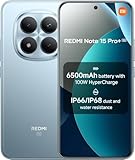
- USA MARKET ONLY WORK ON TMOBILE MINT TELLO OR ANY UNDER TMOBILE NETWORK PHONE NEEDS A SIM CARD ALREADY ACTIVATED ,OUTSIDE USA WORKS ANY GSM CARRIER SIM GSM FCC ID: 2AFZZRA8E
- Dual SIM (nano SIM + nano SIM or nano SIM + eSIM) (NoT MICRO SD SLOT) 5G: n1/2/3/5/7/8/20/28/38/40/41/48/66/77/78 / 4G: LTE FDD:1/2/3/4/5/7/8/12/13/17/18/19/20/26/28/32/66 -- 4G: LTE TDD:38/40/41/42/48 -- 3G: 1/2/4/5/6/8/19 -- 2G Quad Band - Bluetooth 5.4Wi-Fi: Wi-Fi 6/6E/Wi-Fi 5/Wi-Fi 4/802.11a/b/g Supports 2.4GHz Wi-Fi | 5GHz Wi-Fi Supports 2x2 MIMO,Wi-Fi Direct
- 6.83" CrystalRes AMOLED displayResolution: 1.5K (2772 x 1280)Refresh rate: Up to 120HzTouch sampling rate: Up to 480HzInstantaneous touch sampling rate: 2560Hz*Activated in Game Turbo modeBrightness: 3200 nits peak brightnessBrightness: HBM 1800 nitsColor depth: 12bitContrast ratio: 8000000:1DCI- P3 wide color gamut447PPICorning Gorilla Glass Victus 2Sunlight displayHDR10+ | Dolby Vision16,000-step automatic brightness adjustment3840Hz PWM dimming|TÜV Rheinland Low Blue Light (Hardware Solution) Certified | TÜV Rheinland Circadian Friendly Certified | TÜV Rheinland Flicker Free Certified
- Snapdragon 7s Gen 44nm manufacturing process technologyCPU: Octa-core processor, up to 2.7GHzGPU: Adreno GPU
- 200MP main cameraOptical Image Stabilization (OIS)0.56μm, 16in1, 2.24μmf/1.77P lens1/1.4" sensor size8MP ultra-wide cameraf/2.2Rear camera video recording4K at 30 fps1080p at 30/60 fps720p at 30 fps - 32MP front camera1/3.6" sensor sizef/2.24P lensFront camera video recording1080p at 30/60 fps720p at 30 fps
How to check the price before you buy
- Confirm the exact variant. Match the RAM and storage configuration on both listings, since the ₹1,000 gap applies only to the configuration on the comparison page.
- Check the Redmi on mi.com, Amazon India and authorised retailers, and the OPPO K13 Turbo Pro (CPH2731) on OPPO’s India product page and on Amazon India.
- Compare final prices after offers are applied, and note the seller and the date you checked.
- Confirm stock. A lower price from a seller with no stock is not a usable price.
Which one should you buy
- Choose the OPPO K13 Turbo Pro if sustained gaming, the stronger chipset, the larger battery and faster wired charging matter most, and the listed price difference is acceptable.
- Choose the Redmi Note 15 5G if you want an ultrawide lens, a higher-megapixel main camera, a lighter phone, microSD expansion, or the software-support period Xiaomi has publicly committed to.
- Neither spec sheet proves a universal winner. Real-world camera quality, thermal behaviour and gaming performance need independent hands-on testing, which this comparison does not include.
Source note: OPPO’s July 30, 2025 India release states, “Both devices—the OPPO K13 Turbo Pro and the K13 Turbo—are engineered from the ground-up for users who demand consistent performance during long gaming sessions and peak-performance productivity throughout the day.” This is OPPO’s own positioning statement.
Quick Recap
Product prices and availability are accurate as of the date/time indicated and are subject to change. Any price and availability information displayed on Amazon at the time of purchase will apply.

