A case can trap enough heat to make charging slow or stop temporarily, especially during wireless charging. Apple advises removing the case when an iPhone heats while charging, and specifically warns that thick, metal, or battery cases can cause slow or unsuccessful wireless charging. The case is only one possible cause: temperature, charger power, cable type, phone use, and the charging surface can all limit speed.
Start by stopping demanding activity, moving the iPhone and charger out of heat, and removing the case. Then check whether iOS shows Charging On Hold or Slow Charger. The steps below separate a normal thermal protection response from a case, accessory, or hardware problem.
As an Amazon Associate I earn from qualifying purchases.
What is happening when a case makes charging slow?
iPhone batteries charge within a controlled temperature range. When the phone becomes too warm or too cold, iOS can reduce charging current or pause charging until the battery returns to a safer temperature. Apple describes the behavior this way: “If your iPhone gets too warm, charging may slow or stop until the temperature lowers.” The protection applies to charging by cable, MagSafe, and other wireless methods; a different charger cannot bypass it.
Quick wins for a faster PC:
Clear out junk files and repair common Windows errorsFree Scan →Fix the driver behind crashes, sound loss and screen glitchesFind Drivers →A case can contribute by insulating the phone and slowing heat release. That does not mean every case causes overheating. A thin, nonmetal case in a cool room may have no noticeable effect, while a thick, metal-lined, wallet-style, or battery case can make a marginal setup cross the temperature limit. Wireless charging is more sensitive because energy is transferred across a small air gap and some power becomes heat in both the phone and charger.
#1 Best Overall

- Linear damping telescopic clip: easy to adjust, pay attention! Suitable for all types of mobile phones with a width of "6 to 7.5 centimeters". NEVEIKIA mobile phone cooling can cool down when connected to a power source.(Attention: It is best to remove the phone case when using it for a better experience!)
- Quick cooling: Dual engine, cooling principle is the same as a refrigerator, not ordinary fan cooling. It can cool your phone in "3 to 5 seconds", avoiding overheating and ensuring a stable live streaming or gaming experience.
- Dual power supply design: supports powering the radiator through a mobile phone, and can also be connected to an external power source for use; When connected to an external power source, it can provide stable power to both the radiator and the phone, avoiding interruption of heat dissipation due to insufficient power during long-term use and ensuring continuous and stable heat dissipation performance.
- Silent engine cooling: The fan with dual silent design can effectively dissipate air from all directions, providing stronger cooling effect without interfering with your games or Vlog programs.
- Expanded cooling area: Approximately 2.82x1.29 inches of extreme thermal conductivity cooling area, covering the CPU and battery module, protecting your phone from blackening or sudden shutdown.
Heat that is expected
Some warmth is normal during wireless charging, graphics-intensive games, camera use, high-quality video streaming, setup, restoration from backup, and software updates. Those activities increase processor or radio activity while the battery is also receiving power. Warm does not automatically mean the battery is damaged.
Heat that requires action
Take action if the phone becomes uncomfortably hot, charging repeatedly pauses, the charger or case is hot to touch, or iOS displays a temperature warning. A warning means the device needs to cool before normal use and charging can resume. Apple does not specify a universal number of minutes for cooling because the time depends on the starting temperature, airflow, sunlight, workload, and case.
First response: cool the iPhone safely
- Stop demanding activity. End games, camera recording, navigation, video streaming, and other heavy tasks while the phone charges. Lock the screen if you do not need to use it.
- Move the setup. Put the iPhone and charger in a shaded, dry, ventilated place. Do not charge under bedding, inside a closed bag, on a car dashboard, or pressed against your body. Avoid hot cars and direct sunlight.
- Remove the case. Take it off whenever the phone tends to heat during charging. For wireless charging, remove thick, metal, and battery cases first because Apple identifies them as common causes of slow or unsuccessful charging.
- Remove objects between the phone and pad. Coins, cards with metallic components, magnetic mounts, and other metal items can interfere with wireless charging or become hot. Place the bare phone directly on the charging surface and center it according to the charger’s instructions.
- Respond to a temperature warning. Turn the iPhone off and leave it in a cooler environment away from sunlight. Do not put it in a freezer or refrigerator; sudden condensation can damage electronics. Wait until it has returned to a normal temperature before charging again.
Apple’s recommended ambient operating range is 0°C to 35°C (32°F to 95°F). The stated storage range is −20°C to 45°C (−4°F to 113°F), but that storage figure is not a safe charging target.
Check what iOS says about the charging problem
iOS can distinguish a thermal hold from a low-power accessory. Check the Lock Screen and open Settings > Battery while the charger is connected.
Rank #2

- Compact and Lightweight Design: Total weight of 0.02 kg with dimensions of 7.8 X 4.1 inch, making it easy to carry and store during outdoor activities.
- Premium Insulation Material: Filling consists of 90% white goose down for superior thermal protection and temperature regulation.
- Wide Temperature Range: Applicable temperature range of -5℃ to 40℃ , ensuring your device stays protected in various weather conditions.
- Versatile Protection: Protect your phone against sun, snow, heat, and cold while maintaining your phone's standby time longer under high and low temperature conditions.
- Compatible with : For iPhone, Galaxy, Pixel, Microsoft, LG. Motorola, Kyocera, HTC and Huawei cell phones.
- Charging On Hold: The phone has paused because its temperature is outside the preferred range. Cooling the device and its surroundings should allow charging to resume automatically.
- Slow Charger: The connected adapter, wireless pad, hub, car port, shared output, or charging conditions are providing power more slowly than the iPhone expects. A demanding app or extreme temperature can also make the displayed rate appear slow.
- No message, but little progress: Inspect the case, alignment, cable, connector, power source, and background activity. A worn cable or low-output port can limit charging without producing a warning.
These messages are useful clues, not proof that the case is defective. Recheck the phone with the case removed and the same charger in the same room. If the behavior disappears, the case or its alignment is a likely contributor. If it remains, continue through the accessory and environment checks.
Wireless charging: cases and alignment matter most
Wireless charging coils must line up closely. A thick case increases the gap; metal can block or redirect the charging field; and a battery case adds another electrical system that can compete for power. Any of these can reduce speed, make charging intermittent, or create extra warmth.
Wireless troubleshooting sequence
- Remove the case, wallet insert, magnetic accessory, and any metal object from the back of the iPhone.
- Place the phone on the center of the pad or attach it to the magnetic charger as the charger instructions show. Misalignment can cause repeated start-and-stop charging and heat.
- Try the same test in a cool room with the screen locked and intensive apps closed.
- If the setup is still slow, use a compatible MagSafe charger or a Qi2-certified charger. Apple identifies MagSafe and Qi2-certified charging as faster wireless options than basic, lower-power wireless charging on supported models.
- Test another compatible cable and power adapter for the pad. The pad’s own input power affects the output available to the phone.
Magnetic attachment does not make every case compatible. A case can be advertised as wireless-charge compatible yet still reduce speed if it is unusually thick, contains metal, or has a battery. Check compatibility for the exact iPhone generation and charging method.
Wired charging: rule out power and connector limits
A case usually has less influence on wired charging because the cable connects directly to the phone, but it can still matter if a port cutout is tight, the plug is not fully inserted, or the case presses on the connector. Heat from demanding use, a hot room, or a low-power adapter can still trigger a slowdown.
Rank #3

- FITS YOUR LARGE PHONES: Large interior dimensions of 6.5" by 3.6" by 0.4" accommodate Max and Plus phones of the newest models or smaller devices with cases, giving you versatile protection for premium gear. Measure your phone with its existing case to ensure the perfect fit. This thermal phone pouch is engineered to work with your setup, not against it. For smaller phones without cases, go for the medium size option. This isn't a one-size-fits-none solution; it's thoughtfully designed to protect the high-end devices adventure enthusiasts rely on daily.
- NEVER LET HEAT KILL YOUR CONNECTION: PHOOZY’s patented Chromium Thermal Barrier harnesses actual NASA spacesuit technology to reflect solar radiation and shield your phone from extreme heat, helping maintain safe operating temperatures in direct sun. Whether you’re hours into a desert hike, navigating exposed trails with GPS, or capturing photos on the water, your phone stays powered and functional instead of overheating and shutting down. This isn’t just another generic phone pouch, it’s aerospace-grade engineering designed to solve the primary pain point every summer adventurer faces: critical device failure when you need it most.
- ONE POUCH TOTAL PROTECTION: Unlike generic cases that handle only one threat, this thermal phone pouch combines heat-shielding insulation, military-grade impact resistance up to six feet, and water-resistant protection with Anti-Sink technology in a single, streamlined solution. When you're pushing limits in harsh environments, whether on exposed desert trails, open water, or long days under direct sun, your gear should rise to the challenge, not multiply your pack weight. Exceeding military drop-test standards, this heat-resistant phone case eliminates the frustration and expense of carrying multiple protective accessories that fail when conditions get tough.
- RUGGED TERRAIN MEETS ITS MATCH: The Impactor Core engineering exceeds official military drop-test standards, protecting your phone from drops up to six feet on unforgiving surfaces. Fumble your device on a rocky trail, drop it stepping off a boat, or knock it loose while navigating rough terrain? This phone pouch’s proven construction keeps your investment safe. Designed for adventure athletes who demand reliability, this drop protection isn’t marketing hype, it’s certified performance backed by the same rigorous testing standards trusted by professionals in extreme conditions. Quality gear that won’t fail when you’re pushing your limits under the summer sun.
- STAY CONNECTED. STAY SAFE: This insulated phone pouch ensures zero interference with cellular, Wi-Fi, or Bluetooth signals, critical for adventurers who rely on their phones for GPS navigation, emergency communication, and real-time connection in exposed environments. Receive that important call, check your route, track your ride stats, or share the moment all without removing your phone from protection. Unlike many protective pouches that block signals, this thermal phone case for heat and cold maintains full connectivity, so you can stay focused on the adventure while staying connected to what matters: your safety and the people back home.
| iPhone generation or method | Apple’s faster-charge guidance | What to verify |
|---|---|---|
| iPhone 15 and later, wired | Use a USB-C Power Delivery (USB-C PD) charger. | The adapter supports suitable USB-C PD output and the USB-C cable is rated and undamaged. |
| iPhone 14 and earlier, wired | Use the cable with a USB-C connector at the adapter and a Lightning connector at the iPhone. | The Lightning plug is clean, fully seated, and not obstructed by the case opening. |
| MagSafe or Qi2 wireless | Use a compatible MagSafe or Qi2-certified charger for faster wireless charging on supported models. | Correct model support, proper alignment, adequate input power, and a case that does not interfere. |
| Hub, car port, computer, or shared adapter | Output may be lower or shared with other devices. | Connect directly to a suitable wall adapter when testing charging speed. |
“Fast” depends on the iPhone model, battery level, temperature, adapter, cable, and charger. Buying a higher-wattage adapter will not override a thermal hold, and it will not make an incompatible wireless pad charge faster.
How to identify the case as the bottleneck
Use a controlled comparison instead of guessing from how the case feels. Charge the phone in the same room, with the same cable or pad, from a similar battery level, first with the case on and then with it removed. Keep the screen locked and avoid heavy apps during both tests. Note whether the phone becomes hot, whether charging pauses, and whether the Lock Screen reports a slow charger.
- Only the cased test overheats or pauses: The case’s thickness, metal, battery, or alignment is a plausible cause. Replace it with a thinner, nonmetal case designed for the exact model, or remove it while charging.
- Both tests overheat: Look at room temperature, sunlight, charger input, cable condition, background activity, and the phone’s software or hardware.
- Only wireless charging is slow: Focus on coil alignment, case materials, pad input power, and the wireless standard rather than the USB cable.
- Only one cable or adapter is slow: That accessory or its power source is the likely limitation.
This comparison does not establish that a particular material always causes overheating. It identifies whether your specific combination of phone, case, charger, and environment changes the result.
Other reasons an iPhone may charge slowly
Low-power or shared output
Computer ports, car ports, hubs, older adapters, and multi-device chargers may provide less power than a direct wall connection. If several devices share an adapter, the available output can be divided. Test with a suitable adapter connected directly to a wall outlet.
Rank #4

- 【20W Power Ultra-Fast Cooling】The wired magnetic phone cooler utilizes high-performance Peltier element (TEC) with high heat dissipation capacity, and its heat dissipation ability lowers the temperature of the main unit by about 95℉. NOTE: Connection to power supply required for use. Power must exceed 20W for optimal performance. Data cable not included in packag.
- 【Simple Control】The cell phone cooling fan has a built-in Type-C interface, just connect the power cord and it is ready to use. Switch between overclocking mode and silent mode with the click of a button. 12N strong magnetic force holds the phone firmly in place and prevents it from falling off.
- 【Compact and lightweight design】The Magnetic cell phone cooler weighs only 0.18 lb in a small size, leaving more space for hand operation and being without overheavy burden.
- 【Quiet Operation】This smartphone cooler adopts noise reduction design, and the operating noise in silent mode is only 30db, allowing you to play games or watch videos comfortably.
- 【Vertical Air Duct Design】The vertical air duct design of FunCooler 5 smartphone cooling fan focuses on the user's actual experience and innovative ergonomic design, which provides a comfortable grip and does not dissipate heat to the hand.
Phone use during charging
Games, camera recording, navigation, hotspot use, high-resolution streaming, and large downloads consume power while the battery is charging. The net battery increase can therefore look very small. Close demanding apps and let the screen sleep before judging the charger.
Extreme ambient temperature
Charging in direct sun, a hot vehicle, or a room above the recommended range can invoke thermal limits even with no case. Conversely, very cold conditions can also slow charging until the battery warms into its operating range.
Debris, wear, or a poor connection
Lint in a Lightning or USB-C port, a bent connector, frayed cable, or loose fit can interrupt charging. Power the iPhone off before carefully removing visible debris with a nonmetal tool; do not force anything into the port. Replace damaged accessories rather than continuing to use them.
What’s actually slowing this PC down?
Pick the symptom - the matching free tool is one click away.
Software activity in the background
After setup, restore, an update, or a large photo-library sync, the phone may work for an extended period while charging. Let that process finish in a cool, ventilated location before evaluating ordinary charging behavior.
Best Value
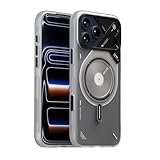
- [Fro iPhone 17 Pro Max Case] Please note that this is Aulumu A17 for iPhone 17 Pro Max Case, please check your phone model
- Advanced 2-layered IMD process for ultimate protection against scratches and vibrant pattern durability. Stylish glow-in-the-dark lines that softly illuminate in the night for a unique aesthetic.(Fluorescence requires the absorption of other light energy, which is then released in darkness)
- Featuring Aulumu's patented CoolHyper Cooling Tech, heat dissipation is primarily achieved through passive cooling fins and thermal silicone gel (reducing temperatures by 2-3 degrees compared to conventional protective cases)
- High-quality aluminum components, including camera ring and buttons, for superior protection and tactile feedback.updated V2 touch button, which completely wraps around the phone, improves security without interfering with your ability to operate the camera buttons.
- Compatible with MagSafe, thanks to the powerful Rubidium magnet N52, making it easy to use with a wide range of Mag-Safe devices and providing stable support.
When to stop troubleshooting and seek service
Contact Apple or an authorized service provider if the iPhone repeatedly becomes extremely hot during light use, shows temperature warnings in a cool environment with the case removed, will not charge with known-compatible accessories, or has a swollen battery, damaged port, burning smell, smoke, or unusual noise. Stop using a damaged or swollen device and keep it away from flammable materials.
Do not continue charging a phone that is hot enough to be painful to touch. Do not puncture, bend, open, or attempt to replace a swollen battery yourself. Record which charger, cable, case, temperature, and iOS message were present; those details help a technician reproduce the fault.
Choosing accessories after you find the cause
Only buy an accessory after the basic case-removal and cooling tests identify what is limiting your setup. Confirm the exact iPhone generation, connector, wireless standard, case thickness, and regional compatibility. For iPhone 15 and later, a USB-C PD charger is Apple’s faster wired option; for iPhone 14 and earlier, choose a USB-C-to-Lightning cable. For wireless charging, select a compatible MagSafe or Qi2-certified charger.
Crashes, No Sound, or Screen Glitches?
Random freezes, missing sound and display glitches usually trace back to one bad driver. Find and replace yours safely.Free scan · under a minuteWindows Errors? Fix Them Before They Spread
Repair common Windows errors and clear accumulated junk for a smoother, more stable PC - no reinstall needed.Free scan · no reinstallLook for clear specifications rather than claims that a case “prevents overheating.” No case can defeat iOS temperature protections, and no charger can guarantee a fixed charging time under every temperature and workload. A case that leaves the charging area unobstructed and avoids unnecessary metal is a sensible compatibility choice, but the phone’s model and the entire charging setup still determine the result.
A concise decision path
- Is the iPhone hot? Stop intensive use, remove it from sun or a hot enclosure, and ventilate the charger.
- Is a case fitted? Remove it; for wireless charging, remove thick, metal, or battery cases and metallic inserts.
- Does iOS say Charging On Hold? Wait for the device to cool; charging should resume automatically.
- Does iOS say Slow Charger? Test a direct wall adapter, an appropriate cable, and a compatible MagSafe or Qi2 charger where applicable.
- Is the problem limited to one case, cable, pad, or port? Replace that component only after a controlled comparison.
- Do warnings or severe heat continue without the case in a cool environment? Stop using the setup and arrange service.
The practical answer is not that every case overheats an iPhone. A case can retain heat or interfere with wireless energy transfer, while iOS can deliberately slow or pause charging to protect the battery. Removing the case, cooling the environment, reducing phone use, and matching the charger to the iPhone generation resolves many cases; persistent heat with a bare phone points beyond the case.
Quick Recap
Product prices and availability are accurate as of the date/time indicated and are subject to change. Any price and availability information displayed on Amazon at the time of purchase will apply.

