Do these 3 things before closing this tab:
1Scan for outdated or missing drivers - takes under a minute2Clear out junk files and repair common Windows errors3Fix the driver behind crashes, sound loss and screen glitchesThe Air Force is retiring the HH-60G Pave Hawk because it is an aging combat-rescue platform being replaced by the newer HH-60W Jolly Green II. The change is a planned fleet modernization, not a response to one publicly identified accident, maintenance failure or budget cut.
The HH-60W performs the same central personnel-recovery mission with updated avionics, communications, navigation, defensive equipment, survivability features, fuel capacity and weapons capability. Conversion is happening unit by unit, so there is no single retirement date that applies to every HH-60G.
As an Amazon Associate I earn from qualifying purchases.
What the HH-60G Pave Hawk does
The HH-60G is the Air Force’s combat-search-and-rescue and personnel-recovery version of the Army UH-60 Black Hawk. Its most demanding task is recovering downed aircrew or other isolated personnel from hostile or hazardous areas. That mission requires an aircraft able to reach a survivor, protect its crew, coordinate with rescuers and return the recovered person for medical treatment.
Air Force descriptions also identify a wider set of missions for the helicopter. Depending on the assignment, HH-60G crews can support civil search and rescue, disaster response, aeromedical evacuation, humanitarian assistance and spaceflight operations. Retiring the aircraft therefore changes the equipment used for those missions, not the Air Force’s responsibility to conduct them.
#1 Best Overall
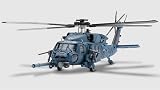
- for S14 HH-60G PAVE HAWK helicopter for US Air Force 83rd Expeditionary Rescue Squadron Pedros Bagram Airfield Afghanistan 91-26406 1:100 Aircraft Pre-built Model
- Size in INCHES: Length: 7.68, Width:
- Material: DIECAST
The Pave Hawk has remained operationally valuable. The retirement decision should not be read as a finding that every HH-60G is unable to perform rescue work. Official explanations instead describe an aging fleet and a successor designed to meet present and future combat-rescue demands with more modern systems.
Why the Air Force is replacing it
An aging platform needs a modern support and mission architecture
The Department of the Air Force’s FY2027 aircraft procurement justification calls the HH-60G aging and identifies the HH-60W program as its replacement. That language points to a fleet-management decision: the Air Force is moving its long-term combat-rescue force to an aircraft whose systems were designed for current communications, navigation, threat and mission requirements.
The public retirement accounts do not provide a single average fleet age, readiness percentage, maintenance-cost figure or quantified savings calculation. Those numbers should not be invented to make the explanation sound more precise. What is established is the Air Force’s stated modernization rationale and the decision to transition to the HH-60W.
Rank #2

- Manufacturer: Kelik (Ukraine)
- Scale: 1/35
- Type: 3D decals
- Kit description: Kit does not contain paints and glue
- Condition: New
Survivability and mission systems have advanced
In its account of Kirtland Air Force Base’s transition, Air Education and Training Command described the Jolly Green II as having improved avionics, enhanced survivability features and increased fuel capacity. Air Force Materiel Command separately reported improved communications, navigation and defensive systems, plus an added GAU-21 weapon capability, when it announced the HH-60W’s initial combat capability in October 2022.
These are selected improvements reported by the Air Force, not a complete technical specification comparison. The sources do not establish that the HH-60G could no longer conduct rescue missions; they establish that the HH-60W offers a more suitable technology baseline for the missions the service expects to perform.
The mission is changing faster than a legacy airframe
Combat rescue depends on more than lifting capacity. Crews must exchange information with aircraft and ground teams, navigate in darkness and marginal weather, identify threats, defend the helicopter and carry enough fuel for an uncertain recovery. Newer communications, navigation, defensive and survivability equipment can reduce the compromises imposed by older systems. The Air Force presents the HH-60W as an aircraft built around those contemporary requirements rather than as a simple continuation of the older helicopter.
Rank #3
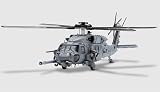
- for S14 HH-60G PAVE HAWK helicopter for US Air Force 210th Rescue Squadron Alaska Air National Guard 91-26466 1:100 Aircraft Pre-built Model
- Size in INCHES: Length: 7.68, Width:
- Material: DIECAST
What is replacing the Pave Hawk?
The replacement is the HH-60W Jolly Green II. It retains the HH-60G’s core role—combat search and rescue and personnel recovery—but introduces updated mission equipment and greater fuel capacity. Air Force descriptions associate the aircraft with the following changes:
What’s actually slowing this PC down?
Pick the symptom - the matching free tool is one click away.
| Comparison area | HH-60G Pave Hawk | HH-60W Jolly Green II | What the public record establishes |
|---|---|---|---|
| Primary role | Combat search and rescue and personnel recovery, with additional rescue and support missions | Combat search and rescue and personnel recovery, including day, night and marginal-weather operations | The replacement preserves the central rescue mission. |
| Avionics | Legacy system architecture | Improved avionics | Air Education and Training Command identifies improved avionics on the HH-60W. |
| Communications and navigation | Earlier-generation equipment | Improved communications and navigation systems | Air Force Materiel Command reported these improvements in 2022. |
| Survivability and defenses | Existing Pave Hawk defensive and survivability equipment | Enhanced survivability features and improved defensive systems | The cited Air Force accounts describe upgrades but do not provide a full equipment-by-equipment inventory. |
| Fuel capacity | Earlier capacity | Increased fuel capacity | The Kirtland transition account identifies increased capacity; it does not state a universal range increase. |
| Weapons | Existing aircraft armament | Added GAU-21 weapon capability is reported | The 2022 combat-ready announcement names the GAU-21 addition. |
| Fleet status | Being retired as units convert | Replacement aircraft entering operational units | Initial combat capability was reported in October 2022, while conversion continues by unit. |
The table shows why “better” needs qualification. The HH-60W is better equipped for the Air Force’s stated future requirements, but that does not mean every HH-60G sortie was ineffective or that all performance figures are publicly documented in the retirement announcements.
When will the HH-60G be retired?
Retirement is occurring in stages rather than on one fleetwide day. Several official milestones show how the transition is unfolding:
Rank #4

- Model Kit
- May Require Paints and Glues to Assemble
- Accurate Scale Model
- Detailed Instructions Provided
- Decals/Transfers Included
| Date | Event | Why it matters |
|---|---|---|
| 2020 | Kirtland’s 58th Special Operations Wing received its first HH-60W. | Conversion began years before the wing retired its final Pave Hawk. |
| October 2022 | Air Force Materiel Command reported that the HH-60W had achieved initial combat capability. | The new aircraft was declared ready for an initial operational combat role; this did not mean every HH-60G unit had converted. |
| December 2024 | The 58th Special Operations Wing at Kirtland retired its last HH-60G. | One major unit completed its Pave Hawk transition. |
| September 2025 | The 920th Rescue Wing reported that its final two HH-60Gs departed Patrick Space Force Base for Davis-Monthan. | Another wing reached the end of its local HH-60G operations. |
| FY2026 | The FY2027 aircraft procurement justification says the HH-60W program will replace the HH-60G in FY2026. | This is budget-program language and may describe a planning milestone rather than every aircraft leaving service on one date. |
| 2029 | A 2024 Air Force account referred to a plan to replace the fleet by 2029. | This later horizon differs from the budget wording and should not be treated as a confirmed universal completion date without newer official confirmation. |
The apparent conflict between “FY2026” and “by 2029” is best understood as a difference in planning scope or document vintage. A budget justification can describe the fiscal year associated with a program, while a unit article can describe the expected period for completing fleet replacement. The evidence supports continuing, unit-by-unit retirement rather than a single definitive end date.
Independent reader supportYour contribution helps us test, update, and keep practical guides available for everyone.How the transition works at an Air Force unit
Training starts before the final Pave Hawk leaves
Kirtland’s example illustrates the normal sequence. The 58th Special Operations Wing received its first HH-60W in 2020, trained and converted personnel, and retired its last HH-60G in December 2024. This overlap allows pilots, maintainers and rescue specialists to learn the new aircraft while the older fleet continues supporting missions.
Free tools Windows power users keep installed
One-click scans. No signup required.
Initial combat capability is not full fleet conversion
When Air Force Materiel Command announced initial combat capability in October 2022, it meant the HH-60W had reached an initial operational threshold. It did not certify that every active-duty, reserve or guard organization had received the aircraft, nor that all Pave Hawks had been withdrawn. Readers should distinguish an aircraft program’s combat-capability declaration from the completion of conversion across the force.
Best Value

- Ready-to-build plastic model kit
- Glue not included
- Paint not included
- For ages 14 and over
Reserve and active units can reach milestones at different times
The 920th Rescue Wing’s September 2025 announcement that its final two HH-60Gs departed Patrick Space Force Base demonstrates why retirement dates differ. Each wing has its own aircraft deliveries, training schedule, mission commitments and disposition plan. One installation can be HH-60W-only while another is still operating or transferring Pave Hawks.
What the retirement does not mean
- It is not evidence of one triggering incident. The official accounts reviewed describe modernization and replacement, not a particular crash, maintenance failure or safety event.
- It does not end Air Force combat rescue. The personnel-recovery mission continues under the HH-60W and the crews trained to operate it.
- It does not prove a specific cost saving. No cited retirement source supplies a verified dollar amount for savings or a quantified maintenance reduction.
- It does not establish a single final retirement day. Unit announcements and planning documents use different dates and scopes.
- It does not make every Pave Hawk incapable. The Air Force’s argument is that a newer fleet is better suited to future requirements, not that the legacy aircraft never worked.
Why the HH-60W matters to rescue crews
Personnel recovery often takes place under conditions that leave little margin for error: darkness, poor weather, hostile air defenses, long distances and incomplete information about the survivor’s location. The Air Force’s stated HH-60W improvements address several links in that chain.
Improved communications and navigation can help the helicopter coordinate with rescue packages and locate or approach isolated personnel. Enhanced defensive and survivability systems are intended to improve the aircraft’s ability to operate in threatening environments. Increased fuel capacity gives planners more flexibility when a mission requires extended searching, rerouting or time on scene, although the public retirement accounts do not quantify a new range figure. The reported GAU-21 capability adds another weapon option to the aircraft’s defensive and mission equipment.
Windows Errors? Fix Them Before They Spread
Repair common Windows errors and clear accumulated junk for a smoother, more stable PC - no reinstall needed.Free scan · no reinstallCrashes, No Sound, or Screen Glitches?
Random freezes, missing sound and display glitches usually trace back to one bad driver. Find and replace yours safely.Free scan · under a minuteThose features matter together. A rescue helicopter is part of a larger package that may include combat aircraft, command-and-control platforms, ground teams and medical evacuation assets. An aircraft with newer interfaces and defensive systems can fit that package without relying as heavily on legacy equipment.
The bottom line on the Pave Hawk’s retirement
The Air Force is retiring the HH-60G because it is modernizing the combat-rescue fleet around the HH-60W Jolly Green II. Official Air Force sources characterize the Pave Hawk as aging and describe the Jolly Green II as offering improved avionics, communications, navigation, survivability, defensive systems, fuel capacity and weapons capability. The HH-60W reached initial combat capability in October 2022, but conversion remains a phased process. Kirtland completed its local retirement in December 2024, the 920th Rescue Wing reported its final departures in September 2025, and broader planning documents cite different horizons, including FY2026 and 2029. Those dates should be read in context, not collapsed into one unsupported fleetwide deadline.
Quick Recap
Product prices and availability are accurate as of the date/time indicated and are subject to change. Any price and availability information displayed on Amazon at the time of purchase will apply.

