Smashing a wall, shattering a crate or reducing a digital object to fragments can feel unusually satisfying because the game makes cause and effect unmistakable: your input produces an immediate, visible change. That clarity can support two experiences strongly associated with enjoyment in game research—autonomy, or feeling that you chose the action, and competence, or feeling effective at it.
That explanation is more defensible than the popular idea that destruction automatically releases anger. Studies have not isolated smashing mechanics from every other feature in a game, and improved mood is not the same thing as reduced aggression. The best-supported account is about agency, feedback and meaningful interaction, with catharsis treated as an unproven interpretation rather than a therapeutic fact.
As an Amazon Associate I earn from qualifying purchases.
What the satisfying feeling consists of
An input becomes a visible consequence
Many game actions are abstract. A menu selection changes a number, a hidden calculation updates a score, or an opponent loses health without the player seeing exactly why. Breaking mechanics make the connection concrete. You press a button, swing a tool or drive into an object, and the object cracks, falls, splinters or disappears.
This tight loop reduces uncertainty. The player does not have to infer whether the action worked; the environment answers immediately. The pleasure can come from the legibility of the interaction itself, before any points, loot or mission progress are awarded.
#1 Best Overall

- FIND CALM ANYWHERE: Feeling overwhelmed? PILPOC’s fidget cube is your ultimate stress reliever that fits in your pocket. With 6 stimulating sides, our cube fidget toy provides a unique sensory experience for relaxation & sharpened focus. A perfect choice as stocking stuffers for kids who need calming, sensory support.
- DESIGNED FOR SENSORY CHALLENGES: We designed our fidget cube for adults & kids with sensory sensitivity. Our fidget cubes help enhance focus, relieve feelings of unease, and assist people looking to break bad habits like smoking & nail-biting.
- FIDGET WITHOUT DISTURBANCE: Be it in class or meetings, our fidget cube for kids & adults allows you to fidget discreetly. This fidget cube toy has 4 silent sides, partly silent buttons, and an audible switch for a satisfying auditory experience.
- BUILT TO LAST: Never worry about your square fidget cube breaking in your pocket. Our fidget toy cube is crafted with sturdy plastic and smooth silicone, ensuring durability and functionality even with constant fiddling.
- DURABLE CASE FOR AWESOME GIFTING: These stocking stuffers for kids & adults come with a protective case, making them ideal for birthday or holiday gifts. Share the benefits of stress relief & sensory support to your loved ones through our cube fidget toys!
Choice creates a sense of agency
Autonomy does not mean unlimited freedom. It means that the action feels selected rather than forced. A destructible environment can give the player a small but clear decision: break this barrier, leave it intact, test another tool, or ignore the object entirely. When the game respects that choice, destruction feels like something the player caused, not merely an animation that happened on schedule.
Successful damage demonstrates competence
Competence is the feeling of being capable. A weak attack that barely marks a surface provides little evidence of skill; a well-timed strike that collapses a structure communicates success instantly. In a 2009 program of six studies—two surveys and four experiments—Christopher J. Ferguson and colleagues found that enjoyment, perceived value and desire to play again were robustly associated with autonomy and competence. Violent content added little unique explanatory value and did not reliably increase enjoyment or immersion.
That result does not prove that every smashing mechanic is enjoyable. It does show why a player may value the experience of making something happen more than the fact that the thing being damaged is violent. Breaking scenery, opening a shortcut or clearing debris can use the same agency-and-competence loop without depicting an attack on a person.
Sensory impact is a plausible amplifier, not a settled cause
Sound, vibration, particles, deformation and a clear pause before collapse can make a consequence easier to perceive. They may also create anticipation: the player sees a crack spread and expects the final break. These are reasonable design hypotheses, but the cited studies did not compare sound, animation, surprise or reward structure in controlled tests of destructible objects. It is therefore safer to describe them as ways a game may emphasize feedback than as proven ingredients with a measured effect size.
Rank #2

- Sensory Fidget Toys for Adults: Harder than our colorful kids fidget worry stone, this hard version is more suitable for teens and adults to get stronger stimulation. Repeatedly rubbing these textured fidget toys through fingers up and down to replace unconscious repetitive behaviors. Roll these quiet fidget sensory stones in one hand, which helps adults with stress to lower the stress level and pressure in the brain during working or meeting
- Worry Stone Calming Toys: Perfect fidget sensory set for students to avoid picking fingers, control most nervous habits and calm down. Autism children with special needs could also benefit from this sensory-based play. Meet all your older kids sensory needs through rubbing and touching these silent sensory stone stress toys(Patented Design)
- Quiet Fidgets for Office and Classroom: it's small, non-noise and hidden, you can keep these mini sensory stones in your pocket and bring it with you when studying or working. These adult anti-stress toys are perfect to keeping hands moving in stressful and anxious moments as a distraction. Popular fidget toy for adults with autism playing. Use it whenever, wherever, without bothering or distracting anyone around you
- Multi-functional Fidget Toys Sensory Stone: Bulk prize box toys and fidget party favors for classroom. These rubber worry stones are good non-noise fidget desk toys for students and staff to relax and refresh mind. Good as goodie bag stuffers, preschool classroom prizes, kids birthday gifts, fidget party favors, Christmas stocking stuffers, and carnival prizes. It also can provide silent entertainment for boys and girls in cars, airplanes, home, restaurants, libraries and more
- Durable and Washable: Made from customized material, these adults fidget item are sturdy and strong. All the edges of stress reliever sensory stones are made into smooth and rounded shapes for autistic boys and girls. You can provide these sensorial fidget toys to children with complete confidence. These autistic quiet fidget sets can also fit easily in a backpack or pocket when teens are outdoors with friends. Your premier choice for a delightful and soothing experience
Virtual destruction is different from breaking a real object
A digital object can be damaged repeatedly without material waste, repair bills or permanent loss outside the game. That makes it a low-cost space for experimentation. The player can test the limits of a bridge, wall or vehicle and restart if the result is inconvenient.
Real-world destruction carries a different value calculation. A 2016 CHI paper by Daniel Eickhoff, Patrick Baudisch and Stefanie Mueller examined physical destructive games, including a game in which participants damaged their own money bills. The researchers recruited 12 students aged 22–32. Eight said they would play again with their own money, and the game received an average excitement rating of 5.5 on a seven-point scale.
Those figures describe a small, qualitative study of physical object damage, not a representative sample of video-game players. The paper argues that a carefully designed destructive game can convert material value into social value by creating a conversational artifact that helps an owner engage an audience. In other words, the destruction was worthwhile because of the social interaction it generated, not simply because loss is inherently pleasurable.
Free tools Windows power users keep installed
One-click scans. No signup required.
That distinction matters when applying the paper to games. Virtual smashing may borrow the drama of damage while removing the cost of replacing a real object. The study supports the idea that destruction can be designed as an interaction with a purpose; it is not a direct test of why players enjoy breaking virtual scenery.
Rank #3

- 【Creative Design】Unlike conventional magnetic toys, the silicone magnetic ball features a large central magnet encased within a textured silicone exterior. Users can enhance their fine motor skills and hand-eye coordination through tactile interactions such as pushing, pulling, grasping, and flipping. The diverse color schemes contribute to improved focus and concentration.
- 【Unique Tactile Function】The varied textures provide sensory stimulation, catering to sensory needs associated with skin picking behavior. These silicone magnetic balls offer a calming effect, helping to alleviate anxiety and stress, thereby enhancing a sense of accomplishment and inducing soothing ASMR. They are particularly suitable for mitigating neural fatigue caused by prolonged smartphone or computer use, including symptoms of stress, anxiety, and arthritis.
- 【Safety and Quality】Crafted from high-quality, non-toxic silicone and high-performance magnets, these silicone magnetic balls are durable, odorless, and CPC-certified for safety. The toy is easy to clean, resistant to peeling, compact, and comes with an exclusive storage bag for convenient portability.The product has obtained copyright patent, patent number: VAu 1-542-656.
- 【Fun Desk Gadgets】In moments of workplace stress or lack of concentration, engaging with these silicone magnetic balls on the desk can relieve tension and improve focus. Through actions such as grasping, pushing, and flipping, they gradually guide users into a state of calmness and concentration, promoting mental clarity without disturbing others.
- 【Perfect Stocking Stuffer】Ideal as stress-relief gifts for adults and teenagers, these silicone magnetic balls serve as excellent desk toys or sensory gadgets to alleviate anxiety. Whether given to colleagues, friends, family, or loved ones, they bring joy to anyone on your list. Providing a satisfying activity for all, they make an ideal gift choice.
Why “letting out anger” is an unreliable explanation
The word catharsis suggests that aggressive energy builds up and is safely discharged through an aggressive activity. Evidence in the supplied studies does not establish that process for smashing games.
Riccarda Kersten and Tobias Greitemeyer’s 2022 paper in Aggressive Behavior used two experience-sampling studies. They found that habitual violent-game players often believed games had cathartic effects because they were in a better mood after playing. Their abstract concludes that players may “(erroneously) believe in the cathartic effects of violent video games, because they are in a better mood after playing.” The wording describes an association between mood and a belief, not proof that anger was released.
The researchers also reported differing results between their two studies on whether violent play related to aggressive feelings after play. That inconsistency is important. Feeling entertained, relaxed or happier can coexist with unchanged aggressive feelings, and a lower immediate feeling of anger does not demonstrate a lasting reduction in aggression.
Do these 3 things before closing this tab:
1Fix the driver behind crashes, sound loss and screen glitches2Repair Windows errors before they cause bigger problems3Scan for outdated or missing drivers - takes under a minuteTherefore, a player can truthfully say, “I feel better after that level,” without that sentence meaning, “The game removed my real-world aggression.” Smashing mechanics may be enjoyable, absorbing or calming for particular players in particular situations, but the evidence does not justify presenting them as anger therapy.
Rank #4
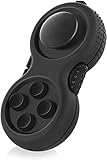
- Introducing the Fidget Toy! The Most Ergonomic,Easy To Use, Addictive Fidget Toy on the Today. The Fidget Toy is Small,Slight,Easy to Store in Your Pocket and Can Be Enjoyed Wherever
- With 8 Fidget Functions the Fidget Toy Provides Never-Ending Fidgeting! The 8 Fidget Functions Include - A Clickable Omnidirectional Controller - 4 Toy Colored Keys (2 Clickable Keys and 2 Silent Keys For Discreet Fidgeting) - A Never-Ending Gear Roller - A Hold Textured Massage Roller - A Clickable Key - A Spinnable Dial - A Spring Loaded Slide - A Hold Textured "Tranquil" Section
- Created to Ease Stress and Increase Concentration - Excellent for Sufferers of ADHD, Autism, or Anxiety. Optimal for Nearly Anyone - Students, Workers, Artists, Time-Killers, Lovers of classical Gaming and Routine Fidgeters
- Optimal Comfort in Fidgeting - Styled from Upper Materials with A Robust Ergonomic Design, Fidget Toy Ensures Incomparable Ease for Fidgeting. The Accompanying Lanyard Enhances The Feel, Allowing Users to Stay Effortlessly Connected to their Fidget Toy
- Nostalgic Toy Design - Inspired by classical video game controllers, the Fidget Toy boasts a colorful, ergonomic design reminiscent of 8-bit gaming's golden age. Enjoy a touch of nostalgia while satisfying your fidgeting urges.
What the broader evidence actually shows
| Study | What was examined | Main result | What it cannot establish |
|---|---|---|---|
| Ferguson and colleagues, 2009 | Six studies: two surveys and four experiments on violent content, motivation and enjoyment | Autonomy and competence were robustly associated with enjoyment, value and desire for future play; violent content added little unique variance | It did not isolate smashing, destructible objects or particular audiovisual effects |
| Eickhoff, Baudisch and Mueller, 2016 | Physical destructive games; 12 students aged 22–32 | Eight participants said they would play again with their own money; excitement averaged 5.5/7 | The sample was small, the objects were physical and the social setting differs from ordinary video games |
| Kersten and Greitemeyer, 2022 | Two experience-sampling studies of mood, violent-game play and catharsis beliefs | Habitual players’ belief in catharsis was associated with being in a better mood after playing | It does not show that gaming reduces aggression or that every player responds the same way |
| Lee, Kim and Choi, 2021 | 662 South Korean adolescents followed across eight waves over four years, producing 5,296 observations | Different fixed-effects specifications produced different conclusions: one supported reduced aggression among heavy players, another supported increased aggression | The study concerned violent-game play broadly, not destructible environments specifically; the model disagreement prevents a simple catharsis headline |
Taken together, these studies support a cautious hierarchy of claims. The strongest claim is that agency and competence are reliable correlates of game enjoyment. A weaker, design-oriented claim is that immediately readable destruction can deliver those experiences. The unsupported leap is that smashing therefore purges anger or prevents aggression.
Independent reader supportYour contribution helps us test, update, and keep practical guides available for everyone.Which design choices can make destruction feel meaningful?
The following axes are useful for describing a destruction mechanic. They are comparison prompts grounded in the evidence about agency and feedback, not experimentally validated predictors that have been tested head-to-head.
| Design axis | Questions to ask | Why it may affect satisfaction |
|---|---|---|
| Directness | Does one action immediately change the object, or is the result hidden behind several systems? | A direct consequence makes cause and effect easier to perceive. |
| Function | Is damage cosmetic, or does it open a route, solve a problem or alter the next decision? | A functional change can connect competence to a goal instead of leaving destruction as a detached spectacle. |
| Choice and control | Can the player choose what, when and how to break something? | Meaningful options support the feeling that the player authored the result. |
| Feedback clarity | Do deformation, sound, camera response and debris communicate exactly what changed? | Clear feedback confirms that the input worked and helps the player learn the system. |
Cosmetic damage versus useful damage
A wall that merely accumulates bullet holes can be visually pleasing, but its effect may end when the animation ends. A wall that collapses and reveals a path changes the player’s options. Neither approach is automatically better. Cosmetic damage can serve expression or atmosphere; functional damage gives the player a new problem to solve. The relevant question is whether the consequence matches the game’s purpose and is understandable to the player.
Recommended Free Tools
Choice can matter more than scale
A spectacular scripted collapse may be memorable, yet it offers little autonomy if every player triggers it at the same moment. A smaller break that the player discovers, times or aims can feel more personally significant. This is not a claim that large destruction is less enjoyable; it is a reminder to separate spectacle from authorship.
Best Value

- 【Metal Fidget Toys Adults】Package includes 5 pieces spiky sensory rings,1 piece fidget spinner, 1 piece fidget bike roller chain spinner, and 1 piece flippy chain
- 【Stress Relief Sensory Fidget Toys】Multi-functional combo fidget toy pack provides a stress-relieving experience rich in spinning, skin stimulation and more for teens and adults with autism, attention deficit hyperactivity disorder ADHD or busy fingers. Ideal for controlling adult stress habits
- 【Sturdy & Durable】Our figette toys are made of high quality stainless steel, durable, reusable, rustproof and colorfast. The compact size and ergonomic design make it easy to carry around and enjoy at any time, whether at home, in the classroom, in the office or on the go
- 【Cool Gadgets Anxiety Tool】The various series of metal fidgets are very interesting and you can share them or keep them all to yourself. Cool fidget spinner toy can be used as office decorations. Keep your hands busy, feel in the mood and concentrate on your thoughts, acupressure rings to relax your finger muscles, promote blood circulation in your fingers and more, and skin pain to keep you awake
- 【Perfect Gifts for Teen Boy】These cool metal gadgets are ideal for birthdays, Valentine's Day, Easter Basket Stuffers, Christmas Stocking Stuffers, Father's Day gifts, Teacher's Day gifts or everyday surprises. Its gender-neutral design is suitable for teen kids, friends and coworkers, fun and practical
Rewards answer a different question
A community discussion asks: “Is destruction fun enough on its own, or should it always have a gameplay reward?” That is a design question, not survey evidence about how common any preference is. Intrinsic satisfaction can come from the action-and-feedback loop itself. A reward—progress, resources, access or points—can provide an additional reason to break an object, but it can also make the action feel compulsory if every piece of destruction is merely a task on a checklist.
A practical design test is to remove the reward temporarily and observe what remains: is the action still legible, controllable and interesting? Then restore the reward and check whether it deepens the decision rather than replacing it. This is a development heuristic, not a result established by the cited studies.
What players may be experiencing—and what they are not necessarily experiencing
- Immediate agency: the environment visibly responds to an intentional input.
- Competence: the player learns that timing, aim or tool choice produced an effective result.
- Curiosity: breaking an object reveals what the system allows and what lies behind it.
- Completion: removing a barrier or clearing a space can make progress tangible.
- Sensory pleasure: sound and motion may make an event more noticeable, although their independent contribution has not been isolated here.
- Not automatically catharsis: a better mood is not proof that aggression was reduced.
- Not automatically violence: virtual destruction can involve scenery, vehicles or puzzles, while violent content can exist without destructible environments.
A responsible way to design or discuss smashing mechanics
- Define the player’s action. Specify what input the player controls and what part of the object should change. Avoid presenting a scripted animation as a choice if the player cannot influence it.
- Make the consequence readable. Use consistent deformation, sound or spatial changes so the player can tell whether the action succeeded. Treat these as communication tools, not guaranteed pleasure buttons.
- Connect damage to a decision. If destruction opens a route, changes cover or reveals information, show how the new state affects play. If it is purely decorative, make that status clear so players do not waste time searching for a hidden function.
- Preserve alternatives. Let players bypass, delay or approach the break when the game’s structure permits. Choice supports autonomy more reliably than forcing every player through the same destructive action.
- Test interpretations, not just spectacle. Ask playtesters whether they understood what they caused, whether they felt in control and whether the result mattered. Do not infer reduced anger from a positive mood report.
What remains unknown
No cited study establishes which players enjoy destruction most, whether novices and experts differ, or whether a particular combination of cracking sounds, particle effects, controller vibration and reward produces the strongest response. The evidence also does not identify a universal boundary between satisfying destruction and tedious repetition.
Crashes, No Sound, or Screen Glitches?
Random freezes, missing sound and display glitches usually trace back to one bad driver. Find and replace yours safely.Free scan · under a minuteWindows Errors? Fix Them Before They Spread
Repair common Windows errors and clear accumulated junk for a smoother, more stable PC - no reinstall needed.Free scan · no reinstallFuture experiments would need to hold the rest of a game constant while varying one ingredient at a time: destructible versus indestructible scenery, cosmetic versus route-changing damage, high versus low player control, or strong versus minimal feedback. They would also need to measure enjoyment, perceived agency, competence, mood and aggressive feelings separately. Without that separation, a single “satisfying” rating cannot explain what the player actually valued.
The bottom line
Smashing and breaking games can feel satisfying because they turn an input into an unmistakable environmental consequence. That clarity can reinforce autonomy and competence—the experiences most consistently linked with game enjoyment in the cited research. Virtual destruction also lets players experiment without the material cost of damaging a real object.
What the evidence does not show is that breaking things reliably drains anger or reduces aggression. Catharsis remains a contested belief, and studies of violent games more broadly produce mixed, design-sensitive results. Treat destruction as an interaction whose value depends on control, feedback and purpose, not as a proven emotional release valve.
Quick Recap
Product prices and availability are accurate as of the date/time indicated and are subject to change. Any price and availability information displayed on Amazon at the time of purchase will apply.

