The Tool Desk
Outbyte PC Repair FREEClear out junk files and repair common Windows errorsFree Scan →Outbyte Driver Updater FREEScan for outdated or missing drivers - takes under a minuteDriver Scan →Wet-out usually means the jacket’s outer face fabric has lost water repellency and become saturated—not that its waterproof membrane has failed. Dirt, body oils, sunscreen and abrasion can stop the durable water repellent (DWR) finish from making droplets bead. Clean the shell, dry it exactly as the care label allows, test the surface, and reapply a compatible DWR treatment if beading does not return. If the inside still gets wet after that process, look for garment-specific damage or ask the manufacturer or a repair service to assess it.
What “wet out” actually means
A waterproof-breathable rain jacket normally has at least two functional layers. The outside is a woven or knitted face fabric treated with a durable water repellent, or DWR. Beneath it is a waterproof-breathable membrane or coating that is intended to stop liquid water while allowing water vapor to move through the garment.
As an Amazon Associate I earn from qualifying purchases.
When the DWR is working, rain forms rounded beads that roll away. When it has been contaminated or worn down, the face fabric absorbs water. The exterior turns darker and looks soaked; this is called wet-out. Patagonia’s care guidance describes wet-out as a situation in which “just the exterior of the fabric looks wet.” The appearance alone does not prove that water has passed through the membrane.
Recommended Free Tools
A saturated face fabric can make the jacket feel clammy and can reduce comfort because the outer textile is no longer shedding rain efficiently. Those effects are different from a confirmed hole, open seam or failed waterproof barrier. Diagnose the surface first instead of discarding a jacket solely because it looks dark in the rain.
#1 Best Overall
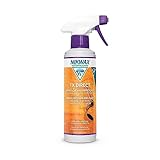
- High Performance Waterproofing Treatment: Designed to enhance performance and revitalize the breathability of waterproof clothing, keeping you warmer and drier
- Easy Application Spray-On Solution: Adds water repellency, revives breathability, and reduces water absorbency with convenient spray-on application
- Compatible with Technical Outdoor Gear: Recommended for rain and ski jackets, waterproof fabrics, technical clothing, and various outdoor apparel brands
- PFAS-Free Water Based Formula: Water based, non-persistent formula contains no optical brighteners or added scent, aerosol-free spray and non-flammable
- Pre-Treatment Cleaning Required: All items must first be cleaned with Nikwax Tech Wash before waterproofing, as household detergents leave behind water attracting residues
How DWR and the waterproof membrane share the job
| Part of the shell | Primary job | What failure or wear looks like |
|---|---|---|
| Face fabric | Provides the outer textile structure and receives the DWR finish. | The fabric darkens as it absorbs water, especially in high-contact areas. |
| DWR finish | Encourages drops to bead and roll off instead of soaking into the face fabric. | Water sits on the surface, spreads into a dark patch or stops beading after cleaning and drying. |
| Waterproof-breathable membrane or coating | Acts as the liquid-water barrier under the face fabric. | Interior wetting that remains after appropriate cleaning and reproofing requires inspection for garment-specific damage. |
DWR and the membrane are related but not interchangeable. A membrane can still block rain while a worn DWR allows the outside to saturate. Conversely, restoring surface beading cannot repair a puncture, damaged seam tape or another structural problem in the waterproof barrier.
Why a rain jacket’s DWR stops working
Dirt and body residue
Dust, mud, body oils, sunscreen and other residue can cover the face fabric and interfere with the DWR’s ability to make a continuous water-shedding surface. The finish may appear to have failed when it is simply masked by contamination. This is why cleaning is the first treatment rather than an optional cosmetic step.
Repeated friction and abrasion
Physical wear gradually removes or damages the surface treatment. Check the cuffs, elbows, shoulders under pack straps, and any panel that repeatedly rubs against equipment or another garment. A jacket can wet out first in these high-friction zones while less-used panels still bead normally.
Windows Errors? Fix Them Before They Spread
Repair common Windows errors and clear accumulated junk for a smoother, more stable PC - no reinstall needed.Free scan · no reinstallCrashes, No Sound, or Screen Glitches?
Random freezes, missing sound and display glitches usually trace back to one bad driver. Find and replace yours safely.Free scan · under a minuteHeat, detergents and incompatible care
Care products and drying conditions matter. Fabric softener can leave residues that interfere with technical finishes, and an unsuitable detergent can do the same. Excessive or unauthorized heat can damage a garment even though controlled low heat is permitted for some shells. The garment’s sewn-in care label takes priority over generic advice.
Wet-out or a real leak? Use the symptoms
| Observation | Most useful interpretation | Next action |
|---|---|---|
| The outside turns dark, but the inside and your clothing remain dry. | Classic wet-out; the face fabric is saturated while the barrier may still be intact. | Clean, dry and retest the DWR. |
| Water beads on most panels but spreads on cuffs, shoulders or under pack straps. | Localized DWR wear from abrasion or residue is likely. | Clean the whole garment, then consider targeted or full reproofing as the product instructions allow. |
| Water sits on the fabric and the shell darkens immediately after a clean, label-approved wash and dry. | The DWR is no longer providing adequate repellency. | Apply a compatible DWR treatment. |
| The inside becomes wet after proper cleaning and reproofing. | Surface treatment alone has not solved the problem; the garment may have damage or another construction-specific issue. | Inspect the particular jacket and contact its maker or a repair service. |
This symptom table is a triage aid, not a universal membrane test. The care guidance does not establish one home procedure that can identify every failed membrane or seam. Persistent interior wetting needs an assessment of the actual garment.
Fix wet-out in the correct order
1. Read the garment care label
Find the sewn-in label before adding cleaner or heat. Confirm whether the shell may be machine washed, which water temperature and cycle are allowed, whether tumble drying is permitted, and whether the manufacturer gives any construction-specific instructions. Labels differ between garments, even when both are described as waterproof-breathable.
2. Remove loose dirt
Brush or rinse off loose mud and grit so they do not become additional residue during washing. Empty pockets and close zippers and fasteners if the label directs you to do so. Do not begin with a DWR spray on a visibly dirty shell; the treatment needs a clean surface.
3. Wash with a suitable mild cleaner
Use a mild cleaner made for technical outerwear or another mild detergent permitted by the garment instructions. Avoid fabric softener. Patagonia’s care guidance recommends an extra rinse so detergent residue is removed from the face fabric and membrane assembly.
Rank #2

- RESTORE DWR PROTECTION – Reapply durable water repellency to waterproof jackets, rain gear, ski wear, tents, and camping gear to help water bead off fabric surfaces
- MAINTAIN FABRIC BREATHABILITY – Helps GORE-TEX and waterproof-breathable materials stay breathable by reducing fabric saturation and wet-out during outdoor use
- PROTECT AGAINST WATER, DIRT & STAINS – Adds all-season protection to outerwear, backpacks, tents, and technical fabrics exposed to rain, mud, snow, and everyday wear
- TREATS MULTIPLE GARMENTS – 5 oz spray treats 1–2 adult jackets, 10 oz spray treats 2–4 jackets, and 16.9 oz spray treats 4–6 jackets depending on garment size and coverage
- FOR BEST PERFORMANCE – Wash gear first with Revivex Pro Cleaner before applying Durable Water Repellent (DWR) Spray to maximize waterproofing performance and longevity
Follow the label’s load and cycle limits rather than assuming that every shell can be washed identically. If the jacket has removable components, treat them only as the label permits. The goal at this stage is to remove dirt and oils, not to add water repellency.
4. Dry exactly as directed
If the care label allows tumble drying, use low heat and continue until the garment is fully dry. Patagonia says that low heat can help reactivate water-repellent properties on suitable garments. Do not transfer that instruction to a jacket whose label prohibits tumble drying or heat. If air drying is specified, use that method instead.
5. Perform a water-bead check
After the shell is clean and completely dry, sprinkle or gently spray water over several panels, including a worn area and a less-used area. Watch what the drops do:
- Beading and rolling: droplets remain rounded and move away, indicating that the DWR is functioning in that area.
- Sitting and darkening: water spreads or remains on the textile and the fabric becomes visibly darker, indicating that the DWR still needs attention.
Testing more than one panel helps reveal localized abrasion. A shoulder under a pack strap may behave differently from the back panel even after the same wash.
6. Reproof only if washing and drying did not restore beading
Choose a DWR treatment intended for waterproof-breathable clothing and follow both the treatment maker’s directions and the jacket’s care instructions. Do not treat a product label as permission to ignore the garment label. Application quantity, drying requirements and suitable fabrics vary by product.
Spray-on versus wash-in DWR treatments
Two common reproofing formats are spray-on and wash-in. Neither is automatically correct for every shell. The right choice depends on the garment’s construction, the care label, how precisely you need to target worn panels and the treatment maker’s instructions.
| Format | Coverage approach | When it can be useful | Important limitation |
|---|---|---|---|
| Spray-on | Applied to the exterior, allowing you to focus on panels that wet out first. | Useful when shoulders, cuffs or other high-contact areas need precise coverage, or when the garment instructions call for an external treatment. | Every intended area must be covered evenly; missed sections may continue to wet out. |
| Wash-in | Added during a wash cycle so the treatment coats the whole item. | Convenient when complete, uniform coverage is wanted and the garment and product instructions permit a wash-in treatment. | It is not automatically suitable for every two-layer or three-layer construction; follow construction-specific guidance. |
Patagonia describes wash-in treatment as coating the whole item and says spray-on treatment can be similarly effective when all areas are covered. A separate Patagonia care page gives different recommendations for some two-layer and three-layer constructions. Treat those as construction-specific directions, not a universal rule. When the jacket’s own instructions conflict with a general product recommendation, use the jacket instructions or ask the manufacturer.
Free tools Windows power users keep installed
One-click scans. No signup required.
One example of the type of product sold for this job is GEAR AID Revivex Durable Water Repellent, which GEAR AID identifies as a PFAS-free spray-on treatment for rainwear and waterproof-breathable jackets. Formulations, availability and instructions can change, so read the current product label before use. The product description does not establish independent performance testing or guarantee compatibility with every garment.
Rank #3
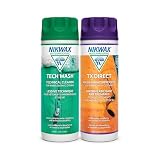
- Tech Wash 300ml & TX.Direct Wash-In 300ml packaged together to safely clean and waterproof technical outwear, rainwear, ski and snow gear
- Tech Wash: Safely cleans technical synthetic outerwear without damaging DWR (waterproofing treatment). Household detergents leave behind water attracting residues
- TX.Direct Wash-In: High performance waterproofer designed to enhance performance and revitalize the breathability of waterproof clothing, keeping you warmer and drier
- Easy to use wash-in solutions clean effectively, restore water repellency and revive breathability by removing water attracting residues from the surface
- Nikwax products are PFAS-free, water based, non-persistent, and contain no optical brighteners or added scent; machine wash safe
Does wet-out mean the jacket is no longer breathable?
Not necessarily. Wet-out can make a shell feel clammy and less comfortable because the saturated face fabric changes how the garment handles moisture, but a wet-looking exterior by itself does not show that the membrane has stopped functioning. Surface repellency and the barrier’s liquid-water resistance are separate properties. Restore the DWR first; evaluate a possible barrier problem only if the inside is actually getting wet.
How to check for localized wear
Spread the dry jacket in good light and compare panels rather than judging only the area that was exposed to the heaviest rain. Look at cuffs, elbows, shoulders beneath pack straps, front closures and any place that rubs against a harness or another layer. If one area darkens while adjacent fabric still beads, abrasion or concentrated residue may be responsible. A whole-garment wash remains the first step because oils and dirt can be distributed beyond the visibly wet patch.
After washing and drying, repeat the bead check on those same locations. This before-and-after comparison tells you whether cleaning recovered the original finish or whether wear has removed it. It also helps you describe the problem accurately if you later contact the manufacturer or a repair service.
Choosing cleaning and reproofing products
You do not automatically need a branded cleaner. The care guidance permits a suitable mild detergent when the garment label allows it; a technical-outerwear cleaner is another option. The essential requirements are compatibility with the shell, no fabric softener, and enough rinsing to remove residue. A specialized product is not a substitute for reading the jacket’s instructions.
Likewise, choose a DWR treatment specifically labeled for waterproof-breathable rainwear. A PFAS-free spray-on option such as GEAR AID Revivex is one example, not a universal endorsement. Check the current label for application, ventilation, drying and fabric restrictions. Do not assume that a treatment intended for a different textile, or a wash-in product recommended for one construction, belongs on every shell.
What not to do
- Do not equate a dark exterior with a failed membrane. Wet-out is a face-fabric condition until interior wetting shows otherwise.
- Do not reproof a dirty jacket. Wash first so oils and grime do not remain under the new treatment.
- Do not use fabric softener. It can leave residue on technical outerwear.
- Do not assume high heat is safe. Use low heat only when the care label allows tumble drying; otherwise use the specified alternative.
- Do not mix care instructions casually. A product designed for one construction or application method may not be right for another.
- Do not promise yourself that reproofing repairs structural damage. DWR changes surface behavior; it cannot mend a cut, failed seam or damaged barrier.
- Do not keep adding treatment without retesting. If the shell beads after cleaning and drying, extra DWR is unnecessary at that point.
If the jacket still wets through inside
Repeat the diagnosis rather than repeatedly adding treatment. Confirm that the wash used a permitted mild cleaner, that detergent residue was rinsed away, that the garment dried according to its label and that the DWR test was performed on a fully dry shell. If the outside beads but the inside still becomes wet in a particular location, note that location and the conditions in which it occurs.
At that point, inspect the specific garment for visible damage and consult the manufacturer or a qualified repair service. The care guidance for this topic does not define a universal home test that can distinguish a failed membrane from every seam, panel or construction problem. A garment-specific assessment is more reliable than assuming that another wash or another coat of DWR will solve it.
Quick wins for a faster PC:
Repair Windows errors before they cause bigger problemsFix Now →Scan for outdated or missing drivers - takes under a minuteDriver Scan →A practical decision checklist
- Exterior dark, interior dry? Treat it as likely wet-out, not proof of a leak.
- Visible dirt, oil or sunscreen? Wash with a suitable mild technical-garment cleaner or permitted mild detergent; skip fabric softener and use the extra rinse recommended by Patagonia.
- Label permits low-heat tumble drying? Dry fully on low heat to help reactivate repellency. If not, use the label’s method.
- Water beads after drying? The DWR is working; no reproofing is needed immediately.
- Water sits and darkens the fabric? Apply a compatible spray-on or wash-in treatment according to the jacket and product instructions.
- Interior still wet afterward? Stop treating it as a simple DWR issue and seek garment-specific inspection or repair advice.
Why cleaning comes before reproofing
Cleaning and reproofing solve different problems. Washing removes the contaminants that block the existing finish. Drying can restore some water-repellent performance when the garment permits low heat. Reproofing adds a new surface treatment when the original finish has been worn away or no longer recovers after cleaning. Skipping directly to a spray or wash-in product can leave the underlying contamination in place and make the result uneven.
Rank #4

- High Performance Waterproofing: Designed to enhance performance and revitalize the breathability of waterproof clothing, keeping you warmer and drier
- Easy Application: Spray-on waterproofing solution adds water repellency, revives breathability, and reduces water absorbency
- Versatile Compatibility: Recommended for rain and ski jackets, waterproof fabrics, technical clothing, GORE-TEX, Patagonia, North face, Columbia, Outdoor Research, Cotopaxi and Arc'teryx
- Safe Formula: Nikwax products are PFAS-free, water based, non-persistent, and contain no optical brighteners or added scent
- Convenient Design: Aerosol-free spray and non-flammable formulation for safe and easy use
This order also prevents unnecessary treatment. A jacket that beads again after a permitted wash and dry does not need an additional DWR layer simply because it once looked wet. Reserve reproofing for a shell that still fails the bead check.
Frequently asked questions
Can a jacket wet out while remaining waterproof?
Yes. Wet-out describes saturation of the outer face fabric. The membrane may continue blocking liquid water, so a dark exterior with a dry interior is not proof of failure.
Should I wash a jacket that only wets out in a few spots?
Yes. Contamination can extend beyond the visible patch, and a whole-garment wash gives the existing DWR a fair test. Inspect and retest the cuffs, shoulders and other high-friction areas afterward.
Is low-heat drying always required?
No. Use low heat only when the garment label permits tumble drying. Patagonia says it can reactivate repellency on suitable garments, but a label that specifies air drying or forbids heat takes priority.
Which is better, spray-on or wash-in DWR?
Neither is universally better. Spray-on allows more precise coverage of worn exterior panels. Wash-in coats the whole item. Construction, the care label and the product directions determine which format is appropriate; some two-layer and three-layer shells have different recommendations.
Do I need a special technical wash?
Not necessarily. A suitable mild detergent allowed by the care label can be used, while a technical-outerwear cleaner is another option. Avoid fabric softener and follow the recommended rinse instructions.
Can reproofing fix a leak?
No. DWR improves surface beading. It cannot repair a puncture, failed seam tape or damaged waterproof barrier. Persistent interior wetting after cleaning and reproofing calls for inspection by the maker or a repair service.
What if the outside beads but I still feel damp?
Record whether the dampness is on the inside, where it occurs and under what conditions. Beading indicates surface repellency, not a complete diagnosis of every moisture problem. If the interior is genuinely wet, seek garment-specific assessment.
Best Value

- WATER REPELLENT SPRAY: One Scotchgard Outdoor Water Shield Spray, 13 oz can, that protects fabrics against the elements
- IDEAL FOR MANY OUTDOOR ITEMS: Water repellent spray is ideal for use on outdoor fabrics during the rainy Spring season, including tents, outerwear, rain gear, umbrellas, patio furniture, outdoor gear, backpacks, canvas tarps, boat covers and more
- SAFE FOR MANY FABRICS: Use this fabric spray before Spring and Summer outings on polyester, nylon, polypropylene, cotton, leather, suede and more
- BREATHABLE: Water repellent spray does not impede fabric breathability, so you can enjoy rainy camping trips during the Spring season
- ODORLESS: Stain sprayer dries clean and odorless, so you don't have to worry about ruining outdoor gear
Bottom line
Wet-out is usually a worn or contaminated DWR finish on the face fabric, not automatic evidence that the waterproof membrane has failed. Read the label, clean with a suitable mild product, avoid softener, dry only within the label’s limits, and perform a water-bead check. If beading does not return, use a compatible spray-on or wash-in DWR treatment suited to that garment’s construction. Interior wetting that persists after those steps calls for inspection of the individual jacket rather than a universal do-it-yourself diagnosis.
Frequently Asked Questions
Can a jacket wet out while remaining waterproof?
Yes. Wet-out is saturation of the outer face fabric; the membrane may still block liquid water if the interior remains dry.
Should I wash a jacket that wets out only in a few spots?
Yes. Wash the whole garment with a permitted mild cleaner, then retest high-friction areas such as cuffs and shoulders.
Do these 3 things before closing this tab:
1Repair Windows errors before they cause bigger problems2Fix the driver behind crashes, sound loss and screen glitches3Clear out junk files and repair common Windows errorsIs low-heat drying always required?
No. Use low heat only when the care label allows tumble drying. Otherwise follow the specified air-drying or other method.
Which is better, spray-on or wash-in DWR?
Neither is universal. Spray-on permits targeted exterior coverage, while wash-in coats the whole item. Follow the jacket’s construction-specific and product instructions.
Can reproofing repair a leak?
No. DWR restores surface beading but cannot repair punctures, failed seam tape or a damaged membrane.
The Bottom Line
Clean first, dry only as the label permits, retest beading, then reproof with a compatible treatment if needed. A wet exterior alone is usually wet-out; persistent interior wetting needs garment-specific inspection.
What’s actually slowing this PC down?
Pick the symptom - the matching free tool is one click away.
Quick Recap
Product prices and availability are accurate as of the date/time indicated and are subject to change. Any price and availability information displayed on Amazon at the time of purchase will apply.

