Companies may spend less on research and development (R&D) than would benefit society because they bear the cost and risk of a project but may not capture all of its eventual gains. That does not mean consumer companies as a group are proven to underinvest, or that a bigger R&D budget automatically produces better products. The evidence on corporate short-termism is contested, and the effects consumers feel depend on what research produces, whether it reaches the market, and how much competition and reliable quality information buyers have.
Why can a company rationally spend less on R&D than society would prefer?
A company decides whether a project is worthwhile largely by comparing its expected costs with the benefits it expects to capture. Society’s calculation is broader: a successful project may help customers, suppliers, workers, or other firms as well as the company that paid for it. When those wider gains are not reflected in the company’s expected return, private investment can fall short of the level that would maximize wider benefit. This is a familiar rationale for public support of business R&D, not proof that any particular company or industry is spending too little.
As an Amazon Associate I earn from qualifying purchases.
Costs, uncertainty, and time
Research requires spending before its outcome is known. A project may fail, take longer than expected, or produce a result that is technically promising but commercially impractical. Even a successful project can take time to develop, manufacture, and sell. The OECD’s 2016 analysis of government financing for business R&D and innovation identifies cost, uncertainty, time to returns, and potential spillovers as reasons private incentives may not match wider social benefits.
Spillovers and the difficulty of capturing returns
Knowledge, trained employees, and follow-on ideas can benefit people beyond the original investor. Competitors may learn from a discovery, or a new technical capability may support later work by others. A company may therefore expect to capture only part of the value its research creates. The larger the gap between a project’s private return and its wider benefit, the weaker the company’s financial incentive to fund it.
#1 Best Overall

- IDENTIFY WHICH FOODS MAY BE CAUSING YOUR SYMPTOMS. Food intolerances happen when your gut microbiome and digestive enzymes can’t break down a food ingredient. Although gluten and lactose are the most common issues, intolerances can happen with any food item. When these intolerances go unchecked, symptoms like headaches, gas, diarrhea, acne, and bloating may develop.
- TESTS 800 COMMON FOOD ITEMS. Our food intolerance test for adults and children covers 14 major food categories: dairy, vegetables, fruits, grains, meats, seafood, nuts, sweeteners, spices, fats, oils, mushrooms, superfoods, and preservatives.
- HOW IT WORKS. (1) Register your test kit on the 5Strands website or mobile app (2) Collect 10-15 strands of hair. (3) Send your sample to our certified lab using the included prepaid shipping materials. (4) Once your sample is received, we’ll email you the results within 4 days. After 60 days, your hair sample will be permanently disposed of.
- EASY TO READ RESULTS. Each food item is labeled as Insignificant, Mild, Moderate, or Severe to help guide your elimination plan. This gives you clear directions to begin removing severe intolerance foods, moderate your intake of mid-level triggers, and keep safe foods in rotation to support gut health, digestion, and symptom relief.
- 3RD PARTY STUDIED & DOCTOR RECOMMENDED. 5Strands is the only intolerance and sensitivity test independently validated through third-party research. Every sample is processed in our certified U.S. lab using a double-pass method for accurate results, and our testing has helped over 345,000 people and pets uncover their food intolerances and environmental sensitivities.
Financing and management pressures
Financing constraints or management incentives tied to near-term earnings can also affect a firm’s choices. These are plausible mechanisms, but the evidence summarized here does not establish their relative importance across consumer companies. A 2001 study on short-term R&D bias argues that analyst and shareholder preference for lower-risk, shorter-term product R&D can influence time-to-market choices when competition is centered on cost rather than innovation. That is a conditional argument about particular competitive circumstances, not a general finding about all firms.
Does shareholder short-termism explain corporate underinvestment?
It may influence decisions in some firms or situations, but the claim that it broadly explains weak long-term investment is disputed. The OECD’s 2021 review, The Future of Corporate Governance in Capital Markets Following the COVID-19 Crisis, describes arguments that companies favored immediate results over productive investment after the 2008 financial crisis. It also says the evidence is inconclusive: one line of analysis finds increased short-termism, while critics point to sluggish capital expenditure alongside continued growth in R&D.
Rank #2
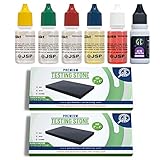
- ALL-IN-ONE GOLD AND SILVER TESTING & APPRAISAL KIT
- FUN, FAST, AND ACCURATE! DETERMINES THE KARAT OF GOLD AND SILVER JEWELRY IN SECONDS!
- 2 AUTHENTIC *LARGE* GTE 2''x 4'' JEWELRY TOUCHSTONES FOR SAFE TESTING THAT WON'T DAMAGE YOUR JEWELRY
- BONUS* GTE NEUTRALIZER QUICKLY CLEANS STONE
- A MUST-HAVE FOR ANYONE WHO WANTS TO INVEST IN GOLD AND SILVER
Those aggregate trends do not settle why a given firm chose its R&D budget. The OECD cautions that the cited investment figures concern listed firms and gross investment; they cannot, by themselves, prove or disprove short-termism. Steven N. Kaplan’s 2018 review, “Are US Companies Too Short-Term Oriented? Some Thoughts,” likewise concludes that there is very little long-term evidence consistent with predictions made by short-termism critics. It is a review and interpretation of the debate, not a causal experiment establishing what drives every company’s decisions.
PC Slower Than It Used to Be?
A free scan shows the junk files, broken settings and background clutter dragging Windows down - then fixes them in one click.Free scan · Windows 10 & 11Crashes, No Sound, or Screen Glitches?
Random freezes, missing sound and display glitches usually trace back to one bad driver. Find and replace yours safely.Free scan · under a minuteOne frequently repeated survey figure needs particular care. Kaplan reports that Graham, Harvey, and Rajgopal’s 2005 survey of 401 financial executives found that 78% said they would sacrifice long-term value to smooth earnings. This measures stated willingness to manage earnings, as reported in Kaplan’s review; it is not a measurement of R&D cuts, observed behavior, or all executives’ decisions.
Rank #3

- 2-Second Refrigeration Acid Test
- Tests to ARI-700 limit of 1 PPM
- Tests for Inorganic Acid (including POE)
- Meets EPA Venting Rules
How does R&D spending translate into product quality?
R&D is an input, not a quality score. It can support better performance, safety, durability, energy efficiency, usability, or new product varieties, but the connection is indirect: projects can fail, successful work may not reach production, and products may not meet users’ needs. A spending increase therefore does not guarantee a noticeable improvement for buyers, while useful improvements can arise from work that is not readily visible in a company’s reported R&D figure.
Comparisons also require care because companies’ definitions and accounting allocations of R&D vary. Patents are an incomplete proxy for innovation: defensive patenting may not represent a useful product advance, and some outputs are difficult to quantify. The OECD’s 2023 theoretical perspective on competition and innovation cautions against treating any one input or output measure as a complete account of innovation.
Rank #4

- Tests for the Most Common STDs: An easy-to-use common STD test with simple, high quality accurate, and private results. Simple HealthKit's Common STD Test screens for the most common and curable STDs / STIs: Chlamydia, Gonorrhea & Trichomoniasis
- Includes Telehealth: As part of our commitment to you. We are here from start to finish, no loose ends. If you receive a positive or abnormal test result, follow-up care is included. No extra charge. No hidden fees. It's that simple.
- Private & Easy To Use: Discreet, at-home testing that fits your life. Clear instructions, quick collection, and no awkward clinic visits. Just test, mail, and get answers.
- High Quality Results & Physician Approved, Test Intended for 18+ Only. Lab processing is included with your test purchase. Lab is CLIA Certified and CAP Accredited. Results delivered through a HIPAA-compliant portal.
- HSA / FSA Eligible: Use your HSA/FSA funds and save. A smarter, more affordable way to take care of your health without surprise costs.
- Investment input: compare R&D amount or intensity only with the accounting definition, period, company scope, and sector made clear.
- Innovation output: look for launches, meaningful product changes, independently measured performance, or validated technical results; patent counts alone do not establish quality.
- Consumer outcome: assess the relevant product category’s reliability, safety, durability, performance, and variety.
Why can competition and quality information matter as much as spending?
Firms can have an incentive to innovate when better products help them win customers. Coordination that weakens this pressure can reduce the incentive to develop or release improved alternatives. In a specific example, the OECD’s 2023 report The Role of Innovation in Competition Enforcement describes a February 2023 action by South Korea’s Fair Trade Commission against Mercedes-Benz Group, BMW, Audi, and Volkswagen concerning coordination on emissions-cleaning technology. The OECD reports that the KFTC concluded the conduct restricted development and release of new diesel cars that could have achieved better gas-reduction performance, limiting innovation and consumer choice. This is the regulator’s conclusion in one automobile case, not a general estimate for other industries.
What’s actually slowing this PC down?
Pick the symptom - the matching free tool is one click away.
Choice also depends on whether buyers can judge quality. In its 2019 report Trust and Online Markets, the OECD distinguishes experience goods, whose quality becomes clear through use, from credence goods, whose quality may remain difficult to observe. When buyers cannot readily assess quality, they may rely on brand names or other imperfect signals. Weak quality information can reduce pressure on firms to improve and can make it harder for new competitors to persuade customers to try their products.
Best Value

- 【Application】It is used to detect whether there are sharp edges that may harm the safety of users on electrical products, including toys, computers, household appliances, electronic equipment, metal edge, etc.
- 【Small and Light】The weight is only 0.13kg. The package contains a sharp edge tester and a box of test caps. We can supply additional test caps if required.
- 【Standard】This product complies with UL-1439 standard and is used for safety testing.
Can consumers contribute to product innovation themselves?
Yes. A 2012 study by Eric von Hippel, Jeroen P. J. de Jong, and Stephen Flowers surveyed 1,173 UK adults and estimated that 6.1%—nearly 2.9 million people—had developed or modified consumer products in the preceding three years. The authors also estimated that annual household product-development spending exceeded 1.4 times the annual consumer-product R&D spending of all UK firms. These are estimates from that study’s UK definitions and period; they do not show that household innovation replaces firms’ research or establish the same ratio elsewhere.
What should buyers look for when judging a company’s innovation record?
A budget number alone cannot tell a buyer whether a product is better or whether a market offers meaningful alternatives. A more useful assessment connects spending to outcomes and market conditions:
- Check whether claimed advances appear in products customers can actually buy, rather than only in announced projects or patent totals.
- Look for independent evidence on category-specific outcomes such as reliability, safety, durability, or performance.
- Consider whether buyers have credible alternatives, new firms can enter, and customers can switch when products disappoint.
- For hard-to-assess products, consider what evidence is available before purchase, such as independent testing, warranties, or other verifiable quality information.
These are practical comparison axes, not a standardized OECD score. They help distinguish the amount a company spends from what its innovation delivers and what consumers can verify.
Free tools Windows power users keep installed
One-click scans. No signup required.
Quick Recap
Product prices and availability are accurate as of the date/time indicated and are subject to change. Any price and availability information displayed on Amazon at the time of purchase will apply.

