Free tools Windows power users keep installed
One-click scans. No signup required.
Bee health is being shaped by a combination of pressures rather than one culprit. Pesticides can reach bees through air, flowers, soil and treated surfaces, while parasites, pathogens, poor nutrition, habitat loss, colony-management practices and limited genetic diversity can alter how colonies and wild populations withstand those exposures. The most defensible answer to “why are bees declining?” is therefore a multi-stressor explanation, with the exact mix varying by species, life stage, landscape and farming system.
Why bee health is a multi-stressor problem
The EPA’s honey-bee framework
The U.S. Environmental Protection Agency’s Pollinator Health Concerns page, last updated November 4, 2025, describes honey-bee health as the result of interacting pressures. It identifies pests and pathogens, poor nutrition associated in part with loss of foraging habitat, pesticide exposure, bee-management practices and lack of genetic diversity. The agency says:
As an Amazon Associate I earn from qualifying purchases.
“The prevailing theory among scientists in EPA, USDA and the global scientific and regulatory community is that the general declining health of honey bees is related to complex interactions among multiple stressors including:”
Windows Errors? Fix Them Before They Spread
Repair common Windows errors and clear accumulated junk for a smoother, more stable PC - no reinstall needed.Free scan · no reinstallOutdated Drivers Are Slowing You Down
One free scan finds every outdated or missing driver and matches the right update for your exact hardware.Free scan · exact hardware matchSpecial offer. See more information about Outbyte and uninstall instructions. Please review EULA and Privacy policy.
That statement concerns managed honey-bee colonies. It should not be converted into a universal ranking for every bumble bee, solitary bee or wild population. A colony can experience a different combination of parasites, forage shortages and chemicals from a ground-nesting solitary bee, and a result measured in western honey bees (Apis mellifera) may not predict the same outcome for another genus.
#1 Best Overall
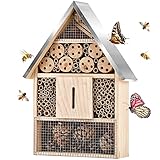
- Dimensions: 9 x 16 x 3 Inch,More capacity, More uses.
- The mason bee house has more holes to accommodate for more Butterflys, bees and ladybugs to habitat, hatcheries or shelter from rain.
- Made of natural materials, such as pine wood, bamboo and pine cone, and not painted. The different filling materials attract a variety of different bugs.
- The metal roof will help protect it from the weather.Waterproof to protect the hotel from erosion,and help stop rain from soaking the bits and pieces that are supposed to keep the ladybirds and lacewings dry.
- Suspension design (via hooks on the back),You can hang it on garden walls, fences, trees, or anywhere else you can hang it.Keep it as dry as possible
What “multiple stressors” means in practice
Stressors can occur at different times and affect different endpoints. An adult may die after a high exposure; a larva may survive but develop poorly; a colony may lose workers faster than it can replace them; or a wild bee may fail to reproduce because flowers are scarce during its short flight season. These pathways can overlap without every pair of stressors producing a stronger-than-expected effect.
What chemicals are bees exposed to?
Insecticides receive much of the public attention, but bees can encounter several chemical classes and their breakdown products. A 2022 U.S. Geological Survey study sampled native bees, honey bees, flowers, soil and air at eight farms in California’s Yolo and Colusa Counties. Across those samples, investigators detected 8 insecticides, 13 herbicides, 12 fungicides and 4 degradates. The finding demonstrates chemical diversity in an intensively managed agricultural landscape; it is not a measurement of every farm or region.
| Chemical group | How bees may encounter it | What the evidence establishes |
|---|---|---|
| Insecticides | Spray or dust on crops, drift through air, residues on flowers, contaminated soil and treated surfaces | Detected in the California USGS sampling; bifenthrin in bee bodies was at levels associated with potential sublethal effects in honey bees |
| Herbicides | Residues on vegetation, soil and airborne particles | Detected in the same eight-farm study; detection does not by itself establish a lethal dose |
| Fungicides | Applications to crops and residues collected while foraging | Detected in bees, plants, soil and/or air in the USGS study |
| Degradates | Breakdown products that remain in environmental media | Four degradates were detected in the USGS samples |
Exposure is not limited to a direct spray on a bee. A forager can contact residues on a flower, carry contaminated pollen or nectar back to a nest, breathe airborne particles or touch a treated surface. Soil matters for ground-nesting species and for plants that take up chemicals through their roots. In-hive treatments used in managed colonies add another possible route, although the amount and consequence depend on the product, dose and timing.
How do pesticides affect bees?
Lethal effects
A sufficiently high dose can kill an individual bee. Mortality is the endpoint most often measured in laboratory toxicity tests, but an individual result does not automatically predict colony collapse or a population trend. Dose, formulation, route, duration and the bee’s life stage all matter.
Rank #2

- 🐝Product Packaging: 1 bee house (Includes 1 feeding tray and 1 pack of installation tools).House size: 21.4*21*11.6cm/8.4*8.26*4.56",compact yet spacious design featuring multiple bamboo tubes of different diameters to accommodate various pollinator species
- 🐝High Quality: Our mason bee house is crafted from solid pine wood, This sturdy construction resists bad weather and ensures long-lasting use in your garden, providing a safe and dry habitat for bees season after season
- 🐝Easy to install: The natural wooden mason bee nest you received has been assembled and can be used at any time. It can be hung on trees or walls (there are no holes at the bottom of the bee house, but the screws we provide are easy to screw in)
- 🐝Bee Houses for the Garden: Equipped with 1 feeding tray, simply add water, nectar, or fruit to create an instant nutrition station for bees, butterflies, dragonflies, and other insects
- 🐝Thoughtful Present: This unique bee house is not only a perfect habitat for bees, but also a beautiful outdoor garden decoration; It's the perfect present for gardeners who appreciate both style and function
Sublethal effects
Bees that survive exposure may still experience changes in movement, feeding, learning, navigation, immunity, development or reproduction. The 2022 review by Tosi and colleagues examined pesticide evidence published from 1970 through 2019 across multiple bee genera. It reported major data gaps for 71% of the sublethal-toxicity evidence and for approximately 99% of evidence on combined pesticide toxicity. The review also noted that 78% of included studies focused on Apis mellifera, leaving less information for other bees.
Those percentages describe gaps identified in the review, not the share of real-world pesticide exposures that are harmless or harmful. They show why a risk assessment based only on short-term death tests can miss effects that appear later or at colony level.
Colony and population consequences
For a managed colony, losing workers during a nectar flow can reduce food collection and brood care even if the queen survives. For solitary bees, there is no workforce to compensate for a failed nest. A chemical can therefore matter through timing and life history as well as through its measured toxicity.
Recommended Free Tools
Do pesticides and other stressors make each other worse?
Some combinations do, but “synergy” is not a rule for every mixture. In a 2021 Nature meta-analysis, Siviter and colleagues analyzed 356 interaction effect sizes from 90 studies. They wrote: “We found an overall synergistic effect between multiple stressors on bee mortality.” Their overall result means mortality was higher in the combined treatments than would be expected from adding the individual effects in the analyzed studies.
Rank #3
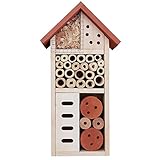
- Shelter for Insect: Lulu Home wooden insect house attracts insects to your garden, and provides them with a safe environment to live, lay eggs, pass the winter or just take shelter from the rain.
- Beneficial for Plants: Some insects are really useful that, when they living in the bug house in your garden, they help to recycle decaying vegetation, pollinate plants, and in some cases even prey on more harmful insects.
- Diverse Rooms in One: To settle more species of insects, each gird of the insect hotel is filled with different material and designed differently. Lulu Home garden bug hotel serves to provide habitat for bees, butterflies, ladybirds, lacewings, etc.
- Premium, Sturdy and Weatherproof: Made of high quality fir wood with exquisite workmanship, it is sturdy and nice-looking. And non-toxic and odorless paint on the proof makes it weather resistant. The materials filled in each grid, such as bamboo, wood shavings, small stakes, are all natural and premium.
- Interesting Decoration: A wonderful ornament to be placed at your garden, balcony, patio, yard, or any place you want. And there is a loop on back for hanging. The bug hotel also provides a great chance for you to find and observe these little creatures in your garden.
The strongest subgroup evidence involved multiple agrochemicals under field-realistic conditions. By contrast, interactions involving parasites and/or nutritional stressors were not greater than additive expectations in that analysis. For outcomes other than mortality, the observed interactions were additive or antagonistic, and the mechanisms behind mortality synergy remained unclear. A synergistic result in the meta-analysis therefore supports caution about mixtures; it does not prove that any particular pesticide-plus-disease combination will act synergistically in every species or landscape.
Mixture risk is difficult to predict because products differ in active ingredients, concentrations, timing and persistence. Bees may receive repeated low exposures rather than one measured dose, and different compounds can occur in pollen, nectar, wax, soil and air at the same site.
Can pesticides from nearby fields reach flowers?
Yes. The USGS study found pesticide residues in border plants that had not been directly sprayed. Drift and uptake from contaminated soil were possible explanations, but the study did not establish one source as the sole cause. The result means a pollinator strip or hedgerow is not automatically chemical-free merely because the spray was aimed at a neighboring crop.
At the eight California farms, investigators measured potential exposure through air, flowers and soils. The finding is geographically specific: it shows pathways in that intensively managed agricultural setting, not a universal residue level for gardens, roadsides or all farms. It does, however, explain why assessments should sample the places where bees actually forage and nest rather than checking only the sprayed crop.
Rank #4

- Durable Mason Bee House: Our mason bee house is fully coated with beeswax, supporting steady use in outdoor surroundings while effectively attracting mason bees to your garden
- Ready-to-Use Design: This natural wooden bee house arrives fully assembled and features a stainless steel screw clasp on the front and back for easy hanging on trees or walls, making it a convenient addition to any garden
- Enhance Pollination: Attracting mason bees to your garden not only beautifies your surroundings but also significantly improves pollination efficiency for flowers and fruit trees, making our Habitat Home Hotel an essential addition for any gardener
- Optimal Nesting Habitat: Each tube in our insect hotel is crafted from kraft paper with a diameter of 5/16 inches and a length of 6 inches, providing a suitable nesting environment for mason bees to thrive
- Simple Installation: The front and back of the bee house is equipped with a sturdy metal wall hook for effortless mounting. We also include a special rope for hanging in trees, offering versatile placement options in any outdoor setting
Why are bees declining beyond pesticide exposure?
Parasites and pathogens
Infectious agents and parasites can reduce adult survival, impair brood or weaken colonies. Their effects may also depend on nutrition, temperature, crowding and management. Evidence that one chemical can interact with another does not establish that disease is the dominant cause everywhere.
Loss of forage and poor nutrition
Habitat conversion can remove the continuous sequence of flowers bees need across a season. The EPA links poor nutrition partly to loss of foraging habitat. A landscape with fewer plant species can leave bees short of pollen or nectar when a crop is not blooming, making recovery from other stressors harder.
Management practices and genetic diversity
Managed colonies may face transport, crowding, supplemental feeding decisions and in-hive chemical treatments. Low genetic diversity can reduce the range of traits available to resist parasites, disease or environmental change. These factors differ from the pressures faced by unmanaged, solitary or ground-nesting bees.
Quick wins for a faster PC:
Clear out junk files and repair common Windows errorsFree Scan →Scan for outdated or missing drivers - takes under a minuteDriver Scan →Climate as context, not a quantified ranking
Changing temperatures, drought, floods and shifts in flowering can alter when bees fly and when food is available. A 2025 Associated Press report, “Bees have some ways to cope with a warming Earth, but researchers fear for their future,” describes that concern. The evidence summarized here does not quantify climate’s independent contribution or place it above pesticides, disease, habitat or management. Local climate effects can instead modify the timing and severity of other pressures.
Best Value
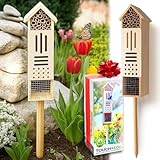
- Constructed with durable and natural cedar wood, this house includes a ground stake
- Skillfully crafted with multiple sections with different sized compartments for various beneficial insects
- Helps to attract various beneficial insects, to offer them a place for breeding and settling
- Native bees & butterflies are great pollinators for your gardens, veggies, herbs, and flowers!
What the major studies actually cover
| Source and setting | Bees or material studied | Main result | Important limit |
|---|---|---|---|
| EPA overview (updated 2025) | Honey-bee colony health | Multiple interacting concerns: pests and pathogens, nutrition and habitat, pesticides, management and genetic diversity | Not a universal ranking for wild species or every region |
| Tosi et al. review (2022) | Multiple bee genera; 1970–2019 literature | Large evidence gaps for sublethal and combined pesticide toxicity; 78% of included works focused on A. mellifera | Literature coverage is uneven across species and endpoints |
| Siviter et al. meta-analysis (2021) | 90 studies and 356 interaction effect sizes | Overall synergy for bee mortality; strong agrochemical-mixture signal | Parasite/nutrition interactions were not above additive expectations; non-mortality effects were additive or antagonistic; mechanisms unclear |
| USGS field study (2022) | Native bees, honey bees, flowers, soil and air at eight California farms | Eight insecticides, 13 herbicides, 12 fungicides and four degradates detected; un-sprayed border plants contained residues | Eight farms in one agricultural landscape cannot represent every species or region |
| PoshBee survey (2019) | Bees at oilseed-rape fields and apple orchards in eight European countries and 128 sites | Nearly all beebread samples had at least one pesticide; about half of nectar samples were contaminated; more than two-thirds of beeswax contained at least one pesticide | These are sampled-site findings, not global prevalence estimates |
The PoshBee figures come from the project’s 2019 European survey summary. They include honey bees, bumble bees and mason bees, but the sites and crops were selected for that survey and should not be treated as representative of all continents or habitats.
What can I do to help bees?
Make forage more useful, not merely more colorful
- Choose a regionally appropriate mix of native or well-adapted flowering plants that supplies blooms across spring, summer and autumn.
- Verify seed origin, planting guidance and whether plants or soil have been treated with persistent pesticides.
- Provide nesting features suited to local bees, such as undisturbed soil for ground nesters and stems or cavities for cavity nesters.
Habitat plantings can increase bee diversity and abundance in agricultural areas, according to USGS material, and they address the nutrition side of the EPA’s framework. They do not remove chemical exposure automatically: the California study found residues in some plants that had not been directly sprayed.
Reduce avoidable chemical contact
- Do not spray insecticides on open flowers or when bees are actively foraging.
- Check the product label and local rules before applying any pesticide, and use the narrowest effective treatment rather than a calendar application.
- Keep treated materials away from water, nesting soil and flowering borders, and prevent drift onto neighboring habitat.
For farms and land managers
Map flowering borders, soil and air pathways; schedule applications to reduce contact with foraging bees; and monitor residues where bees actually collect food or nest. Consider forage continuity, disease management and genetic diversity alongside pesticide decisions. A border that is attractive but contaminated can create an exposure hotspot, so habitat quality and chemical stewardship have to be planned together.
What’s actually slowing this PC down?
Pick the symptom - the matching free tool is one click away.
How to interpret claims about “the cause” of bee decline
Ask six questions before accepting a broad claim: What exposure route was measured (air, plant, soil or in-hive treatment)? Which chemical class or mixture was involved? Was the endpoint death, a sublethal response or colony performance? Which bee group and life stage were tested? Where and in what agricultural setting did the work occur? Finally, was the evidence a laboratory dose study, a field survey, a review or a meta-analysis?
A residue detection proves contact with a compound, not by itself that the residue caused a decline. A laboratory effect establishes biological potential under those test conditions, not necessarily a population-level outcome. Conversely, a lack of measured mortality does not rule out developmental, behavioral or reproductive effects, especially given the data gaps identified by Tosi and colleagues.
The practical bottom line
Bees face a chemical and environmental burden assembled from many sources. Pesticides can move beyond treated crops, and mixtures can sometimes increase mortality, yet the available evidence does not support blaming one compound or assigning a single global cause. The most useful response combines safer chemical practices, reliable forage and nesting habitat, attention to parasites and pathogens, responsible colony management and better monitoring across bee species and life stages.
Quick Recap
Product prices and availability are accurate as of the date/time indicated and are subject to change. Any price and availability information displayed on Amazon at the time of purchase will apply.

