Free tools Windows power users keep installed
One-click scans. No signup required.
AI translation can produce a sentence that is grammatical, natural-sounding, and still wrong for the document. The system may select the wrong meaning of an ambiguous word, lose a pronoun’s referent, treat a button label as a sentence, flatten the speaker’s tone, or choose a technically plausible term that does not belong in your field.
Better results come from giving the translator usable context, writing the source clearly, controlling terminology with the right scope, supplying high-quality domain examples when appropriate, and reviewing the output against the source in its document context. No glossary or longer prompt guarantees correctness.



As an Amazon Associate I earn from qualifying purchases.
Fluency is not proof of a correct translation
A translation is contextually accurate only when it preserves the intended meaning for the particular speaker, audience, document, and situation. Fluency measures how natural the target-language text sounds; it does not establish that the system chose the right sense, retained every relationship, or followed the document’s terminology.
What’s actually slowing this PC down?
Pick the symptom - the matching free tool is one click away.
For example, an isolated target sentence can look polished while referring to the wrong person, using the wrong grammatical gender, or selecting a financial term where a geographical term was intended. A sentence-level check may miss an error that becomes obvious when you read the paragraph, screen, contract, or manual around it.
#1 Best Overall
There is no broadly applicable percentage for how often AI translation misses context. A 2021 evaluation of systems from the WMT 2020 shared task used professional annotation in two language pairs; that experimental scope is not a prevalence estimate for every language, model, or document type. Treat any claimed universal error rate with caution.
Where translation context gets lost
Ambiguous words and wrong senses
Many source words have several valid meanings. “Bank” can refer to a financial institution or a geographical feature; “crane” can mean a bird or a lifting machine. A general model may select the most probable sense from broad usage rather than the sense required by your document. The result can be fluent because the selected word is perfectly normal in the target language.
Subject matter, neighboring terms, and the intended audience often determine the correct sense. A financial report, a hiking guide, and an engineering manual can use the same source word differently. A terminology resource can declare the desired sense for a language pair and domain, but it must be scoped to the situations in which that choice is valid.
Quick wins for a faster PC:
Clear out junk files and repair common Windows errorsFree Scan →Fix the driver behind crashes, sound loss and screen glitchesFind Drivers →Meaning distributed across sentences
Some decisions cannot be made reliably from one sentence. A pronoun may refer to a person introduced two paragraphs earlier. The target language may require gender, formality, or animacy that the source leaves implicit. Verb-phrase ellipsis, ambiguous noun inflections, and changes in speaker relationship are also context-dependent phenomena identified in scholarly evaluation work.
Consider a sequence in which “they” refers first to a customer and later to a team. Translating each sentence independently can force inconsistent forms or attach the pronoun to the wrong antecedent. A reviewer who sees only isolated segments may approve both sentences even though the document no longer makes sense.
Fragments and interface strings
Short UI text is unusually difficult because it omits grammatical clues. “Open” might be a command (“Open the file”) or a state label (“The store is open”). “Print” could be a verb on a button, a noun in a menu, or a feature name. The translator may not know who says the text, where it appears, or what grammatical role it has.
Microsoft’s globalization guidance recommends describing where a string appears, how it is used, the conditions under which it appears, and what its variables mean. It also notes that full sentences are generally easier to translate than single words or fragments. Its concise advice is: “Providing comments for how to translate a string can be helpful to translators.”
Idioms, humor, culture, and register
A literal rendering of an idiom can be understandable but unnatural or misleading. Humor, seasonal references, colloquialisms, and culture-specific allusions may not have an equivalent effect in the target market. The best solution can be a meaning-based rewrite, a neutral expression, or an explanation rather than a word-for-word substitution.
Google’s global-writing guidance recommends avoiding avoidable idioms, colloquialisms, humor, and culturally specific references in source content intended for international audiences. It also emphasizes consistent terminology, sentence structures, phrasing, and capitalization. This is source-writing guidance, not a claim that every idiom is impossible to translate.
Domain vocabulary and inconsistent naming
A technical term can have a specialized sense that a general model does not infer. Even when the meaning is correct, changing the translation of the same concept from screen to screen can make users think two different features exist. In legal, medical, financial, scientific, and engineering content, a near-synonym may carry a materially different implication.
Microsoft describes aligned, domain-specific examples as a way to teach both term mappings and the context around those terms. The quality of the examples matters: they should reflect the real domain, include varied uses, and use terminology consistently.
Give the translator context it can actually use
Context is useful when it resolves a real ambiguity. Supplying a huge block of unrelated text can add noise and review work without improving the decision. Add the smallest surrounding passage and metadata that answer the translator’s likely questions.
For prose, provide the complete thought
- Send the full sentence rather than a list of isolated words.
- Include the surrounding paragraph when a pronoun, omitted subject, tense, or tone depends on earlier text.
- Identify the document type, intended audience, and target locale.
- Flag terms that are ambiguous in this subject area and explain the intended sense in plain language.
- State constraints such as a character limit, a required reading level, text that must remain unchanged, or formatting that must be preserved.
For software and product strings, add metadata
Attach a short note to each string or string group. Useful fields include:
- UI location, such as button, menu, dialog title, error message, tooltip, or status label.
- Grammatical role: noun, verb, command, adjective, state, or complete sentence.
- Who sees or says it and what action or condition causes it to appear.
- Descriptions of placeholders, variables, markup, units, and whether a value can change length.
- Target locale and any character, line-break, or capitalization restrictions.
A practical metadata record might look like this:
{
  "source": "Open",
  "ui_location": "File menu command",
  "part_of_speech": "verb",
  "display_condition": "Shown when a user selects a file",
  "variables": "None",
  "target_locale": "fr-FR",
  "constraints": "Keep under 18 characters"
}
Do not add redundant notes merely to make a prompt longer. A description is valuable when it distinguishes plausible interpretations or identifies a constraint the model cannot infer.
Write source text that carries less hidden ambiguity
Use one name for one concept
Choose a canonical name for a feature, product component, process, or role, then use it consistently. Alternating between “workspace,” “project area,” and “work zone” can make a reader or translation system infer three concepts. Keep capitalization and spelling rules consistent as well.
Do these 3 things before closing this tab:
1Fix the driver behind crashes, sound loss and screen glitches2Clear out junk files and repair common Windows errors3Scan for outdated or missing drivers - takes under a minuteMake relationships explicit
Replace unclear pronouns with a noun when the antecedent could be disputed. Name the actor in instructions instead of relying on an implied subject. Split a sentence when an omitted verb or object would force the target language to guess. This is especially important when the target language marks gender, politeness, number, or animacy differently from the source.
Reduce avoidable cultural and stylistic traps
For global documentation, prefer direct wording over idioms and unexplained local references. Keep sentence structures and terminology stable across a series of pages. If a campaign intentionally uses humor or wordplay, mark that intent and have a native-language editor adapt it for each market rather than expecting literal translation to preserve the effect.
Control terminology without over-constraining the model
A glossary should identify approved terms, source and target language, grammatical information where relevant, and the context in which the term applies. Include brand or product names that must not be translated, known ambiguous words, forbidden alternatives, and locale-specific requirements. Review entries as the product or subject changes.
Rank #3

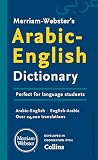
- Over 40, 000 entries including English pronunciations given in the International Phonetic Alphabet (IPA).
- A compact guide to essential Spanish and English vocabulary.
- For ages 13 and up.
- Bi-directional: English to Spanish and Spanish to English.
Choose the control that matches the problem
| Control | Useful for | Important limitation |
|---|---|---|
| Glossary or term list | Stating preferred senses, approved domain terms, names, and alternatives to avoid. | It guides choices but cannot resolve every sentence-level relationship or guarantee compliance. |
| Exact phrase dictionary | Cases where a fixed source phrase must map to a fixed target phrase. | Microsoft says phrase dictionaries perform exact, case-sensitive replacements and should be used sparingly, especially for verbs and adjectives whose translations depend heavily on context. |
| Neural phrase dictionary | Preserving a specified term while allowing surrounding language to adapt. | Behavior is product-specific; verify current implementation details before deployment. |
| Sentence dictionary | Repeated, known source sentences that require an exact target rendering. | It applies only when the source sentence matches exactly, so small edits can bypass it. |
Rigid substitution is a poor fit for words whose form changes with tense, number, case, or grammatical role. A scoped glossary and examples usually provide safer guidance than forcing one string into every context.
Use domain examples carefully when customizing a system
If you are training or adapting a translation system, use high-quality sentence-aligned material from the actual domain. Include different grammatical environments and legitimate senses of important terms, not a pile of repetitive examples. Parallel documents can teach how a term maps and how nearby words influence that mapping.
- Remove misaligned, obsolete, machine-generated, or contradictory examples.
- Keep names, units, formatting, and approved terminology consistent.
- Include varied sentence lengths and realistic document styles.
- Test terms in contexts that were not used as examples.
- Confirm that you have the rights to use every training document; Microsoft’s documentation specifically raises copyright and intellectual-property considerations.
Custom data improves a system’s evidence for a domain; it does not eliminate ambiguity in new sentences. Continue to provide usage notes and review outputs after customization.
Review the translation in the document, not as isolated sentences
For anything beyond informal comprehension, compare the target text with the source while viewing the surrounding document, interface, or layout. The MQM framework used in a cited 2021 evaluation groups issues into accuracy, fluency, terminology, style, and locale conventions. Use those categories as a practical review checklist.
Accuracy and completeness
- Is the intended sense of every ambiguous term preserved?
- Do pronouns, names, references, dates, numbers, units, and conditions still point to the same things?
- Has the system omitted, added, softened, or strengthened any requirement?
- Are negation, tense, modality, and scope unchanged?
Terminology and style
- Are approved terms used consistently across screens, chapters, and related documents?
- Does the register fit the speaker, audience, and purpose?
- Are formal and informal forms used deliberately rather than randomly?
- Were idioms, humor, and culturally specific references adapted appropriately?
Locale and presentation
- Are date, time, number, currency, measurement, address, and quotation conventions correct for the target locale?
- Do translated labels fit their controls, line lengths, and available space?
- Are placeholders, tags, variables, and markup unchanged and in the correct order?
- Does the translated text still make sense in the actual screen, warning, table, or paragraph where it appears?
Have a qualified translator or domain reviewer examine public, legal, medical, financial, safety-critical, or otherwise consequential material. The appropriate level of review depends on the harm a contextual error could cause; there is no universal threshold established by the cited sources.
Recommended Free Tools
Choose a workflow by risk and available context
| Situation | Recommended workflow | Why |
|---|---|---|
| Personal note or rough comprehension | Translate the complete sentence or passage and perform a quick sense check. | The cost of a minor register or terminology error is usually limited. |
| Recurring product or documentation content | Use structured metadata, a scoped glossary, consistent source writing, and document-level review. | Repeated terms and UI constraints make isolated translation unreliable. |
| Specialized domain with substantial existing bilingual material | Evaluate domain examples or custom training, then test unseen contexts and maintain terminology. | Aligned examples can teach specialized mappings, but they do not replace review. |
| Publication-ready or consequential content | Provide full context and terminology guidance, then obtain qualified human and domain review. | Contextual errors can change obligations, safety instructions, diagnoses, or public meaning. |
The key decision axes are how much context is available, how tightly terminology must be controlled, how consistent wording must remain across documents, what locale constraints apply, and what level of review the consequences justify. These dimensions describe workflow choices, not a universal ranking of translation products.
Common failure patterns and fixes
The sentence is fluent but names the wrong object
Likely cause: an ambiguous source term was translated using its most common sense.
Fix: add the domain and intended sense to the sentence or glossary entry, then test the term in several surrounding contexts.
A button label is grammatically wrong
Likely cause: the system received a fragment without knowing whether it was a command, noun, or state.
PC Slower Than It Used to Be?
A free scan shows the junk files, broken settings and background clutter dragging Windows down - then fixes them in one click.Free scan · Windows 10 & 11Crashes, No Sound, or Screen Glitches?
Random freezes, missing sound and display glitches usually trace back to one bad driver. Find and replace yours safely.Free scan · under a minuteFix: identify the UI location, grammatical role, display condition, and any character limit. If possible, provide the complete sentence or a screenshot description.
Pronouns change meaning between paragraphs
Likely cause: segments were translated independently and the antecedent or speaker relationship was unavailable.
Fix: submit the surrounding passage, name the referent where ambiguity remains, and check the finished document rather than approving each segment separately.
Technical terms drift across a manual
Likely cause: no approved terminology or the use of an overly broad exact substitution list.
Fix: establish a scoped glossary, include grammatical and locale information, and review recurring terms across the whole document.
An idiom sounds absurd in the target language
Likely cause: literal translation was used for an expression whose effect depends on culture or wordplay.
Fix: explain the intended meaning and audience, ask for a natural equivalent, or rewrite the source in direct language before translation.
Independent reader supportYour contribution helps us test, update, and keep practical guides available for everyone.What better prompts can and cannot do
A carefully scoped instruction can expose information that would otherwise be hidden: “This is a medical discharge instruction for patients in Canada; keep the drug name unchanged and preserve the imperative tone.” Such guidance narrows the plausible choices. It cannot supply facts that are absent from the source, resolve a contradiction in the document, or guarantee that every target-language grammatical decision is correct.
The Tool Desk
Outbyte Driver Updater FREEFix the driver behind crashes, sound loss and screen glitchesFind Drivers →Outbyte PC Repair FREERepair Windows errors before they cause bigger problemsFix Now →Longer prompts are not automatically better. Put high-value information close to the relevant text, state constraints unambiguously, and avoid conflicting examples. When a term has multiple legitimate translations, describe when each applies instead of demanding one universal replacement.
Best Value
FAQ
Can a glossary guarantee accurate AI translation?
No. A glossary can specify preferred terms and senses, but accuracy still depends on sentence context, grammar, tone, locale, and whether the glossary entry actually applies to that use.
Should every translation be reviewed by a human?
The needed review depends on purpose and risk. Informal comprehension may need only a quick check; public, legal, medical, financial, safety-critical, and publication-ready material warrants qualified review of the source and surrounding document.
Is translating sentence by sentence always wrong?
No. It can work when each sentence is self-contained and terminology is simple. It becomes risky when references, tone, ellipsis, UI role, or domain meaning crosses sentence boundaries.
How much context should I include?
Include enough surrounding text and metadata to resolve a plausible ambiguity: usually the complete sentence, and often the paragraph or screen description when references, role, or display conditions matter. Unrelated text adds noise rather than certainty.
Frequently Asked Questions
Can a glossary guarantee accurate AI translation?
No. A glossary can specify preferred terms and senses, but accuracy still depends on sentence context, grammar, tone, locale, and whether the glossary entry applies to that use.
Should every translation be reviewed by a human?
Review depth should match purpose and risk. Informal comprehension may need a quick check, while public, legal, medical, financial, safety-critical, and publication-ready material warrants qualified review.
Is translating sentence by sentence always wrong?
No. It can work for self-contained sentences with simple terminology, but it is risky when references, tone, ellipsis, UI role, or domain meaning crosses sentence boundaries.
PC Slower Than It Used to Be?
A free scan shows the junk files, broken settings and background clutter dragging Windows down - then fixes them in one click.Free scan · Windows 10 & 11Outdated Drivers Are Slowing You Down
One free scan finds every outdated or missing driver and matches the right update for your exact hardware.Free scan · exact hardware matchHow much context should I include?
Provide enough surrounding text and metadata to resolve a plausible ambiguity—usually the complete sentence, and often the paragraph or screen description when references, role, or display conditions matter.
Quick Recap
Product prices and availability are accurate as of the date/time indicated and are subject to change. Any price and availability information displayed on Amazon at the time of purchase will apply.

