PUBG, short for PlayerUnknown’s Battlegrounds, was made through a collaboration between Irish game designer Brendan Greene and the South Korean studio Bluehole, later reorganized under PUBG Corporation and Krafton. Greene, known online as “PlayerUnknown,” brought the core battle royale concept from his earlier modding work, while Bluehole provided the development team and resources to turn that idea into a standalone global hit.
The game’s rise began with community-made survival mods inspired by last-player-standing competition, then accelerated when PUBG launched in early access in 2017. Its tense 100-player matches, shrinking play zone, scavenged weapons, and high-stakes pacing helped define the modern battle royale formula and pushed the genre into the mainstream.
As an Amazon Associate I earn from qualifying purchases.
Understanding who made PUBG means looking at more than one creator or company. Its story connects mod culture, Brendan Greene’s design vision, South Korean game development, corporate evolution under Krafton, and a worldwide audience that turned PUBG into one of the most influential mullayer games of its era.
The Creator Behind PUBG: Brendan Greene
Brendan Greene, widely known by his online alias PlayerUnknown, is the central creative figure behind PlayerUnknown’s Battlegrounds. Although PUBG was built by a professional studio and later became part of a much larger corporate structure, its core idea grew out of Greene’s experiments with survival gameplay, large maps, shrinking play zones, and last-player-standing tension. His name became so closely tied to the format that it was placed directly in the game’s title.
#1 Best Overall

- PLAYERUNKNOWN'S BATTLEGROUNDS is a last-one-standing shooter being developed with community feedback. Game is unfinished and work in progress
- Xbox One Console Exclusive
- Xbox One X Enhanced
- Parachute onto a massive remote island with nothing but your wits and the clothes on your back
- Defeat every player on the map to earn your bragging rights as the last player left standing
Greene was not originally a traditional game developer working inside a major studio. He was an Irish photographer and web designer who became fascinated with open-world survival games and military simulators, especially the way they allowed players to create unpredictable stories through combat, scavenging, and movement across huge environments. His breakthrough came through modding, where he began shaping battle royale-style experiences inside existing games rather than building a commercial title from scratch.
His earliest major work was connected to ARMA 2, particularly the survival mod scene that surrounded DayZ. Inspired partly by the Japanese film Battle Royale, Greene designed mods that dropped many players into a hostile environment with limited supplies and forced them toward conflict until only one remained. These mods helped define several features now associated with the genre: randomized loot, high-stakes elimination, a playable area that contracts over time, and a match structure where every decision can be final.
Greene’s modding work drew attention because it offered something different from traditional deathmatch shooters. Instead of constant respawns and small arenas, his version of battle royale created long arcs of tension. A player might spend minutes looting quietly, survive a sudden ambush, cross open ground under pressure, and then lose everything in a single mistake. That mixture of patience, risk, and sudden violence became the foundation of PUBG’s identity.
Do these 3 things before closing this tab:
1Clear out junk files and repair common Windows errors2Fix the driver behind crashes, sound loss and screen glitches3Repair Windows errors before they cause bigger problemsFrom Modder to Creative Director
Before PUBG became a standalone game, Greene also consulted on H1Z1: King of the Kill, another early commercial battle royale project. This period helped prove that the format could attract a large audience beyond niche military-sim communities. It also gave Greene valuable experience working with studios on matchmaking, pacing, map design, and the technical demands of large-player-count online matches.
His biggest opportunity came when South Korean game company Bluehole contacted him about creating a dedicated battle royale game. Rather than simply copying the existing mods, Greene joined the project as creative director and helped shape a standalone experience built around the ideas he had been refining for years. The result was PlayerUnknown’s Battlegrounds, developed with a clearer commercial focus, broader accessibility, and the infrastructure needed to support millions of players.
Greene’s contribution was not that he single-handedly built PUBG, but that he supplied the design vision that made it distinct. Bluehole’s developers, artists, engineers, and producers turned that vision into a functioning global game, but Greene’s concepts gave PUBG its recognizable structure. His path from hobbyist modder to the face of one of gaming’s biggest releases remains one of the clearest examples of how community-created ideas can reshape the commercial games industry.
From Battle Royale Mods to a Standalone Game
PUBG did not begin as a traditional studio pitch. Its roots go back to the modding scene, where Brendan Greene experimented with large-scale survival rules inside existing military sandbox games. Inspired by the Japanese film Battle Royale and the tension of last-person-standing survival, Greene created custom game modes that pushed players into a shrinking combat area, forcing encounters until only one player or squad remained.
Quick wins for a faster PC:
Clear out junk files and repair common Windows errorsFree Scan →Scan for outdated or missing drivers - takes under a minuteDriver Scan →Repair Windows errors before they cause bigger problemsFix Now →Rank #2

- Land, loot and outwit your opponents
- Become the last player left standing
- Thrilling Battle Royale Experience
- PlayStation Plus Required
Greene’s earliest breakout work came through DayZ: Battle Royale, a mod built on top of the zombie-survival mod DayZ for ARMA 2. Unlike standard deathmatch modes, it emphasized scarcity, positioning, looting, and decision-making over constant respawns. Players parachuted or spawned into a large map, searched for weapons and supplies, and had only one life. That structure created the high-stakes rhythm that would later define PUBG: long stretches of cautious movement broken by sudden, decisive firefights.
His work gained enough attention that Sony Online Entertainment, later Daybreak Game Company, brought Greene in as a consultant for H1Z1. That project produced H1Z1: King of the Kill, another influential step toward the commercial battle royale format. It helped prove that the concept could attract a large audience beyond niche mod communities, but Greene still wanted to build a more grounded, tactical version with deeper weapon handling, wider maps, and a stronger focus on emergent player stories.
Milestones before PUBG became a standalone title
- ARMA modding: Greene refined the foundations of the format using realistic military sandbox tools.
- DayZ: Battle Royale: The mode introduced a wider audience to the survival-shooter structure that later powered PUBG.
- H1Z1 collaboration: Greene helped bring battle royale into a commercial product with faster matchmaking and mass appeal.
- Bluehole partnership: The South Korean studio saw the potential for a dedicated game built around Greene’s design principles.
The shift from mod to standalone game came when Bluehole, a South Korean developer known for TERA, contacted Greene about creating a new battle royale title from the ground up. Instead of treating the mode as an add-on, Bluehole planned to make it the center of the entire experience. Greene joined the project as creative director, bringing his knowledge of pacing, map flow, loot distribution, and player psychology into a full production environment.
This collaboration became PlayerUnknown’s Battlegrounds, named after Greene’s online handle, “PlayerUnknown.” The standalone approach allowed the team to build systems specifically for battle royale: an aircraft drop at the start of each match, a large island map, randomized loot, vehicles, squad play, a shrinking blue zone, and one-life elimination. These features were not entirely new in isolation, but PUBG combined them into a clean, repeatable format that made every match feel unpredictable.
Recommended Free Tools
By moving beyond mods, PUBG turned a community-driven experiment into a complete commercial game. It retained the tension and improvisation that made the early versions compelling while adding matchmaking, progression, stable servers, esports potential, and global distribution through Steam. That transition marked the moment battle royale stopped being a clever custom mode and became one of gaming’s most influential standalone genres.
Bluehole, PUBG Corporation, and Krafton’s Role
While Brendan Greene supplied the design vision that shaped PUBG, the game became a commercial product through Bluehole, a South Korean game company best known at the time for developing the MMORPG TERA. Bluehole saw the potential in Greene’s battle royale concept and brought him on to lead creative direction for a standalone title. This partnership turned an influential modding idea into PlayerUnknown’s Battlegrounds, a fully supported PC game with dedicated engineering, art, production, server, and publishing resources behind it.
Development was handled by an internal Bluehole team that later became closely associated with the PUBG name. As the game’s scale grew, Bluehole created PUBG Corporation to manage the franchise more directly. PUBG Corporation became responsible for core development, publishing operations in many regions, esports planning, licensing, and long-term brand expansion. This move helped separate PUBG from Bluehole’s earlier identity as a studio centered on MMORPGs and positioned it as a global franchise with its own leadership, roadmap, and business strategy.
Rank #3
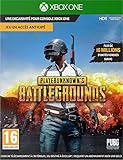
- PLAYERUNKNOWN'S BATTLEGROUNDS is the definitive battle royale experience, pitting 100 players against each other in a struggle for survival across a variety of thrilling and immersive environments Not Just a Game - This is Battle Royale
- Now in Full Product release on Xbox One Xbox live Gold required to play (sold separately)
- Full Product Release game includes 3 maps: the original game map, Erangel, the desert themed map, Miramar and new to the 10 release the 4x4 tropical themed map, Sanhok, featuring all-new weapons and vehicles
- Includes the #10/99 DLC Pack, featuring an exclusive set of clothing and accessories to celebrate the final release of the game on Xbox One
- Xbox One Console launch exclusive and Xbox One x enhanced
How the company structure evolved
- Bluehole: The original South Korean developer and publisher that backed Greene’s standalone battle royale project.
- PUBG Corporation: The dedicated subsidiary formed to oversee PlayerUnknown’s Battlegrounds as a franchise, including updates, regional publishing, and esports efforts.
- Krafton: The parent company that later unified Bluehole and related studios under a broader corporate identity, with PUBG becoming its flagship global property.
Krafton’s role became more prominent as the company reorganized its studios and expanded beyond a single-hit game. The Krafton name now represents the larger corporate group behind PUBG and related projects, including PUBG: Battlegrounds, PUBG Mobile partnerships, and new games connected to or inspired by the PUBG universe. This evolution reflects how dramatically PUBG changed the company’s trajectory: what began as a high-risk PC shooter became the centerpiece of a multinational gaming business.
Ownership and publishing around PUBG can seem confusing because different versions and territories involved different partners. The original PC and console game remained tied to PUBG Corporation and Krafton, while PUBG Mobile was developed and published in partnership with Tencent for global mobile markets. Even so, the underlying PUBG intellectual property sits within Krafton’s corporate ecosystem. Bluehole provided the foundation, PUBG Corporation professionalized and scaled the franchise, and Krafton turned it into a long-term global brand.
How PUBG Was Developed and Launched
PlayerUnknown’s Battlegrounds moved from concept to commercial release with unusual speed. After Brendan Greene joined forces with South Korean studio Bluehole, the project was built around a clear promise: a large-scale survival shooter where up to 100 players parachuted onto an island, scavenged for weapons and gear, and fought until only one player or team remained. Rather than turning the idea into a heavily scripted shooter, the team focused on systems that created unpredictable encounters: shrinking play zones, randomized loot, vehicle movement, long sightlines, and tense audio cues.
Development began in earnest in 2016, with Greene serving as creative director and working closely with Bluehole’s development team in Seoul. The game was built using Unreal Engine 4, which helped the studio prototype quickly and support a large map with vehicles, ballistics, buildings, and many simultaneous players. The first major battleground, Erangel, was designed as a fictional Black Sea island with military bases, towns, fields, forests, bridges, and coastline routes. Its varied terrain gave matches a natural rhythm, from chaotic city drops to quiet looting runs and final circles in open fields or dense compounds.
Early access and rapid iteration
PUBG launched on Steam Early Access for Windows on March 23, 2017, under the title PlayerUnknown’s Battlegrounds. This was a central part of its development strategy, not just a marketing phase. Bluehole and the newly formed PUBG Corporation used live player data, streamer feedback, and community reports to refine weapon balance, server performance, hit registration, map flow, and anti-cheat systems. The game was rough in places, with bugs and performance issues, but its core loop was strong enough that players kept returning for the tension of each match.
- March 2017: PUBG entered Steam Early Access and quickly became one of the platform’s most-watched and most-played games.
- September 2017: PUBG Corporation was established as a subsidiary dedicated to managing and expanding the game.
- December 2017: Version 1.0 launched on PC, alongside the desert map Miramar, giving the game its full official release.
- December 2017: The Xbox One Game Preview version arrived, bringing PUBG to consoles while continuing active development.
- 2018: PUBG Mobile, developed with Tencent, expanded the game’s reach to a massive global smartphone audience.
The official PC release on December 20, 2017, marked a turning point. By then, PUBG had already sold millions of copies and had become a fixture on Twitch, YouTube, and Steam’s concurrent player charts. Its launch was not a traditional “finished and forgotten” release; it was the beginning of a live-service model built around new maps, seasons, cosmetics, ranked play, esports events, and continuing technical updates. Later additions such as Sanhok, Vikendi, and Taego showed how the developers kept experimenting with match pacing, terrain density, and regional themes.
The launch strategy also helped define PUBG’s identity. It was more grounded and tactical than many later battle royale games, with slower movement, lethal gunfights, limited information, and a strong emphasis on positioning. That combination made each match feel like a story shaped by risk: where to land, when to move, whether to take a fight, and how to survive the final circle. By pairing Greene’s battle royale blueprint with Bluehole’s production resources and a fast feedback cycle, PUBG went from a mod-inspired concept to one of the most influential game launches of its era.
Rank #4

- Not
- Available
- Yet
Why PUBG Became a Global Phenomenon
PUBG became a global phenomenon because it turned a simple survival premise into a tense, repeatable, highly watchable experience. One hundred players dropped onto a large island with no gear, searched for weapons and equipment, and fought to be the last person or squad alive. The shrinking play zone forced movement, so matches rarely felt static. A quiet looting phase could turn into a long-range firefight, a desperate vehicle escape, or a final-circle standoff in a field with almost no cover.
Its appeal also came from the way it balanced accessibility with depth. The core rules were easy to understand: land, loot, survive. At the same time, success depended on map knowledge, sound awareness, recoil control, positioning, timing, and risk management. Players had to decide whether to chase air drops, avoid crowded towns, rotate early, or hold a building until the circle moved. This created stories that felt personal, even when a player lost early. A single match could produce comedy, panic, frustration, and triumph within half an hour.
What’s actually slowing this PC down?
Pick the symptom - the matching free tool is one click away.
Factors that fueled PUBG’s rise
- Streamer-friendly gameplay: PUBG arrived at a moment when Twitch and YouTube Gaming were shaping global gaming culture. The unpredictability of each match made it ideal for livestreams, highlight clips, and squad banter.
- High-stakes tension: With no respawns in the standard mode, every gunfight mattered. The “Winner Winner Chicken Dinner” screen became a coveted reward and a recognizable phrase across gaming communities.
- Realistic tone: Compared with more arcade-style shooters, PUBG used military-style weapons, grounded ballistics, vehicles, and large tactical spaces. That gave it a distinct identity in the battle royale wave it helped create.
- Global platform reach: After its PC breakthrough, PUBG expanded to Xbox, PlayStation, and mobile. PUBG Mobile, developed with Tencent involvement, became especially significant in regions where smartphones were the main gaming device.
The game’s international success was accelerated by PUBG Mobile. In markets such as India, Southeast Asia, the Middle East, and Latin America, the mobile version made the battle royale format available to millions of players who did not own gaming PCs or consoles. Free-to-play access, touchscreen controls, regular events, cosmetic rewards, and local esports scenes helped PUBG become more than a PC hit. It became a social game that friends could play together during commutes, school breaks, and late-night voice chats.
PUBG also benefited from timing. It launched when players were hungry for fresh mullayer formats beyond traditional team deathmatch, hero shooters, and survival sandboxes. The game gave competitive players a new kind of ladder to climb, casual players memorable squad sessions, and content creators endless unscripted moments. Even technical issues and rough edges became part of its early identity; players tolerated bugs because the core experience was so compelling. By combining survival-game tension, shooter skill, open-world movement, and social spectating, PUBG helped transform battle royale from a niche mod concept into one of the defining genres of modern gaming.
Independent reader supportYour contribution helps us test, update, and keep practical guides available for everyone.PUBG’s Impact on Gaming and the Battle Royale Genre
PUBG’s influence on gaming was immediate and far-reaching because it turned battle royale from a niche mod concept into one of the defining formats of modern mullayer games. Before PlayerUnknown’s Battlegrounds, large-scale last-player-standing matches existed mostly through custom servers, survival mods, and experimental modes. PUBG packaged that idea into a focused standalone experience with matchmaking, progression, ranked competition, and a clear commercial identity. Its success proved that a slower, more tactical survival shooter could attract tens of millions of players worldwide.
The game also established many conventions now associated with battle royale design. A large map, a shrinking safe zone, randomized loot, parachute drops, squad communication, vehicle traversal, and high-stakes permadeath became familiar features partly because PUBG made them mainstream. Matches created unscripted stories: a desperate swim to the island, a tense bridge ambush, a final circle in an open field, or a squad wipe inside an apartment block. This blend of strategy, luck, positioning, and shooting skill gave each round a different rhythm, encouraging both casual play and serious competition.
The Tool Desk
Outbyte Driver Updater FREEScan for outdated or missing drivers - takes under a minuteDriver Scan →Outbyte PC Repair FREERepair Windows errors before they cause bigger problemsFix Now →Industry shifts driven by PUBG
- Major studios adopted battle royale modes: PUBG’s success helped clear the path for games such as Fortnite Battle Royale, Call of Duty: Warzone, Apex Legends, and other large-scale survival shooters.
- Streaming became part of game design: PUBG’s tense pacing and unpredictable endings made it highly watchable on Twitch and YouTube, reinforcing the link between multiplayer success and creator-driven visibility.
- Early access became a proven launch path: PUBG showed that a rough but compelling multiplayer game could grow rapidly through community feedback, frequent patches, and live-service updates.
- Mobile battle royale exploded: PUBG Mobile, developed for global smartphone audiences, became a massive success and helped make battle royale a dominant genre on mobile platforms.
PUBG also reshaped expectations around realism in the genre. While later competitors leaned into building mechanics, hero abilities, or faster arcade movement, PUBG kept a grounded military-survival tone. Its gun recoil, sound-based awareness, inventory management, and map knowledge rewarded patience and planning. That identity allowed it to stand apart even as the market became crowded. For many players, PUBG remained the benchmark for a more tactical and punishing version of battle royale.
Best Value
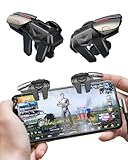
- 【Clip-on Mobile Game Trigger】 Our versatile mobile game triggers feature a unique clip-on design equipped with four zinc alloy buttons, allowing you to seamlessly control your left and right thumbs and index fingers and middle finger for simultaneous movement, aiming, and shooting. Weighing in at just 0.093 lbs , this mobile game controller is perfect for on-the-go gaming during trips or parties.
- 【Almost Zero Latency Physical Mapping】 ACEDAYS Mobile Triggers utilize a copper-silver alloy wire and conductive media combination scheme, effectively minimizing environmental magnetic interference. Experience ultra-sensitive shooting and aiming with almost zero delays, ensuring exceptional game performance. User-friendly with no need for power or drivers, the PUBG mobile controller features a mechanical micro switch with a button lifespan exceeding 5 million presses.
- 【Preventing Accidental Touch】Designed with notches, our cell phone gaming triggers provide a safeguard against accidental touches on the phone's side keys during gameplay, preventing scratches on the side bezel. The notch design seamlessly accommodates tempered film and thickened cases. Additionally, two silicone soft pads on the contact surface protect your screen from scratches.
- 【Ergonomic Design】Crafted from zinc alloy, the buttons on this smartphone game controller have an increased surface area and optimized pressure angles, offering an ergonomic design for extended gaming sessions. Effectively alleviate grip fatigue during prolonged use, ensuring you stay comfortable even after hours of gameplay. This design also addresses issues of sweating, slipping, and poor heat dissipation.
- 【High Compatibility】 Our mobile gaming controller is compatible with iPhone and Android phones, easily clipping onto devices with a thickness ranging from 0.24" to 0.45". Note: If using a phone case with the trigger, ensure the total thickness does not exceed 0.5 inches. Compatible with popular shooter mobile games like PUBG Mobile, Call of Duty Mobile, Fortnite Mobile, and more.
Its impact extended into esports and regional gaming culture as well. Professional PUBG competitions developed across PC and mobile, with teams competing in structured leagues and international tournaments. In countries such as South Korea, China, India, and parts of Southeast Asia, PUBG and PUBG Mobile became cultural phenomena, influencing internet cafés, mobile gaming communities, content creators, and competitive scenes. Even where rivals overtook it in mainstream attention, PUBG’s foundation remained visible across the genre.
The lasting legacy of PUBG is that it demonstrated the commercial power of emergent mullayer tension. It did not invent every ingredient of battle royale, but it assembled them in a way that felt new, scalable, and globally compelling. By transforming Brendan Greene’s mod-born concept into a blockbuster franchise, PUBG changed how publishers, developers, streamers, and players thought about online shooters. The modern battle royale boom is difficult to imagine without the path PUBG created.
Frequently Asked Questions
Who actually made PUBG?
PUBG was created from a game design concept by Brendan Greene, also known as PlayerUnknown, and developed as a standalone game by PUBG Corporation, a subsidiary of South Korean company Bluehole. Greene did not build the entire game alone; he served as the creative lead while a full development team turned the battle royale concept into PlayerUnknown’s Battlegrounds.
What role did Brendan Greene play in PUBG?
Brendan Greene helped define the core battle royale formula behind PUBG: 100 players dropping onto a large map, scavenging for gear, and fighting until one player or team remains. Before PUBG, he worked on battle royale mods for games like Arma 2, Arma 3, and H1Z1, which directly influenced the design of the standalone game.
Is PUBG owned by Bluehole or Krafton?
PUBG was developed under PUBG Corporation, which was created by Bluehole to manage the game. Bluehole later reorganized under the larger Krafton brand, so PUBG is now part of Krafton’s portfolio. Krafton owns and publishes PUBG-related titles, including PUBG: Battlegrounds and PUBG Mobile through its publishing partnerships.
When did PUBG become popular?
PUBG first exploded in popularity after launching in Steam Early Access in March 2017. Its full PC release followed in December 2017, and by then it had already become one of the most-played games on Steam. The game’s momentum continued with console releases and the massive success of PUBG Mobile.
How did PUBG change the gaming industry?
PUBG helped turn battle royale from a niche mod idea into one of the biggest genres in gaming. Its success influenced major titles like Fortnite Battle Royale, Call of Duty: Warzone, Apex Legends, and many others. It also proved that large-scale online survival shooters could become global esports and streaming phenomena.
Outdated Drivers Are Slowing You Down
One free scan finds every outdated or missing driver and matches the right update for your exact hardware.Free scan · exact hardware matchPC Slower Than It Used to Be?
A free scan shows the junk files, broken settings and background clutter dragging Windows down - then fixes them in one click.Free scan · Windows 10 & 11Bottom Line
PUBG was made by PUBG Corporation, a studio under South Korea’s Bluehole, with Brendan Greene playing the defining creative role that shaped its battle royale formula. From Greene’s early mods to PUBG’s standalone release, the game turned a niche survival concept into a global mullayer phenomenon.
Its success helped establish the modern battle royale genre, influenced countless competitors, and transformed PUBG into a major gaming franchise under Krafton. If you want to understand today’s battle royale landscape, PUBG is the starting point.
Quick Recap
Product prices and availability are accurate as of the date/time indicated and are subject to change. Any price and availability information displayed on Amazon at the time of purchase will apply.

