The Tool Desk
Outbyte Driver Updater FREEScan for outdated or missing drivers - takes under a minuteDriver Scan →Outbyte PC Repair FREEClear out junk files and repair common Windows errorsFree Scan →On Windows 11, start by checking Game Mode, then enable Optimizations for windowed games if you play compatible DirectX 10 or DirectX 11 titles in windowed or borderless mode. On a computer with multiple GPUs, assign the game to the appropriate GPU, and test Best performance power mode when the PC is plugged in and extra heat and power use are acceptable. Keep Windows and drivers current and remove unnecessary background load.
These changes improve scheduling, presentation latency, GPU selection or available CPU headroom; none guarantees a particular frame rate. The result depends on the game, graphics API, display mode, hardware, drivers and what else the computer is doing.
As an Amazon Associate I earn from qualifying purchases.
What these settings can—and cannot—change
Windows settings can remove avoidable overhead, select a faster GPU on a hybrid system, improve how compatible windowed games present frames, or let the processor use more power. They cannot turn an entry-level graphics card into a high-end one, add memory, or fix a game whose frame rate is limited by its own engine.
Microsoft’s current gaming guidance targets Windows 11. Windows 10 support ended on October 14, 2025, so it should not be treated as an equally current platform for security or ongoing gaming support. The labels and paths below are for Windows 11 and can change slightly with updates or manufacturer software.
#1 Best Overall

- 32 Inch curved 1500R gaming monitor, 240Hz high refresh rate for gameplay
- Performance: 240Hz refresh rate, Full HD 1920*1080P resolution, 1ms MPRT response time, Built-in FreeSync technology, Anti-flicker, Low blue light
- Interfaces: HDMI up to 240Hz, DP 1.4 up to 240Hz, Earphone Jack, No speakers built-in. One DP cable comes with the package
- Display Colors: 125% sRGB color gamut, 16.7M display colors, 300 Nits brightness, HDR technology, 3500:1 contrast
- Ergonomic Design: 1500R curved, Tilt: -5°~15°, VESA Compatible (100 x 100mm), 178° Wide Viewing Angle.Recommended distance of playing games in this monitor is about 1.2 meters.
Best first checks
| Setting or action | Where to find it | Use it when | Main trade-off |
|---|---|---|---|
| Game Mode | Settings > Gaming > Game Mode | Any Windows 11 gaming PC; verify the baseline setting | No guaranteed FPS increase |
| Optimizations for windowed games | Settings > System > Display > Graphics | DirectX 10/11 games in windowed or borderless-windowed mode | Compatibility varies by game and display |
| Per-app graphics preference | Settings > System > Display > Graphics | Hybrid laptops or PCs with more than one GPU | High performance generally uses more power |
| Power mode: Best performance | Settings > System > Power & battery > Power mode | Plugged-in play where heat and power draw are acceptable | More electricity, heat and laptop battery drain |
| Updates and background cleanup | Windows Update, optional updates and Task Manager | When background activity or old drivers may be limiting performance | Requires troubleshooting rather than one toggle |
| Hardware-accelerated GPU scheduling | Windows graphics settings on supported hardware | Only when testing a specific hardware/driver combination | No universal evidence that On is faster |
| Visual effects: Adjust for best performance | Visual Effects tab | Constrained PCs where general Windows responsiveness matters | Windows animations and effects are reduced |
1. Check Game Mode first
Open Settings > Gaming > Game Mode and make sure Game Mode is enabled. Microsoft says it should be on by default. It is the simplest baseline check because it is designed for gaming workloads and does not require changing individual game files.
Do not use a promised percentage or FPS number to judge this switch. Microsoft’s guidance does not specify a universal frame-rate gain, and the effect can be negligible when the game is already limited by the GPU, CPU, memory capacity or an external frame-rate cap. If Game Mode was already enabled, leave it enabled and move to settings that match your particular problem.
2. Enable Optimizations for windowed games when they apply
Microsoft defines this feature narrowly: “Optimizations for windowed games improves gaming performance for DirectX 10 and DirectX 11 games running in windowed and borderless windowed modes.” Read the full explanation in Microsoft’s Windows 11 support article.
What’s actually slowing this PC down?
Pick the symptom - the matching free tool is one click away.
Turn it on for the default configuration
- Open Settings.
- Go to System > Display > Graphics.
- Under the default settings, enable Optimizations for windowed games.
- Close and restart the game so it creates its next presentation session with the new setting.
The feature transitions compatible games from the older bit-block-transfer (blt) presentation model to the flip model. That can reduce frame latency and enables features such as Auto HDR and variable refresh rate on supported displays. It does not apply equally to every game: a DirectX 12 title, an exclusive-full-screen title, or a game using a different presentation path may not receive the same benefit.
Understand the Auto HDR interaction
Auto HDR turns on windowed-game optimization automatically. If you want to turn the optimization off, Microsoft says you must first turn off Auto HDR. This ordering prevents a user from disabling the underlying optimization while leaving Auto HDR selected.
Rank #2
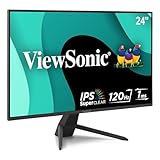
- High-Speed 120Hz Full HD IPS Display: Elevate your gaming experience with this 24 Inch 1080p (1920 x 1080) IPS monitor; featuring a smooth 120Hz refresh rate and 1ms (MPRT) response time, this display delivers the speed and clarity needed for competitive play
- Ultra-Smooth FreeSync Performance: Achieve tear-free and fluid gameplay with AMD FreeSync technology; this feature synchronizes your monitor's refresh rate with your GPU to eliminate screen tearing and stuttering for a more immersive and seamless gaming experience
- Enhanced Viewing Comfort: Minimize eye fatigue during intensive gaming sessions with integrated Flicker-Free technology and a Blue Light Filter; these eye care features provide a more comfortable viewing experience, allowing you to stay in the game for longer
- Customizable Game Mode Presets: Dominate the competition with an arsenal of pre-set visual modes tailored for FPS, RTS, and MOBA games; quickly optimize your screen settings to gain a competitive edge and enjoy the ideal contrast and color for any gaming genre
- Flexible Connectivity Options: Seamlessly connect your gaming console, PC, and laptop with versatile input options; this monitor features HDMI, DisplayPort, and VGA inputs, providing the reliable compatibility needed for all your favorite gaming and home devices
Create a per-game exception
- Return to Settings > System > Display > Graphics.
- Select the game under the custom options list. If it is not listed, add the game application.
- Choose Options.
- Adjust its graphics preference or turn off Optimizations for windowed games and, where applicable, Auto HDR.
- Select Save, then restart the game or app.
Use an exception when a particular title displays incorrectly, stutters after the change, or behaves better with its original presentation path. Change one option at a time so you can identify which setting altered the behavior.
3. Select the right GPU for each game
A desktop with one graphics processor has no alternative GPU to select. This setting matters most on hybrid laptops and other systems that expose integrated and discrete GPUs. Windows offers three choices:
Outdated Drivers Are Slowing You Down
One free scan finds every outdated or missing driver and matches the right update for your exact hardware.Free scan · exact hardware matchWindows Errors? Fix Them Before They Spread
Repair common Windows errors and clear accumulated junk for a smoother, more stable PC - no reinstall needed.Free scan · no reinstall- Let Windows decide allows the operating system to select a GPU.
- Power saving favors the lower-power GPU, which is useful for battery life and light workloads.
- High performance requests the higher-performance GPU, typically the discrete adapter in a hybrid laptop.
To set a preference, open Settings > System > Display > Graphics, select the game, choose Options, select the desired graphics preference and save. Restart the game afterward. The Windows label High performance is a preference, not a benchmark guarantee: a game can remain CPU-limited, use an unexpected executable, or be constrained by its own settings.
If a game uses a launcher and a separate game executable, make sure you assign the executable that actually renders the game. Compare battery use and frame pacing as well as average FPS; choosing the discrete GPU normally increases power consumption.
4. Test Best performance power mode
Windows 11 exposes the power setting at Settings > System > Power & battery > Power mode > Best performance. Microsoft says this mode can help the CPU run at higher performance when needed.
Rank #3

- Quality Visuals: The KG271U 27" IPS monitor with 2560 x 1440 QHD resolution in a 16:9 aspect ratio presents stunning, high-quality images with excellent detail. The zero-frame design does away with the thick frames found on conventional monitors freeing up precious screen space.
- AMD FreeSync Technology: Say “goodbye” to stuttering and tearing. With AMD FreeSync, the monitor’s frames are synced with the graphics card’s frames, which eliminates screen tearing and provide the smoothest gaming experience.
- Up to 180Hz: The 180Hz refresh rate speeds up the frames per second to deliver an ultra-smooth 2D motion scene. With a rapid refresh rate of up to 180Hz, Acer Gaming Monitors shorten the time it takes for frame rendering, lower input lag and provide gamers an excellent in-game experience.
- Responsive!!: Up to 0.5ms GTG (Gray to Gray) response time enhanced gamers’ in-game experience. No matter the fast-moving action or any dramatic transitions will be all rendered smoothly without the annoying effects of smearing or ghosting with KG271U Gaming Monitor.
- New Depths of Color Accuracy: is monitor is ideal for color-critical projects producing accurate colors, supporting DCI-P3 95%. An amazing monitor for graphic designers, photographers, and film editors.
Use it as a test or gaming profile when the computer is connected to power and additional heat and electricity use are acceptable. On a laptop, Best performance can reduce battery runtime, increase fan noise and make the chassis warmer. It is therefore a poor permanent default for someone who values quiet operation or long unplugged sessions.
Quick wins for a faster PC:
Fix the driver behind crashes, sound loss and screen glitchesFind Drivers →Clear out junk files and repair common Windows errorsFree Scan →Scan for outdated or missing drivers - takes under a minuteDriver Scan →After selecting it, play the game or reproduce the slowdown that prompted the change. If there is no observable improvement, return to a more efficient mode. A CPU that is already running at its required performance level will not necessarily gain extra frames from the higher-power policy.
5. Update Windows, drivers and optional updates
Out-of-date software can cause bugs, poor compatibility or scheduling problems. Use Windows Update to install current Windows updates. Also inspect the optional updates area; Microsoft notes that optional updates can include non-critical drivers.
Driver updates are not an automatic performance upgrade for every game. A new driver may fix a specific title, support a feature or correct instability, while an already stable system may show little change. Restart when Windows or a driver installer requests it, then test the same game and settings rather than changing several variables simultaneously.
6. Find and reduce background load
A game may be perfectly configured yet still stutter because another process is consuming CPU time, memory, storage bandwidth or network capacity. Microsoft recommends using Task Manager’s Processes, Performance and Startup apps views to identify unnecessary work.
Rank #4

- 23.8" Full HD (1920 x 1080) Widescreen VA Monitor | AMD FreeSync Premium Technology
- Refresh Rate: 165Hz | Response Time: 1ms (VRB) | Pixel Pitch: 0.275mm | Color Saturation: NTSC 72%
- Zero-Frame Design | HDR Ready
- VESA mounting compliant (100 x 100mm) | Ergonomic Tilt: -5° to 15°
- Ports: 1 x Display Port 1.2 and 2 x HDMI 2.0 (HDMI Cable Included)
Use Task Manager during the problem
- Open Task Manager while the game is running or immediately after a stutter.
- In Processes, sort by CPU, memory, disk or network activity to find unusually heavy processes.
- Use Performance to see whether the CPU, GPU, memory or disk is reaching its limit.
- Review Startup apps and disable programs you do not need launching with Windows.
- Close unused applications before starting the game, especially those that continuously scan, synchronize or render overlays.
Do not terminate a process simply because its name is unfamiliar. Check what it belongs to and whether it is required for Windows, security software, an input device or another application. The goal is to remove unnecessary load, not to “debloat” the operating system indiscriminately.
Limit background activity where appropriate
For applications that do not need to run while you play, use their available Windows background-permission controls or close them before launching the game. This is most useful when Task Manager shows sustained CPU, memory or disk activity unrelated to the game. If resource usage is low and the game is GPU-limited, closing more apps is unlikely to change frame rate.
7. Treat Hardware-accelerated GPU scheduling as an experiment, not a promise
Hardware-accelerated GPU scheduling appears among Windows graphics options on supported systems. Microsoft’s gaming guidance lists it as a setting to check, while its DirectX developer explanation says support depends on graphics hardware and drivers and that reliability and performance are evaluated before driver support is promoted.
The available Microsoft material does not establish that enabling it makes every game faster. If your system is stable, there is no need to change it solely because the switch exists. If you are troubleshooting a specific game, record the current setting, change only that variable, restart the game and compare the workloads you actually use. Revert it if you see crashes, visual corruption, worse frame pacing or no useful improvement.
8. Reduce visual effects only for general responsiveness
Windows visual effects consume some system resources. In the Visual Effects tab, Microsoft offers Adjust for best performance, which reduces animations and other desktop effects.
Best Value

- Quality Visuals: The KG251Q 24.5" monitor with 1920 x 1080 Full HD resolution in a 16:9 aspect ratio presents stunning, high-quality images with excellent detail. The zero-frame design does away with the thick frames found on conventional monitors freeing up precious screen space.
- AMD FreeSync Premium Technology: Say “goodbye” to stuttering and tearing. With AMD FreeSync Premium, the monitor’s frames are synced with the graphics card’s frames, which eliminates screen tearing and provides the smoothest gaming experience.
- 200Hz Refresh Rate: The 200Hz refresh rate speeds up the frames per second to deliver an ultra-smooth 2D motion scene. With a rapid refresh rate of 200Hz, Acer Monitors shorten the time it takes for frame rendering, lower input lag and provide gamers an excellent in-game experience.
- Responsive!!: Up to 0.5ms GTG (Gray to Gray) response time enhanced gamers’ in-game experience. No matter if the fast-moving action or any dramatic transitions will be rendered smoothly without the annoying effects of smearing or ghosting with KG251Q Gaming Monitor
- ZeroFrame Design: With a Nitro KG251Q monitor, you’ll want to see as much of the display as possible. Get more real estate with the near bezel-less design, allowing you to see more and do more. The ZeroFrame design lets you place multiple monitors next to each other for a seamless, almost uninterrupted view.
This is not a gaming-specific FPS control. Consider it on an older or memory-constrained PC when the desktop itself feels sluggish, especially while switching between the game and other applications. The cost is a less polished Windows interface. If the game is already using the GPU heavily and the desktop is responsive, changing visual effects is unlikely to solve a game-specific frame-rate problem.
Choose settings by the problem you are solving
| Observed situation | Most relevant action | What to monitor |
|---|---|---|
| Borderless or windowed DirectX 10/11 game has high latency or poor presentation | Enable Optimizations for windowed games and restart the title | Frame pacing, latency, HDR and variable-refresh behavior |
| Hybrid laptop appears to use integrated graphics | Assign the game to High performance under Graphics options | GPU engine usage, heat, battery drain and stability |
| Performance drops only on battery | Connect power and test Best performance mode | Temperature, fan noise and battery runtime |
| Stutter coincides with another program’s activity | Inspect Task Manager and disable unnecessary startup or background work | CPU, memory, disk and network utilization |
| Crashes or visual glitches after a graphics change | Revert the last change and test one setting at a time | Whether the issue is tied to one game, driver or mode |
| Desktop is sluggish on older hardware | Consider Adjust for best performance in Visual Effects | Desktop responsiveness, not just in-game FPS |
A repeatable troubleshooting order
When a game performs poorly, avoid changing every Windows option at once. Use this order:
- Write down the game’s display mode, resolution, graphics API if known, current Windows power mode and whether the PC is plugged in.
- Confirm Game Mode, then update Windows and inspect optional driver updates.
- If the title is DirectX 10 or 11 and windowed or borderless, enable windowed-game optimizations and restart it.
- On a multi-GPU computer, verify the game’s per-app GPU preference.
- Check Task Manager while reproducing the problem and address the resource that is actually saturated.
- If plugged in, test Best performance power mode and observe heat and noise.
- Only then test Hardware-accelerated GPU scheduling or a per-game exception, changing one variable at a time.
This process distinguishes a Windows configuration issue from a hardware limit. Older hardware may show little improvement from software changes, particularly when the graphics processor is already fully occupied or the game is limited by its CPU workload.
Display compatibility: useful, but not a required purchase
Windowed-game optimizations can enable Auto HDR and variable refresh rate on supported displays. A gaming monitor with variable refresh rate or an HDR gaming monitor can therefore affect which display features are available, but a new monitor is not required to apply any of the Windows settings above and is not a general FPS upgrade. Check that the game, GPU, cable and monitor all support the feature before treating it as a solution.
Quick Recap
Official references
- Microsoft Support: Optimizations for windowed games in Windows 11
- Microsoft Support: Tips to improve PC performance in Windows
- Microsoft: Gaming on Windows 11
- Microsoft DirectX Developer Blog: Hardware Accelerated GPU Scheduling
Product prices and availability are accurate as of the date/time indicated and are subject to change. Any price and availability information displayed on Amazon at the time of purchase will apply.

