The Tool Desk
Outbyte Driver Updater FREEScan for outdated or missing drivers - takes under a minuteDriver Scan →Outbyte PC Repair FREEClear out junk files and repair common Windows errorsFree Scan →No monitor has been proven to protect eyesight or prevent digital eye strain. The most comfortable choice is a display with sharp, readable text, easy brightness control, useful ergonomic adjustment and the ports your work requires. Your viewing distance, room lighting, blinking, breaks and eye health matter at least as much as the panel itself.
For a current example, Dell lists the 27 Plus 4K Monitor S2725QS with its ComfortView Plus feature, blue-light emissions at or below 35%, refresh rates up to 120Hz and four-star eye-comfort certification. Those are manufacturer specifications, not proof that the model prevents eye disease or relieves symptoms for every user. BenQ’s Eye-Care range offers comparable feature categories, including Flicker-Free, Low Blue Light and Visual Optimizer, but those labels also describe features rather than clinically established treatment.
As an Amazon Associate I earn from qualifying purchases.
What “for eyesight” should mean when you buy a monitor
People usually mean one of three things when they search for a monitor “for eyesight”: text that remains comfortable to read, fewer reflections and brightness changes, or reassurance that the display will not damage their eyes. The first two are sensible buying goals. The third goes beyond what current evidence establishes.
EyeWiki’s Computer Vision Syndrome overview describes digital discomfort as a combination of factors rather than a single monitor defect. Viewing distance, monitor height, glare, room lighting, blink rate, breaks, corrective lenses and dry-eye management all affect how a long session feels. A monitor can make a good workstation easier to achieve, but it cannot correct an unaddressed vision prescription or an eye-surface condition.
#1 Best Overall

- 24" Full HD IPS Display: Enjoy crisp 1080p visuals and wide 178 viewing angles for work, study, streaming, and daily use
- 99% sRGB Frameless Panel: See vivid, consistent color with a slim modern design for home office, dorm, or dual monitor setups
- 120Hz Smooth Motion: Experience smoother scrolling, video, and casual gaming with a fast refresh rate that helps reduce choppy motion
- 1ms MPRT Adaptive-Sync: Reduce blur, screen tearing, and stutter for smoother gameplay, movies, and everyday entertainment
- ASUS Eye Care Technology: TV-certified Flicker-Free and Low Blue Light help support comfortable viewing during long sessions
That is why there is no scientifically established overall “best monitor for eyesight.” A responsible recommendation is a best fit for a particular desk and workload, not a promise of protection. Treat eye-comfort ratings, low-blue-light modes and flicker-free labels as product features to evaluate alongside resolution, stand adjustment, connectivity and price.
Shortlist: useful starting points, not a medical ranking
| Use case | Candidate or approach | What is established | What remains unproven |
|---|---|---|---|
| High-resolution text and general office work | Dell 27 Plus 4K Monitor S2725QS | Dell lists ComfortView Plus, blue-light emissions at or below 35%, refresh rate up to 120Hz and four-star eye-comfort certification on its US product page. | No independent eye-strain comparison or clinical protection result is established. Confirm the regional model and current specification sheet. |
| Feature-focused eye-care selection | A specific model from BenQ’s Eye-Care range | BenQ describes Flicker-Free, Low Blue Light and Visual Optimizer technologies. | The range is not one specification or one performance level. Select a model by resolution, size, stand, ports and price; the reviewed material does not show that these features prevent symptoms. |
| Maximum positioning flexibility | An office monitor with a height-, tilt-, swivel- and pivot-adjustable stand, or a compatible VESA mount | Correct positioning supports a slightly downward gaze and an approximately arm’s-length viewing distance. | No particular stand has been shown to cure eye strain. |
| Budget near $500 | Prioritize readable resolution, a fully adjustable stand and the connectivity you actually need before paying for eye-care branding. | This follows the practical comparison criteria used for the example buyer question. | No complete, independently tested under-$500 ranking is established; prices and stock change by region and date. |
The table is a decision aid, not a laboratory ranking. No monitor was physically tested for this guide, and no independent head-to-head study establishes one model as healthiest for the eyes.
How to compare monitors for comfortable, clear work
1. Match resolution and size to readable text
Text comfort depends on pixel density, physical screen size, viewing distance and operating-system scaling together. A higher resolution can make letters cleaner, but it can also make them too small if scaling is left at a setting intended for a lower-resolution display. Conversely, an oversized low-resolution image may look soft or show visible pixel structure.
Start with the text you read most: documents, code, spreadsheets or web pages. Sit at your normal desk distance, set the operating system to a comfortable scaling level and check that letter edges look solid without leaning forward. Do not choose a resolution solely because its number is higher. A screen that lets you read at a relaxed distance is the better fit.
2. Make positioning a specification, not an afterthought
Look for independent height adjustment plus tilt. Swivel and pivot are valuable when you share a desk, use a portrait layout or need to move the screen away from a window. If the supplied stand is limited, check whether the monitor supports a VESA mount that can place it correctly.
EyeWiki advises placing the top of the monitor at or just below eye level, sitting about an arm’s length away and using a slight downward gaze. These are starting points, not rigid measurements: the right position is the one that lets your neck relax and your eyes focus without squinting or leaning.
Rank #2

- 27-Inch Full HD IPS Panel: Enjoy vivid colors and wide viewing angles for work or movies. This 27 inch monitor is a 1080p computer monitor and IPS desktop display for everyday clarity
- 120Hz Refresh Rate & 1ms MPRT: Experience buttery-smooth web scrolling and blur-free action. This 120Hz gaming monitor features a fast 1ms response time, giving you an upgraded PC gaming screen experience
- ASUS Eye Care Technology: Reduce eye strain during long hours of work or play. TV Rheinland-certified filters make this flicker-free eye care monitor suitable for home office setups
- Adaptive-Sync (VRR) Technology: Eliminate screen tearing and choppy frame rates for distraction-free use. This VRR display acts as a brilliantly smooth gaming monitor for any PC gaming setup
- Frameless Edge-to-Edge Design: Maximize desk space with a sleek, modern look. This VESA mount compatible frameless monitor works well for creating a seamless dual monitor setup
3. Control brightness and reflections
Brightness should be easy to change when room lighting changes. A very bright screen in a dim room can feel harsh, while a dim screen in a bright room encourages squinting. Set the display so white backgrounds resemble the brightness of the paper or surroundings near your desk rather than glowing like a lamp.
What’s actually slowing this PC down?
Pick the symptom - the matching free tool is one click away.
Place the monitor at right angles to windows where possible, and move lamps so their reflections do not sit over the text. Matte or antiglare surfaces can reduce reflections. EyeWiki notes that antiglare filters may reduce reflection and glare but may not reduce asthenopia (eye fatigue), so a filter is not a guarantee of symptom relief. An ambient-light sensor can automate brightness changes; it is a convenience feature, not a clinical outcome.
4. Treat flicker and blue-light modes as features, not promises
“Flicker-free,” “low blue light” and similar terms identify a design mode, a measured characteristic or a manufacturer program. They do not establish that a display prevents eye damage. Verify what the manufacturer actually specifies: whether the mode changes the backlight, alters color temperature, requires a preset or is tied to a certification tier.
Dell’s range information describes its own TÜV Rheinland tiers. Dell says its five-star tier requires more than 120Hz refresh, low-blue-light exposure under specified limits, color coverage and an ambient-light sensor, while its four-star tier uses different thresholds. Those are Dell’s explanations of that certification system, not a universal clinical scale that can be used to rank every monitor.
5. Check work-fit specifications
Eye comfort is undermined if the monitor forces awkward workarounds. Before buying, list the devices you connect and check:
Recommended Free Tools
- USB-C: confirm whether the port carries video, data and power delivery, and verify the wattage if you want one-cable laptop charging.
- Hub ports: count the USB-A or other downstream ports you will actually use, and note whether they remain available when the monitor is asleep.
- Refresh rate: office work does not require a gaming refresh rate, but a higher rate can make scrolling and pointer movement appear smoother. Dell lists up to 120Hz for the S2725QS.
- Color needs: photographers, designers and video editors should verify color coverage and the required color-management controls rather than relying on an eye-comfort label.
- Warranty and regional support: check the exact local model, included stand, dead-pixel policy and support period before ordering.
Set up any monitor for less visual strain
Use this sequence after installation. It addresses the factors that a monitor purchase alone cannot fix.
Rank #3
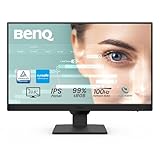
- 【100Hz Refresh Rate】Enjoy smooth and fluid visuals with our monitor's lightning-fast 100Hz refresh rate, reducing lag and motion blur for a more immersive viewing experience
- 【Professional 99% sRGB Color Gamut】Experience vivid and lifelike colors with our monitor's 99% sRGB color gamut, ensuring that images and videos are displayed with accurate and true-to-life colors.
- 【Versatil Connectivity with Easy Switch】Featuring an Input Hotkey for seamless device switching between work and play with a single click Connect to more. With HDMI * 2 and DisplayPort, you can connect to various devices with increased flexibility, making your environment even more convenient & efficient
- 【VESA Certified Media Sync】Ensures compatibility and performance between displays and devices like media players, set-top boxes, and game consoles. It aims to provide a seamless experience when using these devices together, ensuring that features like HDR, refresh rates, and resolution work optimally.
- 【BenQ Eye Care Tech-Low Blue Light Plus】Filters out the shorter, higher energy blue-violet radiation harmful to the eyes while maintaining vivid color quality, promoting eye health without compromising visual performance. This feature reduces eye strain during long periods of use
- Place the screen. Put it directly in front of you for primary work. Position it so windows and uncovered lamps do not reflect in the panel.
- Set the height. Adjust the stand or VESA arm until the top edge is at or just below eye level. Your gaze should fall slightly downward toward the center of the screen.
- Set the distance. Begin at roughly an arm’s length. Move the monitor farther away if you are leaning forward; enlarge text or increase system scaling instead of moving your face closer.
- Choose native resolution. In Windows, open Settings, System, Display and select the display’s recommended resolution and a comfortable Scale value. In macOS, open System Settings, Displays and choose a readable resolution or scaling option. The exact labels can vary by operating-system version.
- Adjust brightness. Lower or raise it until white areas do not look like a light source and dark text remains easy to distinguish. Recheck the setting when the room changes from daylight to evening lighting.
- Test color and eye-care presets. Try the monitor’s low-blue-light or visual-optimizer mode during text work, but keep the mode only if the resulting color and contrast remain comfortable. A warmer picture is a preference, not evidence of protection.
- Select a suitable refresh rate. Use the highest stable rate supported by the monitor and your computer if smooth scrolling helps you. Do not trade away readable resolution or reliable connection simply to obtain a larger number.
- Organize the desk. Keep reference documents near the screen, clean dust from the panel and avoid a bright light source directly behind your head that reflects toward the display.
- Build breaks into the day. Every 20 minutes, look at something about 20 feet away for about 20 seconds, following the 20-20-20 approach described by EyeWiki. Take longer breaks during prolonged sessions.
- Blink deliberately. Screen concentration reduces blinking. Make several complete blinks when you pause, and address dry-air or fan drafts if they worsen discomfort.
Dell 27 Plus 4K Monitor S2725QS: what the published specifications mean
Dell’s US product page identifies the S2725QS as a 27-inch 4K monitor and lists three relevant claims: ComfortView Plus, blue-light emissions at or below 35%, and a refresh rate up to 120Hz. Dell also identifies the model as four-star certified for eye comfort.
These details make the S2725QS a reasonable candidate for a high-resolution office shortlist when its stand, ports and price fit your desk. The 4K resolution can provide detailed text, provided your computer uses scaling that keeps letters large enough at your normal distance. The 120Hz ceiling may make pointer movement and scrolling feel smoother than a conventional office display, but smoothness is not the same as a measured reduction in eye strain.
Confirm the exact regional listing before purchase. Dell’s model names, included accessories, port selection and certification presentation can differ by market, and current availability and pricing are not fixed. Do not interpret the four-star designation as a universal medical grade; it belongs to Dell’s stated certification framework.
BenQ Eye-Care monitors: how to choose within the range
BenQ describes its Eye-Care technology through Flicker-Free, Low Blue Light and Visual Optimizer features. Because “Eye-Care” covers multiple models, the name alone does not tell you the panel resolution, physical size, stand adjustment, USB-C power delivery, refresh rate or color performance.
Use the range as a filter, then inspect a specific model’s current specification sheet. Confirm that the screen is sharp enough at your working distance, that the stand reaches the height you need and that its ports match your computer. Test the low-blue-light mode with the applications you use; if it makes text too yellow or reduces contrast, adjust it or use a normal mode at a comfortable brightness.
BenQ’s feature descriptions should be attributed to BenQ. The available evidence does not demonstrate that any Eye-Care setting prevents digital eye strain, treats dry eye or protects against eye disease.
Rank #4

- 🌈24" Eye Care VESA Monitor for Home, Game and Office
- ⚡Resolution: 1920*1080(FHD); Brightness: 250Nits; FreeSync Technology
- 🔌Interface: HDMI 1.4 & VGA Ports (HDMI Cable include); No speakers and headphone jack. Wired connectivity
- 🖥️Ergonomic Design: Easy Mount Stable Stand, -5°~22°Tilt , 178°V/H Viewing Angle, 75×75mm VESA Compatible; Dimension: W 21.3 inch * D 8.3 inch * H 15.6 inch
- 🧰Warranty: SANSUI 24 inch monitor offer a 30-day money-back and free replacement warranty from order date and lifetime technical support.
Choosing by work pattern instead of marketing label
For documents, coding and spreadsheets
Prioritize crisp text, enough physical area for your windows and a stand that places the top edge correctly. A 4K display can be useful when your computer and operating system handle scaling well. Test long paragraphs and dense spreadsheet cells, not only a colorful product image.
Do these 3 things before closing this tab:
1Clear out junk files and repair common Windows errors2Scan for outdated or missing drivers - takes under a minute3Repair Windows errors before they cause bigger problemsFor a laptop-based desk
USB-C can reduce cable clutter, but “USB-C” does not automatically mean charging. Verify video input and power-delivery wattage separately. If the monitor cannot supply enough power for your laptop, you will still need the laptop charger even though the picture works.
For mixed office and creative work
Compare color coverage and calibration controls with the comfort features. A low-blue-light preset that shifts color can be useful for reading but unsuitable when judging photographs or video. Save a neutral profile for color-critical tasks and a warmer profile for long text sessions if your workflow allows it.
For gaming plus work
Refresh rate, adaptive-sync support and response behavior may matter for games, while stand adjustment and readable scaling matter for work. Do not let a gaming specification substitute for a comfortable viewing position. The right model balances both uses and remains easy to dim in the evening.
Independent reader supportYour contribution helps us test, update, and keep practical guides available for everyone.How to spend a budget of about $500
The example question behind this guide asks for sharp text, reliable performance, USB-C ideally with power delivery and good ergonomics within $500. That is a sensible constraint, but it is not a representative survey and no fixed product ranking can be inferred from it.
Within that budget, allocate money in this order:
- Readable image: choose a resolution and size that let you use comfortable scaling at your normal distance.
- Positioning: favor a height-adjustable stand or budget for a compatible VESA arm if the supplied stand is fixed.
- Required connections: confirm USB-C video and power delivery before paying for a built-in hub or speakers.
- Reliable controls: make sure brightness, input selection and preset changes are accessible without awkward software dependencies.
- Extras: treat ambient sensors, eye-care presets and higher refresh rates as tie-breakers after the essentials are covered.
Prices, retailer stock and regional promotions change. Compare the current local listing for the exact model, not a similarly named screen from another market.
Best Value

- VIVID COLORS: Experience stunning colors across the entire display with the IPS panel. Colors remain bright and clear across the screen, even when you change angles. Tones and shades are represented consistently and beautifully with less color washing.
- SMOOTH PERFORMANCE: Stay in the action when playing games, watching videos, or working on creative projects. The 100Hz refresh rate reduces lag and motion blur so you don't miss a thing in fast-paced moments.¹
- MORE GAMING POWER: Gain a competitive edge with optimizable game settings. Color and image contrast can be instantly adjusted to see scenes more clearly, while Game Mode adjusts any game to fill your screen with every detail in view.
- EASY ON THE EYES: Protect your vision and stay comfortable, even during long sessions. Stay focused on your work with reduced blue light and screen flicker.²
- A MODERN AESTHETIC: Featuring a super-slim design with ultra-thin border bezels, this monitor enhances any setup with a sleek, modern look. Enjoy a lightweight and stylish addition to any environment.
When the monitor is probably not the main problem
Do not keep changing displays if discomfort persists regardless of brightness, distance and breaks. EyeWiki identifies uncorrected refractive error and dry-eye conditions as issues that may need assessment. Blurry vision, headaches, burning, gritty eyes or difficulty refocusing can have several causes.
- Text is blurry on every screen: check your prescription and operating-system scaling rather than assuming the panel is defective.
- Eyes feel dry or gritty: blink more often, reduce direct airflow and consider professional advice about dry-eye management.
- Headaches begin quickly: check glare, excessive brightness, posture and whether you are leaning toward small text.
- Symptoms continue after sensible adjustments: arrange an eye examination, especially if discomfort is new, worsening or accompanied by persistent visual changes.
Antiglare accessories can reduce reflections, but they are not a cure for asthenopia. Likewise, a monitor’s low-blue-light setting should not delay care for symptoms that need evaluation.
What blue-light evidence does—and does not—say
EyeWiki reports that a cited randomized controlled trial found no improvement in computer vision syndrome from blue-blocking lenses. It reproduces this American Academy of Ophthalmology statement: “There is no scientific evidence that the light coming from computer screens is damaging to the eyes. Because of this, the Academy does not recommend any special eye wear for computer use.”
Free tools Windows power users keep installed
One-click scans. No signup required.
That statement concerns special eyewear and should not be stretched into a claim that every screen setting feels identical. Some people prefer a warmer display at night, and reducing glare or excessive brightness can make a workstation more comfortable. Those are comfort choices, not proof that a monitor prevents damage or treats disease.
A practical buying checklist
- Can you read normal text without leaning forward at your actual desk distance?
- Does the stand place the top edge at or just below eye level, or can a VESA mount do so?
- Can you adjust brightness easily for both daylight and evening conditions?
- Will the panel avoid reflections from your windows and lamps?
- Is the stated resolution appropriate for your computer’s scaling behavior?
- If you need USB-C, does the exact port support video and the power-delivery wattage you require?
- Are flicker-free, low-blue-light or certification statements clearly identified as manufacturer features?
- Have you checked the exact regional model, warranty and current price?
- Will the monitor support your color, refresh-rate or gaming requirements without sacrificing readability?
- Have you planned breaks, blinking and an eye examination if symptoms persist?
Bottom line
Choose the monitor that lets you read clearly, sit at a relaxed distance, position the top edge correctly and control brightness without fighting the room. The Dell S2725QS is a plausible high-resolution office candidate based on Dell’s published ComfortView Plus, up-to-35% blue-light-emission, up-to-120Hz and four-star certification claims; a specific BenQ Eye-Care model may suit buyers who value its listed Flicker-Free, Low Blue Light and Visual Optimizer features. Neither is an established medical solution, and neither replaces sensible ergonomics, regular breaks or professional care for persistent symptoms.
Quick Recap
Product prices and availability are accurate as of the date/time indicated and are subject to change. Any price and availability information displayed on Amazon at the time of purchase will apply.

