Start with the reversible settings that affect the most: connect the charger, select Performance mode on a supported Legion when maximum game performance matters, verify the panel’s refresh rate, enable Windows Game Mode, update the graphics driver, and remove unnecessary startup load. Only then lower demanding in-game effects if a particular title still struggles.
These controls are model-dependent. Legion and LOQ laptops can use different mode names, hotkeys, Lenovo Vantage features, BIOS options and display capabilities, so confirm your exact model in its current Lenovo guide before expecting a menu or shortcut to exist.
As an Amazon Associate I earn from qualifying purchases.
Check your model and power state first
Write down the exact model number and Windows version before changing anything. Lenovo’s Legion guides describe the operating-mode and display controls for specific generations, while Lenovo says Vantage features vary by computer model. The Legion 5/5i user guide and the LOQ user guide are useful examples, not a promise that every Lenovo gaming laptop has the same interface.
Recommended Free Tools
- Connect the original or correctly rated AC adapter before testing performance settings.
- Note whether your machine is a Legion, LOQ or another Lenovo gaming line, and record the generation and GPU.
- Keep a simple baseline: the game, resolution, refresh rate, selected mode, and whether the adapter is connected.
Changing one item at a time makes it clear which setting helped and leaves an easy path back if fan noise, heat or battery use becomes unacceptable.
#1 Best Overall

- EXPLORE YOUR PASSION, ELEVATE YOUR GAME – The Lenovo Legion 5i empowers university gamers to explore their latest passions. With a thinner, lighter design and a Lenovo PureSight OLED display, it excels in gaming, streaming, and coursework on the go.
- GAME WITHOUT COMPROMISE – The Intel Core i7-14700HX processor features newly optimized hybrid architecture and industry leading technology that enables you to go beyond gaming and creation. With Intel, you can do it all.
- GAME CHANGER – Powered by NVIDIA Blackwell, the GeForce RTX 5070 graphics bring game-changing capabilities to gamers and creators. Equipped with incredible AI horsepower, prepare to unleash your creativity and experience next-level graphics fidelity.
- 3-MONTHS PC GAME PASS – Play hundreds of high-quality PC games with your new Lenovo Legion device and 3 months of PC Game Pass, including EA Play. With new games added all the time, there’s always something new to play.
- EXPERIENCE INTELLIGENT DESIGN –Lenovo AI Engine+ enhances FPS in today’s top AAA games while also reducing render times in today's premier creation apps. Easily managed through Legion Space, you can enjoy AI-tuned performance effortlessly.
1. Choose the operating mode before launching a demanding game
On supported Legion models, Lenovo’s modes change the laptop’s performance limits, power consumption and heat-sink fan speed. Lenovo summarizes the trade-off this way: “The maximum attainable performance, power consumption, and speed limit for the heat sink fan vary between the operation modes.” Performance is therefore not a free frame-rate switch; it spends more power and usually produces more heat and noise.
What each mode is for
| Mode | Best fit | Trade-off |
|---|---|---|
| Performance | Demanding games or other heavy work while connected to AC power | Higher power and fan activity; use it only when the extra noise and heat are acceptable |
| Balance | Mixed work, moderate gaming and everyday use | A compromise between responsiveness, acoustics and power draw |
| Quiet | Battery operation, light work or a low-noise priority | Lower performance limits in exchange for less fan activity and reduced consumption |
How to set it
- Plug in the AC adapter and close any game that is currently running.
- Open Lenovo Vantage if your model provides it, or use the model-specific control documented in Lenovo’s guide.
- Select Performance, Balance or Quiet according to the table, then start the game and check whether the result fits your noise and temperature tolerance.
- Return to Balance or Quiet for browsing, office work or battery use; leaving Performance enabled all day is unnecessary when the workload is light.
Some Lenovo laptops use different labels or omit one of these choices. Do not install an unofficial utility or assume a Legion shortcut works on an LOQ; use the controls listed for your machine.
2. Set the internal display to a useful refresh rate
A high-refresh panel can make motion look smoother, but it helps only when the display supports that rate and the game produces frames quickly enough to use it. A lower rate can reduce battery consumption. Some panels expose no manual choice, while supported dual-rate models may provide a Lenovo-specific shortcut.
Do these 3 things before closing this tab:
1Clear out junk files and repair common Windows errors2Scan for outdated or missing drivers - takes under a minute3Repair Windows errors before they cause bigger problemsWindows path
- Open Settings.
- Choose System, then Display.
- Open Advanced display.
- Select the laptop’s internal display and choose an available refresh rate that suits the game and panel.
| Priority | Refresh-rate choice | What to expect |
|---|---|---|
| Competitive or motion clarity | Use the highest rate the panel offers, provided the game can deliver useful frame rates | Smoother perceived movement, with potentially higher power use |
| General gaming | Choose a supported rate that matches the game’s typical output | A practical balance between smoothness and efficiency |
| Battery life | Use a lower available rate when smoothness is less important | Lower display demand, though motion may look less fluid |
If Advanced display shows only one rate, that is normally a panel or firmware limitation rather than a missing Windows setting. If your guide documents a dual-rate shortcut, follow that guide for the exact key combination. Lenovo’s Legion 5i (16-inch, 10) guide and the Legion 5 guide contain model-specific display information.
Rank #2

- STEP UP TO TRUE GAMING – The Lenovo Legion LOQ is your first step into gaming, unlocking a new caliber of entertainment. Enjoy seamless AI experiences, high resolution and frame rates, with vacuum-sealed thermals to fast-track your performance.
- GAME WITHOUT COMPROMISE – Be everything you want to be, in game and out with optimized performance and new AI-enhanced features. Play harder and work smarter with the Intel Core i7-13650HX processor.
- STAY ICY, GAME SPICY – Lenovo LOQ’s Hyperchamber Cooling keeps your system from overheating with turbo fans and copper heat pipes. AI Engine+ ensures your laptop stays consistently cool while you bring the heat.
- KEYS THAT SLAY EVERY DAY – The Lenovo LOQ keyboard is built to vibe with a clean white backlight, full layout, and soft-landing switches for smooth, satisfying presses. Game, chat, flex—your way.
- GLOW UP YOUR VISUALS – The FHD IPS display is perfect for gaming and watching your favorite streams. NVIDIA G-Sync technology eliminates screen tearing, stuttering, and input lag, ensuring silky-smooth frame rates.
3. Turn on Windows Game Mode and update the graphics driver
Lenovo’s Windows 10 and 11 gaming guidance recommends Game Mode, current graphics drivers and a best-performance power setting when battery life is not the priority. The current guidance is available in Lenovo’s gaming-experience support article, last modified January 21, 2026.
Enable Game Mode
- Open Settings and select Gaming.
- Open Game Mode.
- Turn Game Mode on, then restart the game.
Windows labels can vary slightly between Windows 10 and Windows 11 builds. If the page is absent, search Settings for “Game Mode” rather than changing unrelated graphics options.
Update the driver for the exact hardware
Use Lenovo Support for your precise model and install the graphics package listed for that machine and Windows edition. Gaming laptops can combine integrated and discrete graphics, so the correct package depends on the hardware and current support page. Reboot after installation and retest the same game and settings. Avoid treating a generic driver package as automatically correct for every Lenovo configuration.
4. Remove unnecessary background load
Startup programs and background utilities can consume memory, processor time or disk activity before a game even opens. Lenovo recommends removing unused programs and disabling unnecessary startup apps as an early troubleshooting step.
Rank #3
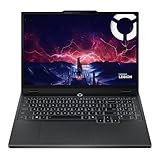
- AMD Ryzen 7 260 Processor (8C / 16T, 3.8 / 5.1GHz, 8MB L2 / 16MB L3)
- NVIDIA GeForce RTX 5060 8GB GDDR7, Boost Clock 2497MHz, TGP 115W, 572 AI TOPS
- 15.3" WUXGA (1920x1200) 16:10, 165Hz, 300-nits, 100% sRGB, Dolby Vision, Anti-glare, IPS Display, G-SYNC
- 16GB (1x16GB) SO-DIMM DDR5-5600 RAM; 512GB M.2 2242 PCIe 4.0x4 NVMe SSD
- Backlit Keyboard, Wi-Fi 6, 802.11ax 2x2, Bluetooth 5.2, Windows 11 Home
- Press Ctrl + Shift + Esc to open Task Manager.
- Select Startup apps.
- Disable only programs you recognize and do not need to launch with Windows.
- Leave security software, touchpad or hotkey components, audio controls and Lenovo hardware services enabled unless your model’s documentation says otherwise.
- Restart Windows and test the game again.
Do not end random processes while playing. If a program is unfamiliar, leave it enabled until you can identify it; an aggressive cleanup can remove a feature you need for networking, input or laptop controls.
5. Adjust in-game graphics only when performance is still inadequate
After the operating mode, refresh rate, Game Mode, drivers and background load are set, tune the game itself. Lenovo specifically suggests testing lower shadows and lighting, ambient occlusion, reflections, ray tracing and anti-aliasing. There is no universal Lenovo FPS gain for any one setting, so change one option at a time and keep a note of the result.
| Setting to test | Why lower it | How to test safely |
|---|---|---|
| Shadows | Can add substantial scene-rendering work, especially in complex environments | Drop one quality level and revisit the same busy scene |
| Lighting | Dynamic lighting effects can increase GPU demand | Lower lighting quality without changing resolution first |
| Ambient occlusion | Adds contact shading that costs processing time | Reduce or disable it if stutter appears in detailed areas |
| Reflections | Reflective surfaces can require additional scene calculations | Test a lower reflection setting near water, glass or vehicles |
| Ray tracing | Ray-traced effects are demanding by design | Reduce or disable the feature before changing every other option |
| Anti-aliasing | Higher techniques and levels can increase rendering cost | Try the next lower level and inspect edges for an acceptable compromise |
Keep resolution and the refresh rate fixed while testing these options; otherwise you will not know which change made the difference. If a lower setting solves the problem, stop there rather than moving every option to Low and sacrificing image quality unnecessarily.
6. Understand battery drain while plugged in
A battery that declines slowly during a demanding plugged-in session is documented on some specific machines and is not a universal Lenovo fault. Lenovo’s battery article, updated March 2, 2026, applies to listed Legion and LOQ Gen 9-and-newer configurations with RTX 4050 or RTX 4060 graphics. Under high power demand, Performance mode or a tuned Custom mode can draw some energy from the battery even while the AC adapter is connected.
Rank #4

- Intel Core i9 14th Gen 14900HX 1.6GHz Processor, NVIDIA GeForce RTX 5070 8GB GDDR7, 32GB DDR5-5600 RAM
- 1TB PCIe Gen4 x4 NVMe M.2 SSD
- 15.1" WQXGA OLED Glossy Display
- Gigabit LAN, 2x2 WiFi 7 (802.11be), Bluetooth 5.4
- 4.19 lbs. (1.90 kg),Windows 11 Home
First verify that your model, generation, GPU and selected mode match those conditions. If they do, Lenovo documents a BIOS battery-protection option that prioritizes charge retention; enabling it can involve a performance trade-off. The menu name and location are model-specific, so use the instructions for your exact BIOS rather than guessing. The applicable explanation is in Lenovo’s battery-drain support article.
- If charge retention matters more than peak performance, use Balance or Quiet and apply the documented battery-protection setting if your model supports it.
- If uninterrupted performance matters more, keep the adapter connected and accept that a supported high-demand configuration may temporarily use battery charge.
- If the battery falls rapidly, the adapter disconnects, or the behavior occurs outside the documented model and mode conditions, stop treating it as normal and check the charger, BIOS and Lenovo support information for your machine.
Recommended combinations by situation
| Situation | Mode | Display and Windows settings | Game settings |
|---|---|---|---|
| Maximum performance while plugged in | Performance, if offered | Use a supported high refresh rate; Game Mode on; current driver | Keep quality high and reduce demanding effects only if performance is inadequate |
| Gaming with less noise | Balance, or Quiet for a lighter title | Choose a refresh rate the game can sustain | Lower shadows, lighting or reflections before changing everything else |
| Gaming on battery | Quiet or Balance, depending on the model | Consider a lower refresh rate | Use conservative quality settings to limit power demand |
| Diagnosing stutter | Start in Balance for a controlled baseline, then test Performance if plugged in | Keep refresh rate fixed during comparisons | Change one listed effect at a time and retest the same scene |
Troubleshoot by symptom
FPS remains poor
- Confirm the adapter is connected and the intended operating mode is active.
- Check Advanced display to ensure Windows is not using an unexpectedly low available rate.
- Verify Game Mode and the graphics driver, then close unnecessary startup or background programs.
- Lower one demanding in-game effect and test again. If the change does nothing, restore it and try the next effect.
The laptop is louder or hotter than expected
Switch from Performance to Balance or Quiet and retest. If the game then loses too much responsiveness, keep Balance and reduce the most demanding visual effect rather than leaving every option unchanged.
The expected mode or refresh menu is missing
That can be normal for a different panel, generation or product line. Check the exact model guide and Vantage documentation; Lenovo explicitly notes that available features vary by computer model.
What’s actually slowing this PC down?
Pick the symptom - the matching free tool is one click away.
The battery declines while connected
Match the machine against Lenovo’s listed Legion and LOQ Gen 9-and-newer, RTX 4050/4060 conditions. If it matches, decide between charge retention and peak performance using the documented BIOS option. If it does not match or the decline is severe, investigate the adapter, BIOS and model-specific support page instead of assuming the behavior is expected.
A reliable final checklist
- Exact model and Windows version identified.
- AC adapter connected for performance testing.
- Operating mode chosen for the current noise, heat and performance priority.
- Supported refresh rate selected in Settings → System → Display → Advanced display.
- Windows Game Mode enabled.
- Graphics driver updated from the exact Lenovo support page.
- Unnecessary startup programs disabled without removing required hardware services.
- In-game effects adjusted individually only when needed.
- Battery behavior checked against the model-specific Lenovo guidance.
For most owners, that sequence delivers the useful changes without risky overclocking or indiscriminate quality cuts. The best setting is the one that matches the workload: Performance for plugged-in heavy gaming when noise is acceptable, Balance for compromise, and Quiet when battery life or acoustics come first.
Quick Recap
Product prices and availability are accurate as of the date/time indicated and are subject to change. Any price and availability information displayed on Amazon at the time of purchase will apply.

