Recommended Free Tools
It depends on the model. The original Google Wifi and first-generation Nest Wifi use Wi‑Fi 5 (802.11ac), not Wi‑Fi 6. Google’s current Nest Wifi Pro is Wi‑Fi 6E, which adds a 6 GHz band to Wi‑Fi 6. That means Nest Wifi Pro can use 6 GHz with compatible devices, while older Google systems remain Wi‑Fi 5 mesh products.
The short answer by model
“Google router” describes several generations of hardware, so there is no single wireless-generation answer. Use the model name rather than the Google logo to determine support:
As an Amazon Associate I earn from qualifying purchases.
| System | Wireless standard | Radio bands | Ethernet | Can join a Nest Wifi Pro mesh? |
|---|---|---|---|---|
| Google Wifi | Wi‑Fi 5 (802.11a/b/g/n/ac) | 2.4 GHz and 5 GHz, simultaneous dual-band | Not stated in the cited current specification | No |
| Nest Wifi (prior generation) | Wi‑Fi 5 generation | 2.4 GHz and 5 GHz | Not stated in the cited current specification | No |
| Nest Wifi Pro (G6ZUC) | Wi‑Fi 6E, AXE5400 | 2.4 GHz, 5 GHz and 6 GHz, tri-band | Two 1 Gbps Ethernet ports per router | No; it requires a separate Pro mesh |
The generation labels are important when buying replacement points or planning an upgrade. A Google Wifi point is not a Wi‑Fi 6 device simply because it can form a modern app-managed mesh, and a Nest Wifi Pro is not merely a faster version of the older Nest Wifi hardware: Google treats it as a separate Wi‑Fi 6E platform.
Crashes, No Sound, or Screen Glitches?
Random freezes, missing sound and display glitches usually trace back to one bad driver. Find and replace yours safely.Free scan · under a minutePC Slower Than It Used to Be?
A free scan shows the junk files, broken settings and background clutter dragging Windows down - then fixes them in one click.Free scan · Windows 10 & 11Wi‑Fi 6 versus Wi‑Fi 6E in practical terms
Wi‑Fi 6 is the 802.11ax generation. Wi‑Fi 6E extends that technology into the 6 GHz spectrum. Google describes 6E as Wi‑Fi 6 with access to 6 GHz, rather than as an entirely separate networking family.
#1 Best Overall

- Nest Wifi Pro is up to 2x faster than Wi-Fi 6, so you get super fast speeds and a reliable connection for your entire home[1]
- Three Wi-Fi routers provide up to 6600 square feet of fast, reliable Wi-Fi[2]; and you can customize your setup to create a mesh Wi-Fi system for the coverage you need
- Nest Wifi Pro uses the latest, most advanced Wi-Fi 6E technology[3], so it isn’t compatible with previous generations of Google Wifi or Nest Wifi
- Nest Wifi Pro automatically adjusts your Wi-Fi network’s performance and activity; it prioritizes video calls and helps websites load quickly
- It has built-in technology to make sure your connection is strong and consistent, even at the edge of your Wi-Fi network’s coverage[2]
What the extra 6 GHz band changes
The 6 GHz band gives compatible devices another radio path that can be less congested than the older 2.4 GHz and 5 GHz bands. It is useful for newer phones, laptops, tablets, televisions and other clients that explicitly support Wi‑Fi 6E. A device that supports only Wi‑Fi 5 or ordinary Wi‑Fi 6 cannot connect to 6 GHz; it continues to use 2.4 GHz or 5 GHz through the Pro router.
Adding a 6 GHz radio does not automatically increase the speed of every device in the home. The client must support Wi‑Fi 6E, the router and client need suitable signal quality, and the internet connection or local server must have enough capacity to make a faster wireless link noticeable.
Google Wifi: a Wi‑Fi 5 system
Google’s specification for Google Wifi lists simultaneous dual-band 2.4 GHz and 5 GHz radios using IEEE 802.11a/b/g/n/ac. The 802.11ac designation is commonly called Wi‑Fi 5. There is no Wi‑Fi 6 or 6 GHz radio in this system.
The Tool Desk
Outbyte Driver Updater FREEScan for outdated or missing drivers - takes under a minuteDriver Scan →Outbyte PC Repair FREEClear out junk files and repair common Windows errorsFree Scan →Coverage and capacity figures
Google states that one Google Wifi point covers up to 1,500 square feet. It also states that a point can support up to 100 connected devices under a test condition of 1 Mbps per device. Those are manufacturer figures, not guarantees of the same throughput or range in every house. Walls, floors, neighboring networks, point placement, client antennas and the internet plan all affect the result.
When Google Wifi is still sufficient
- Your devices are mostly Wi‑Fi 5 or older and your current coverage is reliable.
- Your broadband service is slower than the practical throughput your existing 5 GHz network already delivers.
- You want to keep an existing Google Wifi mesh without replacing every point at once.
Keeping Google Wifi means accepting the limits of Wi‑Fi 5 and the absence of 6 GHz. It can still provide stable whole-home coverage, but it cannot give a Wi‑Fi 6E client a 6 GHz connection.
Rank #2

- Nest Wifi Pro is up to 2x faster than Wi-Fi 6, so you get super fast speeds and a reliable connection for your entire home[1]
- One Wi-Fi router provides up to 2200 square feet of fast, reliable WiFi[2]; and you can customize your setup to create a mesh Wi-Fi system for the coverage you need
- Nest Wifi Pro uses the latest, most advanced Wi-Fi 6E technology[3], so it isn’t compatible with previous generations of Google Wifi or Nest Wifi
- Nest Wifi Pro automatically adjusts your Wi-Fi network’s performance and activity; it prioritizes video calls and helps websites load quickly
- It has built-in technology to make sure your connection is strong and consistent, even at the edge of your Wi-Fi network’s coverage[2]
Original Nest Wifi: also not Wi‑Fi 6
The prior-generation Nest Wifi system is grouped with Google Wifi in Google’s compatibility documentation and belongs to the Wi‑Fi 5 generation. It uses the older 2.4 GHz and 5 GHz approach rather than Wi‑Fi 6E’s three-band design.
Because it is a Wi‑Fi 5 system, an older Nest Wifi router or point cannot be upgraded through software into Wi‑Fi 6. Firmware can improve security or operation, but it cannot add a new 6 GHz radio to hardware that does not contain one.
Nest Wifi Pro: Google’s Wi‑Fi 6E router
Nest Wifi Pro, model G6ZUC, is Google’s Wi‑Fi 6E option. The Google Store specification identifies it as a tri-band AXE5400 system with 2.4 GHz, 5 GHz and 6 GHz radios.
Features that distinguish Pro
- Wi‑Fi 6E: access to 6 GHz for Wi‑Fi 6E-capable clients.
- AXE5400 class: a manufacturer classification for the combined tri-band wireless capability, not a promise that one device will receive 5,400 Mbps in normal use.
- WPA3: support for the newer Wi‑Fi security protocol, subject to client compatibility and network settings.
- Matter support: a smart-home interoperability feature.
- Thread border router: it can connect a Thread-based smart-home network to the home IP network.
- Two 1 Gbps Ethernet ports per router: useful for a wired modem connection, a switch, a wired client or Ethernet backhaul, although each port is limited to 1 Gbps.
These features make Nest Wifi Pro a hardware upgrade rather than a software refresh for an older Google mesh. The 6 GHz benefit is realized only by clients that support Wi‑Fi 6E; older devices remain compatible on the other bands.
Can you mix Nest Wifi Pro with Google Wifi or Nest Wifi?
No. Google’s support documentation states: “Nest Wifi Pro (Wi‑Fi 6E) can’t be combined with Nest Wifi routers or points or Google Wifi points (Wi‑Fi 5) in a mesh network.” The generations use different mesh platforms, so an existing Google Wifi or Nest Wifi point cannot serve as a Pro mesh satellite.
Rank #3

- Nest Wifi Pro is up to 2x faster than Wi-Fi 6, so you get super fast speeds and a reliable connection for your entire home[1]
- Three Wi-Fi router provides up to 6600 square feet of fast, reliable WiFi[2]; and you can customize your setup to create a mesh Wi-Fi system for the coverage you need
- Nest Wifi Pro uses the latest, most advanced Wi-Fi 6E technology[3], so it isn’t compatible with previous generations of Google Wifi or Nest Wifi
- Nest Wifi Pro automatically adjusts your Wi-Fi network’s performance and activity; it prioritizes video calls and helps websites load quickly
- It has built-in technology to make sure your connection is strong and consistent, even at the edge of your Wi-Fi network’s coverage[2]
What a migration requires
Moving to Pro means planning a separate Pro mesh. You can leave the older system operating as a different network during a transition, but it will not become an integrated Pro point. Running two nearby networks can create confusing network names and roaming behavior, so use distinct names temporarily and retire or repurpose the old system once the Pro coverage is ready.
Do not buy one Nest Wifi Pro unit expecting to extend it with inexpensive Google Wifi points. The points may still function independently, but they will not provide the single managed mesh Google documents for Pro.
Client compatibility: which devices can use 6 GHz?
A Wi‑Fi 6E router does not retrofit 6 GHz into a phone or laptop. Check the wireless specification of each important client. The device must explicitly list Wi‑Fi 6E or 6 GHz support; “Wi‑Fi 6” alone does not necessarily mean 6 GHz.
Devices that can connect to Nest Wifi Pro
- Wi‑Fi 6E phones, laptops and tablets can use the 6 GHz network when they are within suitable range.
- Wi‑Fi 6-only devices can use 2.4 GHz or 5 GHz but not 6 GHz.
- Wi‑Fi 5, Wi‑Fi 4 and older 802.11 devices can continue using compatible 2.4 GHz or 5 GHz connections.
- Smart-home products that support only 2.4 GHz will remain on 2.4 GHz; this is normal and does not indicate a router fault.
Because 6 GHz generally has shorter reach and weaker wall penetration than 2.4 GHz, a 6E client may move to 5 GHz when it is farther from the router. That fallback is expected behavior, not evidence that Pro has stopped supporting 6 GHz.
Independent reader supportYour contribution helps us test, update, and keep practical guides available for everyone.Should you upgrade from Google Wifi or Nest Wifi?
The right choice depends on the problem you are trying to solve, not just the Wi‑Fi number.
Quick wins for a faster PC:
Fix the driver behind crashes, sound loss and screen glitchesFind Drivers →Clear out junk files and repair common Windows errorsFree Scan →Rank #4
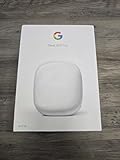
- Nest Wifi Pro is up to 2x faster than Wi-Fi 6, so you get super fast speeds and a reliable connection for your entire home[1]
- One Wi-Fi router provides up to 2200 square feet of fast, reliable WiFi[2]; and you can customize your setup to create a mesh Wi-Fi system for the coverage you need
- Nest Wifi Pro uses the latest, most advanced Wi-Fi 6E technology[3], so it isn’t compatible with previous generations of Google Wifi or Nest Wifi
- Nest Wifi Pro automatically adjusts your Wi-Fi network’s performance and activity; it prioritizes video calls and helps websites load quickly
- It has built-in technology to make sure your connection is strong and consistent, even at the edge of your Wi-Fi network’s coverage[2]
| Your situation | Most sensible approach | Why |
|---|---|---|
| Coverage is stable, devices are older, and broadband speeds are modest | Keep the existing system | A Wi‑Fi 6E radio would provide little benefit to non-6E clients. |
| You own several Wi‑Fi 6E devices and want a 6 GHz connection | Move to Nest Wifi Pro | Pro is the Google model that provides 6 GHz. |
| The current mesh is congested in a dense apartment or busy neighborhood | Consider Pro, then verify client support and placement | 6 GHz may offer a cleaner band, but only compatible clients can use it. |
| You need faster wired links than 1 Gbps | Evaluate another platform or network design | Nest Wifi Pro’s specified Ethernet ports are 1 Gbps each. |
| You want to add one new point to an existing Google Wifi mesh | Use a compatible Google Wifi point or replace the mesh as a whole | Pro cannot be mixed into the older mesh. |
Purchase cost and stock vary by region and date; the cited specifications do not establish a universal current price. Compare the price of a complete Pro replacement, not just one router, if your home needs multiple points.
How to identify which Google system you own
- Open the Google Home app and select the Wi‑Fi device or home network.
- Open the device details or settings page and note whether it is labeled Google Wifi, Nest Wifi or Nest Wifi Pro.
- Check the hardware label for model information if the app name is unclear. Nest Wifi Pro is model G6ZUC.
- Look at the radio description in the device specifications. A 6 GHz or Wi‑Fi 6E entry identifies Pro-class hardware; 802.11ac identifies the Wi‑Fi 5 generation.
Do not infer the generation from the age of the installation, the number of connected devices or the appearance of the access point. Model identification is more reliable than those clues.
Planning a Nest Wifi Pro installation
- Inventory clients. List the phones, computers and other devices for which 6 GHz matters, and confirm that each supports Wi‑Fi 6E.
- Map the home. Place the primary Pro router near the modem and in an open, elevated location. Plan additional Pro units where they can receive a strong wireless link or where Ethernet is available.
- Decide on wired connections. Each Pro router has two 1 Gbps Ethernet ports, allowing a wired device, switch or backhaul connection within that limit.
- Build the Pro mesh separately. Do not attempt to enroll Google Wifi or older Nest Wifi points as Pro satellites.
- Move clients deliberately. Reuse the old network name only after the Pro system is stable, or keep a temporary distinct name to troubleshoot device-by-device.
- Test from real locations. Check rooms where people work or stream, and test both 6E clients and older 2.4/5 GHz devices. A 6 GHz connection in the same room does not guarantee the same result through several walls.
Interpreting coverage, speed and device-count claims
“Up to 1,500 square feet” for a Google Wifi point and “up to 100 devices at 1 Mbps per device” describe Google’s stated test conditions. They are useful for comparing the manufacturer’s intended scale, but they are not independent benchmarks or guaranteed service levels.
Actual performance depends on the internet service entering the home, wireless backhaul between mesh points, building materials, neighboring networks, channel availability, client antenna design, distance and simultaneous traffic. A faster wireless standard cannot overcome a slow broadband plan, poor point placement or a weak mesh link.
Free tools Windows power users keep installed
One-click scans. No signup required.
Bottom line for Google router buyers
Google Wifi and the original Nest Wifi are Wi‑Fi 5. Nest Wifi Pro is Google’s Wi‑Fi 6E model, with 2.4 GHz, 5 GHz and 6 GHz radios, WPA3, Matter, Thread border-router capability and two 1 Gbps Ethernet ports per router. Upgrade when you have Wi‑Fi 6E clients or a specific congestion and capacity need; otherwise, a well-placed Wi‑Fi 5 mesh may remain adequate. If you do upgrade, replace the mesh with Pro units rather than mixing Pro hardware with Google Wifi or older Nest Wifi points.
Quick Recap
Product prices and availability are accurate as of the date/time indicated and are subject to change. Any price and availability information displayed on Amazon at the time of purchase will apply.

