What’s actually slowing this PC down?
Pick the symptom - the matching free tool is one click away.
For most first-time pilots, start with a ready-to-fly (RTF) whoop that includes goggles and a radio. The BetaFPV Cetus X Kit is the simplest supported path in this guide for learning stabilized and manual flight in a small aircraft. EMAX’s Tinyhawk III Plus is another indoor-focused progression option, while the Tinyhawk III Plus Freestyle is an outdoor step-up for pilots who already have some flight experience. DJI Avata 2 is the integrated, guarded cinewhoop choice for buyers who value a polished system and can accept higher cost and less modularity. A fifth option below is a clearly labeled modular setup path, not an independently ranked fifth aircraft.
There is no defensible universal “best” FPV drone. Your decision depends on whether the box contains the aircraft, goggles, transmitter, batteries and charger; whether you want indoor or outdoor space; how quickly you intend to move from self-leveling to Rate (acro) mode; and which video ecosystem you may keep using after your first crashes.
As an Amazon Associate I earn from qualifying purchases.
What FPV means—and what you are actually buying
FPV means first-person view: you fly while watching a live camera feed from the aircraft through goggles or, on some systems, a screen. It is a system rather than a single feature. DJI’s beginner guide identifies the camera, air unit, goggles and RC controller as core parts of an FPV setup (DJI’s FPV guide).
That distinction matters when a listing says “FPV capable.” A bare aircraft may require a compatible radio, goggles, battery and charger. An RTF bundle is easier for a new pilot because the components are intended to work together. A bind-and-fly or modular aircraft can be cheaper or more capable if you already own compatible equipment, but compatibility mistakes can leave you with an aircraft you cannot arm or a video system you cannot see.
#1 Best Overall

- Beginner-Friendly & Safe Flight Design - Perfect for first-time drone pilots aged 14 and above, this quadcopter features one-touch takeoff/landing, stable auto altitude hold, and headless mode to remove the stress of direction control. Fully enclosed propeller guards protect both users and propellers, ensuring safe flight indoors and outdoors.
- HD FPV Camera with 90° Electric Tilt Lens - The built-in HD FPV camera streams smooth real-time first-person view to your smartphone. You can adjust the 90° electric tilt lens remotely mid-flight to switch between wide landscape and overhead angles, capturing clear aerial footage with ease.
- 2 Batteries for 25 Minutes Total Flight Time - Get longer flying fun with 2 rechargeable batteries (1000mAh for 10 mins + 1500mAh for 15 mins). The quick-swap design lets you change batteries in seconds, so you can keep flying without long charging breaks.
- 3D Flips & 3 Adjustable Speed Modes - Pull off impressive 3D flip stunts with just one button for extra fun. Choose from 3 speed settings — low for beginner practice, medium for casual flight, and high for thrilling racing — to match your skill level as you improve.
- All-In-One Kit & Ready to Fly Out of the Box - The package includes every accessory you need to start flying immediately, plus a portable carrying case for easy transport. It comes with spare propellers, propeller guards, a phone holder, charging cable and full instruction guides for hassle-free setup.
FPV products in this guide fall into three practical groups:
- Small whoops: lightweight aircraft with ducts or guards around the propellers, intended mainly for indoor flying or calm outdoor practice.
- Outdoor freestyle quads: faster, more exposed aircraft designed for open space and acrobatic flight. They demand more room and better throttle control.
- Guarded cinewhoops: camera-oriented aircraft with enclosed propellers and a stabilized, integrated experience. They are not the same thing as a conventional modular racing quad.
Propeller guards reduce the chance of a direct propeller strike and help protect the propellers from some contacts. They do not make an aircraft safe to fly near people, animals, traffic or property. Treat every powered drone as a moving aircraft and follow local rules.
The five beginner starting paths at a glance
| Entry | Best fit | What the evidence supports | Main limitation |
|---|---|---|---|
| BetaFPV Cetus X Kit | A first complete analog whoop kit | Specialist guide describes an RTF package with drone, goggles, radio and Normal/Sport/Manual modes (Drone Gear HQ guide). | Current price and exact bundle contents can change; verify the listing before purchase. |
| EMAX Tinyhawk III Plus | Indoor practice with a deliberate mode progression | EMAX describes three modes progressing from basic gyro-level flight to Rate mode (EMAX beginner guide). | Confirm whether the specific listing is RTF and what batteries, goggles and charger are included. |
| EMAX Tinyhawk III Plus Freestyle | Outdoor-oriented pilots with some prior experience | EMAX presents a full starter bundle and calls it its most difficult beginner drone, better for people with previous outdoor flight experience (EMAX beginner guide). | It is not the gentlest first flight; open space and crash-recovery skills are more important. |
| DJI Avata 2 Fly More Combo | A higher-budget, integrated guarded cinewhoop | DJI lists single- and three-battery combo configurations in its FPV guide (DJI FPV guide). | It is a relatively costly, integrated option rather than a conventional modular racing build. Verify the current bundle and price. |
| Modular analog whoop setup (setup path, not a model) | Owners of compatible goggles and radios, or learners who want to build a repairable system | An aircraft, camera, video receiver/goggles, radio link, batteries and charger can be selected separately; the FPV system components must be compatible. | There is no single-box simplicity. You must verify connectors, radio protocol, video frequency and battery requirements before ordering. |
The sources establish four specific product variants, not five independently tested winners. The fifth entry is therefore presented honestly as a setup path instead of inventing a ranking or unsupported specification.
1. BetaFPV Cetus X Kit: the simplest complete starting point
The Cetus X Kit is the most straightforward choice when you do not own FPV equipment. The specialist comparison describes it as a ready-to-fly analog whoop that includes the drone, goggles and radio, with Normal, Sport and Manual modes (source comparison). Treat that as a description of the reviewed kit, not a guarantee that every current retailer bundle is identical.
Why it suits a first flight
- One coordinated package: the aircraft, transmitter and goggles are intended to be used together, reducing the most common first-purchase compatibility problem.
- Mode progression: Normal is the gentlest place to learn orientation and throttle; Sport adds a more responsive feel; Manual removes self-leveling and requires deliberate attitude control.
- Whoop format: enclosed propellers are practical around obstacles and for indoor practice, although they do not remove the need for an empty, permitted area.
- Analog video: analog systems generally make the aircraft and replacement components part of a broader, interchangeable hobby ecosystem, but the image is not equivalent to a modern digital feed.
What to verify before paying
Prices, battery counts and accessory bundles are volatile. Check the exact listing for the number and type of batteries, charger, spare propellers, carrying case and whether the goggles and radio are included. Also check replacement-part availability for the exact Cetus X revision. A compatible-looking propeller or battery can still be wrong in size, connector or voltage.
Rank #2

- Lightweight & Portable Design - Weighing just 151g [9] and C0 certified, this compact drone features full-coverage propeller guards for safer, worry-free transport and flight.
- Palm Takeoff & Landing [1], Gesture Control [2] - Enjoy easy palm takeoff and landing, plus intuitive gesture controls for hands-free operation and seamless flying experiences.
- Smooth & Reliable Tracking - ActiveTrack [3] keeps your subject in focus, while Apple Watch lets you view live feed, check flight status, or use voice control to adjust tracking [17].
- Easy Moment Capture With SelfieShot - Snap memorable moments easily with SelfieShot, allowing quick and convenient selfies anytime with just a simple tap.
- All-Around Safety & Flexible Flight - Fly confidently with omnidirectional obstacle sensing [8] and enjoy versatile flight [13] for safer, more dynamic aerial adventures.
2. EMAX Tinyhawk III Plus: indoor progression from level flight to Rate mode
EMAX presents the Tinyhawk III Plus as an indoor racing whoop with three control modes, moving from basic gyro-level flight to Rate mode (EMAX’s beginner guide). That makes it a useful example of how a beginner aircraft can teach skills in stages rather than locking you into self-leveling forever.
How the modes change the learning task
- Gyro-level or stabilized mode: when you release the stick, the aircraft helps return toward level. This lets you concentrate on orientation, gentle turns and landing.
- Intermediate or sport-style mode: the aircraft remains more responsive and may permit steeper attitudes, so you begin managing momentum instead of simply pointing the nose.
- Rate mode: gyro leveling is removed. Stick input commands rotational rate, and you must level the aircraft yourself before landing.
The exact mode names and switch positions depend on the supplied transmitter. Read the model manual and identify the mode switch before arming; do not assume the switch layout from another EMAX model.
Recommended Free Tools
Who should choose it
Choose the Tinyhawk III Plus when indoor space, a small protected airframe and a structured path toward manual flying matter more than outdoor speed. It is also a sensible choice for a pilot who expects to practice repeatedly and wants the aircraft to remain useful after the first few stabilized flights.
Confirm the exact bundle contents. “Tinyhawk III Plus” can refer to an aircraft listing rather than a complete RTF package, so verify that the product page includes compatible goggles, a transmitter, batteries and a charger before treating the price as your total setup cost.
3. EMAX Tinyhawk III Plus Freestyle: an outdoor step-up, not the easiest first flight
EMAX describes the Tinyhawk III Plus Freestyle as a full starter bundle but also calls it its most difficult beginner drone, recommending it for people with previous outdoor flight experience (EMAX’s guide). That qualification should control how you position it: it is an entry to outdoor freestyle, not a gentle indoor trainer.
Rank #3
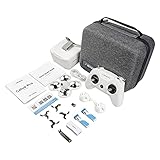
- 【Cetus Pro FPV Kit】BETAFPV Cetus Pro FPV Kit is a brushless whoop drone designed from the ground up for FPV beginners. Auxiliary flight function is available for novices, greatly reducing the threshold of operating. Cetus Pro brushless quadcopter is robust and powerful, allowing you to fly faster, race, and even do freestyle flying. Taking you from ZERO to Super Pilot in one kit
- 【N/S/M 3 Flight Modes】Normal/ Sport/ Manual are available, which can satisfy the different needs of pilots and adapt to various flight environments. Meanwhile, these 3 modes all support 3 different speeds in SLOW/MID/FAST. Pilot can choose the mode that suitable with you
- 【Altitude Hold Function】Altitude hold function enables Cetus Pro brushless quadcopter to Auto-Hover. The quadcopter can stay at a current height when pilots' hands are off the transmitter. The barometer/laser achieves accurate and stable positioning, which makes the quad hovering indoors very stable. Please note the altitude hold function is only available in N mode
- 【Self-protection Function】The Cetus quadcopter has an excellent self-protection function. Which can make an emergency landing when it loses control or in low battery. It will also automatically disarm and drop on ground once it has a strong collision with the object. No more worry about loss and crash
- 【Turtle Mode】Cetus Pro brushless quadcopter comes with turtle mode which is the world's leading technology. When Cetus Pro brushless quadcopter falls to the ground upside-down, simply activate turtle mode with your transmitter to turn it over. No walking through the fields for this
What changes compared with a whoop
- More demanding environment: you need open, permitted space, a clear recovery area and enough altitude to correct mistakes.
- Less forgiving contact: an outdoor freestyle design exposes more of its propellers and structure than a ducted whoop. Expect to replace propellers and possibly other parts after crashes.
- Higher control demands: speed and momentum make throttle management and orientation recovery more consequential, especially when flying in Manual/Rate mode.
Pick this model only if you already have some outdoor multirotor experience or are deliberately accepting a steeper learning curve. Start in the most stable available mode, keep the aircraft close and low over a clear surface, and move to manual acrobatics only after you can reliably stop, turn and land.
Quick wins for a faster PC:
Scan for outdated or missing drivers - takes under a minuteDriver Scan →Clear out junk files and repair common Windows errorsFree Scan →Bundle and maintenance checks
“Full starter bundle” is the manufacturer’s description, but inventory can vary by seller and date. Confirm the goggles, radio, battery type, charger and included spares in the actual listing. Before ordering extra parts, match the exact Freestyle revision and connector; Tinyhawk parts are not automatically interchangeable across generations.
4. DJI Avata 2 Fly More Combo: integrated guarded cinewhoop for a larger budget
DJI presents Avata 2 as a pre-built FPV option and lists configurations with one battery or a three-battery Fly More Combo (DJI’s FPV guide). A September 2026 comparison distinguishes this type of guarded cinewhoop from modular racing builds (DronesInSite comparison).
Why buyers choose an integrated system
- Fewer assembly decisions: the aircraft, camera, air unit, goggles and controller are designed as one ecosystem.
- Guarded camera platform: the cinewhoop form is suited to controlled cinematic movement and close-in framing where a fully exposed freestyle quad would be less practical.
- Battery option: the three-battery combo can reduce interruptions compared with a single-battery package, but verify exactly what the current box contains.
Trade-offs
This is not a conventional modular racing quad. You are buying into an integrated video and control ecosystem, so future upgrades and repairs are constrained by that ecosystem rather than by the broad mix of analog components used in many whoops. The initial cost is higher than a basic whoop path, and current prices and bundle contents must be checked at the time of purchase.
Do not interpret propeller guards as permission to fly near people or indoors without a controlled, empty area. The aircraft still has moving propellers, a radio link and a camera that may create privacy concerns.
Rank #4

- The PK01 drone's remote comes with a super handy built-in screen—no phone needed—so you can watch live HD footage and check flight stats right in your hands. (An SD card is required to save images and videos; not included) Powered by tough brushless motors, this little flyer is strong, smooth, and built to last. With one-key takeoff/landing, headless mode, and even 360° flips, you’ll look like a pro in no time. Ready for takeoff?🤩
- 📷【Drone with Camera】 Equipped with a 1080P HD 80°adjustable lens, the drone not only assists you in catching every wonderful moment from a bird's-eye perspective but is also perfect for selfies. It can even be used to check the roof of a house or other hard-to-reach areas. You can enjoy the real-time HD pictures and videos via the remote screen & APP. Automatically take photos/videos with gestures. First flight tip: choose a windless indoor space, keep the altitude below 6 meters and the distance below 30 meters to help better practice and control the drone.
- 🕹️【More Fun to Fly】 This foldable drone has 2 control modes: remote control, APP control. You can enjoy exciting features such as one-click 360° flips, 3D flip, waypoint flyflight, gravity control, circle fly, rotation fly, 3 speed gear, gravity sensing and Emergency Stop. (Some functions should be controlled by the app) You can also effortlessly command the remote control drone with simple voice instructions like "Take off"and more.
- 🔋【Long Flying Time and Safer】 The upgraded FPV drone is equipped with two enhanced batteries, extending the flight time to 25 minutes, providing no-worry flying experience. The controller has built-in battery and comes with 2pcs USB charging cable, enables you to charge it effortlessly. Features with emergency stop, 4 propeller guards, child lock feature and low power alarm to ensure a safe and reliable flight. PK01 is lightweight, portable and No FAA Registration needed, makes it a ideal drone for indoor and outdoor activities.
- 📲【How to Connect Your Phone】1.Power off the remote controller. 2. Turn on the drone. Note: Make sure the tail of the drone is facing towards you. 3. Download and log in to the "PK01 DRONE" app. 4. Connect your phone to the Wi-Fi network named "PK01DRONE_XXXXXX" via the app. 5. Move the left and right joysticks of the remote control to the lower left or lower right 45 degrees at the same time. The drone light flashes and then turns on, completing horizontal calibration. 6. Enter the app control interface, tap the "Control Switch" icon, and then select "Take Off" for a successful launch.
5. Modular analog whoop setup: a fifth path for compatibility-minded pilots
This entry is intentionally a setup path rather than a claimed fifth “best” model. It makes sense when you already own compatible analog goggles and a radio, or when learning repair and component matching is part of your goal.
The pieces you must match
- Aircraft and flight controller: choose a frame and board that support the battery voltage and motor size you intend to use.
- Camera and video transmitter: confirm that the camera format, transmitter output and goggles’ receiver are compatible.
- Radio link: the transmitter and receiver must use the same protocol and binding procedure.
- Goggles: analog goggles need an analog receiver on the relevant frequency; digital goggles cannot be assumed to work with an analog camera.
- Batteries and charger: match cell count, connector polarity and charge settings. Never charge a battery with an incompatible profile.
- Spare parts and tools: budget for propellers, small fasteners and a way to inspect or replace damaged motors and wiring.
The modular route can lower the cost of each repair and let you reuse equipment, but it shifts the work from the manufacturer to you. If you cannot identify every connector and protocol in the listing, an RTF bundle is the safer first purchase.
Which one fits your goal?
| Your priority | Most appropriate path | Reason |
|---|---|---|
| I own no FPV equipment and want the fewest decisions. | BetaFPV Cetus X Kit | The cited guide describes a complete analog whoop package with goggles, radio and three modes. |
| I want an indoor trainer that can lead to manual flight. | EMAX Tinyhawk III Plus | EMAX explicitly describes a three-mode progression ending in Rate mode. |
| I already fly outdoors and want a small freestyle aircraft. | EMAX Tinyhawk III Plus Freestyle | EMAX positions it as the more difficult beginner option for pilots with prior outdoor experience. |
| I want a polished, guarded camera platform and accept higher cost. | DJI Avata 2 Fly More Combo | It is a pre-built cinewhoop-style system with one- and three-battery configurations. |
| I already own compatible goggles/radio or want maximum repair flexibility. | Modular analog whoop setup | Separate components can be reused, but compatibility and setup become your responsibility. |
Control modes: the progression every beginner should understand
Stabilized and manual modes are not minor settings; they change what the sticks mean. In a self-leveling mode, releasing the roll and pitch sticks helps the aircraft return toward level. In Rate mode, the aircraft holds the attitude you leave it in until you counter-steer. A banked turn therefore requires you to roll into the turn, manage yaw and throttle, then level the aircraft before landing.
Use the least demanding mode that lets you maintain orientation. Progress only when you can take off, hover, turn, stop and land consistently. No source establishes a universal number of simulator hours or a mandatory practice threshold, so avoid treating any fixed hour count as a rule. A simulator can still be useful for learning stick movements without risking hardware, but it does not replace checking the real aircraft’s mode switch, failsafe and battery behavior.
What to check in the box before your first power-up
- Aircraft: inspect propellers, ducts, motors, antenna and frame for shipping damage.
- Goggles: charge them, remove lens protectors and confirm that the camera feed appears before arming.
- Radio: charge or install the specified batteries, bind it to the aircraft and verify that the mode switch changes the expected mode.
- Battery: inspect for swelling or damaged leads; do not use a suspect pack.
- Charger: use the supplied charger or one explicitly rated for the battery’s chemistry and cell count.
- Spare parts: identify the correct propeller orientation and keep at least one compatible replacement set.
- Failsafe: learn how the aircraft disarms or stops motors when signal is lost. Test only in a safe, restrained way described by the manual.
A controlled first-flight procedure
- Choose a legal, empty location. For an indoor whoop, use a room with no people, pets, fragile objects or ceiling fans. Outdoors, use an open area where you can maintain visual contact and avoid bystanders.
- Check the aircraft and weather. Small whoops are easily affected by wind. Do not let a first flight become a recovery exercise in trees or traffic.
- Power the goggles and radio first. Follow the manufacturer’s order for battery connection and binding. Confirm a live video feed and a responsive throttle before placing the aircraft on the ground.
- Select the easiest mode. Use Normal or the equivalent stabilized setting. Confirm the switch position while the motors are disarmed.
- Start with a low hover. Lift only far enough to clear the floor, hold position, release throttle gently and land. Learn how the aircraft drifts before attempting distance.
- Practice orientation. Fly short forward, backward and sideways movements, keeping the nose pointed away from you until you can identify left and right reliably.
- Land before the battery is depleted. Voltage sag can make the final landing unpredictable. Follow the battery guidance in the manual rather than trying to extract every second.
- Inspect after every contact. Remove debris, check ducts and props, and stop flying if a motor sounds rough or a frame is cracked.
Analog versus digital video and the upgrade decision
Analog FPV sends a lower-latency video signal through an analog camera and transmitter to analog goggles. It is common in small whoops and modular builds because components can be selected separately. Digital systems encode the feed and use a matched air unit and goggles ecosystem; they can offer a cleaner image but may limit which future parts can be mixed.
Best Value

- 【2K Ultra HD Camera】Loiley drone features a high-quality 2K HD camera with a 90° remote adjustable angle, allowing you to capture breathtaking photos and ultra-clear videos from the sky. Whether it's a scenic landscape or a special family moment, this drone helps you preserve every beautiful memory with precision. Simply connect your smartphone to the drone’s camera to enjoy a real-time panoramic view, and easily share your adventures directly to social media with just a tap
- 【User-friendly & Optical Flow Positioning】 The Loiley drone operation is magically simple—press the one-touch start/land button to begin flying. With headless mode and gravity sensing, you only need to tilt the controller up, down, left, or right to make the drone fly forward, backward, or sideways. The upgraded optical flow positioning ensures more stable and controllable flight, allowing you to focus on photography. Altitude Hold helps you capture high-quality photos and videos effortlessly
- 【Take it with you】 Loiley drone with camera is your ultimate travel partner! It is small and lightweight, and the size is only 5 x 3 x 2 inches when folded, which can be easily put into a pocket or backpack. Weight under 250g to save you from FAA registration. Whether you're going on an outdoor adventure or exploring new places, you can easily take this mini drone with you and capture amazing aerial shots wherever you go
- 【Safe and Long Battery Life】With two rechargeable drone batteries, this drone extends the flight time to approximately 26 minutes, providing a worry-free flying experience. The batteries are easy to charge and replace, with built-in overvoltage protection. The remote controller emits a low battery warning, ensuring beginners never lose their RC drone
- 【Professional After-Sales Support】A mini drone with a camera makes for a cool and creative gift. Along with that, the package includes a portable bag for outdoor travel. The drone comes with propeller guards, spare fan blades, and remote control batteries, ensuring safety and reliability. Additionally, 24-hour technical support, quality warranty, and Accessories Supply services are provided for customer satisfaction
Before choosing, ask whether you expect to own more than one aircraft. A complete analog kit can be a low-commitment way to learn. A digital integrated system may be attractive if you value image quality and a coordinated user experience. Neither choice removes the need to verify controller, goggles, air-unit and battery compatibility for every later purchase.
Crash, repair and upgrade costs
Crashes are a normal ownership consideration, especially when you move to Manual/Rate mode. The first consumables are usually propellers, but ducts, motors, antennas, frames and camera mounts can also be damaged. Keep a written list of the exact model revision, battery connector, propeller size and radio/video system. Use that information when ordering parts; visual similarity is not proof of compatibility.
Do not buy a larger battery to chase longer flight time without checking the aircraft’s specified voltage, connector and weight tolerance. An incompatible pack can damage electronics or make the aircraft unsafe to control. Likewise, a replacement motor with the wrong mounting or rotation direction can prevent the aircraft from flying even if it physically fits.
Do these 3 things before closing this tab:
1Fix the driver behind crashes, sound loss and screen glitches2Clear out junk files and repair common Windows errors3Scan for outdated or missing drivers - takes under a minuteU.S. rules you need to understand before flying FPV
Rules depend on where and how you operate. In the United States, the Federal Aviation Administration’s recreational FAQ says operators using the recreational exception must register the aircraft, fly only for recreation, follow community-based safety guidance, maintain visual line of sight, yield to manned aircraft and obtain authorization in controlled airspace (FAA recreational FAQ). Registration and operating obligations can depend on the aircraft and use; do not assume a blanket weight exemption applies to every configuration or purpose.
If you operate under Part 107, the FAA’s July 6, 2026 overview states: If you use First Person View or similar technology, you must have a visual observer always keep your drone within unaided sight (for example, no binoculars).
Read the complete FAA Part 107 overview for the operating category and requirements that apply to you. The same overview includes avoiding manned aircraft and not operating carelessly or recklessly among Part 107 requirements.
Goggles do not cancel visual-line-of-sight duties. Arrange a visual observer when your operating category requires one, keep the aircraft where the observer can see it without binoculars, and check current airspace authorization before each outdoor flight. Other countries use different rules, so consult the aviation authority where you will fly.
Buying checklist: avoid an incomplete or incompatible first kit
- Write down your flying environment: indoor room, sheltered yard, open field or cinematic outdoor work.
- Choose the control progression: confirm the aircraft has a stabilized mode and identify how it reaches Manual/Rate mode.
- Inventory the box: aircraft, goggles, radio, batteries and charger should be listed individually.
- Identify the video system: analog or digital, and whether future aircraft will use the same goggles and air unit.
- Check recurring costs: spare propellers, batteries, charger capability and model-specific repair parts.
- Verify legality: registration, visual-line-of-sight, airspace and recreational or Part 107 requirements for your location.
- Save the manual and revision: keep the exact model name and firmware or hardware revision with your purchase records.
Bottom line for a first purchase
Choose the BetaFPV Cetus X Kit if you want the most direct complete-kit entry supported here. Choose EMAX Tinyhawk III Plus when indoor practice and a staged path to Rate mode are your priorities. Choose the Tinyhawk III Plus Freestyle only when you already have some outdoor experience and accept a harder first flight. Choose DJI Avata 2 when an integrated, guarded cinewhoop system justifies the higher cost and reduced modularity. Choose the modular analog path only when you are prepared to verify every component or already own compatible goggles and radio equipment.
Crashes, No Sound, or Screen Glitches?
Random freezes, missing sound and display glitches usually trace back to one bad driver. Find and replace yours safely.Free scan · under a minutePC Slower Than It Used to Be?
A free scan shows the junk files, broken settings and background clutter dragging Windows down - then fixes them in one click.Free scan · Windows 10 & 11Quick Recap
Product prices and availability are accurate as of the date/time indicated and are subject to change. Any price and availability information displayed on Amazon at the time of purchase will apply.

