The best-supported answer is a brewing byproduct, probably residual yeast, rather than liquid beer itself. In a 2023 proteomics study of ground-layer samples from 10 Danish Golden Age paintings, researchers detected proteins from cereal grains and baker’s yeast. Those proteins fit materials associated with beer production, and historical workshop evidence points in the same direction. The exact substance and recipe remain unproven: the authors say proteomics alone cannot identify it indisputably. Their conclusion is therefore a carefully qualified interpretation, not a discovery of a confirmed “beer paint.”
The study, by Fabiana Di Gianvincenzo and colleagues, is available in the full 2023 Proceedings of the National Academy of Sciences article.
As an Amazon Associate I earn from qualifying purchases.
What material was probably used?
The proposed material was something left over from brewing, with residual yeast treated as the leading candidate. The samples contained a combination of cereal proteins and yeast proteins that overlaps with profiles previously observed in beer-related materials. That combination is difficult to explain as a single ordinary animal-glue recipe, but it is compatible with a brewing product introduced into the preparatory layer beneath the paint.
Free tools Windows power users keep installed
One-click scans. No signup required.
“Residual yeast” means the yeast cells and associated material left after fermentation and handling, not a modern packet of baker’s yeast and not necessarily a pour of finished beer. The researchers discuss both beer and residual yeast as plausible brewing-related substances. Their mock-up experiments, described in the study’s supplementary material, found that residual yeast could have strong emulsifying power in simulated ground layers, which makes it technically plausible as an ingredient. It does not, however, prove that every sampled painter used residual yeast or that the historical material matched a modern brewing residue.
#1 Best Overall

- Easy Home Brew - This all-in-one kit includes everything you need, from fermentation equipment to supplies and ingredients, making it the perfect kit for beer enthusiasts.
- Complete Beer Making Kit - No need for additional large pots, strainers, or brewing equipment. All you need is a Mr. Beer Kit, water and common kitchen items to get started.
- Brews in 30 Minutes - Using our hopped Malt extract, you can brew up a batch of beer in less than 30 minutes. You will have ready to drink beer in 3-4 weeks.
- Includes A Second Refill - This kit comes with a bonus refill so you can get to brewing your second batch right away. Makes a total of 4 gallons.
- DIY Kit Beer Accessory - The Mr. Beer four gallon kit comes with Canadian Blonde and Octoberfest Lager you can create your own unique craft beer.
“Although the exact identification of this material cannot be indisputably defined exclusively on the basis of the proteomic analysis, the most likely source of cereal grains and baker’s yeast proteins is a (by-)product of beer brewing.” — Fabiana Di Gianvincenzo and colleagues, 2023
The distinction matters. The analysis found molecular traces of ingredients, not a bottle of beer preserved inside a canvas. A protein profile can indicate what kinds of biological materials were present, while still leaving open the exact source, processing method and proportions.
What the researchers actually analyzed
Ground layers, not the visible paint film
A painting’s ground layer is the preparation spread over the canvas before the artist applies the paint. It can contain a binder plus chalk, other mineral fillers, pigments or additional additives. Its job is to create a coherent, workable surface and to control how later paint layers sit on the fabric. The study examined this preparatory material, so its findings concern canvas preparation rather than a claim that Danish artists mixed beer into every color.
Ten paintings from the Danish Golden Age
The sample comprised ground-layer material from 10 paintings. The works included paintings by C. W. Eckersberg and C. S. Købke, artists associated with the Royal Danish Academy of Fine Arts. This is a focused conservation study, not a census of Danish Golden Age production. Ten objects are enough to reveal a chemically and historically interesting pattern, but not enough to calculate how widespread the practice was among all artists, studios or decades.
Rank #2
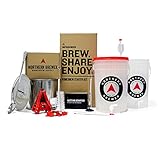
- Highest Rated Starter Kit! The Northern Brewer Brew. Share. Enjoy Homebrew Starter Kit is the perfect choice for holiday gifts and beginners, complete with foolproof instructions.
- This all-in-one kit includes everything you need to start brewing beer at home today including a Brew Kettle and our Hank's Hefeweizen recipe kit.
- Hank's Hefeweizen: This recipe brings a Bavarian classic over the pond to spread the joy of hefeweizen for all to enjoy. Expect a hazy, deep golden ale with a firm and lasting white head and heaps of flavors consisting of soft, luscious wheat notes, medium-low bitterness and fermentation derived flavors ranging from spicy clove to ripe banana.
- Kit Includes: Hank's Hefeweizen recipe kit, Hydrometer, Test Jar, Lab Thermometer, 6.5 gallon fermentor w/ Spigot, lid & Bubbler airlock, Bottling Bucket w/Spigot assembly, Bottle Filler, 5 Gallon Stainless Brew Kettle, 21” Stainless Spoon, 5 ft. Clear Tubing, Cleaner/Sanitizer - Fermenter's Favorites Oxygen Wash, Bottle Brush, Royal Crown Bottle Capper & Caps (60ct.) Yields 5 gallons of finished beer, filling 50 twelve ounce bottles.
Tandem mass-spectrometry proteomics
The team used tandem mass spectrometry-based proteomics. In practical terms, proteins in a tiny sample are broken into peptides; the instrument measures their masses and fragmentation patterns; and those patterns are matched to protein sequences. Cereal and yeast matches can then be compared with known profiles from brewing, food and other biological materials. This approach is especially useful when a historical binder is no longer recognizable by eye, but it still depends on the quality of the surviving proteins and the completeness of the comparative data.
Why a brewing byproduct fits the evidence
Cereal and yeast occur together
The key analytical clue is the combination of cereal proteins with baker’s-yeast proteins in some of the ground-layer samples. Beer production begins with cereal grains and fermentation by yeast, so a residue from that process could carry both classes of proteins. The result is a better fit for a brewing-related ingredient than for a purely mineral ground or a binder made only from animal collagen.
Residual yeast could emulsify a ground layer
The paper reports that residual yeast showed high emulsifying power in mock-up ground layers. An emulsifier helps materials that do not naturally mix—such as water-based and oily components—remain dispersed. That behavior would be useful in a complex preparatory coating, although the experiment demonstrates capability rather than historical use. It shows why residual yeast is a credible candidate when combined with the protein results; it does not identify a particular Copenhagen brewery, batch or formula.
The workshop setting is historically compatible
The paintings are linked to the Royal Danish Academy’s workshop environment. The authors connect the possible recipe to Academy practice, where canvases could be prepared for professors and students rather than each artist starting with an entirely new preparation method. Local artists’ manuals also discuss materials related to brewing. This documentary and institutional context strengthens the interpretation because a shared workshop recipe could explain similar protein signatures across works.
Rank #3

- MAKE YOUR OWN BEER – Be more than a beer drinker; be a beer maker! This craft beer kit turns beer lovers into beer brewers and gives you all the independence, experience, and fun that comes with brewing your own home beer.
- BREW-S-A – Exercise your right to brew! Our decidedly patriotic American Pale Ale makes a crisp, hoppy, and bitter pale ale with light malt flavors.
- HOME BREW STARTER KIT – Designed to help first-timers and hobbyists alike get the most of their beer experience, this beer maker starter kit teaches you about the art of brewing with our Craft a Brew Guide to Craft Brewing.
- FULL BREWERY KIT – This homemade beer making kit comes with the right supplies to brew beer. Enjoy our beer making kits complete with everything you need to become a master brewer, so hop to it!
- CRAFT A BREW QUALITY – Each beer crafting kit and all our home brew recipe kits for beer are assembled by hand in Orlando, FL instilled with the core values of providing high-quality ingredients, elegant and effective design, and an environmentally sustainable mindset. Enjoy beer the right way with your own Craft a Brew kit.
Economic context adds another, more limited, piece of the explanation. Beer was a valuable commodity in 19th-century Denmark, while residual yeast could be obtained as a waste or secondary product from Copenhagen brewing. Reusing a byproduct would make practical sense, but the historical evidence does not tell us whether studios acquired it wet or dried, mixed it with another binder, or altered it before application.
Beer was not necessarily the only binder
Collagen points to animal glue in some samples
Some samples also contained collagen sequences. The researchers associate those sequences with animal glue, a common proteinaceous material in traditional painting preparation. This means the proposed brewing material should not be described as the sole binder in every painting. A ground layer may contain more than one protein source, and different canvases—or different stages of a workshop recipe—may have used different mixtures.
Do not turn a shared pattern into a single recipe
The 10 paintings do not all have to be chemically identical. A studio could modify proportions according to available materials, desired surface texture or the part of the canvas being prepared. Proteomics detects surviving molecular signatures, not the original shopping list. The presence of collagen alongside cereal and yeast proteins is therefore compatible with a mixed or variable preparation.
Crashes, No Sound, or Screen Glitches?
Random freezes, missing sound and display glitches usually trace back to one bad driver. Find and replace yours safely.Free scan · under a minuteWindows Errors? Fix Them Before They Spread
Repair common Windows errors and clear accumulated junk for a smoother, more stable PC - no reinstall needed.Free scan · no reinstallHow contamination was assessed
Historical paintings often receive conservation treatments long after they are made, so a protein detected today might come from a later material rather than the original ground. The paintings in this study had undergone wax-resin lining in the 1960s. During that treatment, the tacking edges were removed before the lining adhesive was applied. The authors explain that this sequence makes the conservation adhesive an unlikely source of the cereal and yeast proteins found in the sampled ground layers.
Rank #4
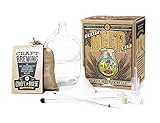
- MAKE YOUR OWN BEER – Be more than a beer drinker; be a beer maker! This craft beer kit turns beer lovers into beer brewers and gives you all the independence, experience, and fun that comes with brewing your own home beer.
- MUNICH CALLING – Oktoberfest is here, wherever and whenever you want “here” to be. With a light red hue, subtle bitterness, caramel sweetness, and a clean dry finish, you can enjoy this full-bodied, malty beer just like they do in old Bavaria.
- HOME BREW STARTER KIT – Designed to help first-timers and hobbyists alike get the most of their beer experience, this beer maker starter kit teaches you about the art of brewing with our Craft a Brew Guide to Craft Brewing.
- FULL BREWERY KIT – This homemade beer making kit comes with the right supplies to brew beer. Enjoy our beer making kits complete with everything you need to become a master brewer, so hop to it!
- CRAFT A BREW QUALITY – Each beer crafting kit is assembled by hand in Orlando, FL instilled with the core values of providing high-quality ingredients, elegant and effective design, and an environmentally sustainable mindset. Enjoy beer the right way with your own Craft a Brew kit.
That argument reduces one obvious contamination route, but it does not turn the result into absolute proof. A conservation sample can contain a complicated mixture of original and later matter, and the analytical conclusion still rests on the total pattern: protein identities, sample location, treatment history and historical plausibility. The study’s wording appropriately keeps the exact identification open.
How strong is the identification?
| Question | What the study supports | What remains unresolved |
|---|---|---|
| Were brewing-related proteins detected? | Cereal and baker’s-yeast proteins were identified in some ground-layer samples. | The analysis does not preserve a recognizable sample of liquid beer. |
| Is residual yeast plausible? | Yes. It can contain the relevant proteins and showed high emulsifying power in mock-up ground layers. | The exact historical residue, preparation and proportions are unknown. |
| Could the material have been beer itself? | Beer is discussed as a possible brewing-related source because its protein profile can overlap with the findings. | The evidence cannot distinguish a finished beverage from a brewing residue with certainty. |
| Was it the only binder? | No. Collagen sequences in some samples are consistent with animal glue as well. | The composition may vary among paintings and layers. |
| How common was the practice? | The pattern occurs in the 10 paintings examined and fits Academy workshop context. | The sample is too small to estimate prevalence across Danish Golden Age art. |
What “binder” means in this historical case
In painting technology, a binder is the material that holds particles together and helps a layer adhere to its support. In a ground, it may bind mineral fillers and pigments into a continuous coating on the canvas. Calling the proposed brewing material a binder does not mean it was necessarily used alone. It may have functioned as one protein-rich component in a preparation that also included glue, chalk, oils or other ingredients.
Nor does the word imply that artists painted scenes with beer. The detected proteins were reported from the ground layer, which is normally hidden under subsequent paint. A viewer would not see a beer-colored paint film, and the finding does not explain the palette or surface appearance of the finished image by itself.
What’s actually slowing this PC down?
Pick the symptom - the matching free tool is one click away.
What the Academy connection can—and cannot—tell us
The Royal Danish Academy connection offers a plausible route for recipes to circulate. If workshop staff prepared canvases for both professors and students, a material that was cheap, locally available and workable could be incorporated into repeated preparation routines. Manuals from the period provide a written counterpart to that possibility.
Best Value

- NO AIRLOCK OR SIPHON REQUIRED – Our patented conical fermenter traps sediment safely at the bottom for zero mess. Features a unique vent plug to let CO2 escape while keeping contaminants out. Easily upgrades to an airlock or blow-off tube.
- DOUBLE THE WITCHCRAFT AND VOLUME – Our 2-gallon system conjures 16 pints of premium craft beer. That is double the size of standard 1-gallon glass kits.
- FULLY LOADED WITH PRO HARDWARE – Stop wrestling with chaotic kitchen makeshift tools. Our Pro level kits arrive packed with an adjustable flow spigot, a heavy-duty 18" heat-resistant mixing spoon, a precision priming sugar scoop for perfect carbonation, eight 1-liter amber bottles, a bonus bubbler airlock upgrade, and an advanced bottle filler & hose assembly that guarantees easy, diabolically clean, no-mess bottling.
- A DEVILISHLY FAST 15-MIN PREP – Skip torturous hours-long grain boils. Complete the entire hot brew prep on your kitchen stove in just 15 minutes.
- FRESH FROM THE UNDERWORLD – Features our elite, top-tier Signature Line Recipe Pack with vacuum-sealed fresh ingredients. Includes our legendary, crisp One Evil Pilsner recipe.
Still, institutional context is not a signed recipe. The evidence does not identify the person who prepared any particular canvas, the brewery that supplied material, or the exact date when a brewing residue entered the ground. It also cannot establish that every Eckersberg or Købke painting—or every Academy canvas—used the same substance. Those questions would require more dated objects, documentary records and comparative analyses.
Why this finding matters to art history and conservation
It expands the range of plausible workshop materials
Traditional painting studies often focus on familiar binders such as animal glue, oil or egg. A brewing byproduct shows how workshop practice could draw on local food and production economies as well. The finding links a scientific signal to a material that would have been available in the surrounding city, while preserving the possibility that the artists’ preparation was improvised or composite.
It gives conservators a testable hypothesis
When a conservator encounters an unusual protein pattern in a ground layer, cereal and yeast markers can now be considered alongside collagen and other candidates. That does not authorize a treatment or a reconstruction recipe. It helps frame further sampling, documentary comparison and mock-up work, especially when a painting’s history includes later lining or other interventions.
Quick wins for a faster PC:
Repair Windows errors before they cause bigger problemsFix Now →Fix the driver behind crashes, sound loss and screen glitchesFind Drivers →Clear out junk files and repair common Windows errorsFree Scan →It demonstrates why small samples need context
The result came from combining molecular evidence with object history and workshop history. A protein match alone would not establish “beer.” Conversely, a mention of brewing materials in a manual would not prove that a particular canvas used them. The interpretation becomes persuasive because several independent kinds of evidence point in a similar direction while none resolves the exact formula.
What readers should not conclude
- Do not say researchers found liquid beer inside the paintings; they found cereal and yeast proteins in ground-layer samples.
- Do not state that residual yeast was conclusively identified. It is a plausible candidate within the broader category of brewing byproducts.
- Do not claim all Danish Golden Age painters used the material. The study covered 10 paintings connected with Academy practice.
- Do not describe the brewing product as the sole binder when collagen evidence indicates animal glue in some samples.
- Do not assume modern beer, brewing yeast or a generic art binder will behave like the historical material. The study does not establish an equivalent modern recipe or recommend one.
How the evidence fits together
The most coherent reading is layered rather than absolute. First, proteomics supplied direct molecular observations: cereal and yeast proteins occur in some sampled grounds. Second, comparison with known beer-related profiles made brewing products a reasonable source. Third, residual yeast displayed useful emulsifying behavior in experimental mock-ups. Fourth, Academy workshop practice and local manuals supplied a historical route by which such a material could have been obtained and used. Finally, the authors tested a conservation explanation and judged the 1960s wax-resin lining an unlikely source of the detected proteins.
Those steps support a likely brewing origin without naming a definitive substance. The responsible answer to “What beer byproduct did Danish Golden Age painters use?” is therefore: researchers propose a beer-brewing byproduct, with residual yeast as a particularly plausible option, but the surviving evidence cannot establish the exact material or recipe.
Source
Di Gianvincenzo, Fabiana, et al., “Proteomic identification of beer brewing products in the ground layer of Danish Golden Age paintings,” Proceedings of the National Academy of Sciences (2023): https://pmc.ncbi.nlm.nih.gov/articles/PMC10208569/.
Recommended Free Tools
Quick Recap
Product prices and availability are accurate as of the date/time indicated and are subject to change. Any price and availability information displayed on Amazon at the time of purchase will apply.

