Do these 3 things before closing this tab:
1Fix the driver behind crashes, sound loss and screen glitches2Repair Windows errors before they cause bigger problems3Scan for outdated or missing drivers - takes under a minuteA desktop Wi-Fi adapter plugs into one of two different motherboard connections: a full PCIe wireless card goes into a compatible PCIe expansion slot, while a small M.2 Wi-Fi module requires a compatible M.2 Key E socket. Check the exact motherboard and adapter manuals before opening the PC—an M.2 socket is not automatically a Wi-Fi socket.
First identify which type of wireless adapter you have
A PCIe add-in card has an edge connector and a metal bracket that fits an expansion opening at the back of the computer case. An M.2 Wi-Fi module is a much smaller circuit board that installs directly into a dedicated motherboard socket. They use different connectors and are not interchangeable.
As an Amazon Associate I earn from qualifying purchases.
| Adapter type | Motherboard connection | What to check |
|---|---|---|
| PCIe wireless card | A compatible, available PCIe slot | The adapter and motherboard manuals for the required slot, supported PCIe standard, and physical clearance. Some cards support PCIe x1 only. ASUS installation instructions |
| M.2 Wi-Fi module | An M.2 Key E Wi-Fi socket | The socket key and module compatibility. Intel’s Wi-Fi 6 desktop kit requires M.2 Key E 2230; Key M and Key B sockets do not work for that kit. Intel’s requirements |
Where a PCIe wireless card goes
Install the card in an available PCIe slot that the motherboard and adapter manuals identify as compatible. The card’s bracket occupies an expansion opening at the rear of the case. Do not assume that a particular slot is suitable just because it is empty: verify the slot and clearance in the motherboard manual, and check the adapter’s requirements. ASUS notes that some of its wireless adapters support PCIe x1 only. ASUS wireless-adapter installation instructions
Install a PCIe card
- Shut down the computer, unplug its power cord, and open the case according to the computer and adapter instructions. ASUS advises disconnecting power before installation.
- Use the motherboard manual to find an available compatible PCIe slot and confirm the card will fit.
- Insert and secure the card in the slot, then attach its antenna or antenna base as directed by the card maker.
- If the adapter includes a USB lead for Bluetooth, connect it to the motherboard’s F_USB header as directed in that model’s instructions. Not every card uses this connection.
- Close the case, start the computer, and install the WLAN drivers and, if applicable, Bluetooth drivers from the adapter maker’s current support instructions.
Where an M.2 Wi-Fi module goes
An M.2 Wi-Fi module goes into a motherboard M.2 Key E socket intended for Wi-Fi—not simply any M.2 socket. For example, Intel’s Wi-Fi 6 desktop kit requires an M.2 Socket Key E 2230 and is not compatible with Key M or Key B sockets. Confirm the exact module and motherboard requirements in their manuals. Intel Wi-Fi 6 desktop kit requirements
#1 Best Overall

- 𝐍𝐞𝐱𝐭 𝐆𝐞𝐧 𝐖𝐢𝐅𝐈 𝟔 - Reach incredible speeds up to 2.4 Gbps (2402 Mbps in 5 GHz or 574 Mbps on 2.4 GHz) with ultra-low latency and uninterrupted connectivity using Wi-Fi 6 technologies¹
- 𝐌𝐢𝐧𝐢𝐦𝐢𝐳𝐞𝐝 𝐋𝐚𝐠 𝐟𝐨𝐫 𝐘𝐨𝐮𝐫 𝐏𝐂 - The networking card is equipped with OFDMA and MU-MIMO technology to reduce lag so you can enjoy ultra-responsive real-time gaming, or an immersive VR experience on even the busiest networks
- 𝐁𝐫𝐨𝐚𝐝𝐞𝐫 𝐑𝐚𝐧𝐠𝐞 - 2 powerful signal-boost, high-gain antennas greatly inrease range for a smoother online gaming experience in further away distances
- 𝐁𝐥𝐮𝐞𝐭𝐨𝐨𝐭𝐡 𝟓.𝟐 𝐟𝐨𝐫 𝐆𝐫𝐞𝐚𝐭𝐞𝐫 𝐒𝐩𝐞𝐞𝐝 𝐚𝐧𝐝 𝐑𝐚𝐧𝐠𝐞 - Equipped with the latest Bluetooth technology, Archer TX55E achieves 2x faster speeds and 4x broader coverage compared to Bluetooth 4.2 so you can connect your favorite devices such as game controllers, headphones, and keyboards for the ultimate setup.²
- 𝐂𝐮𝐭𝐭𝐢𝐧𝐠 𝐄𝐝𝐠𝐞 𝐖𝐏𝐀𝟑 - Protector your network with the latest WPA3 security protocol so your information transmitted via the wireless adapter is secure from hackers³
Install an M.2 Wi-Fi module
- Confirm that the motherboard has a compatible M.2 Key E Wi-Fi socket and that the module is supported.
- Follow the motherboard’s access instructions. Some boards are easier to fit before they are mounted in the case; ASUS recommends that sequence for the module in its V-M.2 PCIe Wi-Fi Card / Intel AX200 quick-start guide.
- Insert the module into the Key E socket and secure it using the board or module manual’s specified method. ASUS’s guide, for example, secures its module with screws from the underside of the motherboard.
- Connect the specified antenna leads to the module’s Wi-Fi ports and install the appropriate drivers.
Check the details that vary by model
- Included parts: Cards and modules can require different antennas, antenna bases, RF cables, brackets, screws, or USB leads. Check what comes with your specific kit. One ASUS motherboard manual says its Wi-Fi card, RF cable, and antenna are sold separately; that is specific to the PRIME B760M-AJ D4, not a general rule.
- Bluetooth wiring: Some PCIe adapters need a separate cable to a motherboard F_USB header for Bluetooth. Check the adapter instructions to see whether yours does.
- Board-specific access: A motherboard may have particular steps for reaching its Wi-Fi socket or fitting a module. For instance, the cited ASUS manual describes removing a thin metal plate from that board’s I/O-shield Wi-Fi opening and installing the module before mounting the board. Follow your own board’s instructions rather than treating this example as universal.
- Drivers: Use the adapter maker’s current support page for WLAN and Bluetooth drivers that match your model and operating system. ASUS directs users to its download center in its installation and driver instructions.
Quick answers to common installation questions
Can I use any M.2 slot for Wi-Fi?
No. Verify that the socket is the right type for the Wi-Fi module. Intel’s cited Wi-Fi 6 desktop kit requires Key E 2230; Key M and Key B sockets are not compatible with that kit.
Does a wireless card need a USB header?
Some PCIe cards use an internal USB cable for Bluetooth. It is a model-specific requirement, not a universal connection for Wi-Fi cards. Follow the adapter manual.
Quick Recap
Best Value

- Intel WI-FI 6E AX210 module built-in
- Dedicated spectrum in 6GHz band for maximum speed and ultra-low latencies
- Support dual-stream Wireless in the 2.4GHz, 5GHz and 6GHz bands
- IEEE 802.11.acR2plusax compliant
- High speed wireless connection up to 2400Mbps
Rank #4
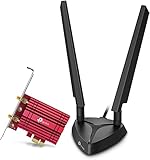
- 𝐖𝐢𝐅𝐢 𝟔𝐄 𝐒𝐭𝐚𝐧𝐝𝐚𝐫𝐝 — Expand to the clearer, broader 6 GHz band for more bandwidth and faster speeds;Boost your overall speeds up to 2402 Mbps (6 GHz) plus 2402 Mbps (5 GHz) plus 574 Mbps (2.4 GHz)¹. 𝐓𝐨 𝐮𝐭𝐢𝐥𝐢𝐳𝐞 𝟔𝐆𝐇𝐳 𝐖𝐢-𝐅𝐢, 𝐭𝐡𝐞 𝐮𝐬𝐞𝐫 𝐧𝐞𝐞𝐝𝐬 𝐭𝐨 𝐛𝐞 𝐮𝐬𝐢𝐧𝐠 𝐖𝐢𝐧𝐝𝐨𝐰𝐬 𝟏𝟏.
- 𝐑𝐞𝐥𝐢𝐚𝐛𝐥𝐞 𝐂𝐨𝐧𝐧𝐞𝐜𝐭𝐢𝐨𝐧𝐬 𝐰𝐢𝐭𝐡 𝐃𝐮𝐚𝐥 𝐀𝐧𝐭𝐞𝐧𝐧𝐚s — The latest Intel Wi-Fi 6E chipset’s reduced latency and improved reliability combined with two antennas unlocks your Wi-Fi 6E router’s full potential
- 𝐖𝐢𝐝𝐞𝐫 𝐒𝐢𝐠𝐧𝐚𝐥 𝐂𝐨𝐯𝐞𝐫𝐚𝐠𝐞 𝐰𝐢𝐭𝐡 𝐌𝐚𝐠𝐧𝐞𝐭𝐢𝐳𝐞𝐝 𝐁𝐚𝐬𝐞 — Two multi-directional antennas with a magnetized base are designed for optimal signal reception
- 𝐁𝐥𝐮𝐞𝐭𝐨𝐨𝐭𝐡 𝟓.𝟑 — The latest Bluetooth technology achieves faster speeds and broader coverage.
- 𝐈𝐦𝐩𝐫𝐨𝐯𝐞𝐝 𝐒𝐞𝐜𝐮𝐫𝐢𝐭𝐲 — The latest security enhancement, WPA3, provides enhanced protection in personal password safety²
Rank #3

- Optimized Speed Dual-Band Wi-Fi - Up to 1200 Mbps Wi-Fi speeds (867 Mbps on 5 GHz band and 300 Mbps on 2.4 GHz band).*
- Bluetooth 5.0 - With reliable Bluetooth technology, enjoy seamless connectivity with game controllers, headphones, keyboards, mice, and more.
- Broad Wireless Range - Two external antennas enables optimized Wi-Fi coverage and stability.
- Easy Installation - Plug the adapter into an available PCI-E slot to upgrade your desktop (both standard and low profile brackets included)
- Windows Compatibility - Supports Windows 10/11
Rank #2

- 𝐖𝐢-𝐅𝐢 𝟔 𝐓𝐞𝐜𝐡𝐧𝐨𝐥𝐨𝐠𝐲 Powered by Intel: The latest Wi-Fi 6 standard gives you incredible speed ultra-low latency and uninterrupted connectivity with OFDMA and MU-MIMO technology Utilizing next-generation Wi-Fi 6 technology Archer TX3000E is designed to excel in even the busiest of networks for next-level entertainment
- 𝐍𝐞𝐱𝐭-𝐠𝐞𝐧 𝐬𝐩𝐞𝐞𝐝𝐬 up to 2.4Gbps: Reach incredible speeds up to 2.4 Gbps (2402 Mbps on 5 GHz or 574 Mbps on 2 4 GHz) - Supports Windows 11, 10 (64bit) - Driver installation required via Website or included CD
- 𝐌𝐢𝐧𝐢𝐦𝐢𝐳𝐞𝐝 𝐥𝐚𝐠 for your PC: Revolutionary OFDMA reduces lag so you can enjoy ultra-responsive real-time gaming or an immersive VR experience
- 𝐁𝐫𝐨𝐚𝐝𝐞𝐫 𝐂𝐨𝐯𝐞𝐫𝐚𝐠𝐞: Two multi-directional and high-performance antennas with a magnetized base extends your existing Wi-Fi reception capabilities. Place the magnetized antenna base anywhere on your desktop to find the optimal location for signal reception. Easily install with low profile bracket.
- 𝐁𝐥𝐮𝐞𝐭𝐨𝐨𝐭𝐡 𝟓.𝟑 𝐟𝐨𝐫 𝐆𝐫𝐞𝐚𝐭𝐞𝐫 𝐒𝐩𝐞𝐞𝐝𝐬 𝐚𝐧𝐝 𝐂𝐨𝐯𝐞𝐫𝐚𝐠𝐞: Archer TX3000E is equipped with the latest Bluetooth 5.3 Technology achieving 2x faster speeds and 4x broader coverage than Bluetooth 4.2. Connect as many devices as you want including game controllers headphones and keyboards for the ultimate setup
Product prices and availability are accurate as of the date/time indicated and are subject to change. Any price and availability information displayed on Amazon at the time of purchase will apply.

