Quick wins for a faster PC:
Repair Windows errors before they cause bigger problemsFix Now →Fix the driver behind crashes, sound loss and screen glitchesFind Drivers →Call a locally licensed pest management professional promptly when termite-like swarmers appear inside your home. Treat the sighting as a reason for identification and a structural inspection, not as proof of a particular termite species or an active colony in the building. Call especially soon if you also find shed wings, mud tubes, hollow or damaged wood, excess moisture, or small flight holes. Outdoor swarmers alone do not establish that your house is infested, but an indoor swarm or any additional evidence deserves professional assessment.
If the insects might be flying ants, save a specimen or take a sharp photograph for identification. A general insect spray may kill visible insects without addressing hidden activity or protecting the structure.
As an Amazon Associate I earn from qualifying purchases.
How urgent is a termite-swarmer sighting?
A swarm inside a structure is not usually a medical or life-safety emergency, and there is no universal response deadline established for every home. It is, however, a strong reason to arrange an inspection promptly rather than waiting to see whether the insects return. Termite damage can remain hidden, and the visible swarmers may be only a short-lived reproductive stage.
Recommended Free Tools
Contact a professional without delay when you see swarmers indoors and any of the following:
#1 Best Overall
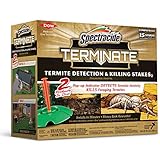
- Two termite products IN one: pop-up indicators detect termite activity, and the stakes kill foraging termites
- Installs IN minutes: place stakes in the ground 2 to 3 feet away from your home and no more than 10 feet apart
- Pop-up indicator: check the stakes for termite activity when the pop-up indicator is seen
- Complete kit: includes 15 stakes with locator shields, instruction booklet and digging tool
- Piles of detached wings on windowsills, floors, or near light sources.
- Earthen or mud tubes on foundations, crawl-space walls, basement surfaces, piers, or other masonry.
- Wood that sounds hollow, feels unusually thin, or shows blistering, galleries, or other damage.
- Persistent dampness, plumbing leaks, condensation, drainage problems, or wood-to-soil contact.
- Small exit holes or damaged areas from which winged insects emerged.
- Repeated swarms in more than one room or during more than one season.
The U.S. Environmental Protection Agency (EPA) advises involving a pest management professional when termite signs are observed; its archived guidance for schools gives the same direction for facilities staff. See the EPA consumer guidance on identifying and controlling termites and its archived termite guidance for schools.
What swarmers can—and cannot—tell you
Swarmers are winged reproductive termites that leave a mature colony to establish new colonies. Seeing them tells you that termite-like insects are present, but it does not, by itself, identify the species, locate the colony, prove that structural members are infested, or show whether the insects entered from outside.
A swarm outdoors may come from a stump, landscape timber, a neighboring structure, or soil near the property. An indoor swarm can emerge from concealed wall, floor, or ceiling spaces, but insects can also enter through gaps, screens, vents, or open doors. Only an inspection that connects insect identification with physical evidence can distinguish those possibilities.
Do not treat a pile of wings as a species diagnosis. Wing color, size, and seasonal activity vary, and ants shed wings too. Preserve the evidence so the inspector can examine it.
Termite swarmers versus flying ants
Flying ants are the most common visual confusion. The EPA’s basic comparison is useful for triage, although a close examination or expert identification may still be necessary.
Rank #2

- Trelona ATBS Annual Bait Stations give ongoing structural protection through colony elimination; however, conditions such as competing insects, floods, the presence of alternative food sources, and cold weather may alter complete structural protection
| Feature | Termite swarmer | Flying ant |
|---|---|---|
| Wings | Four wings are roughly equal in length. | The front wings are longer than the hind wings. |
| Antennae | Straight, or sometimes drooping. | Bent, approximately at a right angle. |
| What the sighting proves | Shows termite-like insects are present; it does not establish species, colony location, or structural activity by itself. | Shows ants are present; it does not rule out a separate termite problem elsewhere. |
Use a clear close-up photograph beside a ruler or a sealed specimen container, and record exactly where the insects were found. Do not crush every insect before an inspector can identify one. If the insects are inaccessible, photographs of the wings, antennae, body shape, and the surrounding area are still useful.
Physical signs that make an inspection especially important
Shed wings and repeated indoor activity
After a swarm, termites often leave discarded wings near windows, doors, lights, or other openings. A single pile does not reveal how far away the colony is, but wings combined with indoor insects or repeated sightings are meaningful evidence to report.
What’s actually slowing this PC down?
Pick the symptom - the matching free tool is one click away.
Mud tubes
Subterranean termites may build earthen tubes that connect soil to wood or help them cross exposed surfaces. Older EPA label material describes mud tunnels as a particularly conclusive sign. That document is a product-specific label dated August 21, 2003, so use it as supplementary context rather than as current, general consumer guidance. A tube should be documented and shown to the inspector, not used as a do-it-yourself treatment target.
Hollow or damaged wood
The EPA recommends checking accessible, exposed wood for hollow spots by probing gently with a flat-head screwdriver or similar tool. Probe only areas where doing so cannot damage wiring, plumbing, finishes, or load-bearing components. A soft or hollow result is a reason to report the location; it is not a complete diagnosis.
Moisture and entry conditions
Leaks, chronic dampness, poor drainage, condensation, and wood in contact with soil can support termite activity or make concealed damage more likely. Photograph the source and note whether it is active. Moisture correction may be necessary even when a treatment is proposed, but drying a damp area does not substitute for an inspection.
Rank #3

- TWO TERMITE PRODUCTS IN ONE: Pop-up indicators detect termite activity, and the stakes kill foraging termites.
- REPLACEMENT STAKES: Includes 5 stakes with locator shields – designed to replace termite stakes already in use with the Spectracide Terminate Termite Detection & Killing Stakes2 complete kit (sold separately).
- INSTALLS IN MINUTES: Place stakes in the ground 2 to 3 feet away from your home and no more than 10 feet apart.
- POP-UP INDICATOR: Check the stakes for termite activity when the pop-up indicator is seen.
Exit holes and damaged finishes
Small holes, blistered surfaces, sagging trim, or unexplained cracks can indicate insect emergence or wood damage. Mark the location with removable tape or a photograph so the inspector can compare it with adjacent areas.
The Tool Desk
Outbyte Driver Updater FREEScan for outdated or missing drivers - takes under a minuteDriver Scan →Outbyte PC Repair FREEClear out junk files and repair common Windows errorsFree Scan →What to do after finding swarmers
- Preserve evidence. Save several intact insects if possible, collect loose wings, and take well-lit photographs. Note the date, room, weather, and whether the insects were alive, dead, or emerging from a surface.
- Limit disturbance. Do not open walls, pull apart flooring, or scrape away tubes before documentation. Keep children and pets away from damaged or treated areas.
- Check only accessible areas. Look at exposed wood, foundation edges, crawl-space access points, window sills, and plumbing-adjacent areas. A gentle screwdriver probe can reveal a hollow spot, but stop if the material is structural or utilities may be behind it.
- Arrange a local inspection. Choose a pest management company licensed in your state. Ask for the license number or a copy of the license and verify concerns with the state pesticide regulatory agency.
- Do not rely on a quick-kill product. A spray or product that merely kills termites does not demonstrate protection for the building. Structural protection depends on the inspection, application method, and the claims and directions on the pesticide label.
What a professional inspection should establish
An inspection should connect the insects to the building’s condition rather than stopping at a visual count of swarmers. Ask the inspector to explain:
- Whether the insects are termites, flying ants, or another species.
- Which termite type is suspected and what observations support that identification.
- Where evidence was found and whether it indicates activity in the structure or insects entering from outside.
- Which areas were inaccessible and what uncertainty remains.
- Whether damaged wood, moisture, soil contact, or construction gaps need correction.
- What monitoring or follow-up inspection is recommended.
Most termiticide applications require trained pest management professionals. A competent inspection report should identify locations, photographs or other evidence, the proposed treatment area, and safety instructions rather than offering a generic application without explaining the findings.
How to evaluate a pest control company
Verify state licensing
Licensing rules vary by state. Ask to see the firm’s current license and, when relevant, the applicator’s credential. If the company will not provide licensing information, contact your state pesticide regulatory agency before signing a contract. The EPA’s consumer page explains this verification step and links readers to the relevant state authorities.
Request the pesticide label
For every proposed pesticide, request the product label before work begins. The label sets legal use sites, application limits, precautions, hazard statements, and reentry directions. Ask the company to identify the exact product and explain how the label supports structural protection for your building.
Rank #4
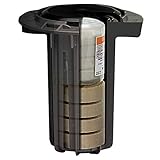
- Includes one CASE of TBS systems: 10 x Advance Termite Inspection Cartdrdge (TIC), 10 x TBS station, 10 x wood block for monitor
- This bait system functions as a DETECTION tool, and does NOT contain termiticides. Install first to detect if termites are present before buying termiticides
- After termites are detected, replace with Trelona cartridges that work with these stations. Trelona is a termiticde by the same brand.
- Does Not Include Spider Tool To Open It
Ask for evidence-based options
Use these questions during the proposal:
- What signs did you find, and where are they located?
- How did you identify the insects?
- What evidence indicates an active structural problem instead of outdoor insects entering the house?
- Where will the treatment be applied, and what parts of the structure will it protect?
- What must occupants do before, during, and after application?
- What is the label’s reentry interval for this product and use?
- What monitoring, warranty conditions, or follow-up inspection is included?
These questions help you compare proposals without assuming that the longest warranty, the strongest odor, or the most extensive application is automatically best.
Independent reader supportYour contribution helps us test, update, and keep practical guides available for everyone.Common termite-treatment approaches
EPA describes several treatment classes. The appropriate choice depends on the suspected termite type, construction, access, evidence of activity, soil and drainage conditions, and the product label. No single method is universally best.
| Approach | How it is used | What to verify |
|---|---|---|
| Physical barriers | Construction or installed materials are used to block termite entry. | Where the barrier is continuous, how concealed gaps are handled, and whether installation protects the specific structure. |
| Liquid soil-applied termiticides | Professionals treat soil around or beneath relevant structural areas to create a chemical zone. | Application locations, drilling or trenching requirements, label claims for structural protection, risks to wells or nearby water, and reentry instructions. |
| Termite bait systems | Bait stations or related systems are placed where termites can find and feed on the bait, with monitoring over time. | Station locations, inspection frequency, what happens if feeding is not detected, and the follow-up plan. |
| Treated building materials | Certain construction materials are manufactured or installed with termite-resistant treatment. | Which components are covered, the product’s approved use, and how existing damage or untreated connections are addressed. |
| Wood treatments | Wood is treated directly or protected with a labeled wood-treatment method. | Penetration limits, concealed areas that cannot be reached, occupant precautions, and whether the method provides the structural protection you need. |
EPA warns that many termiticides are highly toxic and that improper barrier application can fail to protect a structure or contaminate a home or nearby drinking-water wells. The label, not a salesperson’s informal promise, controls use and reentry. Read its directions, limitations, risks, and required precautions.
Why do-it-yourself spraying is a poor substitute
A household insecticide can reduce the number of visible swarmers while leaving the colony, hidden galleries, and entry routes untouched. Even a product marketed to kill termites may not carry a label claim for structural protection. Applying a soil barrier incorrectly can create gaps, expose occupants, or move pesticide toward water sources.
Do not drill, trench, inject, or apply a professional-use termiticide unless the product is legally available for your use and you can follow every label direction. If a treatment label calls for trained applicators, hire a licensed professional. Keep the container, label, and application record for your files.
Best Value

- TWO TERMITE PRODUCTS IN ONE: Pop-up indicators detect termite activity, and the stakes kill foraging termites.
- INSTALLS IN MINUTES: Place stakes in the ground 2 to 3 feet away from your home and no more than 10 feet apart.
- POP-UP INDICATOR: Check the stakes for termite activity when the pop-up indicator is seen.
- COMPLETE KIT: Includes 15 stakes with locator shields, instruction booklet and digging tool.
Location, timing, and evidence limits
Termite species, swarming seasons, building practices, licensing requirements, and treatment methods vary by location. This guidance is U.S.-focused. For local rules, contact your state pesticide regulator or a local extension service. The absence of a swarm outside a typical season does not clear a structure, and the presence of one does not provide a universal timetable for treatment.
There is no reliable one-price answer for termite work. A legitimate proposal must reflect the structure, access, suspected termite type, extent of evidence, selected method, and required follow-up. Compare the inspection findings, label-supported protection, safety instructions, reentry period, and monitoring plan rather than choosing on price alone.
EPA notes broadly that termites cause billions of dollars in structural damage each year and that property owners spend more than two billion dollars on treatment. Those statements appear on the EPA consumer page without a supplied year or precise methodology, so they should be understood as broad context rather than a current cost estimate for an individual home. EPA also says pesticide applicants submit more than 100 scientific studies and tests for review; the page does not attach a publication year to that figure.
The practical decision
Call a licensed pest management professional when swarmers are inside, when swarmers are accompanied by wings, tubes, damaged or hollow wood, moisture, or exit holes, or whenever you cannot confidently distinguish termites from flying ants. Preserve evidence, request a documented inspection, verify the license, and compare treatment proposals by the evidence found, label-supported structural protection, safety and reentry requirements, and follow-up—not by the fact that a product kills insects on contact.
Quick Recap
Product prices and availability are accurate as of the date/time indicated and are subject to change. Any price and availability information displayed on Amazon at the time of purchase will apply.

