Recommended Free Tools
For most people in the United States who need one influenza-vaccine dose, September or October is the best time to get it, with a practical goal of being vaccinated by October 31. The vaccine does not protect immediately: the Centers for Disease Control and Prevention (CDC) says protective antibodies take about two weeks to develop. If you miss October, vaccination can still help while flu viruses are circulating and an unexpired vaccine is available.
Timing differs for young children who need two doses, adults 65 and older, people who are pregnant, and anyone whose health history affects vaccine choice. The guidance below reflects CDC recommendations for the 2026–2027 U.S. season; other countries may use different dates because influenza seasons and public-health guidance vary.

As an Amazon Associate I earn from qualifying purchases.
The usual September–October window
CDC describes September and October as generally good months for people who need only one influenza-vaccine dose for the season. Completing vaccination by the end of October gives the immune system time to respond before later-season exposure is more likely, while avoiding vaccination so early that protection has more time to decline during the season.
October 31 is a target, not a cutoff. An appointment on October 31 is still worthwhile, and a vaccination in November or later should not be rejected simply because the calendar has passed October. CDC advises continuing vaccination throughout the season as long as influenza viruses are circulating and unexpired vaccine remains available. You can confirm current seasonal guidance on CDC’s flu-vaccine timing page.
#1 Best Overall

- 3-In-1 Flu A B And COVID-19 Test Kit: Designed to check for multiple respiratory targets in one test, allowing users to complete a single test instead of using separate kits at home.
- Simple At-Home Testing Process: Step-by-step format with nasal swab, buffer tube, and test cassette designed for straightforward use during everyday situations when testing is needed.
- Quick Results In About 10 Minutes: Provides results in a short timeframe, making it a convenient Covid home test to use before travel, or gatherings.
- Designed For Family Use Ages 2 And Up: Suitable for a wide range of users, including adults and children, making it a practical option for shared household use.
- Compact Single-Test Kit For On-Demand Use: The portable design on these covid tests allows for easy storage in a drawer, bag, or travel kit for quick access when needed.
Why the date is a target rather than a guarantee
The recommended window is population-level timing. It cannot predict exactly when influenza will circulate in your community or how quickly your own immune system will respond. Vaccination reduces risk but does not guarantee that you will avoid infection. Protection varies with age, health, and how closely the vaccine viruses match those circulating. Even when a vaccinated person becomes ill, vaccination can reduce the chance of severe outcomes, according to CDC’s seasonal flu-vaccine facts.
Who should avoid getting vaccinated too early?
Protection can decrease over time. For that reason, most adults—particularly adults age 65 and older—and people who are pregnant in the first or second trimester should generally avoid vaccination in July or August. Receiving a dose that early may leave less protection later in the season.
There is an important exception: early vaccination can be considered when a person is unlikely to be able to return for a later appointment. A dose that is available and administered appropriately is more useful than a missed opportunity. Discuss the timing with a clinician or pharmacist if travel, relocation, limited transportation, or another barrier makes a later visit uncertain.
What’s actually slowing this PC down?
Pick the symptom - the matching free tool is one click away.
Children who need only one dose
CDC says July or August can be considered for children who need only one dose and for people in the third trimester of pregnancy. The decision for a child should follow the season’s age and vaccination-history guidance and the advice of the child’s healthcare professional.
People in the third trimester of pregnancy
Vaccination in the third trimester may help protect a newborn during the first months of life, when an infant is too young to be vaccinated. The timing decision still belongs with the pregnant person’s healthcare professional, who can account for the pregnancy stage, local availability, and the current season’s recommendations.
Children who need two doses need an earlier start
Some children require two influenza-vaccine doses in a season. For them, CDC recommends giving the first dose as soon as vaccine is available so the second dose can be administered at least four weeks later. Waiting until late October to start can make it difficult to complete the series on time.
Because eligibility for two doses depends on a child’s age and previous vaccination history, ask the child’s clinician or vaccination provider to verify the schedule. Do not shorten the interval: the two doses must be separated by at least four weeks.
Rank #2
| Situation | CDC timing approach | Reason for the timing |
|---|---|---|
| Most people needing one dose | September or October; aim for vaccination by October 31 | Balances timely protection with the possibility that protection declines over time |
| Adults, especially those 65 and older | Generally avoid July or August unless a later visit is unlikely | Earlier vaccination may leave less protection later in the season |
| Pregnancy in the first or second trimester | Generally avoid July or August unless a later visit is unlikely | Protection may decrease before the season ends |
| Children needing two doses | Give dose one as soon as vaccine is available; give dose two at least four weeks later | Allows the required interval and completion of the series |
| Children needing one dose | July or August can be considered | CDC allows earlier vaccination for this group when appropriate |
| People in the third trimester of pregnancy | July or August can be considered | May help protect an infant during the first months of life |
| After October | Continue vaccination while flu viruses circulate and unexpired vaccine is available | Late vaccination can still provide protection for the remaining season |
How long does a flu shot take to work?
CDC states that it takes about two weeks after vaccination for antibodies that protect against flu to develop. This is an approximate immune-response interval, not a promise that every person will have complete protection at a particular hour or on a particular day.
“It takes about two weeks after vaccination for antibodies that protect against flu to develop in the body.” — CDC, Who Needs a Flu Vaccine
What the two-week interval means in practice
- You can be exposed shortly before vaccination and become ill before the immune response has developed.
- You can also be exposed during those two weeks, when protection is still building.
- Keep following ordinary infection-prevention advice during this interval; the vaccine is not an instant shield.
- If you have a high-risk medical condition, are pregnant, or care for someone medically vulnerable, ask a healthcare professional how to reduce exposure while waiting for protection to develop.
Vaccination also cannot prevent every infection. Influenza viruses change, and the viruses in circulation may not perfectly match the vaccine viruses. Individual responses differ by age and health. Nevertheless, vaccination remains useful because it can lower the risk of serious outcomes even when infection occurs.
Planning around the two-week interval
If you are scheduling vaccination before a trip, a large family gathering, school term, or workplace season, allow approximately two weeks rather than booking the appointment the day before. That timing does not guarantee that you will avoid flu at the event, but it gives the immune response time to develop. If the event is sooner, get vaccinated when an appropriate dose is available instead of postponing indefinitely; later vaccination can still help during the rest of the season.
The Tool Desk
Outbyte PC Repair FREERepair Windows errors before they cause bigger problemsFix Now →Outbyte Driver Updater FREEScan for outdated or missing drivers - takes under a minuteDriver Scan →A person who was exposed shortly before the appointment may still become ill, because a vaccine cannot reverse an infection that is already incubating. That possibility is not a reason to skip the shot. Influenza can circulate for months, and vaccination may provide protection against a later exposure. Seek medical advice promptly if symptoms develop, particularly if you are pregnant, 65 or older, very young, or have a condition associated with flu complications.
What vaccines are available for the 2026–2027 U.S. season?
CDC describes all U.S. influenza vaccines for the 2026–2027 season as trivalent. They target two influenza A viruses and one influenza B/Victoria virus. The appropriate product and dose depend on age and health circumstances.
For people younger than 65, CDC does not prefer one licensed, age-appropriate vaccine over another. That means availability, eligibility, contraindications, and the advice of your provider can determine which option you receive rather than a universal “best” product.
Rank #3
Adults age 65 and older
CDC preferentially recommends three vaccine options for adults 65 and older. If one of those preferred options is not available, CDC says an age-appropriate alternative should be used rather than delaying vaccination while waiting for a particular formulation. A pharmacist or clinician can check which products are licensed and available for your age and medical situation.
Why the vaccine is annual
CDC recommends annual influenza vaccination for everyone age 6 months and older, with rare exceptions. Two factors drive the yearly schedule: immune protection decreases over time, and influenza viruses change. Vaccine composition is reviewed and updated annually to address those changes. The CDC vaccine facts page explains the current 2026–2027 composition and age-related considerations.
Who should get a flu vaccine?
CDC recommends vaccination for people age 6 months and older, except in rare situations. The recommendation includes healthy adults and children, older adults, pregnant people, and people with chronic health conditions. Your provider may need to select a particular formulation, adjust the timing, or discuss precautions based on your history.
Tell the vaccinator about any serious reaction to a previous influenza-vaccine dose, severe allergy to a vaccine component, or history of Guillain–Barré syndrome. The CDC Vaccine Information Statement asks recipients to share those details with their provider. Read the current statement at CDC’s influenza Vaccine Information Statement.
Where can you get vaccinated?
Common U.S. access points include doctor’s offices, clinics, pharmacies, local health departments, urgent-care centers, college health centers, schools, and workplaces. Availability can vary by location, age, insurance, and the specific formulation. Call ahead or check the provider’s appointment system if you need a particular product, a pediatric appointment, or a dose for someone age 65 or older.
Do these 3 things before closing this tab:
1Repair Windows errors before they cause bigger problems2Scan for outdated or missing drivers - takes under a minute3Clear out junk files and repair common Windows errorsA practical scheduling sequence
- Check your category. Determine whether you need one dose or may need two, whether you are pregnant and in which trimester, and whether you are age 65 or older.
- Choose the earliest appropriate appointment. For most one-dose recipients, schedule in September or October. For a child who needs two doses, schedule dose one as soon as vaccine is available.
- Confirm the product and history. Bring your vaccination record if available and mention prior severe reactions, allergies, or Guillain–Barré history.
- Plan the second visit when required. If two doses are needed, book the follow-up for at least four weeks after dose one before leaving the first appointment.
- If October passes, keep looking. Contact a clinic, pharmacy, health department, or other listed access point while vaccine is available and influenza viruses are circulating.
What to bring and what to ask
Bring any vaccination record you have, your medication and allergy information, and details about a prior influenza-vaccine reaction. For a child, ask the provider to confirm whether the season requires one dose or two before leaving. If you are 65 or older, ask which preferred formulation is available; if none is stocked, ask whether an age-appropriate alternative can be given without delay. Pregnant patients should tell the vaccinator their trimester so timing can be discussed in context.
What if you are exposed or get sick before the vaccine has worked?
A shot given today cannot undo an exposure that happened yesterday, and it cannot provide full antibody protection immediately. If you develop flu-like symptoms, contact a healthcare professional promptly, especially if you are pregnant, age 65 or older, very young, or have a condition that raises the risk of complications. Vaccination timing and treatment decisions are separate questions; do not wait for antibodies to develop before seeking medical advice about symptoms.
Rank #4
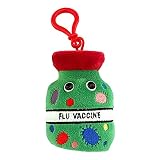
- Adorable plush representation of Flu Vaccine provides an exciting hands-on way to learn about health, science, virology, immunology and the virus that causes the flu
- Cuddly and memorable, this plush keychain is a fun gift for friends and family and memorable way to say “get well” and “feel better.” Perfect post-vaccine gift for a job well done!
- Educational tool for healthcare professionals, public health experts, teachers and anyone with a healthy sense of humor
- Includes an educational card with fascinating facts about vaccines and the flu
- Clip on and take this 4” flu vaccine everywhere you go. Fun accessory for your clothing, backpack, keys, bag or to hang up anywhere in your world!
Do not assume that illness proves the vaccine failed. A vaccinated person may still be infected because circulating viruses differ from vaccine viruses or because individual protection is incomplete. CDC notes that vaccination can still reduce severe outcomes in that situation.
How to interpret U.S. vaccination coverage numbers
Coverage statistics describe how many people received a dose, not how effective the vaccine was. For the 2025–2026 U.S. season, CDC reported that 51.4% of children age 6 months through 17 years received at least one flu-vaccine dose and 41.6% of adults age 18 and older received a flu vaccine. The estimates came from the National Immunization Survey–Flu for children and the Behavioral Risk Factor Surveillance System for adults; CDC notes that survey limitations should be considered when interpreting them. See the full 2025–2026 coverage report.
Outdated Drivers Are Slowing You Down
One free scan finds every outdated or missing driver and matches the right update for your exact hardware.Free scan · exact hardware matchWindows Errors? Fix Them Before They Spread
Repair common Windows errors and clear accumulated junk for a smoother, more stable PC - no reinstall needed.Free scan · no reinstall| Group | 2025–2026 U.S. coverage | How CDC obtained the estimate |
|---|---|---|
| Children age 6 months through 17 years | 51.4% received at least one dose | National Immunization Survey–Flu |
| Adults age 18 years and older | 41.6% received a flu vaccine | Behavioral Risk Factor Surveillance System |
These figures should not be read as vaccine-effectiveness percentages. They indicate uptake during one season and do not predict an individual’s protection or the performance of the 2026–2027 vaccine.
Independent reader supportYour contribution helps us test, update, and keep practical guides available for everyone.Common timing mistakes to avoid
- Waiting for a “perfect” date. September and October are useful targets, but an available vaccination later in the season is preferable to skipping it.
- Assuming protection starts immediately. Plan for about two weeks of antibody development.
- Starting a two-dose child series too late. The doses must be at least four weeks apart, so arrange the first dose as soon as vaccine is available.
- Vaccinating every adult in July or August by default. Early vaccination is generally discouraged for most adults, especially those 65 and older, because protection may wane before the season ends.
- Choosing a product without checking eligibility. Age and health circumstances determine which formulations can be used; adults 65 and older have preferred options, but an age-appropriate alternative is recommended if a preferred option is unavailable.
- Treating coverage statistics as effectiveness data. Uptake percentages show vaccination rates, not the probability that a vaccinated person will avoid flu.
When to ask a healthcare professional before scheduling
Speak with a clinician or pharmacist if you had a severe allergic reaction after a previous flu-vaccine dose, have a severe allergy to a vaccine component, have a history of Guillain–Barré syndrome, are pregnant and unsure which timing applies, or need to determine whether a child requires one dose or two. A provider can also address age-specific formulations and any condition that changes the risk–benefit discussion.
For the latest seasonal dates, product availability, and any changes to recommendations, check CDC’s Who Needs a Flu Vaccine page and Key Facts About Seasonal Flu Vaccine. Recommendations and vaccine availability can change from one influenza season to the next.
Frequently Asked Questions
Is it too late to get a flu shot after October?
Usually no. CDC advises vaccination throughout the season while influenza viruses are circulating and an unexpired vaccine is available. A later dose may still protect you during the remaining season.
Quick wins for a faster PC:
Repair Windows errors before they cause bigger problemsFix Now →Scan for outdated or missing drivers - takes under a minuteDriver Scan →Clear out junk files and repair common Windows errorsFree Scan →Exactly how many days after vaccination does protection begin?
CDC says about two weeks. That is an approximate immune-response interval, not a guarantee of complete protection at a precise hour or day.
Best Value
Can I get vaccinated in July or August?
Most adults, especially those 65 and older, and people in the first or second trimester of pregnancy should generally wait because protection may wane. Early vaccination can be considered when a later visit is unlikely. July or August can also be considered for children needing one dose and people in the third trimester of pregnancy.
Why must some children start before September or October?
Children who need two doses should receive the first as soon as vaccine is available, because the doses must be at least four weeks apart. Starting early allows the series to be completed.
Is one flu-vaccine product better than another?
For people younger than 65, CDC does not prefer one licensed, age-appropriate product over another. For adults 65 and older, three options are preferentially recommended; an age-appropriate alternative should be used if a preferred option is unavailable.
Free tools Windows power users keep installed
One-click scans. No signup required.
Does the flu shot guarantee that I will not get influenza?
No. Effectiveness varies with age, health, and the match between vaccine and circulating viruses. Vaccination can nevertheless reduce severe outcomes if infection occurs.
Who should I tell about a previous reaction or medical history?
Tell the vaccinator about a severe reaction to a prior flu-vaccine dose, a severe allergy to a vaccine component, or a history of Guillain–Barré syndrome. A clinician or pharmacist can discuss precautions and formulation.
Where can I get a flu vaccine?
Common U.S. sites include doctors’ offices, clinics, pharmacies, health departments, urgent-care centers, college health centers, schools, and workplaces. Call ahead about age eligibility, insurance, and product availability.
The Bottom Line
For most people who need one dose, schedule a flu shot in September or October and aim for October 31. Protective antibodies take about two weeks to develop, so do not expect instant protection.
Do not skip vaccination because October has passed. CDC recommends continuing while flu viruses circulate and unexpired vaccine is available. Children who need two doses should start as soon as vaccine is available, while older adults and pregnant people should discuss timing and product choice with a healthcare professional.
Quick Recap
Product prices and availability are accurate as of the date/time indicated and are subject to change. Any price and availability information displayed on Amazon at the time of purchase will apply.

