Vertical farms can grow many crops, but the crops that make the best economic fit today are usually compact, fast-turn products: leafy greens, herbs and microgreens. Strawberries, dwarf tomatoes, dwarf peppers and other fruiting crops are technically possible in stacked indoor systems, yet they generally require more light, time and hands-on work. Grains and tubers are much harder to produce competitively because each kilogram occupies valuable space for longer and sells for relatively little.
“Can grow” and “can grow profitably” are different questions. A crop’s economics depend on the facility, electricity tariff, climate-control load, labor model, scale, selling channel and dependable buyers. No crop is universally profitable, and national controlled-environment production shares are not a ranking of vertical-farm margins.
As an Amazon Associate I earn from qualifying purchases.
What crops can vertical farms grow?
Indoor vertical farming means producing plants in stacked layers under controlled conditions, commonly with hydroponic or another soilless system. That definition is narrower than controlled-environment agriculture (CEA), which also includes greenhouses. Within a vertical farm, crop choice is constrained by rack height, root-zone equipment, lighting, airflow, pollination needs, harvest access and the length of time each plant occupies a growing position.
Do these 3 things before closing this tab:
1Scan for outdated or missing drivers - takes under a minute2Clear out junk files and repair common Windows errors3Fix the driver behind crashes, sound loss and screen glitchesLeafy greens, herbs and microgreens: the established fit
Commercial indoor farms commonly prioritize leafy greens, culinary herbs and microgreens. Lettuce, salad mixes, basil and similar crops stay relatively compact, can be harvested on short schedules and are already familiar to local buyers. Microgreens use little vertical space and can command a high price per unit of weight, although their small, delicate format creates its own seeding, sanitation and packaging workload.
#1 Best Overall

- Avant-garde and modern design: Our smart hydroponics growing system kit merges urban farming innovation with minimalist aesthetics. Crafted from durable ABS, its 17" space-saving profile features an LCD touchscreen for one-touch control, perfect for tech-savvy gardeners or as a unique gift. The integrated full-spectrum panel adapts seamlessly to indoor hydroponics, blending functionality with sleek vertical farming appeal.
- Optimal plant growth: Designed for organic vegetables and herbs, this indoor herb garden maximizes yields in compact settings. Its 17" adjustable height prevents light burn on tall stems, ideal for balcony hydroponics or cultivating tomatoes and basil. The science-backed structure supports healthy eating by accelerating photosynthesis, ensuring nutrient-rich harvests even in limited spaces.
- Versatile planting options: Grow 12 fresh herbs or leafy greens simultaneously with our kitchen hydroponics grow system kit. Dual light modes mimic natural sunlight for year-round indoor garden benefits, whether nurturing peppermint or strawberries. This soilless farming solution thrives in apartments, offices.
- Lighting duration control: Engineered using hydroponic farming research, our system’s 22-hour mode boosts flowering by 50% and enhances fruit sweetness—perfect for organic gardening enthusiasts. The mimic ideal greenhouse conditions, turning your living room into a high-efficiency plant growth lab for faster, tastier yields.
- Efficient water management: Our Growth Lamp is equipped with a water tank with a capacity of up to 5L, providing ample space for root development. herb garden built-in ultra-quiet water pump runs in a 30-minute cycle to ensure fresh water circulation, keeping the water fresh without disturbing your peace. Maximum energy savings. Easy harvest of fresh fruits making healthy eating accessible even for beginners or busy urban dwellers.
University Extension guidance identifies short production cycles, compact growth and strong local demand as reasons these categories suit indoor farms. A 2025 University of Nevada, Reno Extension report likewise describes current vertical-farming economics as favoring high-value, fast-growing leafy greens, microgreens and herbs. “Suit” is the important word: these traits improve the operating fit but do not guarantee a positive margin at a particular site.
Fruiting crops: possible, but more demanding
Strawberries, dwarf tomatoes and dwarf peppers are produced commercially in some indoor vertical systems. Compact or dwarf cultivars are easier to fit between racks than large vining plants. Even so, fruiting crops usually need stronger or longer lighting, remain in production for longer periods and require additional labor such as training, pruning, pollination or repeated harvesting. Those requirements can increase electricity, climate-control and labor costs before any fruit is sold.
A fruiting crop can therefore work when its selling price, quality differentiation and buyer demand compensate for the extra resource use. The same crop can be uneconomic where electricity is expensive, labor is scarce or the market will not pay for locally produced fruit.
Other crops with commercial or emerging uses
Virginia Cooperative Extension lists mushrooms, edible flowers, barley fodder, duckweed and propagation material among products made in indoor vertical farms, alongside greens, herbs, microgreens and fruiting crops. Medicinal, cosmetic, pharmaceutical and nutraceutical plants are described as newer or prospective categories. These examples demonstrate technical and commercial breadth, not proof that every crop has established positive margins at scale.
Rank #2

- 【Multi-Scene Growing Solution】Professional hydroponic tower system for indoor/outdoor/commercial use, featuring corner-friendly design to maximize space efficiency in homes, apartments or greenhouses
- 【High-Yield 30-Pod Structure】6-layer vertical farming system supports 30 plants simultaneously - Ideal for strawberries, tomatoes, lettuce, herbs and vegetable seeds cultivation
- 【Smart Water Management】Built-in 63GPH pump with timer + water recycling system & diverter ensures 40% water saving, while filter ensures clean water circulation for plant health
- 【Modular DIY Design】Expandable BPA-free towers with UV-resistant gray base, compatible with modular extensions for personalized gardening configurations
- 【Complete Starter Kit】Includes step-by-step manual, pre-assembled water pump system and all necessary connectors - Ready to grow within 15 minutes of setup
Why a technically growable crop may lose money
Plants respond to light, temperature, water and nutrients, so a controlled room can produce crops outside their normal season. The economic question is whether the additional control creates enough saleable value to cover the building and operating cost. Six factors usually decide that outcome.
1. Crop architecture and rack use
A short lettuce head can be arranged in dense layers with clear access for seeding and harvest. A tall or vining plant may need trellising, wider aisles and clearance for fruit, reducing the number of productive layers. Choose cultivars whose mature height, root volume and harvest method match the rack, lighting and worker access rather than assuming that any plant can be placed on a shelf.
2. Cycle length and turnover
Every crop occupies growing capacity while lights, pumps, climate equipment and labor are running. Fast crops can create more harvest turns in a year and allow a producer to adjust the mix as orders change. A long-cycle crop ties up a bay for longer, increasing exposure to energy and labor costs and delaying revenue. Cycle length should be measured from seeding through the final saleable harvest, including transplant and sanitation time between batches.
3. Light and energy demand
Fruiting plants generally require more light or a longer lighting period than many leafy crops. Electricity for LEDs, pumps, heating, cooling, dehumidification and air movement can dominate operating costs, and the tariff varies by location and time of day. A crop that works in a region with inexpensive, reliable power may fail under a higher tariff or where heat removal is costly. Model seasonal loads rather than using a single annual electricity assumption.
Rank #3
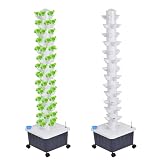
- 【Vertical Hydroponic System】Our hydroponic tower uses hydroponics instead of traditional soil cultivation, greatly improving the product's practicality. The top-down automatic water circulation and timed watering system significantly increases efficiency and minimizes water waste, maximizing plant nourishment for lusher, faster growth
- 【Large Capacity, High Yield】Our hydroponic tower features a 14-layer structure with 70 planting holes. Each layer has 5 planting baskets, allowing for a wide variety of plants, from strawberries and lettuce to flowers. Its automatic water circulation system ensures ample nutrients for plant roots, promoting faster, healthier growth and higher yields compared to traditional soil cultivation
- 【Water-Saving, Labor-Saving, and Simple Maintenance】Our vertical hydroponic tower has a built-in 20L water tank, reducing the frequency of watering, while the automatic watering system minimizes water waste. No tilling or weeding is required, saving time and effort, making it ideal for busy individuals or gardening beginners
- 【Easy to Move】This hydroponic tower features four casters (with brakes) for easy and stable movement. The included water level gauge and power cord (US standard plug) simplify monitoring and operations, ensuring worry-free use. Its vertical tower design is ideal for urban dwellers, maximizing limited space in homes, apartments, or greenhouses, while its stylish freestandings appearance blends seamlessly with any décor style
- 【Package Contents】This hydroponic system includes all necessary accessories, allowing you to produce plants in just a few weeks. The package includes: power adapter, water pump, water level gauge, water circulation system to keep the water fresh, all accessories for the indoor gardening system, and hydroponic supplies. Suitable for various applications
4. Labor and handling
Labor includes propagation, transplanting, spacing, crop training, pollination where needed, scouting, harvesting, trimming, washing, grading and packing. Mechanical or workflow improvements can raise output per worker, but a design that looks efficient on paper may create bottlenecks at harvest or packaging. Extension guidance specifically identifies labor efficiency as a profitability factor, so record minutes per tray or plant at each task instead of counting only headcount.
5. Price, product format and dependable demand
Revenue depends on what buyers actually purchase, not simply on the crop’s retail price. A farm should identify whether it will sell wholesale, to restaurants, through retail, directly to consumers or to institutions; determine the required pack size and delivery frequency; and account for unsold or downgraded product. Distance to buyers, contract terms and demand consistency affect realized price and waste. A dependable buyer can be more valuable than a theoretically higher spot price.
6. Capital, design and scale
Racks, lighting, irrigation, water treatment, environmental controls, refrigeration, food-safety infrastructure and a suitable building require upfront capital. Small pilot systems may share labor or utilities in ways that disappear at commercial scale; large systems may gain automation but face greater financing and utilization risk. Evaluate the complete facility design and the scale at which it will operate, rather than extrapolating from a demonstration room.
The Tool Desk
Outbyte PC Repair FREEClear out junk files and repair common Windows errorsFree Scan →Outbyte Driver Updater FREEFix the driver behind crashes, sound loss and screen glitchesFind Drivers →What U.S. production shares do—and do not—show
The following figures come from USDA Economic Research Service data for U.S. CEA food-crop production in 2024, as reported by Virginia Cooperative Extension. CEA includes greenhouses as well as vertical farms, so these percentages are not vertical-farm shares and do not represent profit margins.
Rank #4

- Enhanced Growth: Maximize efficiency and minimize water waste with our hydroponics tower's automatic water circulation system. Automatic water circulation from top to bottom, results in enhanced plant growth, and faster harvest
- Large Capacity: With each floor equipped with 8 planting baskets, the hydroponics tower allows for growing seasonal vegetables, various edible flowers, and fruits of different heights
- Beginner Friendly: Our hydroponics tower is designed to be user-friendly and easy to set up. Beginners can take advantage of this system without the need for systematic learning. to use and no cultivation required, it's perfect for those seeking easy maintenance
- Versatile Functionality: For indoor and outdoor gardening, this hydroponics tower suits various settings, whether you live in detached houses, apartments, or high-rise buildings. Say goodbye to traditional soil planting and garden anywhere you like
- Excellent Yield: Our hydroponics tower ensures that your plants grow faster than ever and yield excellent results in all conditions. With complete environmental control, you'll be able to cultivate a wide range of agricultural products with ease
| Crop | Share of U.S. CEA food-crop production (2024) |
|---|---|
| Tomatoes | 59% |
| Fresh herbs | 12% |
| Cucumbers | 7% |
| Lettuce | 6% |
| Peppers | 3% |
| Strawberries | 1% |
| Other crops | 12% |
Tomatoes’ 59% share does not establish that tomatoes are the most profitable vertical-farm crop. Greenhouse acreage, regional production patterns, crop prices and facility types all influence the CEA total. The USDA ERS report, Trends, Insights, and Future Prospects for Production in Controlled Environment Agriculture and Agrivoltaics Systems (published January 11, 2024), presents sector-level adoption and production context rather than a crop-by-crop break-even analysis for a specific indoor farm.
How to test whether a crop fits your farm
Use a crop-specific model before purchasing equipment or signing a growing contract. The sequence below keeps biological feasibility separate from commercial viability.
- Define the production system. Record usable rack area, layer spacing, lighting type and schedule, irrigation method, environmental set points, expected uptime and the time required to clean and reset each bay.
- Verify the crop’s physical fit. Check mature height and width, root-zone volume, trellising, pollination, harvest access, disease sensitivity and whether the cultivar is available as seed or transplants.
- Measure the complete cycle. Include germination, transplanting, growing time, harvest windows and turnaround. Estimate saleable units per layer, not just biological yield.
- Build an energy and labor budget. Apply the local electricity tariff to lighting and climate loads. Time every recurring task, including packing and delivery, and separate fixed staff from hours that vary with crop volume.
- Map buyers and specifications. Obtain expected volumes, pack formats, quality standards, delivery days, payment terms and realistic prices from identifiable buyers. Include a disposal or discount assumption for product that misses specification.
- Calculate contribution before fixed costs. For each saleable unit, subtract seed or planting material, nutrients, packaging, variable utilities, crop labor, delivery and expected waste from the realized selling price. Then test whether the remaining contribution can cover rent, depreciation, financing, insurance, maintenance and management.
- Stress-test the result. Recalculate with higher power prices, lower saleable yield, slower turnover, a vacant growing bay or a lost buyer. A crop that works only under perfect utilization is not a robust plan.
- Run a measured pilot. Track actual cycle time, kWh, labor minutes, shrink, rejected product and received prices. Use those measurements to revise the commercial model before expanding capacity.
Comparing the main crop choices
| Category | Why it can fit | What makes the economics harder | Key checks |
|---|---|---|---|
| Leafy greens | Compact canopy, short cycles and established fresh-market demand | Price competition, perishability and the need for consistent quality | Turnaround time, pack-out rate, cooling and buyer volume |
| Herbs | High value relative to space and frequent culinary demand | Delicate handling, shelf-life limits and labor-intensive packing | Variety-specific cycle, packaging format and delivery frequency |
| Microgreens | Very short crops and high value per unit weight | Many small seeding and harvest jobs, sanitation and niche demand | Labor minutes per tray, repeat orders and waste |
| Strawberries | Premium local product and possible use of compact cultivars | Longer occupancy, greater light needs and repeated picking | Pollination, fruit quality, labor per harvest and buyer price |
| Dwarf tomatoes and peppers | Fruiting crops can be stacked when plant architecture is compact | Longer production, stronger lighting, training and pollination | Clearance, trellis workflow, energy load and saleable yield |
| Grains and tubers | Biologically possible in controlled conditions | Long cycles, high space or light demand and low value per unit biomass | Biomass value, occupied volume and whether any premium market exists |
The table describes relative operating logic, not a universal ranking. Local prices, electricity, labor and contracts can reverse the order for an individual facility.
Why staple crops are a difficult current fit
UNR Extension’s 2025 assessment says current vertical-farming models remain economically viable primarily for high-value, fast-growing crops such as leafy greens, microgreens and herbs. It identifies grains and tubers as facing a difficult combination of longer growing cycles, greater light and space requirements and lower market price per unit of biomass. This is an economic constraint under current systems, not a biological impossibility or a claim that future automation, cheaper energy or new markets could never change the calculation.
Best Value
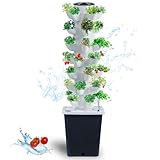
- SOILLESS CULTIVATION: Hydroponics is used instead of traditional soil cultivation, so the automatic top-down timed watering cycle makes better use of water and reduces water waste compared to outdoor potted plants.
- EASY TO MOVE: Our planting tower is small enough to be placed in the kitchen, living room, etc. to meet different layout forms and create a beautiful agricultural landscape.
- VERTICAL TOWER HYDROPONIC GARDEN: Our indoor tower garden hydroponic growing system is designed to provide high productivity and ease of use with a focus on increased utility.
- EASY TO USE: Whether you live in a villa, apartment or high-rise building, the tower hydroponics system offers a soilless option for indoor and outdoor gardening. With this self-watering home hydroponics system, anyone can harvest fresh, farm-quality vegetables in their own home.
- ENRICH GREEN LIFE: This vertical hydroponics kit is known as an indoor sky garden. You and your family can grow 30 different fruits and vegetables at the same time, such as flowers, salads, vegetables, potatoes, fruits and more!
Staples also have exceptionally efficient outdoor and greenhouse supply chains in many regions. To justify indoor production, a staple would need a distinctive value—such as a specialized ingredient, local resilience requirement or high-value seed or propagation use—that outweighs the cost of replacing inexpensive field-grown biomass with illuminated indoor space.
Common mistakes when choosing a crop
- Confusing demand with margin: A popular crop can have intense competition and low realized prices. Confirm buyer commitments and net prices after packaging and delivery.
- Using CEA shares as a profitability list: The 2024 USDA figures cover CEA overall and say nothing about a particular vertical farm’s return.
- Ignoring the full cycle: Counting only days under lights understates propagation, sanitation and changeover time.
- Underestimating fruiting labor: Training, pollination and repeated picking can make a compact plant much more labor-intensive than a leafy crop.
- Scaling a pilot by multiplication: A small room may benefit from shared staff or low utilization of equipment. Validate performance at the intended scale.
- Choosing a crop before a sales route: A technically excellent harvest still loses money if buyers cannot take the volume on the required schedule.
What the available evidence can support
Virginia Cooperative Extension summarizes the practical caution directly: “Despite potential advantages, vertical farming is not universally profitable and may not be appropriate for all producers or markets.” Its profitability discussion points to facility design, energy costs, crop choice, labor efficiency and reliable buyers.
The sources establish broad crop tendencies and decision factors, but they do not provide current, geography-matched margins or break-even prices for every crop, facility size and production method. The UNR report contains broad sector and energy discussion rather than a budget for your building. Before making an investment decision, replace assumptions with local utility rates, equipment quotes, labor costs, production records and written buyer terms.
Crashes, No Sound, or Screen Glitches?
Random freezes, missing sound and display glitches usually trace back to one bad driver. Find and replace yours safely.Free scan · under a minutePC Slower Than It Used to Be?
A free scan shows the junk files, broken settings and background clutter dragging Windows down - then fixes them in one click.Free scan · Windows 10 & 11Decision rule for a prospective grower
Start with the buyer and the facility constraints, then select a crop whose architecture and cycle let you produce the required format repeatedly. Greens, herbs and microgreens are the usual first candidates because their compact, fast-turn profiles align with stacked space. Consider strawberries or dwarf fruiting crops only when the added light and labor have a clear price or market advantage. Treat grains and tubers as specialty experiments rather than default commercial choices unless a specific high-value use changes their value equation.
Quick Recap
Product prices and availability are accurate as of the date/time indicated and are subject to change. Any price and availability information displayed on Amazon at the time of purchase will apply.

